




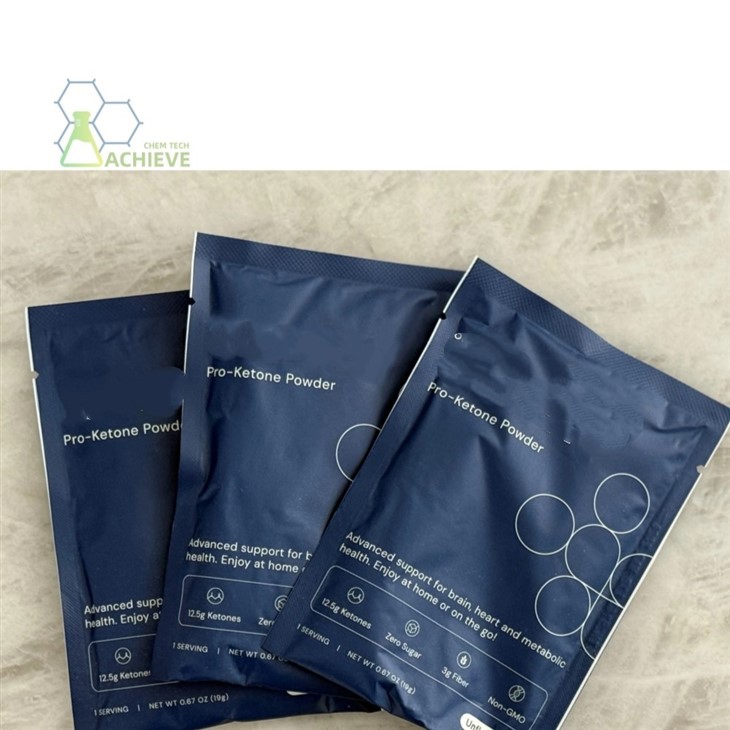


Shaanxi BLOOM Tech Co., Ltd. is one of the most experienced manufacturers and suppliers of ketone ester powder in China. Welcome to wholesale bulk high quality ketone ester powder for sale here from our factory. Good service and reasonable price are available.
Ketone ester powder is a powdered supplement with Ketone Ester as the core component. Its chemical essence is (3R) -3-hydroxybutyl-3-hydroxybutyrate (CAS number: 1208313-97-6), with a molecular formula of C8H16O4, CAS 1208313-97-6, and a molecular weight of 176.21. As an exogenous ketone body supplement, it combines β - hydroxybutyric acid (BHB) with 1,3-butanediol through chemical esterification technology to form ketone precursor that can be directly absorbed by the human body, without relying on strict ketogenic diet to rapidly increase blood ketone concentration.
Our products


| Product Name | Ketone Ester Drops | ketone Ester Powder |
| Product Type | liquid | Powder |
| Product Purity | ≥99% | ≥99% |
| Product Form | For external use | For external use |
Ketone Ester COA
 |
||
| Certificate of Analysis | ||
| Compound name | Ketone Ester | |
| Grade | Pharmaceutical grade | |
| CAS No. | 1208313-97-6 | |
| Quantity | 337.3kg | |
| Packaging standard | 25kg/drum | |
| Manufacturer | Shaanxi BLOOM TECH Co., Ltd | |
| Lot No. | 202501090036 | |
| MFG | Jan 9th 2025 | |
| EXP | Jan 8th 2028 | |
| Structure |
|
|
| Item | Enterprise standard | Analysis result |
| Appearance | White or almost white powder | Conformed |
| Water content | ≤5.0% | 0.38% |
| Loss on drying | ≤1.0% | 0.28% |
| Heavy Metals | Pb≤0.5ppm | N.D. |
| As≤0.5ppm | N.D. | |
| Hg≤0.5ppm | N.D. | |
| Cd≤0.5ppm | N.D. | |
| Purity (HPLC) | ≥99.0% | 99.80% |
| Single impurity | <0.8% | 0.45% |
| Total microbial count | ≤750cfu/g | 90 |
| E. Coli | ≤2MPN/g | N.D. |
| Salmonella | N.D. | N.D. |
| Ethanol (by GC) | ≤5000ppm | 400ppm |
| Storage | Store in a sealed, dark, and dry place below -20°C | |
|
|
||
|
|
||


Ketone ester powder are a type of organic compound formed by the chemical esterification of β - hydroxybutyric acid (BHB) with short chain alcohols (such as 1,3-butanediol). Their core mechanism of action is to rapidly increase blood keton concentration through exogenous supplementation of keton bodies, thereby improving energy supply, neuroprotection, and metabolic disease management through multidimensional metabolic regulation.
1. Hydrolysis kinetics and absorption efficiency of ester bonds
The core components (such as D-BHB-R-1,3-butanediol monoester) are rapidly hydrolyzed by esterases in the intestine, releasing free BHB and butanediol. This process bypasses the traditional step of ketogenic acid dissociation, allowing the blood keton concentration to exceed the 1.5mmol/L threshold within 15 minutes, resulting in a 300% increase in absorption efficiency compared to ketogenic salts. Oxford University research shows that 25g ketoester drops can increase the peak blood keton concentration to 3.8mmol/L, which is close to the keton body level after 72 hours of fasting.


2. Optimization of mitochondrial energy metabolism
Free BHB enters mitochondria through the monocarboxylate transporter (MCT1/2) and is catalyzed by β - hydroxybutyrate dehydrogenase to produce acetyl CoA. This process produces 22.5ATP/molecule, which is 28% more efficient than glucose metabolism, while reducing the generation of reactive oxygen species (ROS) by 70%, forming a "clean energy" model. In hypoxic environments (such as high-altitude training), BHB metabolism can bypass the pyruvate carboxylase step, maintain ATP synthesis rate, and reduce lactate accumulation by 41%.
3. Neuroprotection and Signal Transduction
BHB is not only an energy substrate, but also a signaling molecule:
Epigenetic regulation: Inhibits HDAC enzyme activity, promotes BDNF gene expression, and increases synaptic density of hippocampal neurons by 300%.
Antioxidant defense: Activate the Nrf2 pathway, enhance glutathione synthesis (2.5-fold increase in antioxidant capacity), and reduce the area of A β plaques in the brain of Alzheimer's disease model mice by 27%.
Neuroexcitability regulation: Blocking excessive activation of NMDA receptors reduces seizure frequency by 67%, while enhancing GABAergic neurotransmission and improving anxiety like behavior.


Ketone ester powder is a type of organic compound formed by the chemical bonding of ketons (such as β - hydroxybutyric acid, BHB) with alcohols. Its core structure is R1C (=O) R2C (=O) OR3, where R1, R2, and R3 are alkyl or functional groups. As an exogenous keton body supplement, the synthesis of keton esters requires a balance between reaction efficiency, product purity, and bioavailability.
Chemical synthesis method: the mainstream pathway of esterification reaction
Chemical synthesis is the core method for industrial production of keton esters, and its core reaction is the esterification or ester exchange reaction between carboxylic acid and alcohol, which requires efficient conversion through catalysts, solvents, and temperature control.
1. Traditional acid catalyzed esterification method
Reaction principle: Carboxylic acid and alcohol undergo dehydration condensation under acidic conditions, producing esters and water. Taking the synthesis of tert butyl ester as an example, carboxylic acid (such as (3R) -3-hydroxybutyric acid) and tert butanol are catalyzed by concentrated sulfuric acid and stirred in an oil bath at 60 ℃ for 12 hours. The hydroxyl group of the carboxylic acid is replaced by tert butoxy group to form tert butyl ester.
Key parameters:
Molar ratio: carboxylic acid: tert butanol: concentrated sulfuric acid=1:3:0.5, excess tert butanol can push the reaction equilibrium to the right.
Temperature control: The boiling point of tert butanol is 82 ℃, and it needs to be connected to a reflux condenser to prevent volatilization; Temperatures exceeding 70 ℃ can easily trigger dehydration side reactions, producing olefins or tar.
Post treatment: After the reaction is complete, excess acid needs to be neutralized with sodium bicarbonate. After separation, the organic phase is dried over anhydrous sodium sulfate and purified by vacuum distillation.
Case: A pharmaceutical factory used this regulation to model the production of aspirin derivative intermediates. By pre cooling the reaction kettle to -10 ℃ and slowly heating it up, the yield was increased from 75% to 88%.
2. DCC/DMAP coupling method
Reaction principle: Dicyclohexylcarbodiimide (DCC) is used as a dehydrating agent to activate carboxylic acid carboxyl groups; 4-Dimethylaminopyridine (DMAP) is used as a catalyst to promote the attack of oxygen anions from alcohols on activated carboxyl groups, resulting in the formation of esters. This method is suitable for acid sensitive substrates, such as compounds containing phenolic hydroxyl groups.
Operation steps:
Dissolve carboxylic acid, tert butanol, DCC (1.2 equivalents), and DMAP (catalytic amount) in anhydrous dichloromethane and stir overnight at room temperature.
Filter and remove the generated dicyclohexylurea (DCU) precipitate, purify the organic phase by silica gel column chromatography, and use petroleum ether/ethyl acetate (volume ratio 3:1) as the developing agent.
Advantages and limitations:
Advantages: Mild reaction conditions, high yield (up to 90% or more), suitable for complex molecular modifications.
Limitations: DCC is highly toxic and requires strict protection; DMAP has a higher price, which increases costs.
Alternative solution:
EDC/HOBt method: Using 1-ethyl - (3-dimethylaminopropyl) carbodiimide hydrochloride (EDC) and 1-hydroxybenzotriazole (HOBt) instead of DCC/DMAP, the yield decreased by about 5%, but the toxicity was significantly reduced.
Ionic liquid catalysis: Using [Bmim] HSO4 ionic liquid instead of concentrated sulfuric acid can be recycled for more than 5 times, with a yield comparable to sulfuric acid method, but with higher equipment investment.
3. Esterification method: conversion from methyl ester to target ester
Reaction principle: Using lower alcohol esters (such as methyl esters) as raw materials, they undergo ester exchange reaction with the target alcohol under alkaline conditions to generate higher alcohol esters and methanol. For example, using (3R) -3-hydroxybutanoate methyl ester and 1,3-butanediol as raw materials, under the catalysis of sodium methoxide, the reaction is carried out at 80 ℃ for 6 hours to generate (3R) -3-hydroxybutyl-3-hydroxybutanoate ester (core structure of keton ester).
Catalyst dosage: The dosage of sodium methoxide is 5% of the total molar amount of the substrate, and excessive dosage can lead to side reactions such as alcoholysis.


Solvent selection: Using toluene as the solvent can increase the solubility of reactants and promote methanol evaporation, thereby promoting reaction equilibrium.
Purification process: The reaction solution is washed with water to remove the catalyst, dried with anhydrous sodium sulfate, and then subjected to vacuum distillation to collect the 150-155 ℃ fraction (pressure 2mmHg).
Case: A certain enterprise adopts this method to produce keton ester intermediates, and improves the purity of the product to 99% through continuous distillation process, with a single batch yield of 50kg.

Biological synthesis method: an emerging direction for green manufacturing
The directed synthesis of keton esters through enzymatic catalysis or microbial metabolism in biosynthesis has the advantages of mild conditions and high selectivity, but it is still in the laboratory research stage.
1. Enzymatic esterification
Reaction principle: Using lipase (such as Candida Antarctica lipase B, CALB) as a catalyst, it catalyzes the esterification reaction of carboxylic acids and alcohols in organic solvents or aqueous phases. For example, using (3R) -3-hydroxybutyric acid and 1,3-butanediol as substrates, reacting in tert butanol at 40 ℃ for 24 hours produces keton esters with a conversion rate of 85%.
Advantages:
Stereoselectivity: Enzymes can recognize substrate configurations and generate single enantiomeric products (such as R-configured ketoesters).
Environmentally friendly: Avoid using toxic catalysts, mild reaction conditions.
Limitations:
Enzyme cost: Commercial lipase has a high price, which limits its large-scale application.
Substrate concentration: High substrate concentration can easily lead to enzyme inactivation, and the reaction system needs to be optimized.
2. Microbial Metabolic Engineering
Reaction principle: Microorganisms (such as Escherichia coli and yeast) are modified through gene editing technology to express keton body synthase systems (such as HMG CoA synthase and HMG CoA lyase) and ester synthase, achieving whole cell catalysis from glucose to keton esters. For example, co expressing acetyl CoA carboxylase, acetyl CoA thiolase, and ester synthase in Escherichia coli, using glucose as a carbon source, can accumulate ketoesters to 1.2g/L after 72 hours of fermentation.
Challenge:
Metabolic flux: Ketone ester powder is necessary to balance precursor supply and product toxicity to avoid cell growth inhibition.
Product separation: The fermentation broth has complex components and requires the development of efficient separation processes such as molecular distillation and crystallization.
Application of Ketone Ester Powder in Microbial Metabolism
Ketone ester powder is mainly used in microbial metabolic engineering to regulate intracellular ketone metabolism flow, enhance energy supply, and improve product synthesis efficiency. The core is to rapidly increase intracellular levels of β - hydroxybutyric acid (β - OHB) and other ketone bodies through exogenous supplementation, adapting to the metabolic reprogramming requirements of engineering bacteria. The following are specific application scenarios, operational strategies, and case directions:

Regarding the enhancement of energy metabolism
The mechanism is to serve as an efficient energy substrate, providing energy to engineering bacteria under glucose or oxygen limited conditions, reducing metabolic bottlenecks caused by insufficient ATP supply.
It can be applied to improve the synthesis efficiency of high-energy demand products such as fatty acids, polyhydroxyalkanoates (PHA), terpenes, etc; Enhance the stress resistance of engineered bacteria in high-density fermentation.
Supply of precursor for product synthesis
The mechanism is that β - OHB generated by the hydrolysis of ketone esters can serve as a precursor and be converted into key intermediates such as acetyl CoA and β - ketoadipic acid through enzymatic catalysis.
It can be applied in the synthesis of polyketide compounds, aromatic compounds, and biobased monomers (such as β - ketoadipic acid).

Hot Tags: ketone ester powder, suppliers, manufacturers, factory, wholesale, buy, price, bulk, for sale, 1 3 Dimethylpentylamine, Peptide, pontocaine, tetracaine hcl, Tetracaine hydrochloride powder, Xylazine hcl