


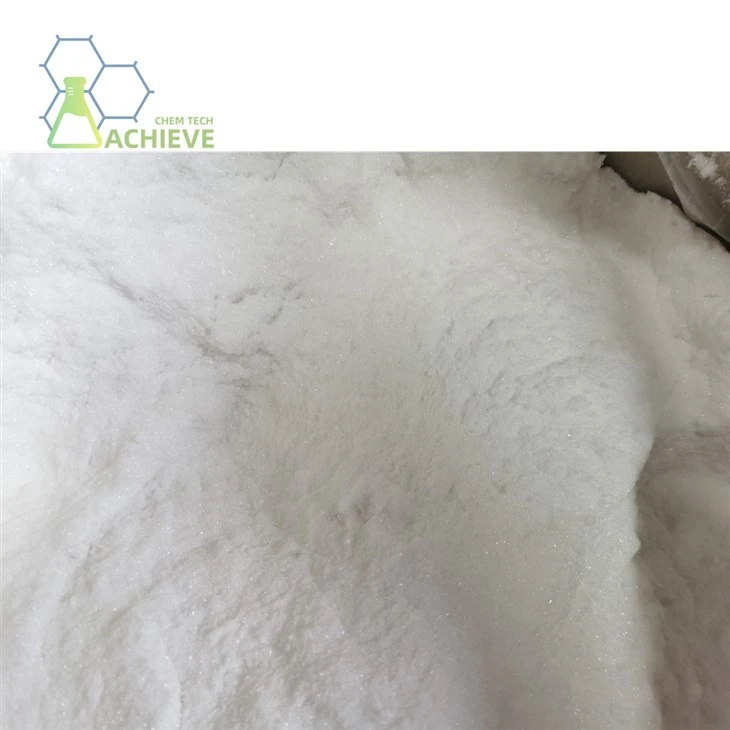


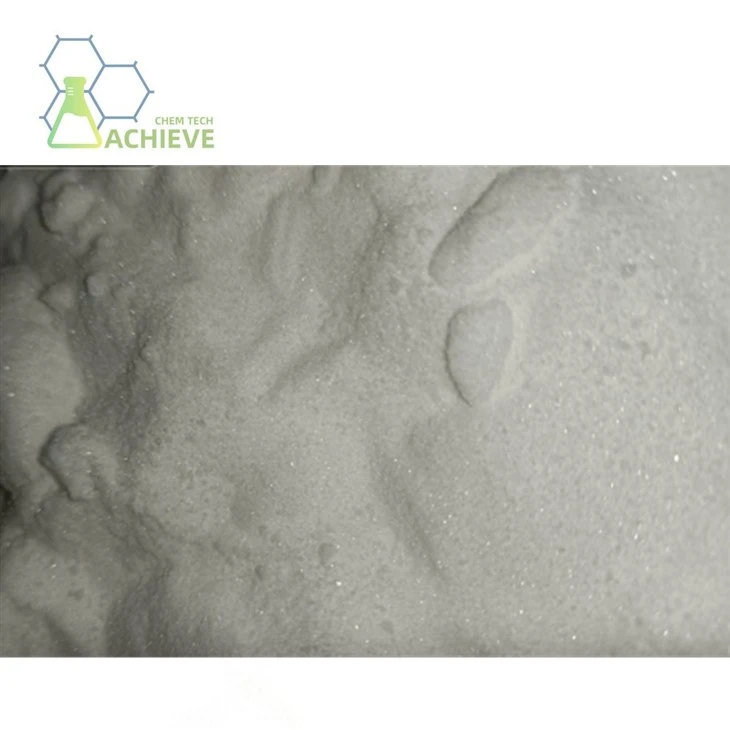
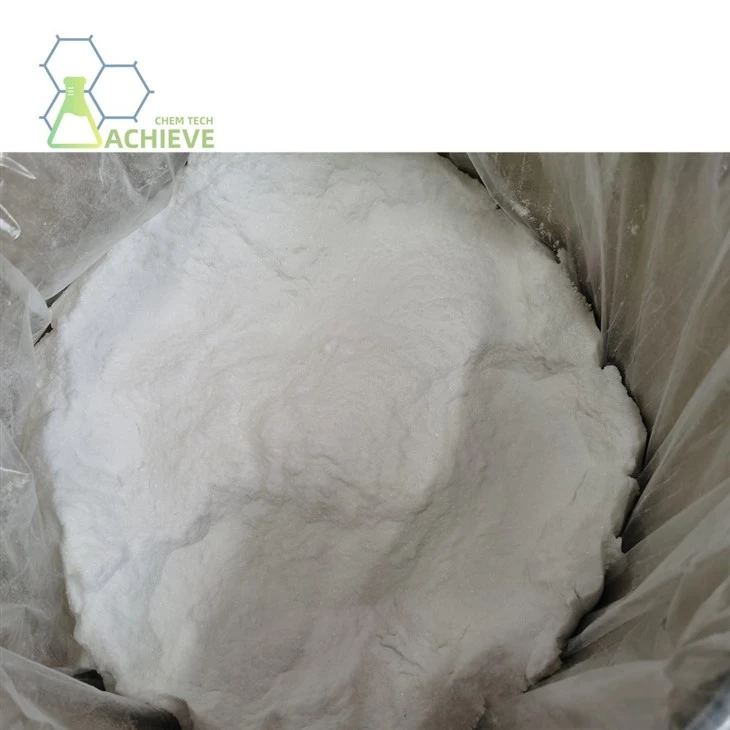

N-(2-Acetamido)iminodiacetic acid appears as a pure white crystalline powder. This white crystalline form not only looks beautiful, but also reflects its high purity and crystallinity. Molecular formula C6H10N2O5, CAS 26239-55-4. In laboratory research, N-(2-acetylamino)-iminodiacetic acid also plays an important role. Due to its unique chemical properties and reactivity, ADA can be used to synthesize various organic compounds and complexes. These compounds and complexes have broad application prospects in fields such as chemistry, biology, and medicine. For example, ADA can form stable complexes with metal ions, which have important application value in catalysis, separation, analysis, and other fields. It can also be used to prepare certain special materials. For example, by mixing ADA with other materials, composite materials with specific functions can be prepared through specific processes. These composite materials have potential application value in fields such as electronics, energy, and environmental protection.
 |
 |
| Chemical Formula | C6H10N2O5 |
| Exact Mass | 190 |
| Molecular Weight | 190 |
| m/z | 190 (100.0%), 191 (6.5%), 192 (1.0%) |
| Elemental Analysis | C, 37.90; H, 5.30; N, 14.73; O, 42.07 |
N-(2-Acetamido)iminodiacetic acid (ADA) is a chemical substance with multiple uses, and its unique chemical structure and properties make it widely used in various fields.

As a biological buffer
Plays an important role in biochemical experiments and is mainly used as a biological buffer. In biochemical research, it is often necessary to add buffering agents in order to maintain the pH stability of the solution. ADA buffer is one of them, which can effectively stabilize the pH value of the solution and prevent experimental errors caused by pH changes. The high activity range of ADA buffer is between 5.8 and 7.4, which makes it widely used in many biochemical experiments. For example, when preparing amphoteric electrolytes and studying myocardial contractile cells, ADA buffer can provide a stable pH environment, ensuring the accuracy and reliability of the experiment.
Desulfurizer
In the production of synthetic ammonia, water gas and semi water gas often contain sulfide impurities, which can affect the quality and yield of synthetic ammonia. It can be used as a desulfurizer to effectively remove sulfides from water gas and semi water gas. By adding ADA, sulfides can be converted into easily removable forms, thereby improving the purity and yield of synthetic ammonia.


Dye intermediates
It can also be used as a dye intermediate. The dye industry is one of the important branches in the chemical industry, and dye intermediates are the key raw materials for dye production. ADA has a unique molecular structure and reactivity, which can react with other compounds to generate dye molecules with new functions. Therefore, ADA has broad application prospects in the dye industry.
Flour gluten enhancer
It can also be used as a flour gluten enhancer. During flour processing, adding ADA can improve the elasticity, toughness, and uniformity of the dough, resulting in larger volume and better organizational structure of the produced flour products. ADA itself has no effect on flour, but when it is added to flour and stirred with water to form a dough, it can quickly release reactive oxygen species, causing the sulfhydryl group (-SH) of amino acids in flour proteins to be oxidized into disulfide bonds (- S-S -), thereby connecting protein chains and forming a three-dimensional network structure. This structure can improve the processing performance of dough and the edible quality of noodle products.


Other applications
In the food industry, especially in the production of noodles, bread, and other flour-based products, N-(2-Acetamido)iminodiacetic acid Azodicarbonamide (ADA) has demonstrated its significant value. For instance, in the manufacturing of instant noodles, the addition of a small amount of ADA can greatly enhance the texture and mouthfeel of the noodles. It helps to create a more elastic and chewy consistency, which consumers prefer. Furthermore, the oxidizing property of ADA promotes the formation of a stable gluten network, ensuring that the noodles do not become overly soft or mushy when cooked.
In the bakery sector, bread manufacturers often use ADA as a dough conditioner to improve the dough's handling properties and final product quality. The ability of ADA to strengthen the gluten structure allows for better gas retention during fermentation and baking, resulting in bread with a finer crumb structure and a softer crust. This not only enhances the visual appeal of the bread but also improves its shelf life by slowing down the staling process.


Moreover, the use of ADA in the production of pasta and other flour-based snacks has also shown promising results. It aids in the development of a firmer texture and a more appealing appearance, making these products more appealing to consumers. The diuretic effect of ADA, which results from its interaction with the -SH groups in proteins, also helps to regulate moisture content within the dough, ensuring optimal baking performance and product quality.
Beyond food applications, ADA has also found use in other industries. In the production of plastics and rubbers, it serves as a blowing agent and cross-linking agent, helping to create lightweight and durable products. Its oxidizing properties make it an effective ingredient in the formulation of adhesives and coatings, enhancing their bond strength and durability.


N-(2-Acetamido)iminodiacetic acid (commonly known as ADA) is an important organic compound with extensive applications in fields such as biochemistry, medicine, and dye industry. The common synthesis methods of N-(2-acetylamino)-iminodiacetic acid typically involve two main steps: first, acetylation of glycine, and then oxidation of acetylation products. The following are specific step instructions.
1. Acetylation of glycine
C2H5NO2+C4H6O3+NaOH/Na2CO3 → C4H7NO3+C2H6O+H2O
Step 1:
Dissolve glycine in an appropriate solvent, such as ethanol or water.
Step 2:
Slowly add acetic anhydride or acetyl chloride to the solution under stirring conditions. In this step, the amount of acetic anhydride or acetyl chloride is usually slightly excessive to ensure complete acetylation of glycine.
Step 3:
Add an alkaline catalyst, such as sodium hydroxide (NaOH) or sodium carbonate (Na ₂ CO ₂), to promote the acetylation reaction. During the reaction process, the temperature of the solution needs to be appropriately controlled to avoid the occurrence of side reactions.
Step 4:
After the reaction is complete, remove the solvent and unreacted acetic anhydride or acetyl chloride by evaporation or extraction. The crude product obtained can be purified by methods such as recrystallization or column chromatography.
2. Oxidation of acetylation products
N-(2-Acetamido)-iminodiacetic acid+C4H6O3+H2O4S → ADA+C2H6O
C4H7NO3-Oxidant → N-(2-Acetamido) - iminodiacetic acid
Step 1:
Dissolve the N-acetylglycine obtained in the previous step in an appropriate solvent, such as water or methanol.
Step 2:
Slowly add oxidant to the solution under stirring conditions. Common oxidants include hydrogen peroxide (H2O2), sodium hypochlorite (NaClO), or potassium permanganate (KMnO4), etc. In this step, the amount of oxidant needs to be strictly controlled to avoid excessive oxidation.
Step 3:
Allow the reaction to proceed at appropriate temperature and reaction time. During the reaction process, continuous stirring is required to ensure a uniform reaction.
Step 4:
After the reaction is complete, remove the solvent and unreacted oxidant through methods such as filtration, evaporation, or extraction. The crude product N-(2-Acetamido) - iminodiacetic acid obtained can be purified by methods such as recrystallization or column chromatography.
Step 5:
In order to obtain N-(2-acetylamino) - iminodiacetic acid (ADA), N-(2-acetylamino)-iminodiacetic acid is esterified with acetic anhydride. Under appropriate temperature and catalyst (such as sulfuric acid), N-(2-acetylamino)-iminoacetic acid undergoes esterification reaction with acetic anhydride to generate ADA.
The synthesis method of N-(2-Acetamido)iminodiacetic acid involves two main steps: acetylation of glycine and oxidation of acetylation products. By strictly controlling reaction conditions, selecting appropriate solvents and catalysts, and using appropriate purification methods, high-purity N-(2-acetylamino)-iminodiacetic acid can be synthesized. This synthesis method is of great significance for studying the properties and applications of ADA, and also provides valuable references for research in related fields.
Product features:

Good biocompatibility:
ADA has good biocompatibility, is non-toxic and non irritating to cells, and can be widely used in the pharmaceutical field, such as sustained-release drug carriers, biological scaffolds, bone repair materials, etc.
Biodegradability:
ADA can undergo hydrolysis reactions under both in vivo and in vitro environmental conditions, ultimately producing non-toxic and harmless amino acids and other small molecule substances, achieving efficient degradation.


Bioabsorbable:
ADA can be effectively absorbed by human tissues and participate in metabolism in the body, avoiding the problems of secondary damage and surgical removal caused by traditional materials.
Excellent mechanical performance:
ADA has high strength and toughness, which can meet the needs of different application scenarios.


Wide application areas:
ADA can be applied in fields such as medicine, biotechnology, agriculture, food processing, etc., and has broad market prospects.

N - (2-acetylamino) iminodiacetic acid (ADA) is an important chemical substance with broad application prospects in multiple fields. The following is a detailed analysis of its development prospects:
With the continuous development of technology, the production process and performance requirements for ADA are also constantly increasing. Through technological innovation and industrial upgrading, the production efficiency and product quality of ADA can be improved, production costs can be reduced, and market competitiveness can be enhanced. For example, using biotransformation to synthesize ADA can improve production efficiency and environmental performance, providing more possibilities for the widespread application of ADA.
Governments around the world have increasingly attached importance to environmental protection and sustainable development, and have introduced a series of policies to support green chemistry and environmental industries. These policies provide strong support for the research and application of environmentally friendly chemicals such as ADA. With the increasing global awareness of environmental protection, green chemistry and the environmental protection industry have become the mainstream trend for future development.
Although ADA has broad market prospects, it also faces fierce market competition and many challenges. In order to maintain a competitive advantage, enterprises need to continuously strengthen their technological research and innovation capabilities, improve product quality and service levels, actively explore markets, and seek new application areas and partners.
Frequently Asked Questions
What is ADA buffer?
+
-
ADA is a zwitterionic buffer used in biochemistry and molecular biology. It is one of the Good buffers developed in the 1960′s to provide buffers in the pH range of 6.15 - 8.35 for wide applicability to biochemical studies.
What is iminodiacetic acid?
+
-
Iminodiacetic acid is an amino dicarboxylic acid that is glycine in which one of the hydrogens attached to the nitrogen is substituted by a carboxymethyl group. It has a role as a chelator. It is a glycine derivative, an amino dicarboxylic acid and a non-proteinogenic alpha-amino acid.
What is ADA specification?
+
-
The document lists over 130 American National Standards and technical reports related to dentistry that were approved by the American Dental Association. It includes standards for dental products, materials, equipment, and informatics.
Hot Tags: n-(2-acetamido)iminodiacetic acid cas 26239-55-4, suppliers, manufacturers, factory, wholesale, buy, price, bulk, for sale, Octreotide Acetate Powder, Pure Creatine Monohydrate Powder CAS 6020 87 7, 18 Glycyrrhetinic Acid CAS 471 53 4, tofacitinib powder, 1 Naphthaleneacetic Acid CAS 86 87 3, Oxytocin powder