






Shaanxi BLOOM Tech Co., Ltd. is one of the most experienced manufacturers and suppliers of penicillin g potassium salt cas 113-98-4 in China. Welcome to wholesale bulk high quality penicillin g potassium salt cas 113-98-4 for sale here from our factory. Good service and reasonable price are available.
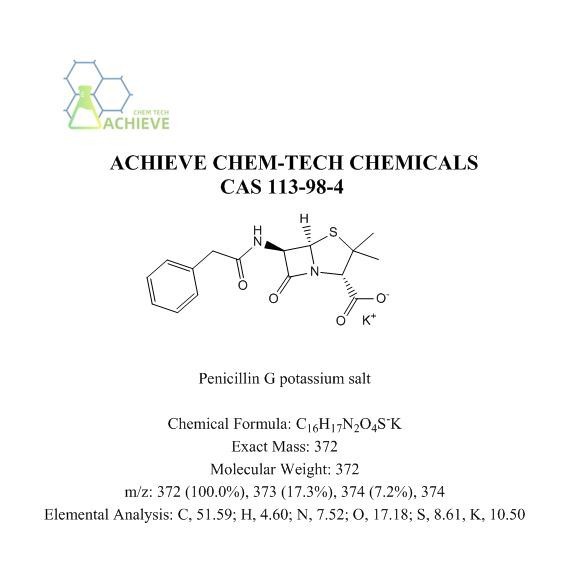
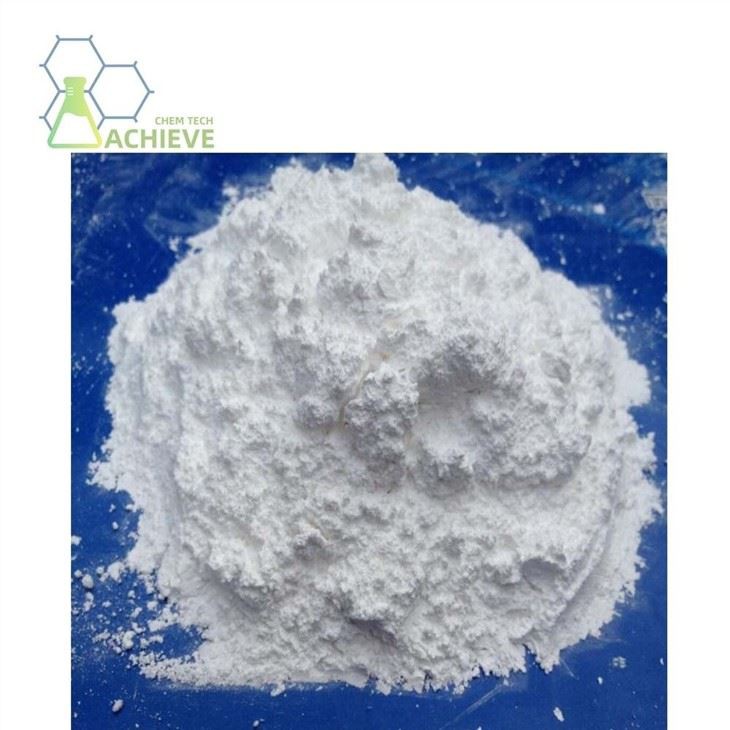
Penicillin G potassium salt is also known as penicillin or penicillin potassium. CAS 113-98-4, Molecular formula C16H17KN2O4S, this product is a white crystalline powder with no odor or a slight special odor, and has hygroscopicity. Easy to dissolve in water, physiological saline, and glucose solution. Water solutions are prone to failure when stored at room temperature and quickly lose their effectiveness when exposed to acids, alkalis, oxidants, etc. Penicillin has good antibacterial activity against Streptococcus pyogenes, Streptococcus pneumoniae, and Staphylococcus aureus that do not produce penicillinase. It has moderate antibacterial activity against Enterococcus. Neisseria gonorrhoeae, Neisseria meningitidis, Corynebacterium diphtheriae, Bacillus anthracis, Actinomyces bovis, Candida albicans, Listeria monocytogenes, Leptospira, and Treponema pallidum are sensitive to this product.
|
Chemical Formula |
C4H6O4Pd |
|
Exact Mass |
224 |
|
Molecular Weight |
225 |
|
m/z |
224 (100.0%), 226 (96.8%), 223 (81.7%), 228 (42.9%), 222 (40.8%), 225 (4.3%), 227 (4.2%), 220 (3.7%), 224 (3.5%), 229 (1.9%), 223 (1.8%) |
|
Elemental Analysis |
C, 21.40; H, 2.69; O, 28.50; Pd, 47.40 |
|
|
|


This product also has certain antibacterial activity against Haemophilus influenzae and Bordetes pertussis. Other Gram negative aerobic or facultative anaerobic bacteria are less sensitive to this product. This product has good antibacterial effects on anaerobic bacteria such as Clostridium difficile, Streptococcus pyogenes, and Bacteroidetes niger, but poor antibacterial effects on fragile Bacteroidetes. Penicilln G potassium salt exerts its bactericidal effect by inhibiting the synthesis of bacterial cell walls.

Penicillin G potassium salt a type of penicillin drug, belonging to the beta lactam class of antibiotics. It achieves bactericidal effect by inhibiting the synthesis of bacterial cell walls. Tabilin has a wide antibacterial spectrum and has good antibacterial effects on various Gram positive bacteria and certain Gram negative bacteria.

Pharmacological mechanism of action
The pharmacological mechanism of penicillin potassium is mainly to inhibit the synthesis of bacterial cell walls. The bacterial cell wall is an important structure for bacteria to maintain their morphology and integrity, mainly composed of peptidoglycans. Tabilin inhibits the activity of transpeptidase, preventing the cross-linking of peptidoglycan and disrupting the synthesis process of bacterial cell walls, leading to the rupture of bacterial cell walls, leakage of internal substances, and ultimately causing bacterial death.
Antibacterial spectrum
Tabilin has a wide antibacterial spectrum and mainly has good antibacterial effects on the following bacteria:
Gram positive bacteria:
Streptococcus genus: including Streptococcus pyogenes, Streptococcus pneumoniae, Streptococcus pyogenes, etc. These bacteria often cause diseases such as pharyngitis, tonsillitis, pneumonia, otitis media, meningitis, endocarditis, etc.
Staphylococcus genus: It has a good antibacterial effect on Staphylococcus that does not produce penicillin enzymes. Staphylococcus is a common pathogen that causes skin infections, pneumonia, sepsis, and other illnesses.


Enterococcus genus: has moderate antibacterial activity against Enterococcus bacteria. Enterococcus can cause urinary tract infections, abdominal infections, etc.
Gram negative bacteria:
Neisseria genus: including Neisseria gonorrhoeae, Neisseria meningitidis, etc. These bacteria often cause diseases such as gonorrhea and meningitis.
Corynebacterium diphtheriae: It is the pathogenic bacterium that causes diphtheria.
Other bacteria such as Bacillus anthracis and Clostridium tetani are also sensitive to penicillin potassium.
Clinical application
Penicillin G potassium salt is mainly used clinically to treat various infections caused by sensitive bacteria, including:
Respiratory infections: such as pharyngitis, tonsillitis, pneumonia, otitis media, etc. These diseases are often caused by bacteria such as streptococcus and staphylococcus, and tabilin has a good antibacterial effect on them.
Skin and soft tissue infections, such as abscesses, cellulitis, etc. These diseases are often caused by bacteria such as Staphylococcus aureus, which are sensitive to tabilin and can be used for treatment.


Urinary and reproductive system infections: such as urinary tract infections, gonorrhea, etc. Gonorrhea is caused by Neisseria gonorrhoeae, which is sensitive to penicillin potassium and can be used to treat gonorrhea.
Neurological infections, such as meningitis. Meningitis is often caused by bacteria such as Neisseria meningitidis. Tabilin is sensitive to it and can be used to treat meningitis.
Other infections: such as anthrax, tetanus, gas gangrene, syphilis, etc. These diseases are caused by specific bacteria or spirochetes, and tabilin is sensitive to them and can be used to treat these diseases.
Tabilin has wide application value in the treatment of various infections caused by sensitive bacteria. The following is a detailed summary of the scope of application of tabilin:
Respiratory infection:
Hemolytic streptococcal infection: Tabilin is the preferred medication for treating pharyngitis, tonsillitis, scarlet fever, erysipelas, cellulitis, and puerperal fever caused by hemolytic streptococci. These diseases usually manifest as symptoms such as sore throat, fever, rash, etc. TTabilin can quickly inhibit bacterial growth, alleviate symptoms, and promote recovery.
Streptococcus pneumoniae infection: Tabilin has a good therapeutic effect on diseases such as pneumonia, otitis media, meningitis, and bacteremia caused by Streptococcus pneumoniae. These diseases are usually more serious and require timely treatment to prevent the condition from worsening.


Skin and soft tissue infections:
Penicillin potassium can be used to treat skin and soft tissue infections caused by sensitive bacteria, such as abscesses, boils, and abscesses. These diseases usually manifest as local redness, pain, fever, and other symptoms. Penicillin potassium can quickly kill bacteria, reduce inflammation, and promote healing.
Other infections:
Penicillin potassium can also be used to treat infectious diseases such as anthrax, tetanus, gas gangrene, syphilis, relapsing fever and diphtheria.
These diseases are usually caused by specific bacteria or spirochetes, and penicillin potassium can quickly kill pathogens, alleviate symptoms, and promote recovery.
Urinary and reproductive system infections:
Penicillin potassium also has good therapeutic effects on certain urinary and reproductive system infections, such as gonorrhea. Gonorrhea is a sexually transmitted disease caused by Neisseria gonorrhoeae. It can rapidly inhibit bacterial growth, alleviate symptoms, and prevent the condition from worsening.


Penicillin G potassium salt as an important salt form of veticillin antibiotics, its synthesis method directly affects the purity, yield, and production efficiency of the drug. At present, the common synthesis methods of veticillin potassium are mainly divided into three categories: natural extraction method, chemical semi synthesis method, and fermentation chemical combination method, each based on different technical principles and process flow.
Natural extraction method: traditional process based on biosynthesis
The natural extraction method uses Aspergillus flavus as the production strain to prepare veticillin potassium through fermentation, filtration, extraction, and salt formation steps. The technical principle is based on microbial metabolism producing veticillin G (the core structure of natural veticillin), which is then converted into potassium salt form through chemical means.
Strain cultivation: Inoculate Aspergillus flavus onto solid culture medium and cultivate at 25 ℃ for 7-10 days to obtain spore culture; Then transfer to the seed tank and cultivate at 27 ℃ for 24-28 hours to prepare the seed solution.
Fermentation production: Transfer the seed liquid into a fermentation tank, add phenylacetic acid precursor and nutrient matrix, and cultivate at 27 ℃ for 7 days. During the fermentation process, glucose, ammonium salts, and other substances need to be added, and the substrate concentration should be maintained through flow control to avoid inhibitory effects.
Filter extraction: After cooling the fermentation broth, filter out the bacterial cells. The filtrate is subjected to multi-stage countercurrent extraction with butyl acetate at pH 2.0-2.5 to obtain a butyl ester extract containing veticillin G.
Salt crystallization: Transfer the butyl ester extract into a pH 7.0-7.2 buffer solution and then transfer back to the butyl ester phase; Add potassium hydroxide solution for neutralization reaction to generate veticillin potassium; Subsequently, veticillin potassium was dissolved in the water component of the reaction solution through vacuum azeotropic distillation dehydration. As the water content decreased, a supersaturated solution was formed, and crystals were eventually precipitated.
Advantages:
Mature technology, low cost, suitable for large-scale production; By using batch fermentation technology with supplementary materials, the yield can be improved and the inhibitory effect of the substrate can be avoided.
Limitations:
Long fermentation cycle (about 7 days), susceptible to bacterial degradation and contamination risks; The extraction process requires a large amount of organic solvents, which poses environmental pressure.
A certain enterprise uses natural extraction method to produce tabilin. By optimizing the fermentation process (such as controlling the dissolved oxygen concentration above 30% saturation and stabilizing the pH value at around 6.5), the fermentation unit is increased to 80000 U/mL, and the crystallization yield reaches 85%.
Chemical semi synthesis method: a modern process centered around 6-APA
The chemical semi synthetic method uses 6-aminopenicillanic acid (6-APA) as an intermediate and introduces different side chains through acylation reactions to prepare various semi synthetic veticillins, including tabilin. The technical principle is based on the chemical modification of veticillin molecular structure, which can selectively synthesize derivatives with specific antibacterial spectra.
6-APA preparation:
Biological enzyme hydrolysis method:
It or V is hydrolyzed using veticillin acylase, and reacted at 40-50 ℃ and pH 8-10 to generate 6-APA and phenylacetic acid or phenoxyacetic acid.
Chemical cracking method:
It is cracked by chemical reagents (such as nitrous acid), but the cost is high and there are many by-products, so its industrial application is limited.
Side chain introduction:
6-APA is condensed with acyl chloride derivatives of side chain acids (such as phenoxyacetic acid) under alkaline conditions to produce veticillin V acid; Then neutralize with potassium hydroxide to form penicillin V potassium.
Crystallization purification:
Further purification of veticillin V potassium by evaporation crystallization or azeotropic distillation crystallization techniques to remove impurities.
Advantages:
It can synthesize various semi synthetic veticillins and expand the antibacterial spectrum; High process flexibility, suitable for developing new antibiotics.
Limitations:
The preparation cost of 6-APA is relatively high and requires reliance on biological enzyme technology or chemical cracking processes; The synthesis steps of side chains are complex and require strict control of reaction conditions.
A certain enterprise produces penicillin V potassium through chemical semi synthesis method, and uses immobilized veticillin acylase to hydrolyze penicillin G. The yield of 6-APA reaches 92%; Subsequently, it was condensed with phenoxyacetic acid chloride, and the total yield of penicillin V potassium increased to 77%.
Fermentation chemical combination method: an innovative path to optimize traditional processes
The fermentation chemical combination method integrates the advantages of natural extraction and chemical semi synthesis methods to produce penicillin G or V through fermentation, which is then chemically modified and converted into tabilin. Its technical principle is based on the improvement of traditional processes, aiming to increase yield and reduce costs.
Fermentation production of penicillin G/V: The fermentation broth of penicillin G or V is prepared by fermenting with Aspergillus flavus.
Chemical modification:
Conversion of penicillin G potassium salt: Reacting veticillin extract with potassium hydroxide to produce tabilin; Purification by azeotropic distillation crystallization.
Penicillin V to potassium salt conversion: It is used as raw material to prepare penicillin V potassium through neutralization, decolorization, crystallization and other steps.
Crystallization optimization: By controlling parameters such as distillation speed, stirring speed, and butanol addition method, the crystallization yield can be improved. For example, a study increased the crystallization yield of penicillin V potassium by 2.12% by adding 0.3% EDTA-Na2 as a stabilizer.
Advantages:
Combining fermentation and chemical advantages to improve the utilization rate of raw materials; Process optimization can significantly improve yield and product quality.
Limitations:
Need to coordinate the connection between fermentation and chemical steps, with high requirements for equipment and operation.
A certain enterprise adopts a fermentation chemical combination method to produce tabilin. By optimizing the fermentation conditions (such as dissolved oxygen control, pH adjustment) and crystallization process (such as segmented stirring, butanol gradient addition), the total yield of tabilin reaches 88%, and the product purity exceeds 99.5%.
Hot Tags: penicillin g potassium salt cas 113-98-4, suppliers, manufacturers, factory, wholesale, buy, price, bulk, for sale, Chlorpropham CAS 101 21 3, epinephrine hcl powder, 99 9 pure lidocaine powder, articaine hydrochloride powder, Uracil Powder CAS 66 22 8, Norepinephrine Tartrate