


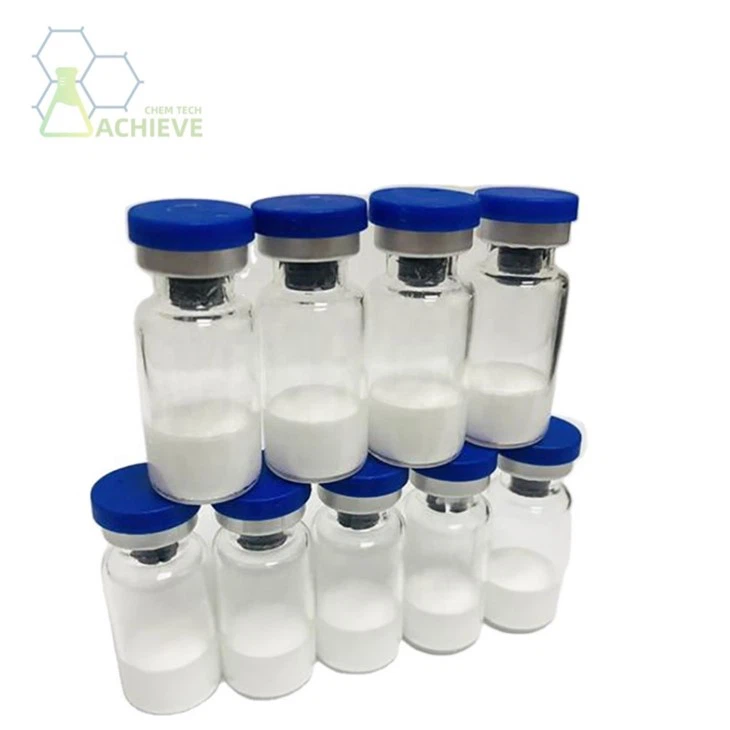

Shaanxi BLOOM Tech Co., Ltd. is one of the most experienced manufacturers and suppliers of proteinase k powder cas 39450-01-6 in China. Welcome to wholesale bulk high quality proteinase k powder cas 39450-01-6 for sale here from our factory. Good service and reasonable price are available.
Proteinase K Powder is a highly efficient, non-specific serine protease widely used in molecular biology and biochemistry, mainly for degrading proteins and removing contaminating proteins from nucleic acid preparations. It is derived from the fungus Engyodontium album (formerly Tritirachium album) and maintains its activity over a wide range of temperatures (20-60°C) and pH (4-12), even when incubated in a solution containing SDS (0.5-1%) or urea (4M) under denaturing conditions.
The enzyme efficiently breaks down a wide range of proteins, including RNase and DNase, by cleaving peptide bonds (preferentially hydrolyzing the carboxyl terminus of aliphatic/aromatic amino acids), and is therefore used for nuclease removal in DNA/RNA extraction to ensure nucleic acid integrity. In addition, it is commonly used in tissue digestion (e.g., paraffin-embedded samples), cell lysis, and proteomics studies.The product is usually supplied in lyophilized form, which is highly stable (-20°C for long term storage) and needs to be dissolved in a buffer (e.g. Tris-HCl, EDTA) before use. Its activity is dependent on Ca²⁺, but chelating agents such as EDTA only partially inhibit enzyme activity. Self-degradation needs to be avoided during handling and heat inactivation at 65°C is recommended. Due to its potent protein hydrolyzing ability, careful protection is required to avoid skin or mucous membrane contact.

Proteinase k powder, also known as Proteinase K or EC 3.4.21.14, is a serine protease isolated and purified from Tritirachium album Limber. Since its first isolation by Wolfgang Ebeling et al. in 1974, proteinase K has been widely used in biochemistry, molecular biology, medicine, and industry due to its high activity and broad substrate specificity.
Applications in Biochemistry and Molecular Biology
In the process of DNA and RNA extraction, the main function of proteinase K is to degrade proteins bound to nucleic acids, allowing DNA or RNA to be free in solution for subsequent extraction and purification. Due to its stability and high activity in denaturing agents such as urea and SDS, proteinase K is commonly used for the isolation of plasmids or genomic DNA and RNA.
proteinase K can inhibit the activity of RNAse and protect RNA from degradation.

1. DNA and RNA extraction
DNA extraction: Protease K can hydrolyze histones that bind to DNA, allowing DNA to dissociate in solution. Subsequently, impurities were removed through various methods such as phenol chloroform extraction, ethanol precipitation, etc., and purified DNA was collected.
RNA extraction: During the RNA extraction process, RNA enzymes are commonly present in the environment, and the sample system itself may also contain RNA enzymes, making RNA highly susceptible to degradation. Adding a small amount of


2. In situ hybridization technology
In in situ hybridization technology, proteinase K is commonly used for pre hybridization processing to digest proteins surrounding the target DNA, increase the chance of probe binding to the target nucleic acid, and enhance the hybridization signal.
However, it should be noted that when the concentration of proteinase K is too high, the digestion time is too long, or the incubation temperature is too high, it can cause damage to the cell structure, leading to the shedding of tissue sections and the disappearance of cell nuclei, thereby affecting the hybridization results. Therefore, in practical applications, it is necessary to strictly control the concentration and treatment time of proteinase K.


3. Virus inactivation and disinfection
Protease K, due to its strong proteolytic activity, can be used for virus inactivation and disinfection. Research has shown that treating pure water and domestic wastewater with a certain concentration of proteinase K can effectively inactivate viruses. Protease K, as a virus inactivating disinfectant, can reduce the potential harm caused by conventional oxidative chemical disinfectants to the human body, and its production and transportation are safe without irreversible environmental pollution.
4. Western blotting and pulse electrophoresis
Protease K has also been widely used in the preparation of chromosome DNA for pulsed electrophoresis, Western blotting, and other experiments. In Western blot experiments, proteinase K can be used to remove non-specific proteins from the sample, improving the specificity and sensitivity of the blot. In pulse electrophoresis experiments, proteinase K can degrade protein impurities in DNA samples and improve electrophoresis efficiency.


5. Protein detection and identification
Proteinase k powder can also be used for the detection and identification of certain proteins. For example, in the study of transmissible spongiform encephalopathy (TSE), proteinase K can be used to digest proteins in brain tissue samples, and to identify the presence of prion proteins by detecting the resistance of pathogenic prions to proteinase K. In addition, proteinase K can also be used for experiments such as determining the localization of enzymes on cell membranes and removing cationic proteins bound to endotoxins (such as lysozyme and ribonuclease A).
Applications in Medicine and Industry
Clinical use: Protease K has certain medicinal value in medicine. For example, treating indigestion with gastric protease, treating bronchitis with acidic protease, treating vasculitis with elastase, etc. In addition, trypsin, chymotrypsin, etc. are also commonly used for the purification of surgical purulent wounds and the treatment of pleural serosal adhesions.


Virus detection and diagnosis: Protease K also has potential applications in virus detection and diagnosis. By digesting the proteins in the virus sample and exposing the virus nucleic acid, it provides convenience for subsequent nucleic acid testing.
Leather industry: Protease K is used in the leather industry for hair removal and softening treatment, which can save time and improve labor hygiene conditions.
Textile industry: Protease K can be used in textile industries such as silk degumming.
Food industry: Protease K can be used in the food industry for meat tenderization, alcohol clarification, etc.


Detergent: Enzyme added laundry detergent is a new product in detergents. Laundry detergent containing alkaline protease can remove blood stains and protein dirt from clothes. But when using it, be careful not to touch the skin to avoid damaging the protein on the surface of the skin and causing allergic reactions such as rash and eczema.

Structural characteristics
The molecular weight of proteinase K is approximately 28900 daltons (28.9 kDa), and there are also literature reports of 29.3 kDa. Its amino acid sequence and three-dimensional spatial structure are highly similar to the subtilisin of the serine protease family, but there are also some unique features.
Disulfide bond structure: Protease K molecules contain disulfide bonds, which increase their stability and enable them to maintain activity over a wide pH range and high temperature conditions.
Ca ² ⁺ binding sites: Proteinase k powder contains two Ca ² ⁺ binding sites, which, although far from the active center, are crucial for maintaining the catalytic activity of the enzyme. Removing Ca ² ⁺ will cause protease K to lose about 80% of its activity, and reintroducing Ca ² ⁺ can only partially restore its activity.
Catalytic triad: Protease K has a catalytic triad Asp-His69-Ser224, which is a key structure for its hydrolytic activity.
Mechanism of action
Protease K can preferentially hydrolyze ester and peptide bonds adjacent to the C-terminus of hydrophobic amino acids, sulfur-containing amino acids, and aromatic amino acids, hydrolyzing proteins into short peptides. Its mechanism of action mainly includes the following steps:
Enzyme substrate binding: After protease K is mixed with the substrate, the substrate binds to the active site of the enzyme, forming an enzyme substrate complex.
Catalytic reaction: Under the action of the active site, the peptide bond of the substrate is hydrolyzed to form a product separated from the enzyme.
The strong degradation effect of protease K makes it a key reagent in various biochemical reactions, especially in DNA and RNA extraction processes. Protease K can effectively degrade proteins bound to nucleic acids, release nucleic acids, and inhibit the activity of nucleases, reducing the degradation of nucleic acids during extraction.

Storage and usage methods
1. Save method
Protease K should be stored in a refrigerator at -20 ℃ to avoid repeated freezing and thawing. If the solution precipitates, it cannot be used again. When preparing proteinase K freeze-dried powder, it is necessary to add a freeze-drying protectant to maintain a high solid content level. However, proteinase K tends to aggregate and form precipitates at concentrations of 20mg/mL or higher, which poses a significant challenge for high solid content freeze-drying.
2. Instructions for use
When using proteinase K, it is necessary to prepare a solution of appropriate concentration according to experimental requirements. Usually, the working concentration of proteinase K is 0.05-0.2mg/mL. In DNA and RNA extraction experiments, extracting a sample requires approximately 0.1mg of proteinase K. To improve the efficiency of nucleic acid extraction, the dosage of proteinase K can be appropriately increased. When using proteinase K for in situ hybridization, Western blotting, and other experiments, it is necessary to strictly control its concentration and processing time to avoid damaging the cell structure.

First Discovery and Naming (1974)
In 1974, the research team led by German scientist Wolfgang Ebeling published a study in the European Journal of Biochemistry, reporting the first isolation and purification of a novel protease from the culture supernatant of the fungus Parengyodontium album (formerly known as Tritirachium album Limber).This fungus can grow on media using keratin as the sole carbon and nitrogen source. Since the enzyme efficiently degrades keratin, it was named Proteinase K, where the letter "K" stands for keratin. The study also preliminarily determined its molecular weight to be approximately 28.9 kDa and identified it as a member of the serine protease family.
Structural and Functional Characterization (1975–1986)
In 1975, Hilz and co-workers discovered that the activity of Proteinase K could be activated by denaturants such as urea and SDS, and that it retained high activity over a broad pH range (4.0–12.5) and at elevated temperatures (50–70 °C). This property made it highly advantageous in nucleic acid extraction.In 1976, research clarified its cleavage specificity: it preferentially hydrolyzes peptide bonds at the carboxyl terminus of aliphatic and aromatic amino acids.In 1986, Jany's team completed the full amino acid sequence determination, confirming that Proteinase K belongs to the subtilisin family and contains the catalytic triad Asp39-His69-Ser224, laying the foundation for structure–function studies.
Powder Formulation and Industrial Application (1980s to Present)
From the 1980s onward, with the rise of molecular biology techniques, Proteinase K became a core reagent for DNA/RNA extraction owing to its efficient removal of protein contaminants from nucleic acid samples.To improve stability and convenience, the purified enzyme was industrially lyophilized into a white powder, commonly referred to as the product, which facilitates storage and accurate weighing.Subsequently, its applications expanded from basic scientific research to clinical diagnostics, forensic identification, and other fields. During the COVID-19 pandemic in 2020, the product experienced a sharp surge in demand due to its critical role in viral nucleic acid extraction and inactivation. This promoted its large-scale production and domestic substitution, establishing it as an essential raw material for the global biotechnology industry.

High Performance Liquid Chromatography (HPLC)
Gel filtration chromatography or reversed-phase chromatography is employed for quantitative purity analysis. Gel filtration chromatography separates components based on molecular weight differences and enables rapid determination of the monomer content. Reversed-phase chromatography separates substances according to hydrophobicity differences with higher sensitivity.The main peak purity is calculated by the peak area normalization method, which is suitable for refined quality control of high-purity Proteinase K powder.


Residual Nucleic Acid Detection
To meet the requirements for molecular biology applications, the activities of DNase, RNase and residual host nucleic acids in the sample must be tested. For DNase/RNase detection, λDNA or RNA is used as the substrate, and degradation is observed by electrophoresis after incubation.Residual nucleic acids can be determined by fluorescent quantitative PCR or ultraviolet spectrophotometry to ensure that the residual level complies with experimental standards and avoids interference with nucleic acid amplification experiments.
FAQ
What is proteinase K used for?
+
-
WHAT ARE THE APPLICATIONS OF PROTEINASE K? Proteinase K is commonly used in molecular biology to digest protein and remove contamination from preparations of nucleic acid. Addition of proteinase K to nucleic acid preparations rapidly inactivates nucleases that might otherwise degrade the DNA or RNA during purification.
What is the form of proteinase K powder?
+
-
A typical working concentration for Proteinase K is 50–100μg/ml. Form: Lyophilized powder. Recommended Reaction Buffer: 50mM Tris-HCl (pH 8.0), 10mM CaCl2.
Is proteinase K toxic?
+
-
Highly toxic by inhalation, Harmful by ingestion, Mutagen. Potential Health Effects: Inhalation: May be harmful if inhaled. Causes respiratory tract irritation.
Hot Tags: proteinase k powder cas 39450-01-6, suppliers, manufacturers, factory, wholesale, buy, price, bulk, for sale, phenacetin crystal, paracetamol powder, Tetrahydrobiopterin BH4 Powder, CAS 1251731 06 2, 1 7 chlorodibenzo b d furan 1 yl 4 6 diphenyl 1 3 5 triazine, CAS 1883265 32 4