






Shaanxi BLOOM Tech Co., Ltd. is one of the most experienced manufacturers and suppliers of pure alpha arbutin powder cas 84380-01-8 in China. Welcome to wholesale bulk high quality pure alpha arbutin powder cas 84380-01-8 for sale here from our factory. Good service and reasonable price are available.
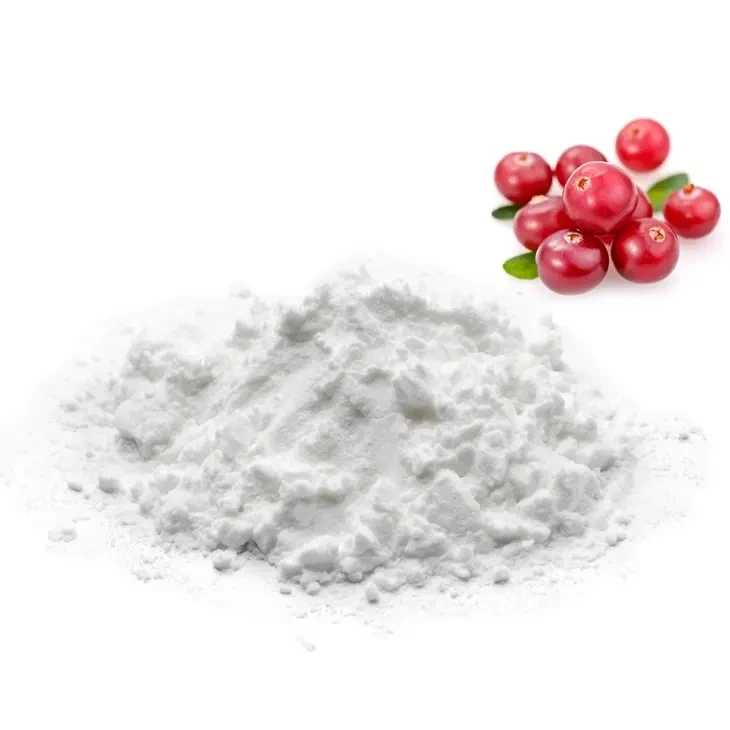
Pure Alpha Arbutin Powder is a highly pure and highly effective cosmetic active ingredient. With an excellent purity of ≥99%, it has become a leading whitening agent in modern skincare formulations. As a white crystalline powder produced through advanced biosynthetic technology, it has excellent solubility in water, making it easy to blend into various formulations such as serums, creams, and lotions. Its core mechanism of action lies in efficiently inhibiting the activity of tyrosinase from the source, thereby significantly reducing the production of melanin. It has definite effects on improving dark skin tones, reducing pigmentation spots, and brightening the overall skin tone. Compared to traditional β-betulinic acid, its efficacy is more outstanding. It can exert excellent whitening effects at extremely low application concentrations while maintaining excellent safety and stability. It is recommended that the addition amount in facial products should not exceed 2%.
|
|
|

|
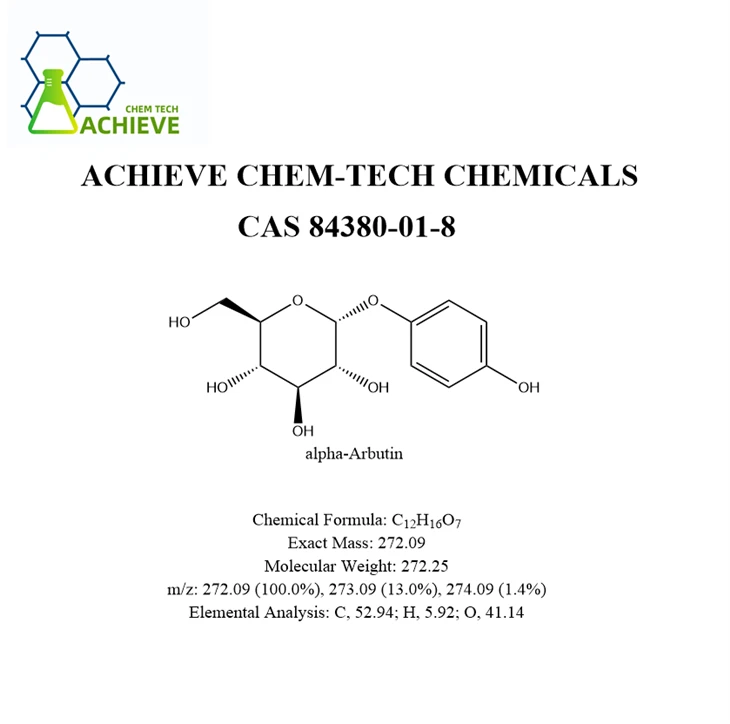
Chemical Formula |
C12H16O7 |
|
Exact Mass |
272.09 |
|
Molecular Weight |
272.25 |
|
m/z |
272.09 (100.0%), 273.09 (13.0%), 274.09 (1.4%) |
|
Elemental Analysis |
C, 52.94; H, 5.92; O, 41.14 |
Extraction Sources & Methods
Alpha-Arbutin does not naturally exist in the environment. Instead, it is synthesized through a specific biochemical process. This compound is produced via the enzymatic glycosylation reaction involving different microorganisms. Specifically, it is formed by combining a molecule of hydroquinone (or benzenediol) with a molecule of glucose, resulting in the creation of a single alpha-Arbutin molecule. This reaction typically occurs in controlled environments where microorganisms are cultivated to produce the enzymes necessary for the glycosylation process.
The primary method for obtaining alpha-Arbutin is through fermentation, a process that aligns with environmental protection standards and exhibits high stereoselectivity. During fermentation:
Microbial Cultivation
Specific microorganisms are carefully cultivated in optimal conditions to encourage the production of the enzymes required for the glycosylation reaction.
Glycosylation Reaction
Under controlled conditions, the cultivated microorganisms catalyze the reaction between hydroquinone and glucose, leading to the formation of alpha-Arbutin.
Purification
After the reaction, the resulting mixture undergoes purification processes to isolate and concentrate the alpha-Arbutin, ensuring high purity levels suitable for various applications.

Pure Alpha Arbutin Powder, with its exceptional skin-whitening properties and safety profile, has become a popular ingredient in cosmetics and medical products. It effectively inhibits the formation of melanin by suppressing tyrosinase activity, contributing to even skin tone and reduced pigmentation.
Experimental Research Cases
Inhibition of Tyrosinase Activity

Various in vitro studies have been extensively conducted to assess the capacity of alpha-arbutin to inhibit tyrosinase activity, which is a critical enzyme in the melanin biosynthesis pathway. These studies are fundamental in understanding the mechanism of action of alpha-arbutin and its potential applications in skincare products for skin whitening and hyperpigmentation reduction.
In these studies, alpha-arbutin is typically incubated with tyrosinase under controlled conditions. Researchers then monitor the subsequent changes in melanin production or the inhibition of melanogenesis. This can be achieved through various methods, such as spectrophotometric assays to measure the reduction in melanin content or the inhibition of tyrosinase activity directly.


The results of these in vitro studies have consistently shown that alpha-arbutin effectively inhibits tyrosinase activity, leading to a reduction in melanin synthesis. This inhibitory effect is dose-dependent, meaning that higher concentrations of alpha-arbutin generally result in greater inhibition of tyrosinase activity and melanin production.
However, it's important to note that in vitro results may not always directly translate to in vivo efficacy. Therefore, clinical studies are also necessary to evaluate the effectiveness and safety of alpha-arbutin in real-world applications. Nevertheless, the in vitro studies provide valuable insights into the mechanism of action of alpha-arbutin and its potential as a skin whitening agent.


Alpha-arbutin has been shown to effectively inhibit tyrosinase activity at relatively low concentrations. For instance, one study reported an IC50 value of 611 μM for alpha-arbutin in inhibiting melanogenesis in mouse B16-4A5 cells. This indicates that alpha-arbutin can significantly reduce melanin production even at moderate concentrations.
Effects on Melanin Synthesis
- To further understand the impact of alpha-arbutin on skin pigmentation, researchers have investigated its effects on melanin synthesis in various cell lines and skin models.
- Alpha-arbutin has been found to significantly inhibit melanin synthesis in a dose-dependent manner. In non-cytotoxic concentrations, it reduces tyrosinase activity and subsequently decreases melanin production. These effects have been observed in both two-dimensional cell cultures and three-dimensional skin models, suggesting that alpha-arbutin can effectively lighten skin tone when applied topically.
Safety
- Safety studies typically involve assessing the cytotoxicity of alpha-arbutin in various cell lines. These studies are conducted to evaluate the potential for alpha-arbutin to cause harm to cells at different concentrations. The results of these studies can help determine the safe concentration range for alpha-arbutin in skincare products.
- In general, alpha-arbutin has been shown to be relatively non-toxic to cells at concentrations commonly used in skincare products. However, it's important to note that the cytotoxicity of alpha-arbutin can vary depending on the cell type and specific experimental conditions used. Therefore, it's crucial to conduct comprehensive safety studies to ensure the safety of alpha-arbutin in skincare products.
Stability
Stability studies are also essential for evaluating the suitability of alpha-arbutin for use in skincare products. These studies involve evaluating the stability of alpha-arbutin under different conditions, such as temperature, pH, and light exposure. The results of these studies can help determine the shelf life of skincare products containing alpha-arbutin and ensure that they remain effective over time.


Alpha-arbutin has been shown to be stable under certain conditions, but it can degrade under others. For example, studies have shown that alpha-arbutin remains stable up to a temperature of 100°C and performs stably under neutral pH conditions. However, it becomes unstable under extreme pH conditions (e.g., pH 1 or 13) and can also be affected by light and ultraviolet irradiation.
To ensure the stability of alpha-arbutin in skincare products, manufacturers often incorporate stabilizers and use packaging that protects against light exposure. Additionally, they conduct stability testing over extended periods to ensure that the products remain effective and safe for consumer use.

Comparative Studies with Beta-Arbutin
- Some studies have compared the chemical and enzymatic stability, as well as the biological activities, of alpha-arbutin and beta-arbutin.
- These studies have found that alpha-arbutin often exhibits higher stability and more potent tyrosinase inhibitory activity compared to beta-arbutin. This makes alpha-arbutin a more attractive option for use in skincare products aimed at achieving skin whitening effects.

Pure Alpha Arbutin Powder is a highly potent and naturally derived skincare ingredient renowned for its exceptional brightening and lightening properties. Derived primarily from the bearberry plant, this fine white powder works wonders in addressing hyperpigmentation, age spots, melasma, and uneven skin tone.
Alpha arbutin works by inhibiting the activity of tyrosinase, an enzyme crucial for the production of melanin, the pigment that gives skin its color. By effectively reducing melanin formation, it helps to fade existing dark spots and prevent new ones from forming, leading to a more even and radiant complexion.
Unlike some other skin lightening agents, it is gentle and suitable for long-term use, causing minimal irritation or sensitization. Its purity ensures maximum efficacy with minimal side effects, making it a favorite among dermatologists and skincare enthusiasts alike.
Formulated into various skincare products such as serums, creams, and lotions, it easily penetrates the skin's surface to deliver its benefits deep within the dermal layers. Regular use can result in noticeably brighter, clearer, and more uniform skin tone.
Moreover, its stability and compatibility with other ingredients make it a versatile addition to advanced skincare formulations. Whether you're looking to address specific discoloration issues or maintain an even, radiant complexion, pure alpha arbutin powder stands out as a reliable and effective choice. Its natural origin and proven efficacy make it an indispensable component in the quest for flawless, luminous skin.

Pure alpha arbutin powder is a glycosylated hydroquinone derivative and belongs to the hydroquinone glycoside class of compounds. Its molecular formula is C₁₂H₁₆O₇, with a molecular weight of 272.25. The core structure is formed by the connection of the ortho-hydroxyphenyl group and the α-D-xylopyranosyl group through a glycosidic bond. This diastereoisomer (with the spatial orientation of the glycosidic bond opposite to that of β-arbutin) endows it with unique chemical properties, making it excellent in whitening, anti-inflammatory, and stability aspects.
|
|
|
|
|


Physical State and Solubility
Pure α-arbutin powder appears as white to off-white crystalline powder, odorless or with a slight special smell. Its melting point range is 202-208℃. It may decompose at 185-195℃ and needs to be sealed and stored in a low-temperature (2-8℃) and dry environment to prevent moisture absorption and caking. In terms of solubility, α-arbutin is easily soluble in water (151g/L at 20℃), slightly soluble in ethanol, and insoluble in non-polar solvents such as ether and chloroform. This polar solubility property makes it easy to blend with other components in cosmetic formulations, especially showing better stability under warm conditions (<70℃) or cold preparation conditions.
Acidity, Alkalinity and Stability
The pH value of α-arbutin is typically controlled within the range of 5.0 - 7.0, presenting a weakly acidic to neutral property. The phenolic hydroxyl groups and glucose residues in its molecule confer its amphiphilic characteristics, but the acidic nature predominates. Stability studies have shown that α-arbutin performs best within the pH range of 4 - 6.5, suitable for various formulations such as aqueous solutions, emulsions, ointments, gels, membranes, and aerosols. Compared to β-arbutin, α-arbutin exhibits superior stability to light and heat. For instance, in an accelerated test at 40°C, the rate of its content decline is significantly lower than that of the β-type, thanks to the steric hindrance effect of the α-configured glycosidic bond, reducing the risks of hydrolysis and oxidation.
Reactivity and Whitening Mechanism
The core reactivity of α-arbutin stems from its potent inhibition of tyrosinase. Tyrosinase is a key enzyme in melanin synthesis. α-arbutin functions through the following mechanisms:
Direct inhibition: Binding to the active site of tyrosinase, blocking the process of catalyzing the conversion of L-tyrosine to dopaquinone.
Down-regulation of gene expression: Inhibiting the expression of microtubule-associated protein (MITF), reducing the synthesis of tyrosinase and related enzymes.
Signal pathway regulation: Activating the intracellular cAMP signaling pathway, inhibiting the activity of MITF, thereby blocking the melanin synthesis pathway.
Studies have shown that α-arbutin at a concentration of 0.5% can significantly inhibit the activity of tyrosinase, and its effect is 10%-30% better than that of β-arbutin at a concentration of 1%. Moreover, α-arbutin does not produce toxic metabolites such as hydroquinone, avoiding the risks of cytotoxicity, irritation and sensitization.
Safety and Compatibility
α-Betulinic acid is classified as a safe ingredient by the International Cosmetic Ingredient Nomenclature (INCI). The European Commission on Consumer Safety Sciences (SCCS) recommends a safe concentration of 2% for α-betulinic acid in facial creams and 0.5% in body lotions. It has strong compatibility and can be used in combination with most cosmetic ingredients (such as vitamin C, nicotinamide), but it should not be combined with preservatives like methylparaben to prevent the formation of hydroquinone derivatives. Additionally, α-betulinic acid is only for external use and oral administration may cause adverse reactions.
Application Areas and Extended Functions
Apart from whitening, the chemical properties of α-betulinic acid make it outstanding in the following areas:
Anti-inflammatory repair: Inhibits the release of inflammatory factors and accelerates skin repair after ultraviolet burns.
Antioxidant: Removes free radicals and delays skin aging.
Burn and scald treatment: As a new drug component, it quickly relieves pain, reduces inflammation, promotes healing and leaves no scars.
Food coloring: As a natural pigment, it is used for coloring beverages, candies and other foods.
FAQ
1. What does alpha arbutin powder do?
Anti-aging: Alpha Arbutin has antioxidant properties that can counteract the damage caused by free radicals, delaying the skin aging process and reducing the appearance of fine lines and wrinkles.
2. How to use alpha arbutin powder on face?
Pure arbutin comes in a powdered form. It must not be applied directly into the skin, as it is highly potent and may cause a sharp burning sensation. Although it is safe to mix alpha-arbutin into other creams and lotions, it should never be mixed directly. Dissolve it in water first, and make a uniform mixture.
3. What are the side effects of alpha arbutin?
Skin irritation: Alpha Arbutin is generally considered to be a gentle ingredient, but some individuals may experience skin irritation, redness, or itching. This is more likely to occur if you have sensitive skin or if you are using a product with a high concentration of Alpha Arbutin.
Hot Tags: pure alpha arbutin powder cas 84380-01-8, suppliers, manufacturers, factory, wholesale, buy, price, bulk, for sale, pure Sevoflurane, Isoflurane Solution, Hydrocortisone Powder CAS 50 23 7, 3 Dimethylaminophenol, Sapropterin Hydrochloride, Pure Dexmedetomidine CAS 113775 47 6