





Shaanxi BLOOM Tech Co., Ltd. is one of the most experienced manufacturers and suppliers of pyrroloquinoline quinone disodium salt cas 122628-50-6 in China. Welcome to wholesale bulk high quality pyrroloquinoline quinone disodium salt cas 122628-50-6 for sale here from our factory. Good service and reasonable price are available.
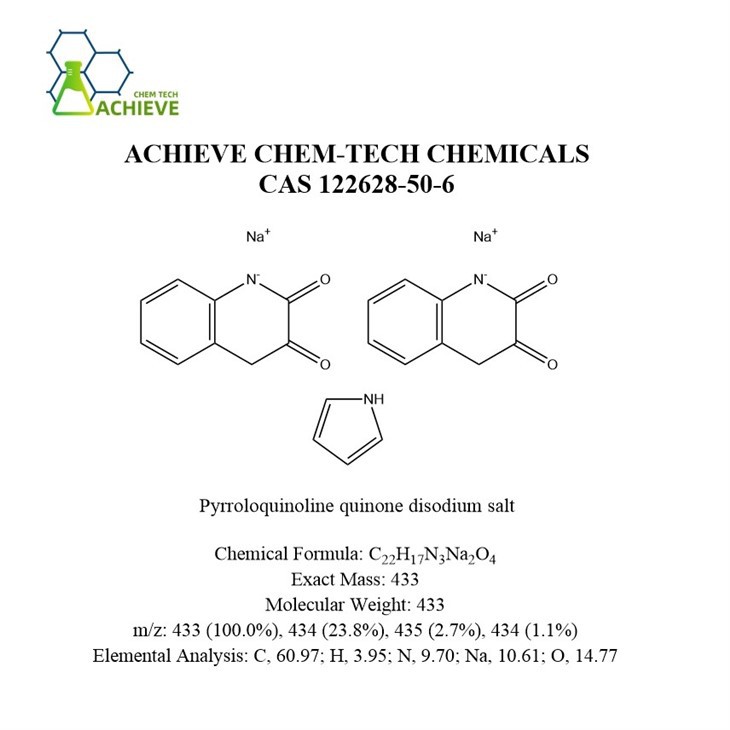
Pyrroloquinoline quinone disodium salt (PQQ-2Na) is an organic molecule with unique biological activity, with the molecular formula C14H4N2Na2O8 and CAS 122628-50-6. It appears as a reddish brown solid at room temperature and pressure and belongs to the water-soluble B group vitamin compounds. This substance was initially isolated from the culture of methylotrophic bacteria and is known as the "fourteenth vitamin" in the world medical community due to its physiological functions similar to vitamins.
PQQ-2Na is widely present in prokaryotes, plants, and mammals, such as fermented soybeans, green peppers, kiwifruit, parsley, tea, papaya, spinach, celery, and breast milk. It is an essential nutrient for mammals and plays an important role in maintaining immune function. As a new cofactor, PQQ-2Na plays a role in transferring electrons, protons, and chemical groups in enzymatic reactions, while also stimulating microbial growth, plant pollen germination, and plant growth.
Its core biological activities include antioxidant and free radical scavenging abilities far exceeding vitamin C, which can alleviate oxidative stress damage; Promote mitochondrial development by activating cellular signaling pathways to increase mitochondrial count and improve energy metabolism; Immune regulation, enhancing immune cell activity, and improving antibody production ability; Neuroprotection, induction of nerve growth factor synthesis, promotion of nerve fiber regeneration, has potential preventive and therapeutic effects on neurological diseases such as Parkinson's disease.
PQQ-2Na has been recognized by major regulatory agencies worldwide and approved as a new food ingredient for use in beverages, dietary supplements, and other fields. Due to its multi-target and multi system biological activity, it has shown broad application prospects in the fields of functional food, medicine, and agriculture.

|
|
|


|
Chemical Formula |
C22H17N3Na2O4 |
|
Exact Mass |
433 |
|
Molecular Weight |
433 |
|
m/z |
433 (100.0%), 434 (23.8%), 435 (2.7%), 434 (1.1%) |
|
Elemental Analysis |
C, 60.97; H, 3.95; N, 9.70; Na, 10.61; O, 14.77 |

Pyrroloquinoline quinone disodium salt (PQQ-2Na) is an organic molecule with unique biological activity. Since its discovery in 1979, it has attracted continuous attention in the fields of nutrition, pharmacology, and functional foods due to its wide physiological functions and potential applications. As a new cofactor substance, PQQ has vitamin like properties and is widely present in prokaryotes, plants, and mammals, especially in fermented foods, green leafy vegetables, fruits, and breast milk.
1. Mitochondrial biogenesis and cellular energy enhancement
PQQ significantly increases the number of mitochondria and optimizes their function by activating key signaling pathways involved in intracellular mitochondrial biogenesis, such as PGC-1 α. Research has shown that daily intake of 20mg PQQ can increase the mitochondrial density of human fibroblasts by more than 30%, while enhancing ATP synthesis efficiency. This effect is prominent in the field of sports nutrition, for example, when combined with coenzyme Q10, the level of coenzyme Q10 in mitochondria can double, effectively relieving muscle fatigue after exercise.

2. Metabolic disease intervention
For patients with metabolic syndrome, PQQ improves mitochondrial fatty acid oxidation ability and reduces serum cholesterol and triglyceride levels. Clinical trials have shown that supplementing PQQ (20mg/day) for 12 consecutive weeks can reduce fasting blood glucose by 12% and increase insulin sensitivity by 18% in patients. The mechanism may be related to PQQ activating the AMPK pathway and inhibiting the expression of genes related to fat synthesis.
1. Prevention and treatment of neurodegenerative diseases
PQQ has potential intervention effects on Alzheimer's disease and Parkinson's disease. Animal experiments have shown that PQQ can inhibit β - amyloid protein aggregation, reduce neuronal apoptosis, and promote synaptic regeneration by upregulating BDNF (brain-derived neurotrophic factor) expression. A cognitive function study conducted in the elderly population in Japan showed that after supplementing with 20mg PQQ daily for 12 weeks, participants' memory test scores increased by 23% and brain blood flow increased by 15%.


2. Improvement in sleep quality
PQQ alleviates anxiety related insomnia by regulating the hypothalamic pituitary adrenal axis (HPA axis) and reducing cortisol levels (average decrease of 28%). When combined with GABA, the time to fall asleep is reduced by 40% and the duration of deep sleep is increased by 35%. This synergistic effect is significant in high-pressure occupations such as pilots, and can effectively enhance the alertness of the next day's work.
1. Free radical scavenging and oxidative stress inhibition
The antioxidant capacity of pyrroloquinoline quinone disodium salt is 5000 times that of vitamin C, and it can work through a dual mechanism: directly neutralizing reactive oxygen species (ROS) such as superoxide anions and hydroxyl radicals; Activate the Nrf2 pathway and upregulate the expression of endogenous antioxidant enzymes such as SOD and GSH Px. In the alcoholic liver injury model, PQQ can reduce the MDA (malondialdehyde) content in liver tissue by 62% and increase GSH levels by 45%.


2. Organ protective effect
Liver: PQQ significantly reduces the levels of serum ALT and AST in rats with alcoholic liver injury by inhibiting the NF - κ B pathway, reducing the release of inflammatory factors such as TNF - α and IL-6.
Cardiovascular: PQQ can inhibit the oxidative modification of LDL and reduce the formation of atherosclerotic plaque. Clinical studies have shown that after 6 months of supplementing PQQ in patients with coronary heart disease, the intima-media thickness (IMT) of the carotid artery decreases by 0.12mm.
Kidney: In the model of diabetes nephropathy, PQQ reduces glomerular cell apoptosis and urinary protein excretion rate by 53% by activating PI3K/Akt pathway.
1. Activation of immune cells
PQQ can enhance NK cell activity (by 32%), promote B cell differentiation into plasma cells, and increase antibody production by 2.1 times. In the elderly population, PQQ supplementation can increase influenza vaccine antibody titers by 40% and reduce infection rates by 35%.
2. Antitumor mechanism
PQQ exerts anti-cancer effects through multiple pathways:
Direct killing: induces mitochondrial membrane potential collapse in tumor cells, triggering caspase-3 dependent apoptosis pathway.


Metabolic inhibition: Blocking glucose uptake in tumor cells and inhibiting the Warburg effect.
Angiogenesis inhibition: Downregulation of VEGF expression reduces tumor angiogenesis.
In the transplanted tumor model of breast cancer, PQQ combined with chemotherapy can reduce the tumor volume by 68%, which is significantly better than the single drug treatment group.
1. Brain health products
A brain boosting supplement formulated with PQQ, PS (phosphatidylserine), and extract of Portulaca oleracea can significantly increase working memory capacity (by 27%) and attention duration (by 34%). This type of product has a market share of 18% in Japan.
2. Anti aging combination
The oral beauty capsule combined with PQQ and NMN (nicotinamide mononucleotide) activates the SIRT1 longevity gene, increasing skin collagen synthesis by 41% and reducing wrinkle depth by 29%.


Clinical tests have shown that after 8 weeks of continuous use, the skin elasticity index of the subjects increased by 38%.
3. Sports nutrition supplements
The PQQ Coenzyme Q10 complex developed for athletes can increase maximum oxygen uptake (VO2max) by 12% and delay the onset of exercise-induced fatigue by 23%. After application in triathletes, the average completion time was reduced by 7.2 minutes.
1. Skin anti-aging
Pyrroloquinoline quinone disodium salt promotes type I collagen synthesis by activating the TGF - β/Smad pathway in fibroblasts. Essence containing 0.1% PQQ can increase skin firmness by 31% and reduce pigmentation by 42%.
2. Animal health promotion
As a feed additive, PQQ can increase the breast muscle percentage of broiler chickens by 8% and reduce the feed to meat ratio by 0.15; After adding it to sow feed, the number of piglets born increased by 1.2 per litter, and the weaning weight of piglets increased by 0.8kg.


Development history of pyrroloquinoline quinone sodium salt
The discovery of pyrroloquinoline quinone sodium salt (PQQ) originated from scientists' in-depth study of microbial metabolic mechanisms. In the 1950s, Norwegian chemist J.G. Hauge discovered a special enzyme in Pseudomonas fluorescens culture that significantly promotes metabolism while studying it. However, limited by the technological conditions at the time, he was unable to determine the chemical composition of the enzyme. This puzzle was not solved until 1979 when Japanese chemist Ryu Sakamoto used an innovative extraction method to isolate PQQ from black vinegar (a fermented food) in Amami Oshima, Japan, and confirmed its molecular structure for the first time using X-ray crystal diffraction technology. This breakthrough discovery reveals that PQQ is a tricarboxylic acid quinone compound belonging to the oxidoreductase cofactor family, laying the foundation for subsequent research.
In the 1980s, Ryuo Sakamoto's team discovered through a series of experiments that PQQ could not only participate in redox reactions as an enzyme cofactor, but also stimulate microbial growth and metabolism, and even promote cellular energy production. This discovery has attracted widespread attention from the scientific community. In 1989, PQQ was recognized as an essential nutrient for living organisms, marking its transition from a simple enzyme cofactor to a functional nutrient. In 2003, Japanese scientists confirmed through experiments that experimental mice lacking PQQ would exhibit phenomena such as low reproductive ability and impaired immunity, and speculated that it would have similar effects on humans. Based on this, PQQ has been officially classified as the "14th vitamin" and has become a new member of the water-soluble B vitamin family. This recognition not only enhances the scientific status of PQQ, but also provides a theoretical basis for its application in the fields of functional food and medicine.
With the gradual revelation of PQQ's biological functions, its safety and potential applications have been recognized by global regulatory agencies. In 2012, Health Canada approved PQQ as a natural health food; In 2016, the US FDA granted it GRAS (Generally Recognized as Safe) certification, allowing it to be used in foods such as energy drinks; Japan classifies it as a non pharmaceutical food ingredient; The EU approves it as a dietary supplement or natural health food. In 2022, the Chinese National Health Commission approved PQQ as a new food ingredient, marking its official entry into the Chinese market. At the same time, PQQ's production technology has also made breakthroughs. The chemical synthesis method dominates due to its easy availability of raw materials and low cost, but it also faces environmental pollution issues; Although microbial fermentation is environmentally friendly and safe, it faces challenges such as difficulty in obtaining strains and high isolation costs. The parallel development of two technologies has promoted the industrialization process of PQQ.
In recent years, the application scope of pyrroloquinoline quinone disodium salt has expanded from the initial nutritional supplements to multiple fields such as medicine, cosmetics, and feed. In the medical field, its antioxidant, neuroprotective and metabolic regulation functions are used to develop auxiliary treatment products for hypertension, heart disease, neurodegenerative diseases and diabetes; In the cosmetics industry, PQQ's anti-aging properties make it a core ingredient in oral beauty and skincare products; In the agricultural field, plant fertilizers containing PQQ can significantly increase crop yields, while as feed additives, they can enhance animal antioxidant capacity and improve breeding efficiency. In addition, the combination of PQQ with coenzyme Q10, NMN and other substances further amplifies its health benefits, meeting consumers' demand for efficient nutritional supplements.
Frequently Asked Questions
What are the benefits of PQQ disodium salt?
+
-
PQQ (pyrroloquinoline quinone) disodium salt is a highly bioavailable compound that acts as a potent antioxidant and cellular energizer. It is primarily recognized for stimulating the growth of new mitochondria, supporting cognitive function, enhancing cardiovascular health, and reducing inflammation and muscle fatigue.
Is PQQ hard on the liver?
+
-
As a powerful antioxidant, PQQ may potentiate to prevent the loss of secretory cells in the liver caused by BKO-induced oxidative stress (45). In the current study, knowledge on PQQ was further extended, and treatment with a PQQ-supplementary diet was demonstrated to provide robust protection to the liver.
Is PQQ safe for kidneys?
+
-
Protecting Against Kidney Damage
Researchers are constantly searching for ways to defend kidney function and avoid progression to kidney failure. The results of studies in animal models indicate that PQQ use helps protect the kidneys, even in the face of diabetes and elevated blood glucose levels.
Hot Tags: pyrroloquinoline quinone disodium salt cas 122628-50-6, suppliers, manufacturers, factory, wholesale, buy, price, bulk, for sale, Cyproheptadine hydrochloride sesquihydrate, colchicine powder, tetramisole hcl powder, Daidzin, epinephrine powder, 1 3 dimethylpentylamine hydrochloride