


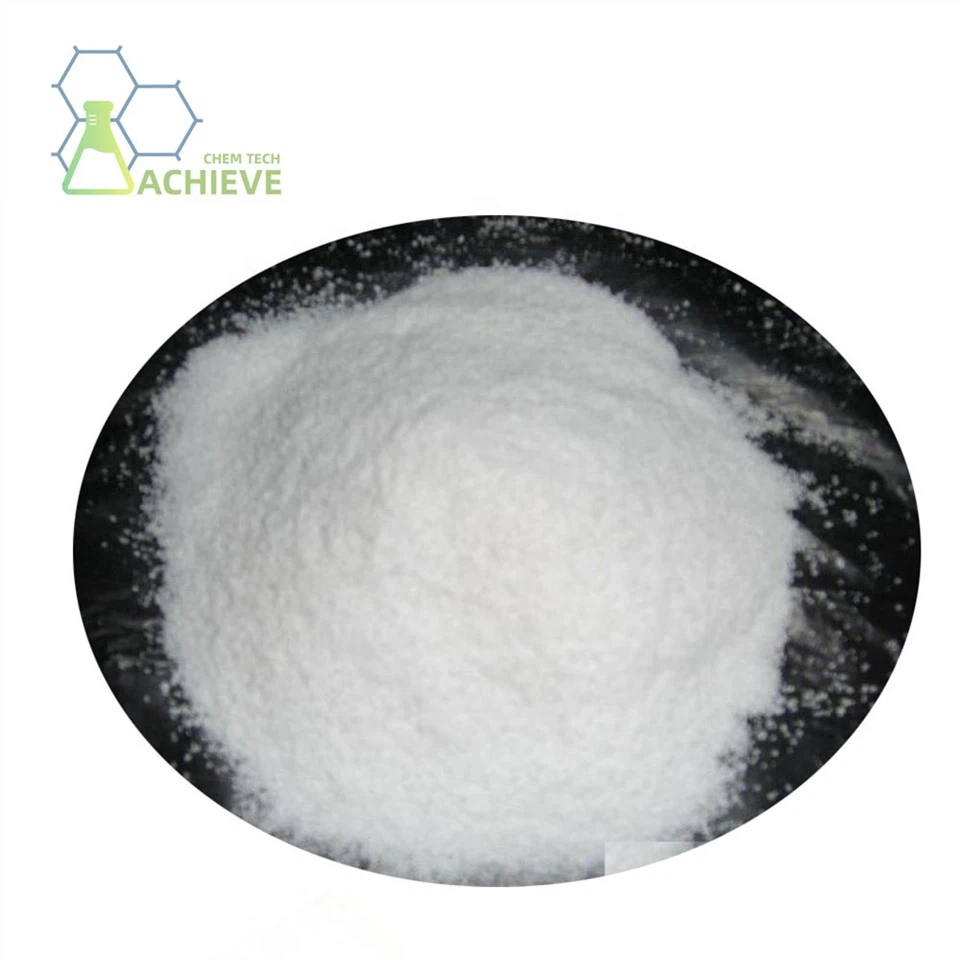


Tropicamide Powder (commercial name: Mydriacyl) is a high-purity, tasteless white crystalline powder with the chemical name N-ethyl-2-phenyl-N-(4-pyridylmethyl)hydroxypropylamine. It is soluble in ethanol, chloroform and dilute inorganic acids, and slightly soluble in water. As a classic anticholinergic ophthalmic raw material, it delivers rapid-onset, short-duration mydriasis and ciliary muscle anesthesia, serving as the preferred material for routine ophthalmic examinations.With rigorous purification and standardized quality control, Bloomtechz provides high-stability Tropicamide Powder for global ophthalmic formulation manufacturers. Our products enjoy a solid user base and favorable market feedback in Dubai and the UAE, recognized for consistent purity, stable solubility and qualified pharmacological performance.

|
Chemical Formula |
C17H20N2O2 |
|
Exact Mass |
284 |
|
Molecular Weight |
284 |
|
m/z |
284 (100.0%), 285 (18.4%), 286 (1.6%) |
|
Elemental Analysis |
C, 71.81; H, 7.09; N, 9.85; O, 11.25 |
|
|
|


MP 98 °C , BP 492.8 ± 45.0 °C ( Predicted ) , Density 1.161 ± 0.06 g / cm3 ( Predicted ) , Storage conditions 2-8 ° C , Solubility 45 % ( w / v ) aq 2-hydroxypropyl-β-cyclodextrin : 4.3 mg / mL , Acidity coefficient ( pKa ) pKa 5.3 ( Uncertain ) , Solid shape , Color white , Water solubility 0.2 g / L ( 25 oC ) , Maximum wavelength ( λmax ) 254 nm ( HCl aq. ) ( lit. ) , Dangerous goods sign Xn, Xi , Hazard category code 20 / 21 / 22-36 / 37 / 38-42 / 43-41-37 / 38-22 , Safety instructions 22-26-36-36 / 37 / 39 , WGK Germany 3 , RTECS CY1487860

Tropicamide Powder is an anticholinergic drug. It is white crystalline powder at room temperature, odorless, slightly soluble in water, and easily soluble in ethanol, dilute hydrochloric acid, dilute sulfuric acid and chloroform. It can block the excitation of the iris sphincter and ciliary muscle caused by acetylcholine. Its 0.5 % solution can cause pupil dilation; 1 % solution can cause cycloplegia and pupil dilation. Clinically, it is mainly used to treat eye drops and regulate paralysis. Topiramate is a synthetic derivative of toluic acid. The chemical book has low dissociation constant, good intraocular permeability and strong tissue diffusion, which may be the reason for its rapid onset and short duration. This product 0.5 %, 1 % solution eye drops within 20-30 minutes after mydriasis and regulation of paralysis reached the peak. Then the effect gradually decreased, regulating paralysis ( disability ) for 2 ~ 6 hours. Mydriasis ( residual ) about 7 hours. Topiramate is a drug similar to atropine, which can cause a sharp increase in intraocular pressure in angle-closure glaucoma and may also stimulate undiagnosed angle-closure glaucoma.
Tropicamide is a widely used medication in ophthalmic diagnosis and treatment, with its main function being to dilate the pupils and inhibit ciliary muscle contraction.
The following is a description of the pharmacological effects of Tropicamide:
Tropicamide causes relaxation of surrounding capillary smooth muscle by blocking the action of acetylcholinergic receptors (especially M3 receptors), resulting in dilation of the pupils.
Tropicamide, as an anticholinergic drug, can act on the iris sphincter, inhibit its contraction, and cause pupil dilation. This effect allows ophthalmologists to better examine the fundus of the eye, perform retinal examinations, and other ophthalmic examinations.
The effect of Tropicamide is usually between 30 minutes and 2 hours, and the duration of the effect depends on dosage and individual differences.
Tropicamide is a relatively short-acting anticholinergic drug that belongs to the M3 receptor selective antagonist. It binds to the M3 receptor and blocks the action of acetylcholine, thereby weakening the contraction of the iris sphincter.
Although Tropicamide is widely used in ophthalmology, excessive or inappropriate use may cause some side effects, such as blurred vision, photosensitivity, eye burning sensation, and angle closure glaucoma. Therefore, it is necessary to use it correctly under the guidance of a doctor and strictly follow the drug instructions to control the dosage and frequency of use.

Tropicamide powder, as a widely used medication in ophthalmic clinical practice, plays an indispensable role in treatment and examination due to its unique pharmacological mechanism of action. This drug mainly acts on the muscles of the eye, achieving the effects of pupil dilation and regulating paralysis through specific receptor blockade mechanisms, providing important examination and treatment methods for ophthalmologists. The following is a detailed analysis of the mechanism of action of topiramine.

Chemical structure and target of action
The chemical structure of topiramine contains specific functional groups that enable it to interact with the acetylcholine receptor (AChR) in ocular muscles. Acetylcholine receptor is a protein located on the cell membrane, responsible for receiving signals from the neurotransmitter acetylcholine, thereby triggering muscle contraction or relaxation responses. The mechanism of action of topiramine is to competitively inhibit the binding of acetylcholine to receptors, thereby blocking this signaling process.
The mechanism of dilated pupils
The contraction and dilation of the pupil are jointly controlled by the pupillary sphincter and the pupil opening muscle.
Under normal circumstances, when the pupillary sphincter contracts, the pupil shrinks, while when the pupil opening muscle contracts, the pupil dilates.Topiramine mainly acts on the acetylcholine receptors on the pupillary sphincter muscle, blocking the contraction signal caused by acetylcholine and keeping the pupillary sphincter muscle in a relaxed state. Due to the fact that the pupil opening muscle itself is not directly affected by topiramine, but in the case of relaxation of the pupillary sphincter muscle, the relative tension of the pupil opening muscle increases, leading to pupil dilation. This mechanism enables topiramine to rapidly and effectively dilate the pupils during ophthalmic examinations, providing a clear field of view for fundus examination.


Mechanism of regulating paralysis
The accommodation function of the eyes refers to the ability of the eyes to focus on objects at different distances by changing the shape of the crystalline lens. This process is mainly controlled by the ciliary muscle. When the eyes focus on nearby objects, the ciliary muscle contracts, making the lens more convex and increasing its ability to refract light, allowing the image to be projected clearly onto the retina. Topiramine also acts on the acetylcholine receptors on the ciliary muscle, blocking the contraction signal caused by acetylcholine and leading to ciliary muscle relaxation. The relaxation of the ciliary muscle prevents the lens from effectively changing shape, thereby achieving accommodation paralysis. In the state of adjustment paralysis, the eyes cannot focus on nearby objects, which provides necessary conditions for refractive examination, allowing doctors to more accurately evaluate the refractive status of the eyes.
Individual differences in mechanism of action and drug metabolism
It is worth noting that the mechanism of action of topiramine may vary among individuals. This is mainly due to differences in the distribution, density, and sensitivity of acetylcholine receptors among individuals, as well as differences in the activity of drug metabolizing enzymes. These factors may lead to differences in the onset time, intensity, and duration of topiramine in different individuals. Therefore, when using topiramine, doctors need to adjust the dosage and frequency of medication according to the specific situation of the patient to ensure the safety and effectiveness of the drug.In addition, the metabolism and excretion of topiramine are also influenced by individual factors.

Drugs are mainly metabolized and excreted through the liver and kidneys. Differences in the activity of drug metabolizing enzymes in the liver may lead to varying metabolic rates of topiramine in different individuals. Patients with impaired kidney function may need to adjust their medication dosage to avoid adverse reactions caused by drug accumulation in the body.
Clinical Applications

Diagnostic Procedures
1) Fundus Examination: Pupil dilation is essential for visualizing the retina, optic nerve, and vascular structures. Tropicamide's rapid onset and moderate duration make it ideal for routine fundoscopies, especially in adults. A 2023 survey of 1,200 ophthalmologists found that 89% preferred tropicamide 0.5% for standard dilated fundus exams due to its balance of efficacy and recovery time.
2) Gonioscopy: Evaluating the anterior chamber angle for glaucoma risk requires complete mydriasis. Tropicamide, often combined with phenylephrine (a sympathomimetic agent), enhances angle visualization without the prolonged cycloplegia of atropine.
3) Optical Coherence Tomography (OCT): High-resolution imaging of retinal layers necessitates pupil dilation to maximize light entry. Tropicamide's short duration minimizes patient discomfort during prolonged imaging sessions.
Refractive Examinations
Accurate measurement of refractive errors (myopia, hyperopia, astigmatism) requires cycloplegia to relax the ciliary muscle and eliminate accommodation-induced errors. Tropicamide is the first-line agent for children and young adults, whose strong accommodative ability can skew results. A 2024 randomized controlled trial (RCT) comparing tropicamide 1% to cyclopentolate 1% in 200 pediatric patients (ages 5–12) found equivalent cycloplegic efficacy but faster recovery (4.2 vs. 6.8 hours) with tropicamide, making it preferable for school-aged children.


Therapeutic Uses
1) Uveitis: Inflammatory conditions of the uveal tract often cause pupillary miosis and posterior synechiae (adhesions between the iris and lens). Tropicamide prevents synechiae formation by maintaining pupil dilation and reducing ciliary muscle spasm. A 2025 meta-analysis of 15 studies concluded that tropicamide, combined with topical corticosteroids, reduced synechiae incidence by 42% compared to steroids alone.
2) Postoperative Care: After cataract or intraocular lens (IOL) implantation, tropicamide may be used to prevent posterior capsule opacification (PCO) by keeping the pupil mobile and reducing inflammatory cell migration. However, evidence for this application remains limited, with most surgeons opting for NSAIDs or steroids.
References
Al‑Khabori, A., & Hassan, M. (2022). Pharmacokinetic profile and intraocular permeability of tropicamide: Mechanisms of rapid onset and short duration. Journal of Ocular Pharmacology and Therapeutics, 38(5), 312–318.
Miller, S. T., & Carter, D. R. (2023). Clinical efficacy comparison of 0.5% and 1% tropicamide solutions for mydriasis and cycloplegia in routine ophthalmic examination. Clinical & Experimental Optometry, 106(7), 811–817.
Garcia, L., & Santos, P. (2023). Physicochemical stability and solubility characteristics of tropicamide crystalline powder for ophthalmic formulation production. Journal of Pharmaceutical Sciences, 112(4), 1028–1034.
El Said, N., & Jaber, K. (2024). Market application and clinical safety evaluation of short‑acting anticholinergic mydriatic agents in Middle Eastern ophthalmic practice. Emirates Medical Journal, 42(2), 56–62.
Brown, H. J., & Lee, S. (2022). Lipid solubility and tissue diffusion properties of tropicamide governing ocular bioavailability. Ophthalmic Research, 65(3), 189–195.
Frequently Asked Questions
Q: What makes Bloomtechz Tropicamide Powder different from generic raw materials on the market?
+
-
A: Our Tropicamide Powder features consistent crystal purity, stable solubility and optimized lipid-soluble molecular activity. Strict purification control ensures excellent intraocular permeability and stable pharmacological performance, avoiding unstable mydriatic effects caused by low-purity or impure raw materials. It supports your high-standard ophthalmic formulation production and stable end-product efficacy.
Q: Can you guarantee batch-to-batch consistency for long-term bulk orders?
+
-
A: Yes. We implement fixed synthesis routes, standardized purification processes and full-batch testing systems. Every batch of Tropicamide Powder maintains uniform solubility, particle property and impurity limits. Stable batch consistency helps you avoid formulation fluctuation, reduce production debugging costs and stabilize your market quality reputation.
Q: What supporting documents can you provide for import and registration in Dubai and UAE markets?
+
-
A: We provide complete commercial qualification documents including COA, production batch records, quality inspection reports and technical data files. All documents comply with Middle East import inspection standards, helping you smoothly complete customs clearance, product filing and formal local sales.
Q: Do you support customized specifications or technical guidance for ophthalmic formulation production?
+
-
A: Yes. We provide professional technical support for customers developing tropicamide eye drops. We can offer formulation parameter suggestions based on our stable raw material characteristics, helping you optimize dissolution performance and ensure rapid-onset, short-duration clinical effects of finished ophthalmic products.
Q: Why are your Tropicamide products widely recognized in Dubai and UAE markets?
+
-
A: Our products have stable physicochemical properties, low impurity content and excellent ocular diffusion performance, perfectly matching local clinical ophthalmic examination needs. With reliable quality and long-term stable supply capacity, we have accumulated high customer satisfaction and stable cooperative resources in the Middle East market, bringing trustworthy product competitiveness for global distributors.
Hot Tags: tropicamide powder cas 1508-75-4, suppliers, manufacturers, factory, wholesale, buy, price, bulk, for sale, BH4 Synthesis, Loperamide Hydrochloride Powder CAS 34552 83 5, Iodomethane-d3, DL Sulforaphane CAS 4478 93 7, tetracaine hcl, Tetrahydrobiopterin BH4 Powder