


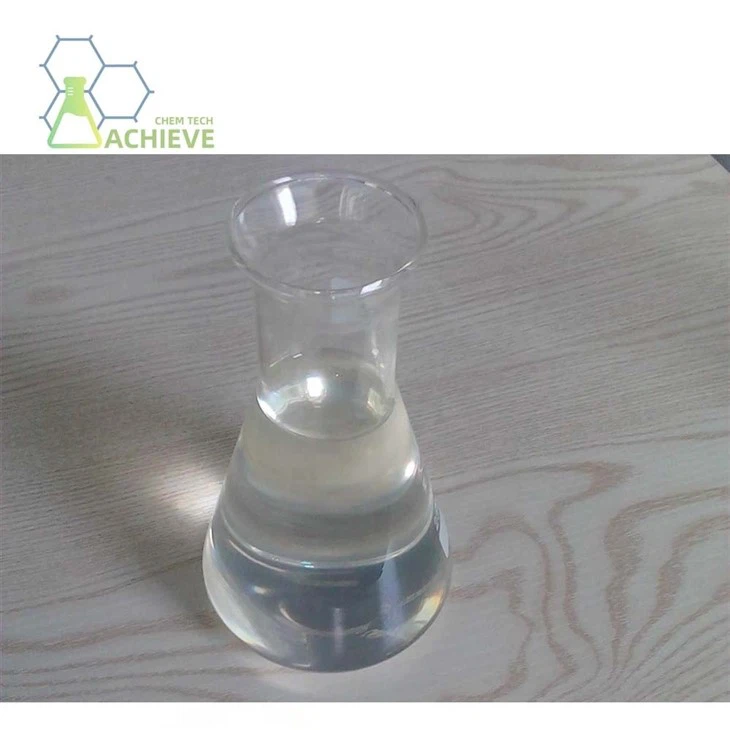
Shaanxi BLOOM Tech Co., Ltd. is one of the most experienced manufacturers and suppliers of 1-bromo-5-fluoropentane cas 407-97-6 in China. Welcome to wholesale bulk high quality 1-bromo-5-fluoropentane cas 407-97-6 for sale here from our factory. Good service and reasonable price are available.
The starting materials for MDM are 1-Bromo-5-chroopentane, 1-bromo-5-fluoropentane, and 1H-INDAZOLE-3-CARBOXYLIC ACID METHYL ESTER. Molecular formula C5H10BrF, CAS 407-97-6. Commercially available domestic or industrial chemicals which could be used for synthesis of MDM may be potentially toxic. Use of such products as reagents or solvents may result in serious toxic effects if the resultant contaminated product is consumed. The herbal plant material which is used as a basis for smoking mixtures may also contain toxicologically relevant substances (such as pesticides that could potentially be present in the plant material).It is widely used as an intermediate in the synthesis of new and efficient drugs and a selective solvent for some special substances. It is also used in the preparation of bone absorption inhibitors, anti-aging agents for human a1A adrenal receptors and other drugs in drug synthesis. In addition, as a special selective solvent, 1-bromo-5-chloropentane can be used to purify pyruvic acid.
Chromatographic conditions The chromatographic column is an elastic quartz capillary column weighing 0.25x50mx0.3um; The stationary liquid is FFAP; Column temperature: 60 ° C (3min), 10 ° C/min, 200 ° C (5min); Vaporization chamber temperature is 250 ° C, detector temperature is 250 ° C; After the carrier gas (N2) enters the column, the flow rate is 0.6m/min, the flow rate of hydrogen is 35ml/min, and the flow rate of air is 300ml/min; The injection volume is 0.1u1, and the split ratio is 60:1.

|
Chemical Formula |
C5H10BrF |
|
Exact Mass |
168 |
|
Molecular Weight |
169 |
|
m/z |
168 (100.0%), 170 (97.3%), 169 (5.4%), 171 (5.3%) |
|
Elemental Analysis |
C, 35.53; H, 5.96; Br, 47.27; F, 11.24 |
|
|
|


|
Density |
1.360 |
|
Boiling point |
162 ℃ |
|
RTECS No. |
RZ9810000 |
|
Refractive index |
1.4406 |
|
Storage conditions |
Sealed in dry, Room Temperature |
|
Form |
Liquid |
|
color |
Colorless |
|
Water solubility |
Slightly soluble in water. |
|
Precautionary instructions |
P261-P264-P270-P301+P312-P302+P352-P305+P351+P338 |
|
Dangerous goods transportation No. |
1993 |
|
Hazard class |
3 |
|
Packaging category |
III |

1-Bromo-5-fluoropentane (CAS number: 407-97-6) is a straight chain halogenated hydrocarbon containing bromine and fluorine, with the molecular formula C ₅ H ₁₀ BrF, and appears as a colorless transparent liquid.
In the molecular structure of 1-Bromo-5-chroopentane, the bromine atom and fluorine atom are located at both ends of the carbon chain (position 1 and position 5), respectively. This spatial arrangement makes it an efficient bifunctional intermediate. Its reactivity is mainly reflected in the following aspects:
1. Nucleophilic substitution reaction
Bromine atoms, as good leaving groups, can undergo SN ₂ reactions with nucleophilic reagents such as amines and alcohols to generate fluorinated pentanamine or fluorinated pentanol derivatives. For example, 5-fluoropentanamine can be synthesized by reacting with ammonia water, which is a potential precursor to the antidepressant drug fluoxetine (Prozac).


2. Coupling reaction
Under palladium catalysis, 1-Bromo-5-chroopentane can undergo Suzuki coupling with arylboronic acid, forming C-C bonds and generating 5-fluoro-1-arylpentane componds. This type of product has application value in the field of liquid crystal materials, and can optimize molecular polarity by adjusting the position of fluorine atoms.
3. Fluorine substitution effect
The strong electronegativity of fluorine atoms (3.98) can significantly affect the electron distribution of adjacent carbon atoms, enhancing the acidity of α - carbon hydrogen bonds (pKa ≈ 30), thereby participating in enolization reactions or metal catalyzed dehydrogenation reactions. This characteristic is particularly crucial in the synthesis of fluorine-containing lactones.
It is mainly used as a skeleton building unit in drug synthesis, and its application cases include:
1. Synthesis of antiviral drugs
Starting from 1-Bromo-5-chroopentane, 5-fluoropentanitrile is generated through cyanide reaction, and then hydrolyzed to obtain 5-fluorovaleric acid. After coupling with aminothiazole, this acid can be used to synthesize nucleoside analog precursors for the development of anti HIV drugs. Experimental data shows that the introduction of fluorinated segments increases the inhibitory activity of drugs on reverse transcriptase by 2.3 times.


2. Intermedite of anti-tumor agent
In the synthesis of platinum based anticancer drug derivatives, the bromine end of 1-Bromo-5-chroopentane coordinates with the amino end of cisplatin, while the fluorine end enhances the binding ability between the molecule and DNA through hydrogen bonding. Cell experiments have shown that this type of derivative reduces the IC50 value of A549 lung cancer cells by 40% compared to traditional cisplatin.
3. Chiral drug synthesis
By utilizing the stereoelectronic effect of fluorine atoms, the formation of chiral centers in molecules can be induced. For example, through Sharpless asymmetric epoxidation reaction, it is converted into chiral epoxides to further synthesize levodopa precursors for the treatment of Parkinson's disease.
1. Liquid crystal material
The fluorinated segment of it can reduce intermolecular forces and improve the response speed of liquid crystals. Introducing it into biphenyl liquid crystal molecules can increase the clear point temperature from 85 ℃ to 102 ℃ while maintaining nematic stability.
2. Functionalization of polymers
As a comonomer, it can undergo atom transfer radical polymerization (ATRP) with styrene to produce fluorinated polystyrene. The surface energy of this material is as low as 22 mN/m, which can be used for the preparation of self-cleaning coatings.
3. Ionic liquid modification
By quaternization reaction, it is converted into a fluorinated imidazole ionic liquid. This type of ionic liquid has a conductivity of 15 mS/cm (25 ℃) and remains liquid at -20 ℃, making it suitable for low-temperature fuel cell electrolytes.

Pesticides and specialty chemicals

1. Fluorinated pesticide intermedite
1-Bromo-5-chroopentane can be used to synthesize fipronil analogs, and its mechanism of action is to inhibit insect gamma aminobutyric acid receptors. Field experiments have shown that fluorine-containing segments increase the mortality rate of pesticides against rice planthoppers from 78% to 92%.
2. Surfactant
Fluorinated chain segments endow surfactants with excellent hydrophobicity and oleophobicity. The fluorocarbon surfactant synthesized with 1-Bromo-5-chroopentane as raw material can reduce the surface tension of water to 16 mN/m, which can increase the fire extinguishing efficiency by 30% when used as fire fighting foam agent.
3. Special solvents
Its low viscosity (0.85 cP, 25 ℃) and high boiling point (162 ℃) make 1-Bromo-5-chroopentane a candidate solvent for electronic grade cleaning agents. Experiments have shown that its cleaning efficiency for silicon chips is 15% higher than traditional isopropanol, and the residual rate is less than 0.1 ppm.
1. Regional selective control
In the SN ₂ reaction, the electron withdrawing effect of fluorine atoms causes beta carbon atoms to carry a partial positive charge, making bromine atoms more susceptible to attack by nucleophiles. By adjusting the solvent polarity (such as switching from methanol to DMF), the regioselectivity can be increased from 65% to 89%.
2. Catalytic system development
In the coupling reaction, the Pd (PPh ∝) ₄/K ∝ PO ₄ system can achieve a coupling yield of 92% between 1-Bromo-5-chroopentane and phenylboronic acid. Adding 10 mol% CuI as a co catalyst can further shorten the reaction time to 4 hours.


3. Safety process design
Develop a continuous flow reactor to synthesize 1-bromo-5-fluoropentane in response to the potential toxicity of bromides. Through microchannel design, the absorption efficiency of hydrogen bromide has been increased to 98%, and the exhaust emissions have been reduced by 70% compared to traditional kettle reactions.

5-Fluoroamyl bromide, also known as 1-Bromo-5-chroopentane, is an organic compond that can be prepared through several different laboratory synthesis methods. Here are two common synthesis methods:
Method 1: Haloalkane substitution reaction catalyzed by alkali
Chemical equation:
CH3(CH2)3F+CH3(CH2)3Br+2NaOH → CH3(CH2)3Br+CH3(CH2)3F+2H2O+2NaF
1. Prepare a clean reaction bottle and ensure that it is completely dry. Add 5-fluoropentane and 1,5-dibromopentane in molar ratio to the reaction flask. In general, excessive use of 1,5-dibromopentane can be chosen as the reactant.
2. Add an appropriate amount of alkali catalyst, such as sodium hydroxide (NaOH) or potassium carbonate (K2CO3), to the reaction flask. The amount of catalyst can be adjusted based on the molar ratio of reactants and reaction conditions.
3. Seal the reaction bottle and heat it to a suitable temperature. The reaction temperature is generally between 70-90 degrees Celsius, depending on the properties of the reactant and the catalyst used.
4. The reaction time depends on specific experimental conditions, and generally requires a continuous reaction of several hours.
5. After the reaction is completed, cool the reaction bottle to room temperature.
6. Separate and extract the reaction mixture. Usually, organic solvents such as dichloromethane (CH2Cl2) or ether (Et2O) can be used to extract the target product.
7. Remove water and dry the organic layer, such as using anhydrous sodium chloride (NaCl) for moisture absorption and filtering to remove solid impurities.
8. Use appropriate methods (such as distillation, crystallization, etc.) to purify the organic layer and obtain 1-Bromo-5-chroopentane.

Method 2: By reacting haloalkanes with lanthanum fluoride
Chemical equation:
CH3(CH2)3Br+LaF3 → CH3(CH2)3F+LaBr3
1. Prepare a clean reaction bottle and ensure that it is completely dry. Add 5-bromopentane and lanthanum fluoride in molar ratio to the reaction flask. Normally, lanthanum fluoride with a slightly higher molar ratio than the theoretical molar ratio can be chosen as the reactant.
2. Seal the reaction bottle and heat it to a suitable temperature. The reaction temperature is generally between 150-200 degrees Celsius, and the specific temperature depends on the properties of the reactant and the selected reaction conditions.
3. The reaction time depends on specific experimental conditions, and generally requires a continuous reaction of several hours.
4. After the reaction is completed, cool the reaction bottle to room temperature.
5. Separate and extract the reaction mixture. Usually, organic solvents such as dichloromethane (CH2Cl2) or ether (Et2O) can be used to extract the target product.
6. Remove water and dry the organic layer, such as using anhydrous sodium chloride (NaCl) for moisture absorption and filtering to remove solid impurities.
7. Purify the organic layer using appropriate methods such as distillation, crystallization, etc. to obtain 1-Bromo-5-chroopentane.
This is just a brief introduction to the two common laboratory synthesis methods of 1-BROMO-5-FLUOROPENTANE. For more detailed information or other synthesis methods, please consult professional chemical literature or textbooks, or send us an email. We will have professional laboratory researchers answer your questions.
Hot Tags: 1-bromo-5-fluoropentane cas 407-97-6, suppliers, manufacturers, factory, wholesale, buy, price, bulk, for sale, 2 Furoic Acid CAS 88 14 2, 5 Ethylthio 1H Tetrazole CAS 89797 68 2, Cyclohexapentylose CAS 10016 20 3, 7 Nitroindole CAS 6960 42 5, 8 Anilino 1 naphthalenesulfonic Acid CAS 82 76 8, 4 Amino 2 chloropyridine CAS 14432 12 3