




Shaanxi BLOOM Tech Co., Ltd. is one of the most experienced manufacturers and suppliers of cyanuric chloride 98% cas 108-77-0 in China. Welcome to wholesale bulk high quality cyanuric chloride 98% cas 108-77-0 for sale here from our factory. Good service and reasonable price are available.
Cyanuric Chloride 98% is an organic compound with the molecular formula of C3Cl3N3 and white crystalline powder. It has a pungent smell. Also known as melamine chloride and cyanuric chloride, they are unstable in the air, volatile and irritating. Soluble in benzene, hot ether, acetone, acetonitrile, dioxane, ethanol, acetic acid, chloroform, carbon tetrachloride and other organic solvents, slightly soluble in water, easy to decompose into cyanuric acid when meeting water and alkali, and release hydrogen chloride gas. It is an important fine chemical product with a wide range of uses. It is an intermediate of the pesticide industry, a raw material for the manufacture of reactive dyes, and can be used as various auxiliaries for the production of organic industry, such as fluorescent whitening agent, textile anti shrinking agent, surfactant, etc. It is a rubber accelerator and one of the raw materials used for the manufacture of explosives in the national defense industry, as well as a raw material used for the synthesis of drugs in the pharmaceutical and pesticide industries.

|
Chemical Formula |
C3Cl3N3 |
|
Exact Mass |
183 |
|
Molecular Weight |
184 |
|
m/z |
183 (100.0%), 185 (95.9%), 187 (30.6%), 189 (3.3%), 184 (3.2%), 186 (3.1%), 184 (1.1%), 186 (1.1%) |
|
Elemental Analysis |
C, 19.54; Cl, 57.67; N, 22.79 |


Cyanuric Chloride 98% (CAS number: 108-77-0, chemical formula C ∝ N ∝ Cl ∝) is a white crystalline solid with a melting point of 145-148 ℃ and a boiling point of 194 ℃ (decomposition). It has three highly active chlorine atoms, making it an important multifunctional intermediate in organic synthesis. The triazine ring (1,3,5-triazine) in its molecular structure endows it with unique chemical stability and reactivity, which can be functionalized through stepwise substitution reactions.
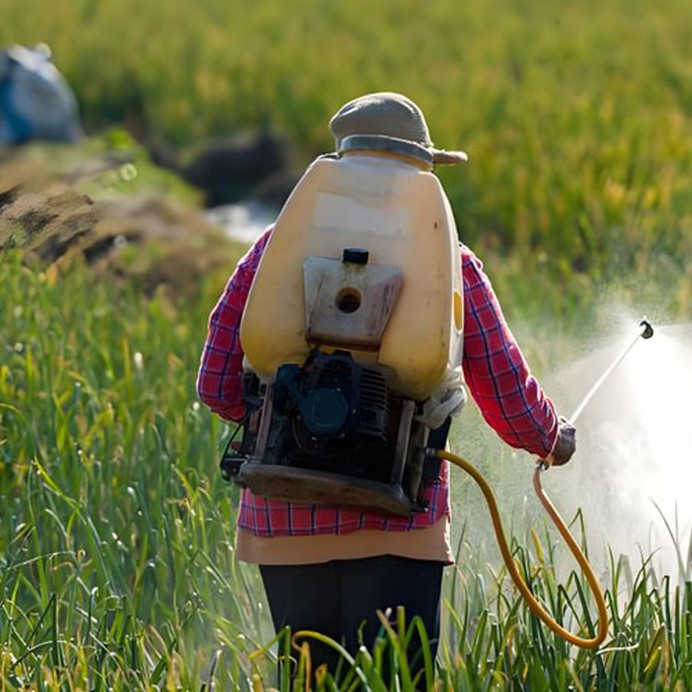
In China, about 70% of the demand for cyanuric chloride is used to synthesize triazine pesticides. Among the triazine pesticides, triazine herbicides are the main consumers. According to statistics, there are 9 varieties of triazine herbicides on the market at present, namely atrazine, terbutazine, simazine, atrazine, prometryne, cyanazine, terbutazine, simazine, trifluoperazine and isopentyl. Triazine herbicides are mostly mature products with stable market sales.
In fluorescent whitening agent:
In addition to herbicides, fluorescent brighteners also play an important role in the cyanuric chloride industry chain, and with the improvement of people's living standards, higher requirements have been put forward for the demand and quality of fluorescent brighteners. Fluorescent whitening agent is mainly used to absorb the ultraviolet ray of the wavelength of the invisible part of the solar light, and then emit the visible blue light or blue violet light. Through the principle of optical complementarity, the clothes, papers, coatings, inks, photo papers, etc. treated by the fluorescent whitening agent can be made whiter, brighter and brighter.

In light stabilizer
Light stabilizer is a kind of polymer material additive. It is an efficient ultraviolet absorber that can improve the aging resistance of polymer by capturing free radicals to decompose peroxides and transfer excited energy. It is usually obtained by connecting hindered amine with cyanuric chloride. At present, the best hindered amine light stabilizer is GW-944. Based on this structure, some light stabilizers with other structures were synthesized by substitution of substituents and studied.
For example, the hindered amine light stabilizer monomer 4-hydroxy-tetramethylpiperidine or 4-amino-tetramethylpiperidine was used to modify the triazine ring to improve product performance, It is also an integral part of the market structure of cyanuric chloride.
In ultraviolet absorber:
UV absorbers are special light stabilizers, mainly benzophenones, benzotriazoles, triazines, etc. UV absorbers absorb UV light to make themselves enter the excited state from the ground state, then gradually transition back to the ground state and release energy in the form of visible light or thermal radiation. This formula can reduce the free radical oxidation and reduction of polymer materials after being irradiated by UV light, To protect the appearance and performance of polymer materials.
Other applications:In addition to the above applications, cyanuric chloride is widely used in many other industries, such as synthetic reactive dye yellow 145, 167, 176 and reactive dye red. Cyanuric chloride and phenyl hypophosphite are used as raw materials to synthesize flame retardants such as triazine triphenylphosphite propyl ester, ethyl ester and heavy metal trapper TMT-3Na for soil remediation.

There are many methods reported in the literature for cyanuric chloride, but the industrial production methods mainly include hydrocyanic acid method and sodium cyanide method.
1. Hydrocyanic acid method:
Most of the advanced countries in the world adopt the hydrocyanic acid process route, that is, liquid hydrocyanic acid and chlorine are used for gas-liquid reaction in the reactor to produce cyanuric chloride gas. After washing and rectification, the gas enters the fixed bed polymerization reactor with catalyst in a gaseous state to produce cyanuric chloride gas, and then enters the coagulator to obtain products. The tail gas is discharged after treatment.

There are three methods to prepare cyanuric chloride by mixing cyanuric chloride: liquid phase method, pressurized method and atmospheric gas phase method.

The liquid phase method is the first industrialized method. Because the polymerization is carried out in the liquid phase, the reaction process is easy to control, but the product contains impurities such as tetramer and hexamer, which need to be refined with low yield and high cost, so it has been eliminated abroad.
In the atmospheric gas phase method, fully dried hydrogen cyanide and chlorine are mixed in proportion (excessive chlorine), preheated, and sent into the polymerizer. Activated carbon (or copper chloride or cuprous ferrochloride with silica gel and zeolite as the carrier) is used as the catalyst.
Polymerization is carried out under the gas phase condition that the reaction temperature is controlled at 380 ℃. The product after polymerization is dried and crystallized by cooling with cold air.
In the atmospheric gas phase method, fully dried hydrogen cyanide and chlorine are mixed in proportion (excessive chlorine), preheated, and sent into the polymerizer. Activated carbon (or copper chloride or cuprous ferrochloride with silica gel and zeolite as the carrier) is used as the catalyst. Polymerization is carried out under the gas phase condition that the reaction temperature is controlled at 380 ℃.

The product after polymerization is dried and crystallized by cooling with cold air.Cyanogen chloride synthesis and cyanogen chloride polymerization are completed in one reactor, and also in two reactors. The latter can also recover part of cyanogen chloride and return to the polymerization reactor for polymerization. This one-step method saves the cyanogen chloride refining process, simplifies the equipment, shortens the reaction cycle, and the yield is more than 86%.
The product quality, yield, production cost and other indicators of atmospheric method are better than those of other methods, and it is easy to scale production. Therefore, atmospheric gas phase method has developed rapidly abroad, and has become the main synthesis route abroad. However, this method also has some shortcomings, such as high production temperature, certain risks, and product quality needs to be improved.

Sodium cyanide method:
Cyanogen chloride was synthesized from sodium cyanide and chlorine gas, and then was prepared by gas phase catalytic polymerization. In the specific process, 3 sodium cyanide solution sent from the tank farm is prepared into 15% aqueous solution, mixed with chlorine gas in proportion and enters the cyanogen chloride reactor through a special nozzle to generate cyanogen chloride monomer, which is cooled and dehydrated by the first cooler and the first separator.
And then cooled and dehydrated by the second cooler and the second separator before entering the dryer for further dehydration and drying. Then, it enters the polymerization reactor to generate gaseous cyanuric chloride, which is crystallized to generate powder solid cyanuric chloride products under cold air at 0.5 ℃.
adverse reaction
Cyanuric Chloride 98% (CAS number: 108-77-0, molecular formula C ∝ N ∝ Cl ∝) is a white crystalline solid with a melting point of 145-148 ℃ and a boiling point of 194 ℃ (decomposition). It has three highly active chlorine atoms, making it an important multifunctional intermediate in organic synthesis. However, its chemical stability and reactivity also pose significant health and environmental risks.
Local adverse reactions
Acute corrosive burns
After direct contact with the skin, melamine dust or liquid quickly reacts with moisture to generate HCl, leading to protein denaturation. Clinical manifestations include:
Red rashes and edema: Within a few minutes of contact, a clearly defined red rash appears, accompanied by local swelling;
Blisters and ulcers: forming large blisters within 24 hours, exposing the dermis layer after rupture, and prone to secondary infection;
Allergic contact dermatitis
Long term or repeated exposure may trigger type IV hypersensitivity reactions, which involve the theory of hapten carrier binding:
Incubation period: Asymptomatic 48-72 hours after first contact, onset 12-48 hours after second contact;
Clinical manifestations: erythema, papules, blisters, accompanied by severe itching, with borders consistent with the contact area;
Diagnosis: Positive patch test (commonly used concentration 0.1% melamine ethanol solution).
Corneal and Conjunctival Corrosion
After eye contact with melamine, HCl gas directly corrodes the ocular surface tissue:
Immediate reactions: severe pain, tearing, photophobia, conjunctival congestion and edema;
Delayed onset damage: corneal epithelial detachment, stromal layer turbidity, and in severe cases, corneal perforation;
Animal experiment: After exposure to 50 μ g/24h, the corneal thickness of rabbits decreased by 40% and the transmittance decreased by 75%.
Long term complications
Untreated eye injuries may lead to:
Corneal scar formation: affecting vision, requiring corneal transplantation surgery;
Dry eye syndrome: Damage to lacrimal gland function leading to dryness of the ocular surface;
Secondary infection: Increased risk of bacterial or fungal keratitis.
Systemic toxicity reactions

Acute inhalation injury
After inhaling melamine dust or HCl gas, the respiratory mucosa is stimulated:
Upper respiratory tract: burning pain, cough, and hoarseness in the nasopharynx;
Lower respiratory tract: bronchospasm, pulmonary edema, manifested as difficulty breathing and cyanosis;
Chronic respiratory diseases
Long term low-dose exposure may lead to:
Occupational asthma: airway hyperresponsiveness, wheezing attacks after exposure to allergens;
Chronic obstructive pulmonary disease (COPD): continuous decline in lung function, decreased FEV ₁/FVC ratio;
Pulmonary fibrosis: X-ray shows grid like shadows and reduced lung capacity.


Oral Acute Poisoning
After ingestion of melamine, HCl corrodes the digestive tract:
Oral cavity and esophagus: mucosal ulcers, bleeding, and in severe cases, esophageal perforation;
Stomach: severe abdominal pain, vomiting, and bloody substances in the stomach contents;
Liver and Kidney Toxicity
Animal experiments have shown that long-term oral exposure can lead to:
Liver: Elevated serum ALT and AST levels, hepatic steatosis;
Kidney: Elevated blood creatinine and urea nitrogen, renal tubular necrosis;
Mechanism: Accumulation of chloride, a metabolite of HCl, interferes with cellular energy metabolism.

Frequently Asked Questions
Is cyanuric acid the same as baking soda?
+
-
Is Cyanuric Acid the Same as Baking Soda? No, cyanuric acid and baking soda work in very different ways in your pool. Baking soda raises the total alkalinity in your pool. But baking soda does not protect or stabilize your chlorine, like CYA.
What is an alternative to cyanuric acid?
+
-
Cal-Hypo Tablets
Like cal-hypo shock, cal-hypo tablets are unstabilized chlorine tablets, containing no cyanuric acid. Cal-hypo tablets are more expensive than regular tablets to buy, and the specialized feeders required to use them are also on the pricey side.
Does sunlight reduce cyanuric acid?
+
-
No you have this backwards. Chlorine can break down with sunlight exposure, and CYA reduces this effect - however in doing so it makes the chlorine less effective at sanitizing especially at high CYA levels. Unfortunately the only real way to reduce CYA is to drain and refill.
Hot Tags: cyanuric chloride 98% cas 108-77-0, suppliers, manufacturers, factory, wholesale, buy, price, bulk, for sale, Synthetic Chemical, 3 methyl 4 piperidone, DIMETHYLPHOSPHINE OXIDE, 2 4 Quinolinediol, 2 5 Dihydroxybenzaldehyde, 3 Nitrobenzaldehyde 99