



Shaanxi BLOOM Tech Co., Ltd. is one of the most experienced manufacturers and suppliers of 2-amino-4,6-dichloropyrimidine cas 56-05-3 in China. Welcome to wholesale bulk high quality 2-amino-4,6-dichloropyrimidine cas 56-05-3 for sale here from our factory. Good service and reasonable price are available.
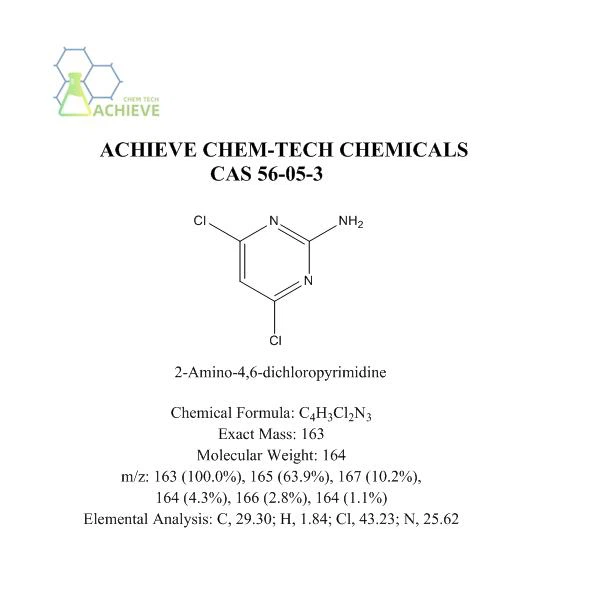
2-Amino-4,6-dichloropyrimidine is an important nitrogen-containing heterocyclic compound and a versatile synthetic building block. Its molecular structure is centered around a pyrimidine ring, with an electron-donating amino group (-NH₂) substituting the 2nd position on the ring, while the 4th and 6th positions are occupied by two electron-withdrawing chlorine atoms (-Cl). This asymmetric electron distribution creates a unique reactivity profile. This compound typically appears as a white to off-white crystalline solid, and its physical and chemical properties are greatly influenced by intramolecular hydrogen bonds and strong dipole moments. In organic synthesis, its value is irreplaceable: the amino group at the 2nd position can serve as a nucleophilic site for acylation or alkylation reactions, while the chlorine atoms at the 4th and 6th positions have significantly different reactivity and enable sequential selective nucleophilic substitution, thereby efficiently constructing complex heterocyclic systems, especially widely used in the synthesis of various drug molecules (such as non-nucleoside reverse transcriptase inhibitors for anti-HIV), pesticide herbicides, and functional materials. Additionally, its pyrimidine skeleton itself is a biological equivalent and can be used to simulate purine structures, being utilized in drug design to develop kinase inhibitors and anticancer agents. Due to its high reactivity and potential toxicity, this compound requires careful storage and handling under appropriate protective measures.

|
Chemical Formula |
C4H3Cl2N3 |
|
Exact Mass |
163 |
|
Molecular Weight |
164 |
|
m/z |
163 (100.0%), 165 (63.9%), 167 (10.2%), 164 (4.3%), 166 (2.8%), 164 (1.1%) |
|
Elemental Analysis |
C, 29.30; H, 1.84; Cl, 43.23; N, 25.62 |


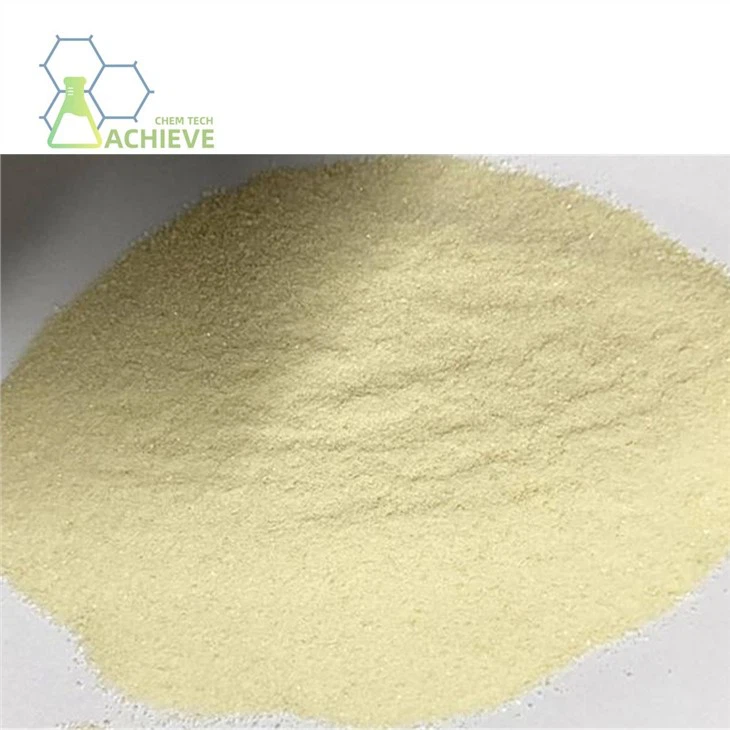
2-Amino-4,6-dichloropyrimidine is an important organic compound with the molecular formula C ₄ H ∝ Cl ₂ N ∝ and a molecular weight of 163.99. This compound usually appears as white plate-like crystals or orange yellow powder at room temperature and pressure, with specific physical and chemical properties. Due to its unique molecular structure, 2-amino-4,6-dichloropyrimidine has demonstrated extensive application value in multiple fields. Detailed explanation of the usage during the following period:
2-Amino-4,6-dichloropyrimidine is an important intermediate in pesticide chemical synthesis, widely used in the production process of herbicides and insecticides. The chlorine atoms and amino units in its structure provide abundant reaction sites for subsequent chemical transformations. Sulfonylurea herbicides are a class of highly efficient, low toxicity, and broad-spectrum herbicides widely used in agricultural production. 2-Amino-4,6-dichloropyrimidine is one of the key intermediates for the synthesis of sulfonylurea herbicides. For example, 2-amino-4,6-dichloropyrimidine is required in the production process of herbicides such as bensulfuron methyl, pyrimethanil, and nicotinuron methyl.

Application in the field of pesticides

Bensulfuron methyl: a selective systemic herbicide that can effectively control annual and perennial broad-leaved weeds and sedges in rice fields.
Pirmeturon: It is a selective pre emergence and post emergence herbicide that can be absorbed by plant roots, stems, and leaves, and transmitted vertically in the plant body. It is mainly used for controlling broad-leaved weeds in soybean fields.
Nicotine sulfometuron: It is also an efficient herbicide widely used for field weeding of various crops.
In addition to sulfonylurea herbicides, 2-amino-4,6-dichloropyrimidine can also be used to synthesize other types of pesticide chemicals, such as insecticides, fungicides, etc. These pesticide chemicals play an important role in agricultural production, helping to improve crop yield and quality.
2-Amino-4,6-dichloropyrimidine also has important application value in the pharmaceutical field, often used as a pharmaceutical intermediate for the synthesis of various drugs. The amino and chlorine atoms in its structure provide abundant possibilities for the design and synthesis of drug molecules. Through chemical transformation, 2-amino-4,6-dichloropyrimidine can be synthesized into biologically active molecules that may have pharmacological effects such as antibacterial, antiviral, and anti-tumor properties. Although there may be relatively few specific application cases of 2-amino-4,6-dichloropyrimidine in the pharmaceutical field at present, its potential application value will gradually be explored as research deepens. In the process of drug development, 2-amino-4,6-dichloropyrimidine can be used as a starting material or key intermediate to develop drug molecules with novel structures and excellent pharmacological activities through structural modification and modification. This is of great significance for the development of new drugs and helps to address the many challenges currently faced in the pharmaceutical industry.

Application in the field of organic synthesis

2-Amino-4,6-dichloropyrimidine has a wide range of applications in the field of organic synthesis, often used as an intermediate for the synthesis of various organic compounds. The chlorine atoms and amino units in its structure provide abundant reaction sites for subsequent substitution reactions, addition reactions, and so on. Through chemical transformation, 2-amino-4,6-dichloropyrimidine can be synthesized into various heterocyclic compounds, such as pyrazoles, pyrimidines, etc. These heterocyclic compounds have wide application value in fields such as materials science and medicinal chemistry. In organic synthesis, 2-amino-4,6-dichloropyrimidine can serve as a key intermediate in the construction of complex molecules. By reacting with other organic compounds, molecules with specific structures and functions can be synthesized, which may have potential applications in fields such as materials science and biochemistry.
Molecular materials with specific optical, electrical, or magnetic properties can be synthesized through chemical modification and modification. The amino and chlorine atoms in the structure of 2-amino-4,6-dichloropyrimidine may provide possibilities for its application in the dye and pigment industries. By reacting with other compounds, dyes and pigment molecules with specific colors and properties can be synthesized. In scientific research experiments, 2-amino-4,6-dichloropyrimidine is often used as an important reagent or intermediate for the study of various chemical reactions. Its unique chemical properties make it play an important role in research in fields such as organic synthesis and medicinal chemistry.


Synthesis of 2-amino-4,6-dichloropyrimidine:
Guanidine hydrochloride, diethyl malonate and sodium methoxide are used as raw materials, which are obtained by cyclization and chlorination. The technological process is to add a measured amount of sodium methoxide, methanol, guanidine hydrochloride and diethyl malonate into the enamel reactor, react the mixture for 2 hours, cool to room temperature, and filter to obtain a white solid, namely, 4,6-dihydroxymonosodium salt - 2-aminopyrimidine. Then add dichloroethane, triethylamine and dihydroxymonosodium salt into the reactor, drop phosphorus oxychloride under reflux, reflux for 2 hours, remove the solvent dichloroethane under reduced pressure, put the reaction material into water, neutralize it with 30% liquid alkali to pH=5~6, filter, wash it to neutral, and get the orange product, which is the finished product after drying. This method consumes 1.049 tons of guanidine hydrochloride (95%) to produce 1 ton of product; 1.937 tons of diethyl malonate; Sodium methoxide (28%) 6.663 tons; Phosphorus oxychloride (95%) 4.045 tons; Triethylamine (95%) 0.977 tons; Methanol (99.5%) 2.45 tons.

It can also be obtained by reaction of 2-amino-4,6-dihydroxypyrimidine with phosphorus oxychloride.
side effect
2-Amino-4,6-dichloropyrimidine is an important organic synthesis intermediate widely used in fields such as pesticides, pharmaceuticals, and organic synthesis. However, as a chemical substance, it may have certain side effects on the human body and the environment during use. The following is its detailed explanation:
Irritation to the human body
skin irritation
2-Amino-4,6-dichloropyrimidine is irritating to the skin. Direct contact may cause symptoms such as redness, swelling, itching, and pain in the skin. Long term or repeated exposure may cause skin allergic reactions, such as rash, urticaria, etc. Therefore, protective gloves should be worn during operation to avoid direct skin contact.
Eye irritation
This compound has severe eye irritation. If accidentally splashed into the eyes, it may cause symptoms such as redness, swelling, pain, tears, and even lead to vision loss in severe cases. Therefore, protective goggles should be worn during the operation to ensure eye safety.
Respiratory irritation
The dust or vapor of 2-amino-4,6-dichloropyrimidine may cause irritation to the respiratory tract. Inhalation may cause symptoms such as coughing and difficulty breathing, and long-term exposure may cause damage to the respiratory system. Therefore, good ventilation conditions should be maintained during operation, and dust masks or respirators should be worn.
Health hazards
Acute toxicity
Although there is currently relatively limited data on the acute toxicity of 2-amino-4,6-dichloropyrimidine, based on its chemical properties, it can be inferred that it may have certain acute toxicity. Rat oral LD50>1500mg/kg indicates relatively low acute toxicity, but caution should still be exercised. Accidental ingestion or excessive inhalation may cause symptoms such as nausea, vomiting, abdominal pain, and in severe cases, may even endanger life.
Chronic toxicity
Long term exposure to 2-amino-4,6-dichloropyrimidine may have chronic effects on health. Although there is relatively little research on its chronic toxicity at present, based on the toxic characteristics of similar compounds, it can be inferred that it may cause damage to organs such as the liver and kidneys. In addition, it may also affect the nervous system, immune system, etc., leading to symptoms such as headache, dizziness, fatigue, and weakened immunity.
Carcinogenicity
There is currently no conclusive evidence to suggest that 2-amino-4,6-dichloropyrimidine is carcinogenic. However, due to the presence of chlorine atoms in its chemical structure, it may have certain genetic toxicity or mutagenicity. Therefore, close attention should be paid to health status and regular physical examinations should be conducted during long-term contact.
Environmental impact
Water pollution
2-Amino-4,6-dichloropyrimidine is insoluble in water, but if it leaks during production or use, it may enter the water body through methods such as rainwater flushing, causing harm to aquatic organisms. It has high stability in water bodies and may persist for a long time, potentially affecting aquatic ecosystems.
Soil pollution
If this compound leaks into the soil, it may have toxic effects on soil microorganisms and plants. Long term accumulation may lead to a decline in soil quality, affecting the growth and yield of crops. In addition, it may also be transmitted through the food chain, causing harm to higher-level organisms.
Air pollution
During production or use, 2-amino-4,6-dichloropyrimidine may be released into the atmosphere in the form of dust or vapor. Although its concentration in the atmosphere may be relatively low, long-term exposure may still have potential impacts on the environment and human health.
Other potential side effects
Explosion and fire risks
Although 2-amino-4,6-dichloropyrimidine itself is not flammable, it may cause explosions or fires under specific conditions (such as mixing with oxidants, high temperatures, etc.). Therefore, during storage and use, it should be kept away from sources of fire and heat, and avoid contact with prohibited substances such as oxidants.
Special effects on experimental animals
In animal experiments, 2-amino-4,6-dichloropyrimidine may exhibit specific toxic effects. For example, it may affect the reproductive system and developmental process of experimental animals. These findings are of great significance for assessing their potential risks to human health.
Hot Tags: 2-amino-4,6-dichloropyrimidine cas 56-05-3, suppliers, manufacturers, factory, wholesale, buy, price, bulk, for sale, 2 Bromopyridine 4 carboxylic acid, Acetohydroxamic Acid CAS 546 88 3, 2 Bromo 9 9 spirobifluorene, 4 Methoxyphenylacetone CAS 122 84 9, quinone dioxime, 5 Chloro 2 Nitrotoluene CAS 5367 28 2