




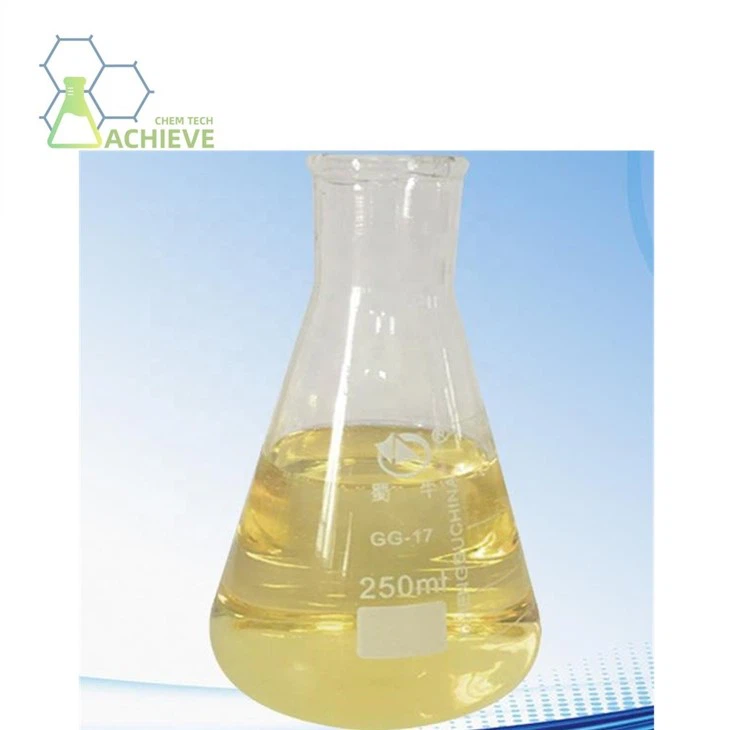


2-Aminoacetophenone is an organic compound with a unique chemical structure and properties, consisting of a benzene ring, an amino group (- NH ₂), and an acetyl group (- COCH ∝). The benzene ring is a cyclic structure with six carbon atoms, possessing aromaticity. The distribution of electron clouds on it gives the benzene ring special stability and reactivity. The appearance usually appears as yellow to brown crystals or oily liquids, soluble in organic solvents such as ethanol, ether, chloroform, etc., slightly soluble in water (solubility of about 0.5 g/100 mL, 20 ° C), but can form salts with acids and dissolve in water, soluble in dilute hydrochloric acid or sulfuric acid to form salts. Used for biological activity, as an intermediate in organic synthesis, and also for environmental science and detection.

Additional information of chemical compound:
|
Chemical Formula |
C8H9NO |
|
Exact Mass |
135.07 |
|
Molecular Weight |
135.17 |
|
m/z |
135.07 (100.0%), 136.07 (8.7%) |
|
Elemental Analysis |
C, 71.09; H, 6.71; N, 10.36; O, 11.84 |
|
Melting point |
20℃ |
|
Boiling point |
85-90℃0.5 mm Hg(lit.) |
|
Density |
1.112 g/mL at 25℃(lit.) |
|
Storage conditions |
2-8℃ |
|
|
|


2-Aminoacetophenone, as an important organic compound, has demonstrated unique application value in multiple fields. The following will elaborate on its uses in medicine, chemical synthesis, biological testing, fragrances and cosmetics, agriculture, environmental science, and other aspects:
Application in the field of medicine
It is an important respiratory biomarker for Pseudomonas aeruginosa infection. In patients with cystic fibrosis (CF), pulmonary Pseudomonas aeruginosa infection is extremely common, and this compound can be exhaled by patients infected with this bacterium. By detecting the concentration of 2-Aminoacetophenone in the exhaled breath of patients, it can assist in the diagnosis of Pseudomonas aeruginosa infection. This method has significant advantages such as non invasiveness, speed, and high sensitivity, which can achieve early diagnosis, help to take timely treatment measures, and improve patient prognosis. Compared to traditional diagnostic methods such as bacterial culture, the detection method based on 2-Aminoacetophenone is easy to operate and does not require complex sample processing, greatly reducing diagnostic time. Moreover, this method is non-invasive to the patient's body and has good reproducibility, especially suitable for patients who require long-term monitoring of their condition, such as cystic fibrosis patients. It can timely grasp changes in infection status and adjust treatment plans.

Disease diagnostic markers

In recent years, research has found that its content may change in biological samples of patients with metabolic diseases. For example, in patients with metabolic diseases such as diabetes and obesity, their metabolic pathways may be disturbed, resulting in abnormal synthesis, decomposition or excretion of 2-Aminoacetophenone, thus changing its concentration in blood, urine and other biological samples. By monitoring the levels of 2-Aminoacetophenone in these samples, it is expected to provide new indicators for early diagnosis, disease assessment, and treatment monitoring of metabolic diseases. In the field of immune diseases, 2-Aminoacetophenone has also shown potential as a biomarker. Autoimmune diseases such as rheumatoid arthritis and systemic lupus erythematosus involve abnormal activation of the immune system in their pathogenesis. Research has shown that 2-Aminoacetophenone may be involved in signal transduction or metabolic processes of immune cells, and its content may change during the occurrence and development of diseases. Detecting the level of this compound in the patient's body can help to gain a deeper understanding of the pathogenesis of immune diseases and provide new ideas for disease diagnosis and treatment.
It is a key intermediate for the synthesis of various aminoglycoside antibiotics. In the synthesis process of aminoglycoside antibiotics, the active functional groups such as amino and carbonyl groups of 2-Aminoacetophenone can participate in various chemical reactions. For example, by acylation reaction, specific acyl groups can be introduced on its amino group to construct an antibiotic molecular skeleton with antibacterial activity. Further structural modification and optimization can enhance the inhibitory effect of antibiotics on bacterial cell walls or protein synthesis, improve antibacterial efficacy, expand the antibacterial spectrum, and make them have good antibacterial activity against multiple drug-resistant strains. In addition to aminoglycoside antibiotics, 2-Aminoacetophenone can also be used to synthesize other types of antibiotics, such as beta lactam antibiotics. In the synthesis of β - lactam antibiotics, it can serve as a side chain precursor and react with the β - lactam ring to form compounds with antibacterial activity. This synthetic strategy provides abundant chemical means for the development of new antibiotics, which helps to address the increasingly serious problem of bacterial resistance.

Drug synthesis intermediates

It can serve as a lead compound for the development of anti-tumor drugs. Its unique chemical structure endows it with certain biological activity, and researchers can modify and optimize its structure based on this. For example, by introducing different substituents on its benzene ring, the electronic cloud distribution and spatial configuration of the molecule can be altered, thereby affecting its binding ability with tumor cell targets. Some modified 2-Aminoacetophenone derivatives can specifically act on the signaling pathways of tumor cells, interfere with the proliferation, differentiation, and apoptosis processes of tumor cells, and inhibit tumor growth and metastasis. In addition, 2-Aminoacetophenone derivatives can also be used in combination with other anti-tumor drugs to exert synergistic anti-tumor effects. By combining with chemotherapy drugs, targeted therapy drugs, etc., the killing effect of drugs on tumor cells can be enhanced, drug dosage can be reduced, toxic side effects can be minimized, and patient tolerance and quality of life can be improved.
2-Aminoacetophenone also has certain applications in the synthesis of cardiovascular drugs. For example, it can participate in the synthesis of drugs with antihypertensive and antiarrhythmic effects. By designing and modifying its molecular structure, the affinity between drugs and cardiovascular system related receptors can be regulated, the pharmacokinetic properties of drugs can be improved, and the efficacy and safety of drugs can be enhanced. 2-Aminoacetophenone can also be used as a synthetic intermediate for the treatment of neurological diseases. When synthesizing drugs such as antiepileptic, antidepressant, and anti Parkinson's disease drugs, their chemical activity is utilized to construct molecular structures with specific biological activity, regulating the release, uptake, and metabolism of neurotransmitters, thereby exerting therapeutic effects on neurological diseases.

Application in the field of spices and cosmetics
It has a special aroma, which is complex and unique, with a certain amount of fruity, floral, and a faint almond like sweet fragrance. This mixed aroma allows it to add a rich and delicate olfactory experience to the product in the spice formula, and when combined with other spice ingredients, it can create a layered and attractive fragrance. In the formulation of perfume, 2-Aminoacetophenone can be used as an important fragrance ingredient. It can be combined with other floral fragrances such as roses, jasmine, etc. to enhance the sweetness and warmth of the floral aroma, making the floral notes more rich and long-lasting; When paired with fruity spices such as citrus and peach, it can enhance the freshness and naturalness of the fruit aroma, making the fruity notes more vibrant; Mixing with woody fragrances such as sandalwood and cedar can increase the softness and depth of woody aroma, creating a more stable and elegant fragrance atmosphere. Due to its unique chemical structure, 2-Aminoacetophenone can be used as a key intermediate in the synthesis of complex essence.

Application in the field of spices

In the essence industry, through the modification and transformation of its molecular structure, such as the introduction of different functional groups or chemical reactions with other compounds, essence molecules with specific aroma characteristics and persistence can be synthesized. These essence molecules can be used in various fragrance products, such as perfume, fragrance spray, air freshener, etc., to meet the needs of different consumers for fragrance. In chocolate products, it can add a nutty aroma similar to almonds, making the flavor of chocolate more rich and mellow; In fruit flavored beverages, it can enhance the sweet aroma of fruits, improve the taste and appeal of the beverage. With consumers' pursuit of diversified food flavors, 2-Aminoacetophenone provides a new flavor option for the food industry. It can help food manufacturers develop innovative and differentiated products that meet the preferences of different consumer groups for special flavors and expand the product range in the food market.
In cosmetics, 2-Aminoacetophenone is often used as a flavoring ingredient to bring a pleasant aroma to the product. In skin care products such as face cream, lotion, essence, etc., adding an appropriate amount of 2-Aminoacetophenone can bring consumers a pleasant sense of smell and enhance the use experience of the product. Its unique aroma can be emitted at the moment of applying the product, allowing consumers to enjoy the soothing and relaxing aroma while using skincare products, enhancing consumers' favorability and loyalty to the product. Different brands and types of cosmetics can create personalized aroma characteristics by adding fragrance ingredients such as 2-Aminoacetophenone. High end skincare products may focus on creating elegant and noble aromas to reflect the quality and positioning of the product; Cosmetics targeting young consumers may choose fresher and more lively fragrances to attract the target customer group. This personalized aroma design helps the product stand out in market competition and form a unique brand image.

Application in the field of cosmetics

During the use of cosmetics such as lipstick, eye shadow and liquid foundation, consumers also pay attention to their smell. The addition of 2-Aminoacetophenone can improve the odor of cosmetic products, mask any potential unpleasant odors in the raw materials, and make the product more comfortable and pleasant to use. For example, adding an appropriate amount of 2-Aminoacetophenone to some lipsticks can make them emit a faint fragrance and enhance the user's makeup experience. The unique aroma can become a selling point for makeup products and attract consumers' attention. When consumers choose among numerous makeup products, products with pleasant fragrances are often more likely to arouse their interest. The aroma imparted by 2-Aminoacetophenone to cosmetic products can increase their added value and make them more competitive in the market.

Main Synthesis Methods

Reduction Method of 2'-Nitroacetophenone
Principle: Reduce the nitro group (-NO₂) in 2'-Nitroacetophenone to an amino group (-NH₂).
Conditions: Commonly used reducing agents such as iron powder/hydrochloric acid, catalytic hydrogenation (H₂/Pd-C), or borohydride (NaBH₄) are employed.
Characteristics: Widely used in industrial applications, with readily available raw materials, but the reduction conditions need to be controlled to avoid excessive reduction or side reactions.
Reaction of Isatoic Anhydride with Organometallic Reagents
Principle: React isatoic anhydride with organometallic reagents such as CH₃Li to form an intermediate, which is then hydrolyzed to obtain the target product.
Conditions: The reaction is carried out under low temperature (-78℃) and in an anhydrous and oxygen-free environment. The reaction steps include cooling, gradual addition of reagents, and stirring of the reaction.
Characteristics: High yield, but the operating conditions are demanding, suitable for small-scale laboratory preparation.


Delepine Reaction Method
Principle: Use 2'-Bromoacetophenone and hexamethylenetetramine as raw materials, and through the hydrolysis of the quaternary ammonium salt intermediate, obtain the product.
Conditions: The reaction is carried out in diethyl ether, stirred at room temperature for 12 hours, then filtered, washed, and dried. It is then refluxed with a 30% ethanol solution of hydrochloric acid for 3 hours.
Characteristics: Multiple steps, but the raw materials are relatively easy to obtain, suitable for the synthesis of specific structural derivatives.
Electrochemical Oxidation Method
Principle: In an oxygen atmosphere, using n-Bu₄NI as an oxidation-reduction catalyst, through electrochemical oxidation of the C(sp³)-H bond of 2'-aminophenylacetone, form indigo (Isatin) derivatives.
Conditions: Conducted at room temperature, using a platinum electrode and methanol solvent.
Characteristics: Green and environmentally friendly, but the product is a derivative, requiring further conversion to obtain the target compound.

Key Reaction Conditions and Optimization
Temperature Control: For the isatoic anhydride method, a low temperature (-78℃) is required to prevent side reactions; for the electrochemical method, it is conducted at room temperature to reduce energy consumption.
Solvent Selection: Choose polar or non-polar solvents based on the reaction type, such as diethyl ether, chloroform, methanol, etc.
Catalysts and Reagents: Reduction methods commonly use iron powder, Pd-C, or NaBH₄; electrochemical methods rely on n-Bu₄NI catalyst.
Post-treatment Steps: Include quenching, extraction, drying, concentration, and purification (such as vacuum distillation or column chromatography).
Application Areas and Market Demand
Pharmaceutical Intermediate: Used for synthesizing antidepressants, antipsychotic drugs, and neuroprotective agents (such as AMPA receptor modulators).
Flavors and Dyes: As precursors for synthesizing flavors or dyes, giving products specific fragrances or colors.
Research Reagents: In neurobiological research, used as a tool drug to explore glutamate receptor functions and neural plasticity mechanisms.
Market Trend: With the advancement of drug research and development for neurological and mental disorders, market demand is steadily increasing, and there is a growing demand for high-purity (≥99%) products.
Safety and Environmental Protection Precautions
Raw Material Toxicity: Raw materials such as 2'-nitroacetophenone and bromides are toxic; operations should be conducted in a fume hood.
Waste Disposal: The reaction-generated waste liquid should be classified and collected, and handled in accordance with hazardous chemical specifications.
Green Chemistry: New methods such as electrochemical methods comply with sustainable development requirements, reducing the use of organic solvents and waste emissions.
Hot Tags: 2-aminoacetophenone cas 551-93-9, suppliers, manufacturers, factory, wholesale, buy, price, bulk, for sale, 1 3 Propanediol Liquid CAS 504 63 2, 3 5 Dichloropyridine, 4 Aminoacetanilide CAS 122 80 5, 3 4 Pyridinedicarboxylic acid, 1 2 4 Triazole CAS 288 88 0, 6 Nitro 1 diazo 2 naphthol 4 sulfonic Acid