




Lanthanum Fluoride is an inorganic compound that appears as a white powder or crystal, almost insoluble in water but soluble in strong acids such as hydrochloric acid and nitric acid. It is stable at room temperature but may undergo hydrolysis in high temperature or humid environments. It is an ionic crystal with high ionic conductivity and potential applications in solid-state electrolytes. In humid environments, lanthanum fluoride may slowly hydrolyze to produce lanthanum hydroxide and hydrofluoric acid:LaF3+3H2O→La(OH)3+3HF
Because it remains stable at high temperatures and is suitable for applications in high-temperature environments. This substance has low refractive index and high transparency, and is commonly used in the manufacture of optical lenses, prisms, and window materials. In infrared optics, lanthanum fluoride can be used to manufacture infrared lenses and optical fibers. It serves as a gain medium for solid-state lasers and can be used to manufacture efficient and high-power lasers.
Additional information of chemical compound:
|
Chemical Formula |
F3La |
|
Exact Mass |
195.90 |
|
Molecular Weight |
195.90 |
|
m/z |
195.90 (100.0%) |
|
Elemental Analysis |
F, 29.09; La, 70.91 |
|
Melting point |
1493℃ |
|
Density |
5.936 g/mL at 25℃(lit.) |
|
|
 |


Lanthanum Fluoride (chemical formula LaF3) is an inorganic compound belonging to the rare earth fluoride family. It has unique physical and chemical properties, such as high melting point, good chemical stability, low refractive index, etc., which make it widely applicable in multiple fields. The following are its uses:
Application in Medicine and Science
It is a key material for preparing scintillators. A scintillator is a material that can convert high-energy particles (such as X-rays, gamma rays) or radiation energy into visible light. Lanthanum fluoride scintillators are widely used in modern medical imaging technology due to their high light output, fast decay time, and good energy resolution. PET is a nuclear medicine imaging technique that generates three-dimensional images by detecting the gamma rays produced during the annihilation of positrons and electrons produced by the decay of radioactive isotopes in the body.


Lanthanum fluoride scintillator, as a detector material in PET scanners, can efficiently convert gamma rays into visible light signals, thereby improving image resolution and sensitivity. In CT scanning, lanthanum fluoride scintillators can be used to enhance the detection efficiency of X-rays, reduce radiation dose, and improve image clarity. Its low refractive index and high transparency make it an ideal material for optical imaging and sensor fields. For example, in fluorescence microscopy, lanthanum fluoride can be used as an optical window or lens material to reduce light dispersion and loss, and improve imaging quality.
Lanthanum fluoride scintillators are used for particle detection in high-energy physics experiments. When high-energy particles (such as protons, neutrons, muons, etc.) interact with lanthanum fluoride, scintillation light signals are generated, which are captured by detectors and converted into electrical signals, thereby achieving particle detection and measurement. In high-energy physics experiments such as the LHC, lanthanum fluoride scintillators are used to detect and measure the trajectories and energies of high-energy particles, helping scientists study the properties and interactions of elementary particles.


Lanthanum fluoride scintillators can also be used in neutrino detection experiments to study the properties and behavior of neutrinos by detecting the scintillation light signals generated by the interaction between neutrinos and atomic nuclei. Lanthanum fluoride scintillators have high sensitivity to radiation dose and can be used for radiation dose measurement and monitoring. For example, in nuclear power plants, medical radiation therapy, and industrial radiation applications, lanthanum fluoride scintillators can be used as dosimeters to monitor radiation dose in real-time, ensuring the safety of personnel and the environment.
It is an important raw material for manufacturing rare earth crystal laser materials. By doping rare earth ions (such as neodymium ions, erbium ions, etc.) into lanthanum fluoride crystals, high-power and high-efficiency laser crystals can be prepared. Lanthanum fluoride based rare earth crystal lasers have wide applications in industrial processing, medical treatment (such as laser surgery), communication, and scientific research. For example, neodymium doped lanthanum fluoride crystal lasers can generate lasers with a wavelength of 1053 nanometers, which are suitable for material processing and scientific research.


The low phonon energy characteristics of lanthanum fluoride make it an ideal substrate material for upconversion lasers. Upconversion lasers achieve laser output by converting low-energy photons into high-energy photons, and have advantages such as wavelength tunability and strong anti-interference ability. It is a key component in the manufacture of fluoride glass optical fibers. Fluoride glass has advantages such as low loss, wide transmission bandwidth, and high nonlinearity coefficient, making it suitable for mid infrared light communication and sensing fields.
Lanthanum fluoride based fluoride glass fiber has high transmittance in the mid infrared band and can be used for long-distance, high-speed optical communication systems. Fluoride glass fiber can also be used to manufacture fiber optic sensors, achieving high sensitivity measurement of physical quantities such as temperature, pressure, and strain.

Biomedical and Nanotechnology

Nanoparticles are widely used in the fields of biomarkers and imaging due to their unique luminescent properties and biocompatibility. Through surface functionalization modification, lanthanum fluoride nanoparticles can specifically target biomolecules (such as proteins, nucleic acids, etc.), achieving real-time monitoring and imaging of biological processes. Lanthanum fluoride nanoparticles can be used for intracellular imaging to study the structure and function of organelles. For example, combining lanthanum fluoride nanoparticles with antibodies can specifically label receptors on the cell surface, enabling imaging of receptor distribution and dynamic changes.
Lanthanum fluoride nanoparticles have potential applications in in vivo imaging. Non invasive monitoring of biological processes in animal models can be achieved through near-infrared fluorescence imaging technology. Nanoparticles can also serve as drug delivery carriers, targeting drugs to the lesion site, improving therapeutic efficacy and reducing side effects.


Through surface modification, lanthanum fluoride nanoparticles can specifically target tumor cells, achieving targeted drug delivery. For example, combining anti-cancer drugs with lanthanum fluoride nanoparticles can increase the concentration of the drug in tumor tissue and enhance the therapeutic effect.
Application in ceramic and glass manufacturing
The addition of lanthanum fluoride can significantly improve the physical properties of ceramics, including hardness, strength, toughness, and wear resistance. Lanthanum fluoride reacts with ceramic matrix materials (such as alumina, zirconia, etc.) to form solid solutions or second phase particles, which hinder dislocation movement and thus improve the hardness and strength of ceramics.


The addition of lanthanum fluoride can induce phase transformation toughening or microcrack toughening mechanisms in ceramic materials, improving their fracture toughness. The addition of lanthanum fluoride can refine ceramic grains, reduce grain boundary defects, and thus improve the wear resistance of the material. Lanthanum fluoride has excellent chemical stability and can resist corrosion from corrosive media such as acids and bases.
During the sintering process, lanthanum fluoride reacts with the surface of ceramic particles to form a liquid phase, promoting particle rearrangement and material migration, thereby increasing the density of ceramics. The addition of lanthanum fluoride can lower the sintering temperature of ceramics, reduce energy consumption and production costs. Lanthanum fluoride promotes the binding between particles, reduces porosity, and improves the density and mechanical properties of ceramics.


Adding lanthanum fluoride to alumina ceramics can significantly improve their hardness and strength, making them suitable for the manufacturing of high hardness tools such as cutting tools and grinding tools. The addition of lanthanum fluoride can enhance the toughness of zirconia ceramics and is suitable for the preparation of biomedical materials such as artificial joints and dental restorations.
In recent years, researchers have developed various new types of lanthanum fluoride based ceramic materials, such as lanthanum fluoride alumina composite ceramics, lanthanum fluoride zirconia composite ceramics, etc. These materials combine the advantages of lanthanum fluoride and matrix materials, and have excellent mechanical properties and chemical stability.


This material has high hardness, high strength, and excellent wear resistance, making it suitable for the manufacturing of high hardness tools such as cutting tools and grinding tools. This material has high toughness and good biocompatibility, making it suitable for the preparation of biomedical materials such as artificial joints and dental restorations. Lanthanum fluoride based glass fiber technology has made significant progress in the field of mid infrared light communication and sensing.
Lanthanum fluoride based glass fiber has high transmittance in the mid infrared band and is suitable for long-distance, high-speed optical communication systems. Lanthanum fluoride based glass fiber can be used to manufacture fiber optic sensors, achieving high sensitivity measurement of physical quantities such as temperature, pressure, and strain. Significant breakthroughs have been made in the application research of lanthanum fluoride in bioglass.


Researchers have found that the addition of lanthanum fluoride can enhance the biological activity and osteogenic properties of bioglass, promoting the regeneration and repair of bone tissue. Lanthanum fluoride based bioglass exhibits excellent biological activity and osteogenic properties, making it suitable for the preparation of biomedical materials such as bone defect repair and dental implants.
Market Dynamics and Future Prospects
The global LaF₃ market, valued at $120 million in 2023, is projected to grow at a CAGR of 6.8% through 2030, driven by demand in optics, electronics, and environmental technologies. Key trends include:
Nanotechnology Integration: LaF₃ nanoparticles are poised to transform biomedicine and catalysis, with research focusing on surface functionalization for enhanced performance.
Sustainable Production: Efforts to replace hydrofluoric acid with greener fluorinating agents aim to reduce environmental impact during synthesis.
Emerging Applications: LaF₃-based perovskite solar cells and quantum dots are under development, potentially revolutionizing renewable energy and display technologies.
The double-edged effect of fluorine release kinetics
Kinetic Mechanism of Fluorine Release
Crystal Structure and Diffusion Path
LaF₃ has a layered or nanosheet structure (such as LaF₃ nanosheets synthesized by solution method), and the migration ability of fluoride ions (F⁻) in the lattice directly affects the release rate. The nanostructure may provide a shorter diffusion path, accelerating the release of fluorine, while a dense crystal structure inhibits the release.
Environmental Conditions' Impact
Temperature: High temperature may enhance lattice vibration, promoting the diffusion of F⁻.
Humidity: Hygroscopicity (LaF₃ is prone to absorbing moisture in the air) may disrupt the lattice through hydration, accelerating the release of fluorine.
pH Value: Acidic or alkaline environments may corrode the surface of LaF₃ and release F⁻. For example, in strong acid, LaF₃ can dissolve and release fluoride ions.
External Stimuli
Light: Some studies induce LaF₃ to release fluoride ions through photocatalysis or photochemistry for specific chemical reactions or environmental remediation.
Electric Field: In an electrochemical system, LaF₃ may act as an electrode material and regulate the release and adsorption of fluoride ions through an electric field.
Potential Functional Applications (the "Blade" Effect)
Environmental restoration
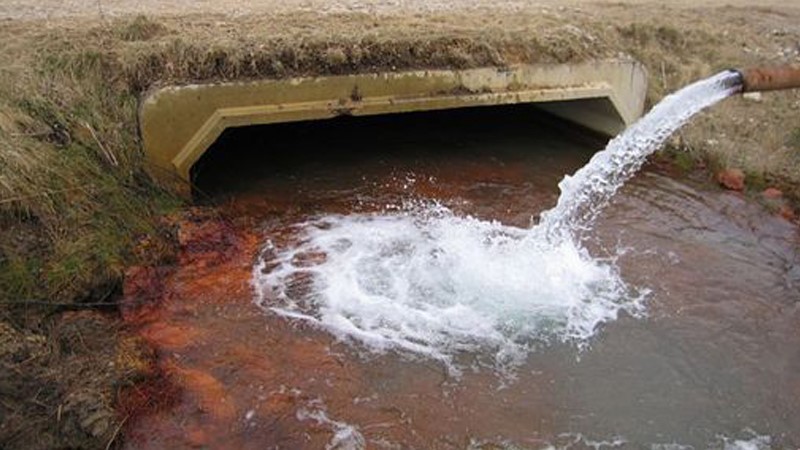
LaF₃ can be used as a fluoride ion adsorbent to treat fluoride pollution in industrial wastewater. The kinetics of fluoride release can be optimized by adjusting the pH value or temperature to achieve efficient and controllable removal of fluoride ions.
Catalysis and Chemical Synthesis
The release of fluoride ions may participate in specific catalytic reactions (such as fluorination reactions), or act as a reaction medium to regulate the reaction rate. For example, the high fluoride migration rate of LaF₃ nanosheets may enhance its catalytic activity.


Biomedical Applications
Fluoride Ion Selective Electrodes: LaF₃ is used to manufacture fluoride ion selective electrodes, and the kinetics of fluoride release/adsorption affects the sensitivity and stability of the electrodes.
Drug Sustained Release: By regulating the fluoride release rate of LaF₃, new fluoride-containing drug carriers may be developed for local fluoride treatment (such as oral care or bone diseases).
Safety Risks and Challenges (The Other Side of the "Double-edged Sword")
Toxicity Risks
Acute Toxicity: Excessive intake of fluoride ions can lead to fluorosis, characterized by nausea, vomiting, hypocalcemia (fluoride ions combine with calcium to form insoluble calcium fluoride, reducing serum calcium concentration), and even death.
Chronic Exposure: Long-term exposure to LaF₃ dust or released fluoride ions may cause irritation to the respiratory system, skin, and eyes, and increase occupational health risks.
Environmental persistence
LaF₃ is difficult to degrade in the environment, and the release of fluorine may accumulate over a long period, potentially causing harm to ecosystems (such as aquatic organisms).
Process control difficulty
Release rate regulation: In application, the release rate of fluorine needs to be precisely controlled to avoid rapid release leading to toxicity or slow release affecting functionality. For example, in catalytic reactions, rapid fluorine release may disrupt the reaction balance.
Stability issue: LaF₃ may accelerate fluorine release in humid or high-temperature environments. It is necessary to optimize storage and transportation conditions (such as argon-filled protection, low-temperature drying).
Balance strategies and future directions

Material modification
By doping other elements (such as rare earth metals) or surface coating (such as alkyl chains), the fluorine release kinetics of LaF₃ can be regulated, enhancing stability and reducing toxicity.
Develop nanostructured LaF₃ (such as core-shell structure) to achieve controlled release of fluorine ions.

Application scenario optimization
In environmental remediation, combine adsorption-recycling cycles to reduce direct exposure and fluorine release of LaF₃.
In biomedicine, strictly limit the dosage and release route of LaF₃ to avoid systemic toxicity.

Safety assessment and regulation
Establish a fluorine release kinetics model for LaF₃ to predict its environmental behavior and health risks.
Formulate safety standards for LaF₃ production, use, and waste disposal, and strengthen occupational protection and environmental pollution control.
Frequently Asked Questions
Why is it "transparent" in the field of optics? What frequency bands can be transmitted through?
+
-
It is a rare material that is far ultraviolet transparent. The transmission range extends from 250 nm (ultraviolet) to 14 μ m (mid infrared), which is almost unmatched by other materials in the ultraviolet region. This characteristic makes it a core coating material for ultraviolet dichroic mirrors, narrowband filters, and infrared fibers (such as ZBLAN glass).
What is its refractive index? What are the "lesser known applications" of this value?
+
-
The refractive index is about 1.59 at 550 nm visible light and about 1.57 at 1.0 μ m infrared. This value happens to be in the middle zone between "high refractive index" and "low refractive index", allowing it to alternate with other fluorides (such as magnesium fluoride and barium fluoride) to form multilayer interference films for laser optics and precision filters.
What is the "obsessive-compulsive disorder" in its crystal structure? Why hexagonal crystal system?
+
-
It belongs to the tysonite structure, space group P3c1, and unit cell parameters: a=0.7185 nm, c=0.7351 nm. The characteristic of this structure is the distorted coordination polyhedron formed by 11 fluoride ions around the lanthanum ion, instead of the common 8-coordination. This' asymmetric 'structure is the root of its ionic conductivity and optical anisotropy.
Hot Tags: lanthanum fluoride cas 13709-38-1, suppliers, manufacturers, factory, wholesale, buy, price, bulk, for sale, 3 Nitrobenzonitrile, 4 tert Octylphenol CAS 140 66 9, 4 4 Dimethylbiphenyl CAS 613 33 2, 5 Methylpyridine 3 boronic Acid CAS 173999 18 3, Antioxidant 1520, Succimer powder