




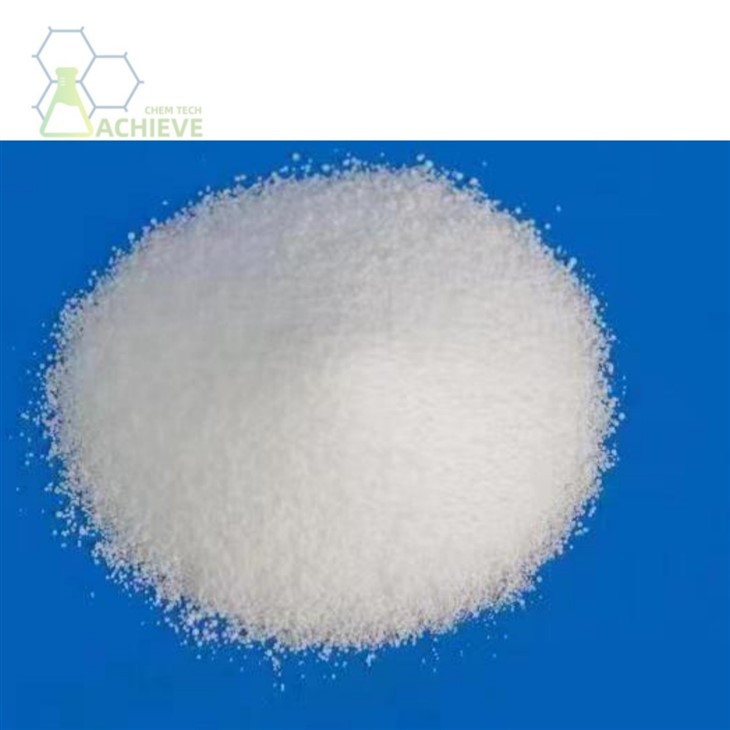


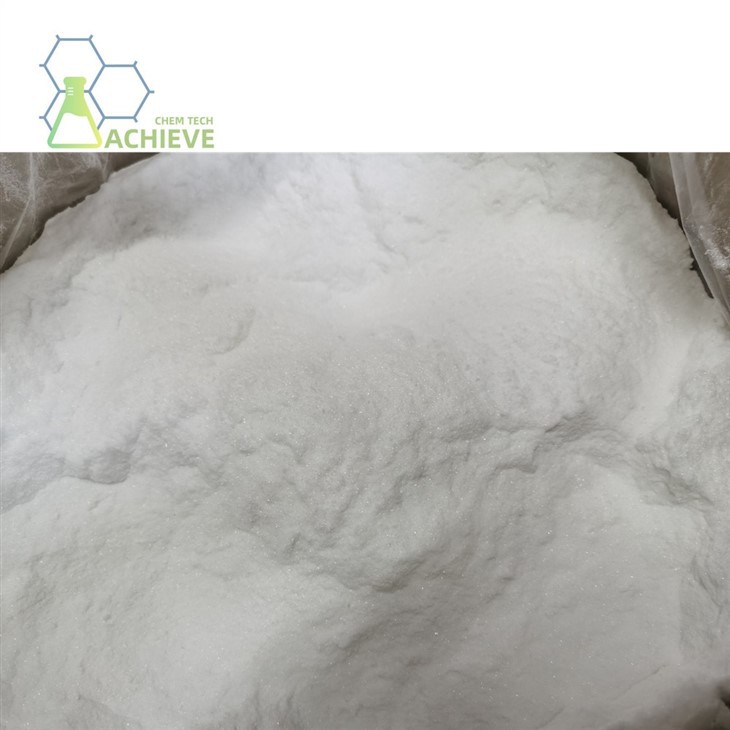


Shaanxi BLOOM Tech Co., Ltd. is one of the most experienced manufacturers and suppliers of lithium hydride cas 7580-67-8 in China. Welcome to wholesale bulk high quality lithium hydride cas 7580-67-8 for sale here from our factory. Good service and reasonable price are available.
Lithium hydride is an inorganic compound that appears as a white or bluish gray semi transparent crystal or powder. It is stable in dry air at room temperature and does not decompose; But it can undergo thermal decomposition at high temperatures, quickly turning gray when exposed to light, and quickly decomposing into lithium hydroxide and hydrogen gas when exposed to water. The reaction equation is: LiH+H ₂ O → LiOH+H ₂ ↑. It does not react with chlorine, oxygen, or hydrogen chloride at room temperature, but can react with oxygen and chlorine at high temperatures to produce corresponding oxides and chlorides; Reacts with nitrogen to generate amine compounds, imine compounds, and nitrides; It can react with aluminum chloride in ether to produce lithium aluminum hydride, which is insoluble in benzene and toluene, slightly soluble in dimethylformamide, and soluble in ether. It can be used as a desiccant, as well as a reducing agent, alkylating reagent, Claisen's reagent, etc., and as a nuclear protection material.

Additional information of chemical compound:
|
Chemical Formula |
HLi |
|
Exact Mass |
8.02 |
|
Molecular Weight |
7.95 |
|
m/z |
8.02 (100.0%), 7.02 (8.2%) |
|
Elemental Analysis |
H, 12.68; Li, 87.32 |
|
Melting point |
680 °C(lit.) |
|
Density |
0.82 g/mL at 25 °C(lit.) |
|
Storage conditions |
Store below +30°C. |
|
|
|


Lithium hydride, with the chemical formula LiH and a molecular weight of approximately 7.95, is a colorless crystal in its pure state at room temperature and pressure. It often appears gray when containing small amounts of impurities. This is a typical salt like hydride with extremely high chemical reactivity. It can spontaneously ignite when exposed to air and react violently with water to release hydrogen gas. It is precisely this' violent 'chemical personality that endows it with an irreplaceable strategic position in many high-end fields. From aerospace propulsion to drug synthesis, from nuclear protection to chip manufacturing, it holds a pivotal position in the modern industrial landscape due to its high hydrogen content (12.7%), strong reducibility, and unique reactivity.

Organic synthesis field: the undisputed "universal reducing agent"
1. Condensation agent and reducing agent
In organic synthesis, it is a commonly used reducing agent that can reduce compounds such as aldehydes, ketones, esters, etc. to their corresponding alcohols or hydrocarbons. It can also be used to prepare other organic lithium reagents, which play a crucial role in organic synthesis. Compared with common reducing agents, it has stronger reducing ability and higher selectivity, especially suitable for fine synthesis that requires strict reaction conditions.
2. Alkylation reagents and Claisen's reagents
It can also serve as an alkylating reagent and a Claisen reagent in organic reactions.
This means that it can not only "steal" oxygen, but also "insert" carbon chains, playing a bridging role in building complex organic molecular frameworks.
3. Desiccant
Due to its extreme sensitivity to water, it can react with water to produce lithium hydroxide and hydrogen gas, which precisely contributes to its unique value as a desiccant. In organic reaction systems with extremely strict water requirements, trace amounts of water can be efficiently consumed, providing an extremely dry environment for the reaction.


It is insoluble in benzene and toluene, but soluble in ether, which makes its drying effect particularly excellent in ether solvent systems.
4. Synthesis of vitamin A intermediates
It can also be used to prepare intermediates for synthesizing vitamin A, directly serving the pharmaceutical and nutritional industries. Although the size of this application is not large, its added value is extremely high, reflecting its penetration in high-end fine chemicals.
Hydrogen Generation and Storage: An Energy Capsule from Battlefield to Space
1. Military hydrogen generator
The military value of product is primarily reflected in its high efficiency as a source of hydrogen gas generation. 7.95 grams of product can react with water to obtain 22.4 liters of hydrogen gas (under standard conditions) - which means that a very small mass can release a huge volume of hydrogen gas. This characteristic makes it used to manufacture military energy materials such as incendiary bombs and signal flares.


The hydrogen gas produced by its reaction with water can also serve as a hydrogen source for fuel cells, providing power for military equipment.
2. Aerospace hydrogen generator
In the field of aerospace, it can be used as a hydrogen generator to provide the required hydrogen source for aircraft related devices. Due to its high energy density and lightweight characteristics, it is considered for use as a propellant and energy storage system in the aerospace industry. In a drying oven filled with argon gas, lithium with a smooth surface can be reacted with hydrogen gas at around 700 ℃ for about 15 hours to obtain high purity, with a maximum purity of 99.8%.
3. Hydrogen storage materials
It is a reversible material for storing and releasing hydrogen gas, with great potential applications in the field of hydrogen energy. Its hydrogen content is as high as 12.7%, which is currently one of the highest hydrogen contents among known solid-state hydrogen storage materials. The reversibility of releasing hydrogen gas for fuel cell use when needed and being able to "suck back" hydrogen gas when not needed makes it a highly promising key material in the hydrogen energy industry chain.
4. Balloon inflation and fuel cell hydrogen storage medium
As a lightweight low-pressure hydrogen source, it can be used for inflating balloons and also as a hydrogen storage medium for fuel cells.


Nuclear Industry: Silent 'Radiation Shield'
1. Nuclear protective materials
It is used as a nuclear protective material, which is closely related to its high hydrogen content and the physical properties of effectively slowing down neutrons. In nuclear reactors, hydrogen containing materials can effectively slow down neutron velocity and are one of the ideal choices.
2. Hydrogen bomb raw material - lithium deuterium
Lithium deuterium (LiD) in it is the source of deuterium required for fusion in hydrogen bombs. Although this use is sensitive, it objectively demonstrates its strategic position in nuclear weapon technology.
In the field of nuclear science and technology, isotope derivatives play an irreplaceable role.
3. Preparation of PET radioactive tracer
Tritium can be generated through specific nuclear reactions, and tritium can be used for the preparation of radioactive tracers for positron emission tomography (PET). PET technology is widely used in medical imaging to observe and evaluate metabolic activity in diseases such as the brain, cardiovascular system, and tumors. It can be said that it indirectly supports a core diagnostic technology of modern precision medicine.


Batteries and New Energy: The 'Secret Weapon' of the Next Generation Lithium Battery
1. Negative electrode material for lithium-ion batteries
Widely used as an auxiliary component in lithium-ion batteries as a positive electrode material. Adding lithium hydride to the negative electrode of a battery can improve its energy density and charge discharge performance. The team led by Yu Xuebin from the Department of Materials Science at Fudan University has discovered and revealed for the first time the lithium ion transport mechanism of LiH.
And demonstrated its important role in improving the cycling stability of lithium metal negative electrodes. The specific mechanism is: in the charging state, lithium exists mainly in the form of hydrides mixed with small particles of the second metal; When current flows out of the battery pack, lithium generates hydrogen to the second metal particles, and lithium ions enter the electrolyte; During charging, lithium is injected into the negative electrode composition and reacts with the second metal hydride to form small product particles again. This reversible mechanism provides a new approach for the design of high-energy density batteries.


2. Negative electrode materials for new energy chemical lithium batteries
In addition to traditional lithium-ion batteries, it can also be used as a precursor for lithium battery negative electrode materials in the field of new energy and chemical engineering, to develop new high-capacity negative electrode compositions and help breakthrough the next generation of energy storage technology.
Semiconductor and Electronics Industry: The 'Invisible Driver' Behind Chips
1. Semiconductor dose doping source
Can be used in semiconductor processes as a dose doping source to change the carrier concentration in semiconductor materials and regulate the performance of electronic devices. In nanoscale manufacturing processes, doping accuracy directly determines chip performance, and its high purity and controllable reaction characteristics make it an ideal doping precursor.
2. Integrated circuit manufacturing - CVD substrate pretreatment


In the vapor phase epitaxy (CVD) process of integrated circuit manufacturing. It is used as a pre-treatment agent on the substrate surface to remove impurities and oxides on the surface, ensuring high-quality thin film growth. This use is directly related to the yield and performance of chip manufacturing.
3. Perfect crystal preparation
It can be used in the preparation process of semiconductor crystals to form crystals by reacting with other compounds. This type of crystal can provide high purity and excellent crystal structure for the preparation of high-performance semiconductor components.
Medicine and Life Sciences: Full Chain Penetration from Synthesis to Diagnosis
1. Drug synthesis catalysts and intermediates
In some medical research, it can be used as a catalyst, reducing agent, or reaction intermediate for studying compounds or drugs. For example, used for the synthesis of organic compounds, pharmaceutical raw materials, or pharmaceutical intermediates, serving research in drug development, efficacy evaluation, and drug synthesis processes. As a high-end pharmaceutical intermediate, lithium hydride can assist in pharmaceutical research and production.


2. Intermediate for synthetic drugs
It can be used to synthesize organic compounds, pharmaceutical raw materials, or pharmaceutical intermediates, playing a key role in drug development, efficacy evaluation, and drug synthesis processes. Due to the extremely strict requirements for purity and impurity content in the pharmaceutical industry, suppliers are usually required to provide products with high purity (99.8% level).
Medicine and Life Sciences: Full Chain Penetration from Synthesis to Diagnosis
1. Ceramic process stabilizer
Used as a stabilizer in ceramic technology, it can improve the performance of ceramic materials, such as increasing their hardness and thermal stability. The addition of product can effectively regulate grain growth and optimize microstructure during high-temperature ceramic sintering process.
2. Preparation of special alloys


It can be used to prepare special alloys and materials, with characteristics such as high strength, high hardness, and corrosion resistance. It can also be used as a precursor for preparing rare metals and alloys - metallic lithium can be obtained through reduction reactions, and it can also be used to synthesize hydrides of metals such as aluminum and magnesium.
3. Superhard material cubic boron nitride catalyst
It can also be used as a synthetic catalyst for cubic boron nitride, a superhard material, and occupies a place in the superhard material industry.
Other industrial applications: ubiquitous' behind the scenes heroes'
1. Pesticide synthesis
The synthetic production of pesticides, chemicals, fragrances, dyes and other industries all have varying degrees of demand for them. It acts as a reducing agent and condensing agent, participating in the synthesis reactions of various active ingredients.
2. Fragrance purification and dye processing
In the fields of spice purification and dye processing, its reducibility can be used to remove impurities, regulate molecular structure, and improve product quality.


3. NMR experimental solvent
Can be used as a sample solvent in nuclear magnetic resonance (NMR) experiments. Compared with other solvents, it has stronger chemical shift and lower noise level, and can obtain more accurate nuclear magnetic resonance signals and analysis, making it a special tool in high-end analytical chemistry.
4. Experimental raw materials for universities and research institutes
The relevant experimental research of chemical engineering colleges and research institutes in universities also has varying degrees of demand for lithium hydride.
FAQ
What is LiH used for?
LiH (CAS 7580-67-8) is a binary metal hydride with molecular formula LiH. It is supplied as a powder. It is used as a reducing agent in organic synthesis for example in the reduction of chlorosilanes and as a strong base for deprotonations.
Is LiH explosive?
The substance may ignite spontaneously on contact with moist air. The substance is a strong reducing agent. Reacts violently with oxidants, halogenated hydrocarbons and acids. This produces flammable/explosive gas (hydrogen - see ICSC 0001).
Does LiH exist?
LiH is defined as a compound notable for its unique applications, including use as a neutron shield, fusion reactor fuel, hydrogen gas source, and heat storage material. It is characterized by a simple electronic structure and strong reducing properties.
Is LiH possible?
A group of materials scientists at Lawrence Livermore National Laboratory (LLNL) have made significant progress in developing a scalable and efficient method to produce dense LiH, a material with immense potential for use in nuclear fusion, long-term human space travel, and thermal energy storage.
Hot Tags: lithium hydride cas 7580-67-8, suppliers, manufacturers, factory, wholesale, buy, price, bulk, for sale, 2 Chlorobenzaldehyde CAS 89 98 5, 6 Nitro 1 diazo 2 naphthol 4 sulfonic Acid, tert Butyldimethylsilyl chloride, 2 6 Dichloropyrazine CAS 4774 14 5, 2 4 Quinolinediol, 2 2 Bis hydroxymethyl butyric Acid CAS 10097 02 6