




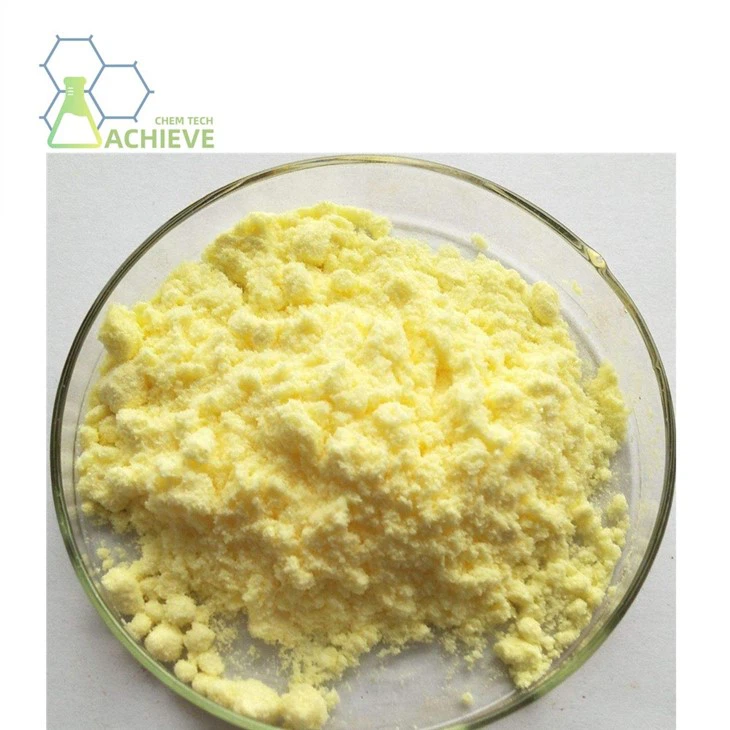
Shaanxi BLOOM Tech Co., Ltd. is one of the most experienced manufacturers and suppliers of 2-methyl-4-nitrobenzoic acid cas 1975-51-5 in China. Welcome to wholesale bulk high quality 2-methyl-4-nitrobenzoic acid cas 1975-51-5 for sale here from our factory. Good service and reasonable price are available.
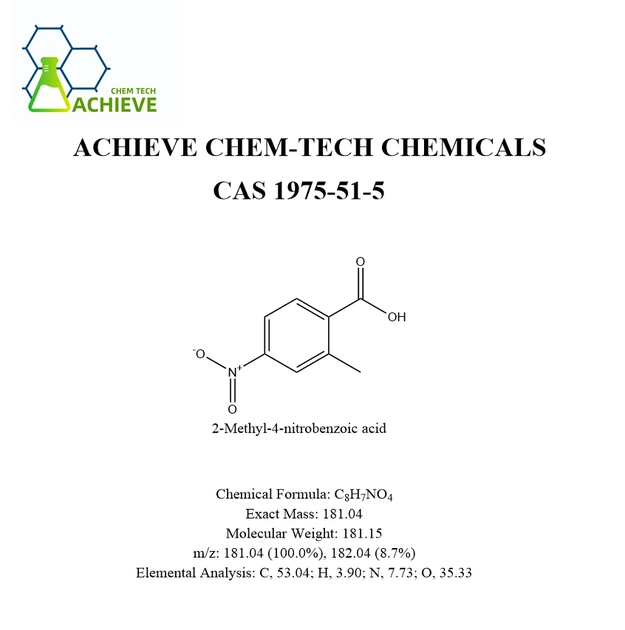
2-Methyl-4-nitrobenzoic acid is an organic compound with the chemical formula C₈H₇NO₄. Structurally, it features a benzene ring substituted with a methyl group at the 2-position and a nitro group at the 4-position, along with a carboxylic acid group. This compound is a derivative of benzoic acid, modified to include both nitro and methyl substituents, which significantly influence its chemical properties and reactivity.It is often utilized as an intermediate in the synthesis of pharmaceuticals, dyes, and agrochemicals. Its nitro group can be reduced to an amino group, facilitating further functionalization and the creation of complex molecular architectures. Due to its reactivity and versatility, this compound serves as a valuable building block in organic chemistry research and industrial applications.

|
|
|

|
Chemical Formula |
C8H7NO4 |
|
Exact Mass |
181.04 |
|
Molecular Weight |
181.15 |
|
m/z |
181.04 (100.0%), 182.04 (8.7%) |
|
Elemental Analysis |
C, 53.04; H, 3.90; N, 7.73; O, 35.33 |

2-Methyl-4-nitrobenzoic acid is an organic compound with distinct physical properties that define its morphology. This compound, belonging to the class of nitrobenzoic acids, exhibits characteristics typical of aromatic carboxylic acids with nitro and methyl substituents.
Appearance and State: At room temperature, it typically appears as a solid. It is often observed in the form of crystalline powder or needles, depending on the conditions of its synthesis and purification. The crystalline structure is a result of the molecule's ability to form ordered, repeating patterns through intermolecular forces, particularly hydrogen bonding and van der Waals interactions.
Color: Pure product is usually off-white to pale yellow in color. The presence of impurities or variations in the manufacturing process can lead to slight discoloration, but the compound generally maintains a relatively light hue.
Odor: Like many organic acids, the compound may possess a faint, characteristic odor. However, it is not typically described as having a strong or pungent smell compared to other carboxylic acids, possibly due to the electron-withdrawing effects of the nitro group, which can influence the compound's volatility and, consequently, its odor intensity.
Solubility: This compound exhibits moderate solubility in polar solvents such as ethanol and dimethyl sulfoxide (DMSO), and it is sparingly soluble in water. The presence of the carboxylic acid group allows for hydrogen bonding with water molecules, but the hydrophobic methyl and nitro groups reduce its overall water solubility. In organic solvents, the compound's solubility is enhanced due to better interaction with the nonpolar parts of the molecule.
Melting Point: It has a relatively high melting point, which is characteristic of many aromatic compounds with strong intermolecular forces. The exact melting point can vary slightly depending on the purity of the sample but is generally in the range of 200-210°C. This high melting point reflects the compound's crystalline nature and the strong interactions between its molecules.
Stability: The compound is stable under normal storage conditions but should be kept away from strong oxidizing agents and excessive heat, as the nitro group can confer some sensitivity to these conditions.

Pharmaceutical Intermediates: Core Mainstream Application Field

The pharmaceutical industry represents the primary application scenario for this chemical compound. Thanks to its flexibly modifiable functional groups, it is deployed in the synthetic manufacturing of a wide range of targeted therapeutics, clinical medicines and pharmaceutical testing reagents.
First and foremost, it serves as an essential raw material for synthesizing tolvaptan, a vasopressin V2 receptor antagonist clinically indicated for hyponatremia induced by heart failure and liver cirrhosis. The compound acts as the core precursor of the drug's aromatic parent nucleus.
Two pivotal reactions-nitro reduction and carboxyl amidation-construct the core molecular scaffold of the drug, rendering it an indispensable key building block for the industrial-scale creation of tolvaptan.
Second, 2-Methyl-4-nitrobenzoic acid supports the research and development of small-molecule anti-tumor and anti-inflammatory drugs. Catalytic hydrogenation reduces the para-nitro group to an amino group, yielding 2-methyl-4-aminobenzoic acid.


The amino group can undergo diazotization, nucleophilic coupling and heterocyclic condensation reactions, enabling conjugation with heterocycles such as pyrazole and pyrimidine to generate Raf kinase inhibitors and candidate anti-inflammatory arylamide agents, which suppress tumor cell proliferation and systemic inflammatory responses. Beyond this, the compound is utilized to fabricate biochemical fluorescent detection probes. Leveraging the optical response properties of the aromatic nitro group, it enables the synthesis of intracellular enzyme activity assay reagents for in vitro pharmacological experiments and biological specimen testing.
Pesticide Synthetic Intermediates: Manufacture of Eco-Friendly Agrochemicals
Within the agrochemical sector, this compound functions as an key building block for synthesizing high-efficiency, low-toxicity herbicides and insecticides, aligning with the development demands of green pesticides in modern agriculture.
On one hand, it facilitates the synthesis of aryloxypropionate herbicides. Carboxyl esterification and side-chain modification tune the molecular architecture of herbicides, inhibiting the synthesis of acetyl-CoA carboxylase in weeds and blocking their fatty acid metabolism. This delivers potent eradication of broadleaf weeds in farmlands while maintaining high crop safety.


On the other hand, it is employed in producing key building blocks for sulfonylurea herbicides, optimizing the lipophilicity and target specificity of pesticide molecules to boost weeding efficacy and mitigate pesticide residue levels.
Additionally, the compound acts as a precursor for synthetic pyrethroid insecticides. Amidation modification generates insecticidal moieties targeting piercing-sucking pests including aphids, whiteflies and planthoppers, which disrupt neural signal transmission in pests. Such formulations feature robust insecticidal activity and low propensity for pest resistance, and are widely adopted for pest control on fruits, vegetables and field crops.
Dye and Fine Chemical Intermediates: Production of Textile Colorants
This chemical is not used directly as a dye, but as a core precursor for aromatic dyes applied in textile printing and dyeing, as well as colorants for industrial inks. Reduction of its molecular nitro group produces aromatic amine derivatives with excellent diazotization reactivity. These derivatives undergo coupling reactions with phenols and aromatic amines to synthesize yellow and orange acid dyes and reactive dyes. Characterized by favorable water solubility and superior color fastness, these dyes suit the dyeing of natural fibers such as cotton and linen. They are also applied in color blending for water-based industrial inks and pigment slurries, sustaining stable utilization across the printing, dyeing and fine chemical industries.

Research on Organic Synthetic Methodology: Reaction Templates and Standard Reference Reagents

In laboratory organic synthesis research, this compound serves as a classic polyfunctional aromatic ring reaction template. Researchers leverage its three distinct reactive sites to investigate synthetic processes including selective oxidation of aromatic side-chain methyl groups, controlled reduction of nitro groups and directional esterification of carboxyl groups, optimizing construction methodologies for C-C, C-N and C-O bonds.
Furthermore, its stable physicochemical properties and well-defined molecular structure make it a frequent standard reference material for chromatographic analysis. It supports method validation and calibration for high-performance liquid chromatography (HPLC) and mass spectrometers, facilitating purity testing and quality control of aromatic carboxylic acid chemical compounds and pharmaceutical key building block.

Monomers for Polymer Materials: Synthesis of Functional Resins

This compound can be incorporated as a modifying monomer into the synthesis of polyester resins and anti-corrosion coating resins. Polycondensation reactions between its carboxyl groups and polyols integrate nitro and methyl moieties into the polymer backbone, enhancing the resin's acid and alkali resistance, high-temperature stability and mechanical strength.
The modified resins are formulated into anti-corrosion coatings for metal equipment and protective linings for industrial pipelines. Compared with conventional polyester materials, they exhibit markedly improved anti-aging performance and chemical stability, suitable for demanding industrial anti-corrosion operating conditions.

Two mainstream synthetic routes are adopted in industrial creation and laboratory preparation: the nitration route of o-toluic acid, and the selective monomethyl oxidation route of 4-nitro-o-xylene.
Route 1: Selective Nitration of o-Toluic Acid (Preferred Industrial Process)
Using o-toluic acid as the starting material, oriented nitration is carried out with dilute mixed acid (nitric acid + sulfuric acid) under low-temperature controlled conditions.
Joint positioning effects of the carboxyl and methyl groups facilitate preferential formation of para-nitro substituted compounds. The reaction temperature is maintained between 0 and 10 °C to suppress polynitration side reactions.
Upon reaction completion, crude solids precipitate after dilution with ice water, followed by recrystallization in hot water to remove the isomer 2-methyl-6-nitrobenzoic acid.
This route features short process flow and readily available raw materials, yet precise temperature and acid concentration control are required to boost reaction selectivity. Supporting neutralization and water washing procedures are implemented to lower waste acid discharge.
Route 2: Selective Mono-oxidation of 4-Nitro-o-xylene
4-nitro-o-xylene is first obtained via nitration of o-xylene, after which one methyl group undergoes selective oxidation into a carboxyl group. Traditional processes adopt strong oxidants including potassium permanganate and sodium dichromate, which suffer from massive heavy metal waste residues and prone over-oxidation generating dicarboxylic acid byproducts.
Modern eco-friendly technologies adopt liquid-phase oxidation with dilute nitric acid catalyzed by NHPI/cobalt salt catalysts under atmospheric pressure and low temperature, delivering superior selectivity and far less three wastes. 2-Methyl-4-nitrobenzoic acid precipitates upon acidification after oxidation, with purified purity exceeding 99%, and this process is widely applied for manufacturing high-end pharmaceutical-grade materials.
Auxiliary Purification
Crude compounds from both routes are purified via recrystallization using an ethanol-water mixed solvent to eliminate isomers, unreacted starting materials and oxidative impurities.
Byproduct Control
Temperature regulation during nitration reduces dinitro impurities; the catalytic system in the oxidation step prevents byproducts formed from dual-methyl oxidation. Each route bears distinct merits: the nitration route is selected for mass creation of chemical intermediates, while the catalytic xylene oxidation route is preferred for high-purity pharmaceutical active ingredients.

High-performance liquid chromatography (HPLC) serves as the primary analytical technique for this compound, coupled with an ultraviolet (UV) detector to quantify the main component and related impurities.
A C18 reversed-phase column is the standard chromatographic stationary phase, with a methanol–aqueous phosphoric acid mobile phase applied for gradient elution at a detection wavelength ranging from 240 to 260 nm.
Quantification relies on the UV absorbance generated by conjugation between molecular nitro groups and aromatic rings. This method achieves effective separation of unreacted starting materials, oxidative byproducts and stereoisomers, and is applicable to purity testing of industrial raw materials and pharmaceutical key building blocks. Its system suitability and recovery rates fully comply with pharmacopoeia quality control specifications.
Infrared spectroscopy (IR) is adopted for qualitative identification: characteristic absorption bands cover vibrational peaks of carboxylic hydroxyl groups, aromatic nitro moieties and methyl groups.
Rapid structural confirmation is realized by matching the acquired spectrum against a standard reference library. Proton nuclear magnetic resonance spectroscopy (¹H NMR) is utilized for definitive structural verification, which differentiates three sets of hydrogen signals on the benzene ring and accurately identifies substitution positions; this technique is widely deployed in new compound development and impurity source tracing.
Liquid chromatography-tandem mass spectrometry (LC-MS/MS) is used for trace impurity analysis, whereby trace nitroaromatic impurities are qualitatively identified via characteristic molecular ion peaks and quantitatively measured.
Water content is determined via Karl Fischer titration, while ignition residues and heavy metals are tested per universal colorimetric methods for chemical compounds. Thin-layer chromatography (TLC) is available for rapid screening, employing a dichloromethane–ethyl acetate developing solvent with visualization under UV light, ideal for rapid preliminary in-process testing in creation workshops.
FAQ
What is the CAS number of it?
+
-
97 1975-51-5.
Hot Tags: 2-methyl-4-nitrobenzoic acid cas 1975-51-5, suppliers, manufacturers, factory, wholesale, buy, price, bulk, for sale, Trimethyl Phosphate CAS 512 56 1, 1 3 Propanediol Liquid CAS 504 63 2, Thiophosgene, 6 Nitro 1 diazo 2 naphthol 4 sulfonic Acid, quinone dioxime, 4 Diphenylamino phenylboronic Acid CAS 201802 67 7