




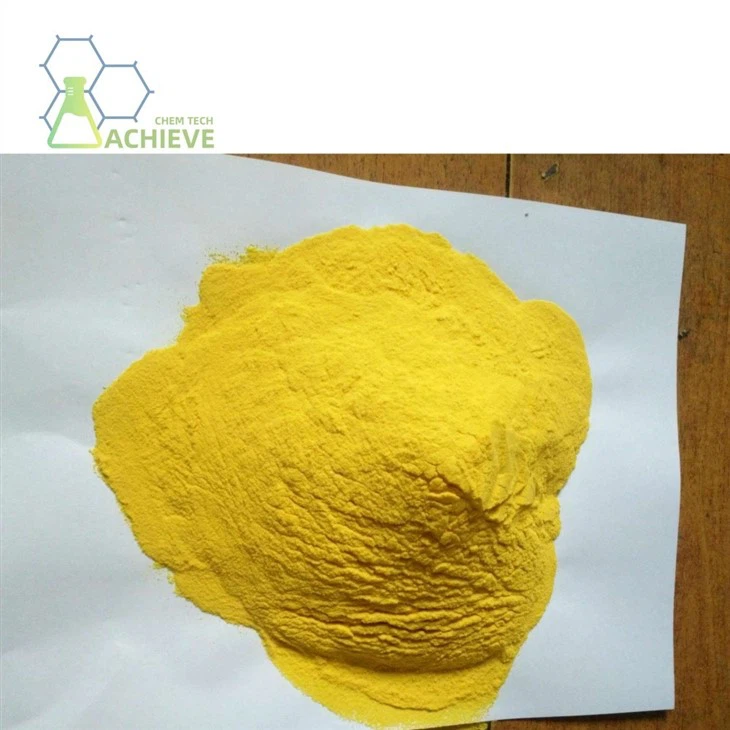


3,5-Dinitrosalicylic acid, also known as 2-hydroxy-3,5-dinitrobenzoic acid or 3,5-dinitroorthohydroxybenzoic acid, is an organic compound. The appearance is usually gray white crystals or yellow plate-like crystals, soluble in water, as well as organic solvents such as alcohols, benzene, and ethers. It is mainly produced by nitration of salicylic acid. The specific process is to add salicylic acid to a mixed acid (usually a mixture of nitric acid and sulfuric acid) and carry out nitration reaction at 15-25 ℃. Then slowly pour the nitration into ice water to obtain a yellow solid precipitate. After filtration and washing with water, 3,5-dinitrosalicylic acid is obtained. It serves as an important intermediate in pharmaceutical synthesis and is used to synthesize various drugs. In biochemical and enzymatic research, it is used as a reagent for detecting and analyzing enzyme activity. It can also react with reducing sugars to produce colored products, and the content of reducing sugars can be determined by colorimetric method. The colorimetric method can also be used to determine the content of polysaccharides. Used for spectrophotometric determination of ampicillin, etc. As an analytical reagent used for glucose detection.

Additional information of chemical compound:
|
Chemical Formula |
C7H4N2O7 |
|
Exact Mass |
228.00 |
|
Molecular Weight |
228.12 |
|
m/z |
228.00 (100.0%), 229.01 (7.6%), 230.01 (1.4%) |
|
Elemental Analysis |
C, 36.86; H, 1.77; N, 12.28; O, 49.09 |
|
Melting point |
168-172℃ (lit.) |
|
Boiling point |
369.91℃(rough estimate) |
|
Density |
1.7914 (rough estimate) |
|
|
|


Application in plastic additives
3,5-dinitrosalicylic acid (abbreviated as: DNS), It is an important organic compound. In the plastic industry, DNS or its derivatives can be used as plastic additives to improve the performance of plastic materials. The following are its uses in plastic additives:
DNS molecules contain functional groups such as hydroxyl (- OH), nitro (- NO2), and carboxyl (- COOH). These functional groups endow DNS with unique chemical properties, enabling it to interact with certain components in plastic materials and improve their performance. DNS or its derivatives can be added as enhancers to plastic materials. They can form hydrogen bonds or ionic bonds with plastic molecular chains to enhance the intermolecular forces of plastic materials, thereby improving their mechanical properties such as hardness, wear resistance, and tensile strength. In the process of plastic blending or composite, the compatibility between different plastic components is often poor, leading to a decrease in the performance of the blend or composite material.

DNS or its derivatives can be added as compatibilizers to plastic blends or composite materials, promoting the interaction between different plastic components through their special chemical structure, and improving the compatibility and performance of blends or composite materials. DNS or its derivatives can also improve the processing performance of plastic materials. For example, they can reduce the melt viscosity of plastics, improve their flowability and formability, making plastic materials easier to form and process during processing
Specific application scenarios in plastic additives

DNS or its derivatives can be added as reinforcing agents to plastic materials such as polycarbonate, polyamide, polyester, etc. to improve their mechanical properties such as hardness, wear resistance, and tensile strength. For example, adding an appropriate amount of DNS or its derivatives to polycarbonate can significantly improve its hardness and wear resistance, making it more suitable for manufacturing high demand engineering plastic products. DNS or its derivatives can be used as compatibilizers in the preparation process of plastic blends or composite materials. For example, in the blending process of polyolefin and polystyrene, adding an appropriate amount of DNS or its derivatives can improve the compatibility and properties of the blend.
In addition, DNS or its derivatives can also be used as reinforcing agents in the preparation of plastic composite materials to improve their mechanical properties and durability. DNS or its derivatives can also be used to prepare specialty plastics. For example, when preparing special plastics that are resistant to high temperatures and wear, an appropriate amount of DNS or its derivatives can be added to improve the high temperature resistance and wear resistance of the plastic. In addition, when preparing special plastics with special functions (such as flame-retardant plastics, conductive plastics, etc.), 3DNS or its derivatives can also be considered as additives.
After adding DNS or its derivatives, the mechanical properties such as hardness, wear resistance, and tensile strength of plastic materials are significantly improved. This is due to the interaction between DNS or its derivatives and plastic molecular chains, which enhances the intermolecular forces of plastic materials. DNS or its derivatives can reduce the melt viscosity of plastics, improve their flowability and formability. This makes plastic materials easier to shape and process during the manufacturing process, improving production efficiency and product quality.

In the preparation process of plastic blends or composites, the use of DNS or its derivatives as compatibilizers can significantly improve the compatibility and performance of the blends or composites. This helps to address compatibility issues between different plastic components and improve the overall performance of blends or composites. By adjusting the amount and type of DNS or its derivatives added, plastic materials can be endowed with special functions. For example, adding DNS derivatives with flame retardant properties can improve the flame retardant properties of plastics; Adding conductive 3,5-dinitrosalicylic acid derivatives can prepare conductive plastics, etc.
Precautions for use in plastic additives

The amount of DNS or its derivatives added needs to be strictly controlled. Adding too little may not achieve the expected effect; Excessive addition may lead to a decrease in the performance or even failure of plastic materials. Therefore, sufficient experimentation and testing are required before use to determine the optimal dosage. Compatibility testing is required before adding DNS or its derivatives to plastic materials. To ensure good compatibility with plastic materials and avoid issues such as delamination and cracking. DNS or its derivatives have a certain impact on the processing conditions of plastic materials, such as temperature, pressure, speed, etc.
Therefore, it is necessary to optimize processing conditions before use to ensure that plastic materials have good processing performance and product quality. DNS or its derivatives may have certain toxicity and irritability. Therefore, a safety assessment is required before use to ensure that it is harmless to the environment and human health. At the same time, necessary safety measures need to be taken during use, such as wearing protective goggles, masks, gloves, and other personal protective equipment.
Future Development Trends in Plastic Additives
Green development
With the increasing global emphasis on environmental protection and sustainable development, green development has become an important trend in the future plastic additive industry. DNS or its derivatives, as plastic additives, need to pay attention to environmental protection and sustainable development, adopt more environmentally friendly and energy-saving production processes and technological means, and reduce pollution and damage to the environment.
Functional development
With the continuous progress and innovation of science and technology, the functional development of plastic additives has become an important direction for the future. DNS or its derivatives can be chemically modified and modified to give plastic materials more special functions, such as flame retardancy, conductivity, antibacterial, etc. This will help meet the market's demand for high-performance, multifunctional plastic materials.
High performance development
With the widespread application of high-performance plastic materials such as engineering plastics and specialty plastics, the performance requirements for plastic additives are also increasing. DNS or its derivatives need to continuously improve their performance to meet the market's demand for high-performance plastic additives. For example, the thermal stability, weather resistance, and other properties of DNS or its derivatives can be improved by optimizing the molecular structure and increasing purity.
Intelligent development
With the continuous development of intelligent technology, the plastic additive industry will also usher in opportunities for intelligent development. By introducing intelligent technology, precise addition and control of plastic additives can be achieved, improving production efficiency and product quality. Meanwhile, intelligent technology can also help the plastic additive industry achieve new production modes such as personalized customization and on-demand production.
side effect
3,5-dinitrosalicylic acid is an organic compound with a wide range of chemical and biological applications, such as as as an analytical reagent for glucose detection, pharmaceutical intermediate, strong oxidant, etc. However, due to its active chemical properties, it may have certain side effects on the human body and the environment. The following is a detailed analysis of its side effects:
1. Human health side effects

Acute poisoning symptoms
3,5-dinitrosalicylic acid is irritating to the human body and may cause acute poisoning if ingested or in contact. The symptoms of acute poisoning mainly include:
Eye and upper respiratory tract irritation symptoms: After contact, the eyes and upper respiratory tract may feel obvious irritation and discomfort, such as tearing, coughing, sneezing, etc.
Headache and anxiety: Due to the stimulating effect of chemicals on the central nervous system, poisoned individuals may experience neurological symptoms such as headache and anxiety.
Nausea, vomiting, and abdominal pain: The digestive tract is a common affected area of poisoning, and poisoned individuals may experience symptoms such as nausea, vomiting, and abdominal pain.
Constipation: Some poisoned individuals may experience digestive symptoms such as constipation, which may be related to intestinal smooth muscle paralysis.
Skin damage: For people who are poisoned through skin absorption, symptoms such as blisters, edema, and roughness may appear on the skin, accompanied by local numbness, itching, burning pain, and other discomfort.
Chronic effects
Long term exposure or low-dose intake of 3,5-dinitrosalicylic acid may have chronic effects on the human body, including:
Skin and mucosal irritation: Long term exposure may cause sustained irritation and damage to the skin, mucous membranes, and other areas.
Neurasthenia syndrome: Symptoms of neurasthenia such as dizziness, fatigue, and memory loss may occur.
Hypotension: Long term exposure may affect the cardiovascular system, leading to hypotension.
Digestive system symptoms: Nausea, vomiting, chest tightness, loss of appetite, stomach pain, constipation, and other symptoms may persist or recur.
Liver injury: The liver is an important organ for detoxification, and long-term exposure to 3,5-dinitrosalicylic acid may lead to liver injury, manifested as symptoms such as liver enlargement, liver pain, jaundice, etc.

2. Environmental health side effects
Water pollution
3,5-dinitrosalicylic acid is water-soluble, and if discharged directly into water without treatment, it may cause pollution to the water. This pollution not only affects the survival and reproduction of aquatic organisms, but may also spread through the food chain, ultimately affecting human health.
Soil pollution
The residue of 3,5-dinitrosalicylic acid in soil may lead to soil pollution. This pollution may affect the community structure and function of soil microorganisms, thereby affecting soil fertility and crop growth.
Air pollution
During production and use, 3,5-dinitrosalicylic acid may be released into the atmosphere in the form of gas or dust, causing air pollution. This type of pollution not only affects human health, but may also have long-term impacts on the ecological environment.
3,5-Dinitrosalicylic acid is a testament to the enduring utility of simple organic compounds in scientific and industrial progress. From its origins in urine analysis to its role in cutting-edge biotechnology, DNS continues to evolve, driven by innovations in synthesis, application, and safety. As researchers push the boundaries of green chemistry and nanotechnology, DNS is poised to remain a vital tool in the quest for sustainable and precise analytical solutions.
Hot Tags: 3,5-dinitrosalicylic acid cas 609-99-4, suppliers, manufacturers, factory, wholesale, buy, price, bulk, for sale, 1 2 Naphthoquinone 4 sulfonic acid sodium salt, 2 Phenylacetamide CAS 103 81 1, Antioxidant 1520, D-tert-Butylglycine, 2-Chloro-3-methylpyridine, 5 Fluoro 2 Nitroaniline CAS 2369 11 1