




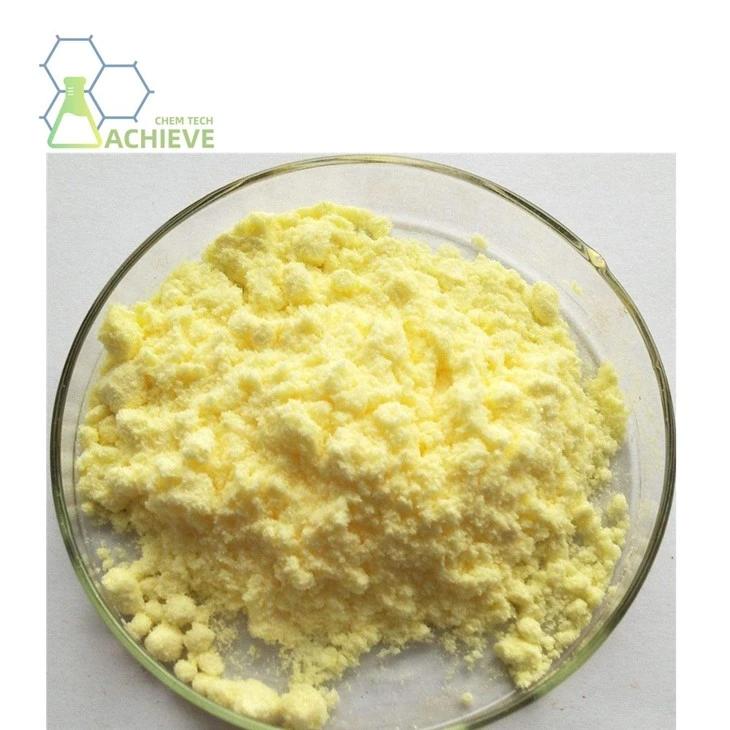
3-Amino-5-methylpyrazole(AMP) is a heterocyclic organic compound featuring a pyrazole ring substituted with an amino group at the 3-position and a methyl group at the 5-position. This chemical structure imparts unique reactivity and properties, making it valuable in various applications.Chemically, the compound belongs to the pyrazole family, characterized by a five-membered ring containing two adjacent nitrogen atoms. The amino group (-NH₂) enhances its solubility in polar solvents and provides a site for further chemical modifications, such as acylation or alkylation reactions.Meanwhile, the methyl group contributes to the molecule's lipophilicity, influencing its physical properties and interactions with biological targets.
In practical applications, it serves as a versatile intermediate in organic synthesis. It can be used to prepare pharmaceuticals, agrochemicals, and advanced materials. For instance, its derivatives may exhibit biological activities, including antimicrobial or anti-inflammatory effects, though specific applications depend on structural modifications.

|
|
|


|
Chemical Formula |
C4H7N3 |
|
Exact Mass |
97.06 |
|
Molecular Weight |
97.12 |
|
m/z |
97.06 (100.0%), 98.07 (4.3%), 98.06 (1.1%) |
|
Elemental Analysis |
C, 49.47; H, 7.27; N, 43.27 |


Pharmaceutical Industry
3-Amino-5-methylpyrazole serves as a key intermediate in the synthesis of various pharmaceutical compounds. Its amino and pyrazole groups make it a versatile building block for drug development.

Core Structural Properties and Foundation of Medicinal Value
AMP has a molecular formula of \(\mathbf{C_4H_7N_3}\). It appears as a pale yellow solid at room temperature, possessing two functional groups: reactive amino group and pyrazole heterocycle, which provide multiple reaction sites for pharmaceutical synthesis. The 3-amino group in its structure features strong nucleophilicity and can participate in substitution, condensation, cyclization and other reactions.
As a privileged scaffold, the pyrazole ring binds efficiently to biological targets such as enzymes and receptors in vivo, endowing its derivatives with broad-spectrum biological activities including anti-inflammatory, hypoglycemic and anti-tumor effects.
Meanwhile, AMP is weakly alkaline and can form salts with organic acids to improve water solubility, meeting the requirements for pharmaceutical formulation development. Owing to the above properties, AMP has become an indispensable intermediate in the pharmaceutical industry.


Intermediate and Scaffold Builder for Anti-Tumor Drugs
Pyrazole derivatives have become a research hotspot in anti-tumor drug development due to their capabilities of inhibiting cell proliferation and inducing apoptosis of tumor cells. AMP is a critical building block for constructing the core scaffolds of such drugs. It can be converted into pyrazolo[1,5-a]pyrimidine derivatives via cyclization reactions, which exert prominent inhibitory effects on cancer cells of lung cancer, breast cancer, lymphoma and other malignancies.
For instance, 3-amino-5-methylpyrazolo[1,5-a]pyrimidin-7-one is synthesized from AMP and diethyl oxalate through condensation and cyclization.
This compound can be further modified into CDK4/6 kinase inhibitors, which restrain tumor cell proliferation by blocking cell cycle progression. In addition, the amino group of AMP can undergo amidation reaction with aromatic carboxylic acids to synthesize pyrazole-containing tyrosine kinase inhibitors. These agents target and inhibit EGFR, VEGFR and other targets for the treatment of advanced solid tumors. Compared with other intermediates, AMP-derived anti-tumor derivatives present high target selectivity and low toxic and side effects, well adapting to the demands of clinical combination therapy.


Applications in the R&D of Anti-Inflammatory and Anti-Infective Drugs
3-Amino-5-methylpyrazole derivatives show great potential in anti-inflammatory and anti-infective fields. The pyrazole ring suppresses the release of key inflammatory factors such as TNF-α and IL-6, while the amino group reinforces hydrogen bonding with inflammatory targets. In the research and development of non-steroidal anti-inflammatory drugs (NSAIDs), AMP reacts with benzoyl chloride to produce N-benzoyl-3-amino-5-methylpyrazole.
This compound exerts anti-inflammatory and analgesic effects by inhibiting COX-2 activity, with remarkably fewer gastrointestinal adverse reactions than traditional NSAIDs.In terms of anti-infective agents, AMP is applied to prepare intermediates for antifungal and antibacterial drugs. For example, 5-bromo-3-methylpyrazolecarboxylic acid is obtained from AMP via bromination and oxidation. Condensation of this intermediate with heterocyclic amines yields antibacterial drugs active against Candida albicans and Staphylococcus aureus, which work by inhibiting nucleic acid synthesis of pathogens. Furthermore, AMP derivatives possess moderate inhibitory activity against herpes virus, influenza virus and other viruses, opening up new directions for antiviral drug research.


Molecular Building Block and Screening Tool in Drug R&D
As a versatile molecular building block, AMP plays a vital role in the early stage of drug discovery. Combinatorial chemistry based on AMP enables rapid establishment of pyrazole-containing compound libraries, which are applied to high-throughput screening of active compounds targeting G protein-coupled receptors (GPCRs), kinases, ion channels and other targets. For example, novel p38 MAPK inhibitors screened from AMP-based compound libraries can be used to treat autoimmune diseases including rheumatoid arthritis and psoriasis.
Moreover, AMP can serve as a β-sheet template to study the interactions between drug molecules and proteins or peptides, facilitating structural optimization of drug molecules and improving target affinity and druggability. In drug metabolism research, AMP derivatives are used as probe molecules to simulate the absorption, distribution, metabolism and excretion of drugs in vivo, providing a theoretical basis for dosage form design and administration route selection.

Agrochemicals
It is used in the production of agrochemicals such as pesticides and herbicides. The compound's chemical structure allows it to be incorporated into molecules with specific biological activities.

Chemical Structure and Reactivity
Amino Group (-NH₂): The amino group in it acts as a nucleophile, enabling it to participate in various chemical reactions such as acylation, alkylation, and condensation. This reactivity is essential for modifying the compound and incorporating it into larger molecules with desired properties.
Pyrazole Ring: The pyrazole ring system, a five-membered heterocycle with two nitrogen atoms, imparts stability and rigidity to the molecule. This structure is often found in bioactive compounds, contributing to their pharmacological and agrochemical properties.
Applications in Pesticides
Insecticides: It can be used to synthesize insecticides that target specific pests. Its structure allows for the design of molecules that interfere with insect physiology, such as inhibiting neural transmission or disrupting metabolic processes.
Acaricides: The compound can also be incorporated into acaricides, which are chemicals used to control mites and ticks. By modifying its structure, chemists can create compounds with enhanced activity against these pests.
Mode of Action: The specific biological activity of pesticides derived from it often involves interaction with pest-specific receptors or enzymes, minimizing harm to non-target organisms.


Applications in Herbicides
Selective Herbicides: It can be used to develop herbicides that selectively target weeds without harming crops. This selectivity is crucial for sustainable agriculture, reducing the environmental impact of weed control.
Pre- and Post-Emergence Herbicides: Depending on the formulation, herbicides containing it can be applied before or after weeds emerge, providing flexibility in weed management strategies.
Mechanism of Action: The compound's structure allows for the design of herbicides that disrupt essential plant processes, such as photosynthesis or amino acid synthesis, leading to weed death.
Advantages in Agrochemical Development
Versatility: The compound's reactivity and structural features make it suitable for a wide range of agrochemical applications, from broad-spectrum pesticides to highly selective herbicides.
Efficacy: By incorporating it into agrochemical molecules, chemists can enhance their potency and effectiveness, leading to better pest and weed control.
Environmental Safety: The ability to design molecules with specific biological activities reduces the risk of off-target effects, contributing to safer and more sustainable agricultural practices.


Synthetic Strategies
Derivatization: It can be derivatized through various chemical reactions to introduce functional groups that enhance its agrochemical properties. For example, acylation can introduce lipophilic groups to improve membrane permeability.
Coupling Reactions: The compound can undergo coupling reactions, such as Suzuki-Miyaura or Sonogashira cross-couplings, to form carbon-carbon bonds with other aromatic or heteroaromatic compounds, expanding the structural diversity of potential agrochemicals.
Formulation: The compound can be formulated into different agrochemical products, such as emulsions, granules, or powders, to suit various application methods and environmental conditions.
Case Studies and Examples
Sulfonylurea Herbicides: Some sulfonylurea herbicides, which are highly effective and selective, may incorporate similar heterocyclic structures to it. The compound's structure could be used to develop new sulfonylureas with improved properties.
Neonicotinoid Insecticides: Although neonicotinoids typically feature a nicotinamide core, the amino and heterocyclic functionalities in it could inspire the development of new insecticides with novel modes of action.


Regulatory and Environmental Considerations
Toxicity and Safety: Agrochemicals derived from it must undergo rigorous testing to ensure they are safe for humans, animals, and the environment. Regulatory agencies set strict guidelines for their use and application.
Sustainability: The development of agrochemicals that degrade rapidly in the environment and have minimal persistence is a growing focus. The compound's structure can be modified to enhance biodegradability and reduce environmental impact.
Future Prospects
New Agrochemical Classes: As research continues, it may find applications in emerging agrochemical classes, such as biopesticides or RNA-based pesticides, offering new tools for pest and weed management.
Green Chemistry: Efforts to develop more sustainable synthetic methods and formulations may further enhance the appeal of using it in agrochemical production.


3-Amino-5-methylpyrazole is a valuable compound in the production of agrochemicals, offering unparalleled versatility due to its amino and pyrazole groups. Its role in developing effective pesticides and herbicides is likely to expand as researchers explore new synthetic strategies and applications. By leveraging its unique properties, chemists can design and synthesize agrochemicals with improved efficacy, safety, and environmental sustainability, contributing to more productive and resilient agricultural systems.
FAQ
What is Aminopyrazole used for?
+
-
The aminopyrazole class of compounds originally from Pfizer has shown promising early profiles for the treatment of both visceral leishmaniasis and cutaneous leishmaniasis.
Is pyrazole soluble in water?
+
-
Pyrazole - Physico-chemical Properties.
Soluble in water, soluble in alcohol, ether and benzene. Store below +30°C. Melting Point 67-70 °c, boiling point 186-188 °c.
What class of drug is Aminopyrine?
+
-
It is a tertiary amino compound and a pyrazolone. Aminophenazone is a pyrazolone with analgesic, anti-inflammatory, and antipyretic properties that carries a risk of agranulocytosis.
Is aminophylline short or long acting?
+
-
Aminophylline is a short-acting drug. It comes into effect immediately after being administered. Aminophylline majorly contains theophylline. Theophylline medication, once taken, starts working within 30 minutes.
What does aminophylline do to the heart?
+
-
Aminophylline increases levels of plasma catecholamines. In the present study, intravenous aminophylline administration increased heart rate and LV dP/dt by stimulating β-adrenoceptors.
Hot Tags: 3-amino-5-methylpyrazole cas 31230-17-8, suppliers, manufacturers, factory, wholesale, buy, price, bulk, for sale, Alizarin Powder CAS 72 48 0, 2 Bromopyridine 4 carboxylic acid, 5 Chlorovaleryl Chloride CAS 1575 61 7, Tetrabutylammonium Bromide Powder CAS 1643 19 2, Sodium Thiosulfate Powder CAS 7772 98 7, Cinnamamide