





Shaanxi BLOOM Tech Co., Ltd. is one of the most experienced manufacturers and suppliers of 3-chloroanisole cas 2845-89-8 in China. Welcome to wholesale bulk high quality 3-chloroanisole cas 2845-89-8 for sale here from our factory. Good service and reasonable price are available.
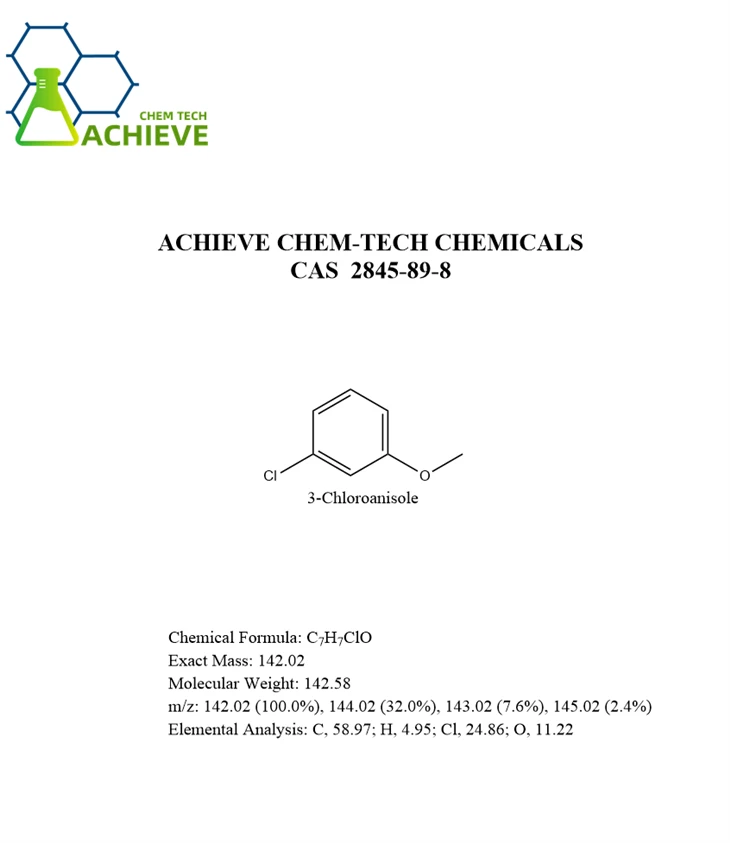
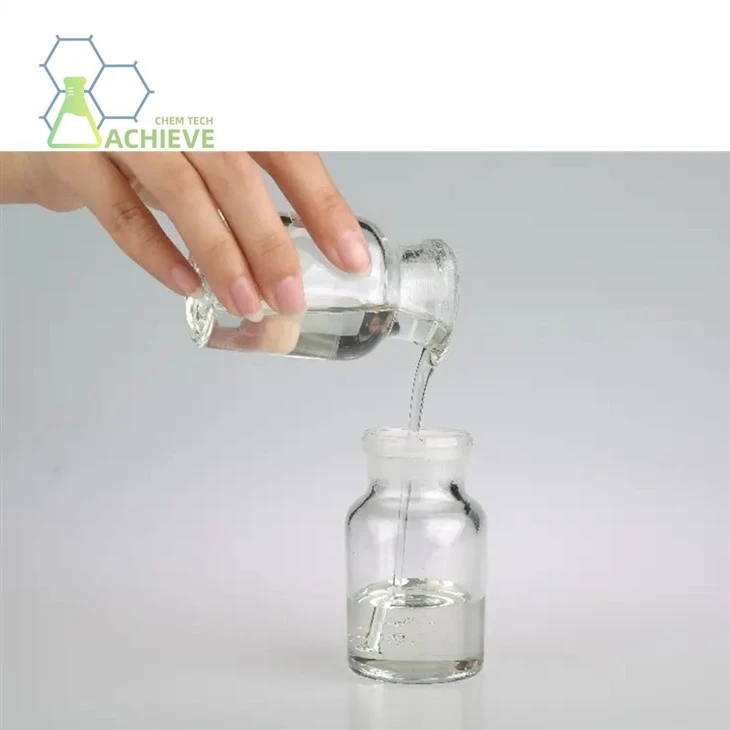
3-Chloroanisole, also known as 3-chloroanisole in Chinese, is an important organic compound. It is also known as m-chloroanisole, 1-chloro-3-methoxybenzene, or 3-chloroanisole. Its CAS number is 2845-89-8. The appearance is usually a colorless to almost colorless transparent liquid with low solubility in water, such as 235 mg/L. It is stable at room temperature and pressure, but should be avoided from contact with fire sources and high temperature environments.
It may also react with other chemicals, depending on the reaction conditions and the properties of the reactants. It has a wide range of applications in chemical research, such as serving as a raw material or intermediate for synthesizing other compounds; In industrial production, it may also be used as a raw material or solvent for certain specific chemical reactions. It is a flammable liquid that may cause irritation to the skin and eyes. Therefore, when in contact, appropriate personal protective equipment such as safety goggles, protective gloves, and gas masks should be worn. It should be stored in a cool, dry, well ventilated place, away from sources of fire and heat. During transportation, relevant safety regulations and laws and regulations should be followed.

Additional information of chemical compound:
|
Chemical Formula |
C7H7ClO |
|
Exact Mass |
142.02 |
|
Molecular Weight |
142.58 |
|
m/z |
142.02(100.0%),144.02(32.0%),143.02(7.6%),145.02(2.4%) |
|
Elemental Analysis |
C, 58.97; H, 4.95; Cl, 24.86; O, 11.22 |
|
Melting point |
25℃ |
|
Boiling point |
193℃(lit.) |
|
Density |
1.164 g/mL at 25℃(lit.) |
|
|
|


3-Chloroanisole, also known as m-chloroanisole or 1-chloro-3-methoxybenzene, is an important organic compound. It has a wide range of applications, involving multiple fields such as chemical research, chemical production, pharmaceuticals, pesticides, and dyes. The following is a detailed explanation of its purpose:
Use of perfume, essence and electronic materials
In the field of spices, m-chloroanisole is often used as a raw material for blending various spices. It can be combined with other spice ingredients to form complex and charming aroma combinations. For example, when blending meat spices, m-chloroanisole can provide a fragrance similar to grilled or smoked meat, enhancing the taste and flavor of the food. In addition, it can also be used to blend tobacco flavors, adding a unique aroma and taste to tobacco products.


In the field of essence, m-chloroanisole is more widely used. It can be added to various essence, such as daily essence, edible essence and tobacco essence. Among daily essence, m-chloroanisole can provide a fresh and lasting fragrance, making perfume, shampoo, shower gel and other products more attractive. In the consumption of essence, it can enhance the aroma and taste of food, making food more delicious. In the tobacco essence, it can add a unique aroma and burnt sweet feeling to the tobacco products and enhance the experience of smokers.
Strong stability: m-Chloroanisole has strong chemical stability and is not easily oxidized or decomposed, thus it can maintain its aroma characteristics in various environments.
Persistent aroma: Due to the strong and long-lasting aroma of m-chloroanisole, it can maintain its fragrance for a long time in the product, improving the overall quality of the product.
High safety: m-chloroanisole e is harmless to human body when used properly, so it can be safely used in various spices and essence.

As an intermediate in photoresist and electronic packaging materials

In the process of integrated circuit manufacturing, photoresist is a key material. It can undergo a chemical reaction under illumination, thereby transferring the pattern on the mask to the silicon wafer. M-Chloroanisole can be used as an important intermediate in photoresist and participate in the synthesis process of photoresist. By precisely controlling its proportion and conditions in the reaction, the chemical structure and physical properties of the photoresist can be adjusted to meet different photolithography process requirements.
This photoresist has better photosensitive performance and resolution, which helps to improve the manufacturing accuracy and performance of integrated circuits. Electronic packaging materials are an important component for protecting electronic components and ensuring stable operation of electronic devices. It can be used to synthesize packaging materials with special properties, such as materials with good insulation, heat resistance, and moisture resistance.

As an intermediate in photoresist and electronic packaging materials

These properties are crucial for protecting electronic components from external environmental influences. By reacting with other compounds and introducing them into the molecular structure of packaging materials, the mechanical properties and chemical stability of the materials can be enhanced, improving the reliability and service life of electronic devices. With the continuous development of organic electronics, more and more organic compounds are being used as electronic materials.
Due to its unique molecular structure and electronic properties, it has the potential to become a potential candidate for organic electronic materials. For example, it can be used as a luminescent layer material or hole transport layer material in organic light-emitting diodes (OLEDs). By optimizing the molecular structure and synthesis method of m-chloroanisole, its application performance in organic electronic materials can be further improved.


3-Chloroanisole is an important organic compound that plays a crucial role as an intermediate in fields such as medicine, pesticides, and dyes. Although its development history is not widely known, by analyzing scientific literature, advances in the chemical industry, and changes in industrial applications, we can outline the process of this compound from discovery to widespread application. The following is a detailed exploration of its development history:
I. Continuous Expansion of Traditional Application Fields
As a core raw material for cemented carbides, its applications in cutting tools and abrasives will continue to deepen. With the modernization and upgrading of the manufacturing industry, the requirements for the purity and particle size of titanium carbide powder in high-end cutting tools have increased, driving its development toward high purity and refinement.Meanwhile, in fields such as mechanical coating and metallurgical refractory materials, its wear resistance and high-temperature resistance can extend the service life of equipment. Demand will grow steadily along with the expansion of industrial capacity, becoming core support for the stable development of the industry.
II. Broad Expansion Potential in Emerging Fields
In the new energy and electronics sectors, titanium carbide powder can be used as a photocatalyst for water splitting to produce hydrogen, and also as electrode and heat-dissipating materials to support the upgrading of electronic devices. In the aerospace industry, its lightweight and high-temperature-resistant properties suit the manufacturing of high-end components, with demand continuously unlocking.In addition, the popularization of additive manufacturing technology will enable it to play an important role in the production of customized parts, forming a new growth engine.
III. Technological Upgrading Drives Industrial Quality Improvement and Efficiency Enhancement
The ongoing optimization of current preparation processes will break industry bottlenecks, reduce production costs while improving product quality, and gradually reduce reliance on imported high-end products.Policy support and increased corporate R&D investment will promote its development toward nanoscale and spheroidized forms, adapting to more high-end scenarios. It is expected that the global market will maintain steady growth in the coming years, and its core position in the high-end manufacturing industrial chain will be further highlighted.

3-Chloroanisole, as a colorless and transparent liquid with a pungent odor, has potential applications in various fields. The following is a detailed analysis of its development prospects:
Technological progress and industrial upgrading
Production process optimization: With the continuous advancement of production technology, the production process of 3-chloroanisole will be continuously optimized. For example, by improving reaction conditions, enhancing reaction efficiency, and reducing production costs, the yield and quality of 3-chloroanisole can be further increased.
Application of environmental protection technology: In the production process of 3-chloroanisole, the application of environmental protection technology will become increasingly important. By adopting advanced technologies such as wastewater treatment and exhaust gas treatment, environmental pollution during the production process can be reduced, and the environmental protection level and social responsibility of enterprises can be improved.
Industry chain integration: With the intensification of market competition and the continuous improvement of the industry chain, the 3-chloroanisole industry chain will show a trend of integration. Through close cooperation and resource sharing between upstream and downstream enterprises, the synergy and overall competitiveness of the industrial chain can be further improved.
Analysis of Industrial Chain Development
Upstream raw material supply: The upstream raw materials for 3-chloroanisole mainly include chlorinated benzene, methanol, etc. The market supply of these raw materials will directly affect the production cost and output of 3-chloroanisole. Therefore, strengthening the monitoring and regulation of the upstream raw material market is of great significance for ensuring the stable supply of 3-chloroanisole.
Midstream production and manufacturing: The production and manufacturing process of 3-chloroanisole is the core part of the industrial chain. By adopting advanced production technology and equipment, improving production efficiency and product quality can reduce production costs and enhance market competitiveness. Meanwhile, strengthening quality management and safety control in the production process is also an important measure to ensure product quality and corporate reputation.
Products Description
3-Chloroanisole (3-chloroanisole, CAS number: 2845-89-8) is a colorless and transparent liquid widely used in organic synthesis and scientific research fields. Its adverse reactions involve acute irritation to the skin, eyes, respiratory tract, and digestive system, and long-term exposure may cause chronic effects such as central nervous system suppression and liver and kidney damage.

Skin irritation
Clinical manifestations: redness, edema, itching at the contact site, and in severe cases, the formation of blisters or ulcers.
Case: A laboratory operator did not wear gloves when handling 3-Chloroanisole. Within 24 hours, diffuse erythema appeared on both hands, accompanied by a burning sensation. After 7 days of rinsing with clean water and local hormone therapy, the condition improved.
Mechanism: Chlorinated aromatic hydrocarbons directly damage the stratum corneum of the skin, triggering the release of inflammatory factors.
Eye irritation
Clinical manifestations: conjunctival congestion, tearing, photophobia, and in severe cases, corneal epithelial detachment.
Animal experiment: Rabbit eye irritation test showed that after 0.1mL of the original solution was dropped into the conjunctival sac, the corneal opacity score reached level 2 (maximum level 4) within 24 hours.
Treatment principle: Immediately rinse with physiological saline for at least 15 minutes, and use antibiotic eye ointment if necessary.


Respiratory irritation
Clinical manifestations: cough, shortness of breath, chest pain, high concentration exposure may lead to chemical pneumonia.
Case: In a chemical plant leak accident, three workers developed laryngeal edema after inhaling steam and required tracheotomy treatment.
Mechanism: Chlorinated aromatic hydrocarbons stimulate respiratory mucosa, causing bronchospasm.
Digestive system reactions
Clinical manifestations: Nausea, vomiting, abdominal pain, and in severe cases, chemical gastritis may occur after ingestion.
Animal experiment: The oral LD50 of rats was 2000mg/kg, showing reduced activity and diarrhea.
Treatment principle: Immediately induce vomiting, take activated carbon orally, and perform gastric lavage if necessary.

FAQ
What is meta chloro anisole used for?
+
-
Meta Chloro Anisole (MCA), chemically known as 3-chloro Anisole, is an organic compound with the molecular formula C7H7ClO. It is a clear to pale yellow liquid with a musty, earthy odor, and is often used in the food and beverage industry as a flavoring agent [1-5].
What is the density of 3 Chloroanisole?
+
-
Density: 1.164 g/mL at 25 °C(lit.) Refractive Index: n20/D 1.536(lit.)
Hot Tags: 3-chloroanisole cas 2845-89-8, suppliers, manufacturers, factory, wholesale, buy, price, bulk, for sale, 4 Hydroxyphenylacetic Acid CAS 156 38 7, squaric acid treatment, 2 3 Dichloropyridine CAS 2402 77 9, 5 6 Dimethoxy 1 indanone CAS 2107 69 9, 2 2 Bis hydroxymethyl butyric Acid CAS 10097 02 6, 5 Methyl 2 pyrazinecarboxylic Acid CAS 5521 55 1