




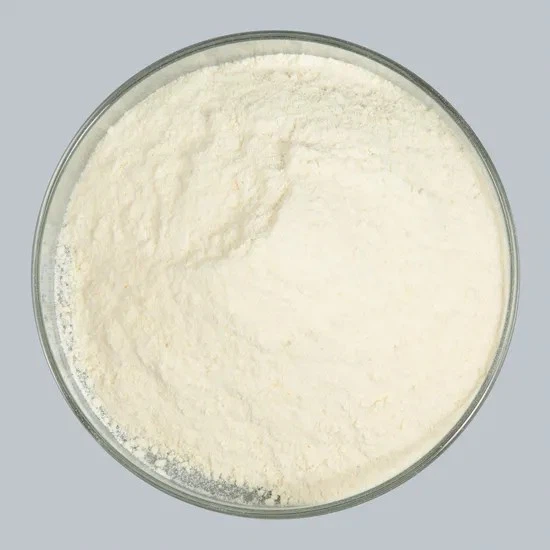
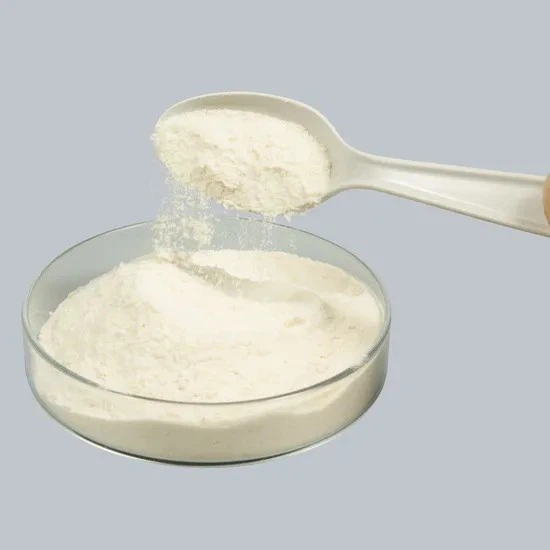
Shaanxi BLOOM Tech Co., Ltd. is one of the most experienced manufacturers and suppliers of 4-bromo-1-indanone cas 15115-60-3 in China. Welcome to wholesale bulk high quality 4-bromo-1-indanone cas 15115-60-3 for sale here from our factory. Good service and reasonable price are available.
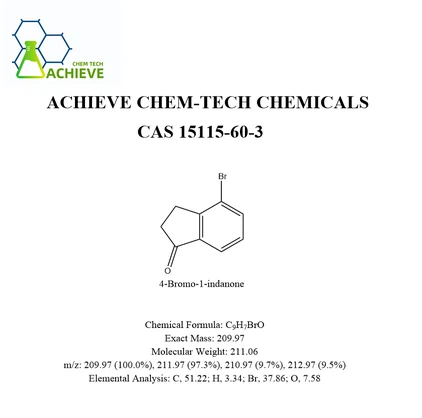
4-Bromo-1-indanone is a chemical compound with a unique structure and distinct properties. The molecule features an indanone backbone, which is a bicyclic structure consisting of a benzene ring fused to a cyclopentane ring, with a ketone group (C=O) located at the bridgehead position of the cyclopentane ring. The addition of a bromine atom at the 4-position of the benzene ring gives rise to it, distinguishing it from other indanone derivatives.

|
|
|
|
Chemical Formula |
C9H7BrO |
|
Exact Mass |
209.97 |
|
Molecular Weight |
211.06 |
|
m/z |
209.97 (100.0%), 211.97 (97.3%), 210.97 (9.7%), 212.97 (9.5%) |
|
Elemental Analysis |
C, 51.22; H, 3.34; Br, 37.86; O, 7.58 |
Organic Intermediate
Synthesis of Complex Molecules
4-Bromo-1-indanone serves as an important intermediate in the synthesis of various complex organic molecules. Its unique chemical structure, featuring an indene ring, a ketone group, and a bromine atom substituted at the C-4 position, allows for the introduction of diverse functionalities through chemical reactions.
This compound has potential applications in the pharmaceutical industry. As an indanone derivative, it may exhibit biological activities similar to other indanone compounds, such as anti-cancer or neuroprotective properties. However, specific pharmaceutical applications require further research and development.


Anti-Cancer Properties
- Many indanone derivatives have shown promise in inhibiting the growth and proliferation of cancer cells. The specific mechanism of action may involve targeting cell signaling pathways, such as kinase inhibitors, or affecting cellular processes like apoptosis (programmed cell death).
- The bromine substituent and the ketone group could potentially interact with biological macromolecules, such as proteins or DNA, leading to anti-cancer effects.
Neuroprotective Properties
- Some indanone compounds have demonstrated neuroprotective effects, potentially by reducing oxidative stress, inhibiting neuroinflammatory processes, or modulating neurotransmitter systems.
- The indene ring structure might allow it to cross the blood-brain barrier, making it a candidate for neurological disorders.

Further Research and Development
Biological Screening
Conducting in vitro and in vivo studies to evaluate the compound's activity against various biological targets and disease models.
Determining the compound's toxicity profile and pharmacokinetic properties to assess its suitability for further development.
Structure-Activity Relationships (SAR)
Investigating how modifications to the 4-Bromo-1-indanone structure affect its biological activity.
Using SAR studies to optimize the compound for better potency, selectivity, and pharmacokinetic properties.
Mechanism of Action Studies
Elucidating the specific molecular mechanisms by which exerts its biological effects.
Identifying potential drug-target interactions and downstream signaling pathways affected by the compound.
Preclinical and Clinical Development
Advancing the compound through preclinical studies to establish its efficacy and safety in animal models.
Initiating clinical trials to evaluate the compound's safety and efficacy in humans, ultimately leading to potential regulatory approval and commercialization.
Catalyst and Material Science
Olefin Polymerization Catalyst
Due to its specific chemical structure, could potentially be used as a ligand in olefin polymerization catalysts. This application leverages its ability to interact with metal ions and stabilize the catalytic active site.

1. Design and Synthesis
请替换当前内容 Adopting high-performance integrated joints,the CRA series can increase the tempo by 25%,and the productivity can reach a new peak;the vibration suppression algorithm is upgraded to achieve a good anti-shaking effect;the full-parameter DH compensation algorithm and TrueMotion algorithm are supported,and the absolute positioning accuracy is 0.2 ~ 0.4 mm under the change of attitude movement,and the curved motion is precise and stable.
2. Unique Optical and Electrical Properties
The introduction of specific substituents, such as bromine, can tune the optical and electrical properties of the liquid crystal materials.
These properties are essential for applications in displays, where factors like birefringence, dielectric anisotropy, and clearing point need to be carefully controlled.


3. Mesomorphic Phase Stability
Indanone derivatives can contribute to the stability of various mesomorphic phases, such as nematic, smectic, and columnar phases.
The ability to stabilize specific mesomorphic phases is crucial for achieving optimal performance in liquid crystal devices.
4. Molecular Alignment and Ordering
The chemical structure of indanone derivatives can influence the molecular alignment and ordering within liquid crystal materials.
Proper alignment and ordering are essential for achieving high-quality displays with uniform and defect-free textures.

Displays
Improved liquid crystal materials can lead to better performance in LCDs, such as higher contrast ratios, faster response times, and wider viewing angles.
Optical Switches
Liquid crystal materials with unique optical properties can be used in optical switches for telecommunications and data routing.


Indanone-derived liquid crystals could find applications in devices such as liquid crystal lasers, photonic crystals, and other emerging technologies.
Indanone derivatives, offer exciting opportunities for the design and synthesis of new liquid crystal materials with unique optical and electrical properties. These materials have the potential to revolutionize displays, optical switches, and other optoelectronic devices. However, overcoming the challenges of synthesis, property tuning, and stability will be essential for realizing the full potential of these compounds in liquid crystal applications.


Liquid Crystals
In the field of liquid crystals, indanone derivatives, may play a role in the design and synthesis of new liquid crystal materials with unique optical and electrical properties.
1. Optical Properties
Birefringence: Indanone derivatives can influence the birefringence of liquid crystals, which is crucial for the performance of liquid crystal displays (LCDs). High birefringence can lead to brighter and more efficient displays.
Refractive Index: The refractive index of liquid crystals can be adjusted by incorporating specific substituents, such as bromine, to optimize the optical performance of devices.


2. Electrical Properties
Dielectric Anisotropy: The dielectric anisotropy of liquid crystals determines their response to electric fields. Indanone derivatives can be designed to enhance or modify this property, enabling faster switching times and lower power consumption in LCDs.
Conductivity: Tailoring the conductivity of liquid crystals can be important for applications in organic electronics, such as organic light-emitting diodes (OLEDs) and organic field-effect transistors (OFETs).
3. Mesomorphic Phases
Indanone derivatives can stabilize specific mesomorphic phases (nematic, smectic, columnar) of liquid crystals, which are essential for different types of displays and optoelectronic devices.

Design and Synthesis Considerations
Molecular Structure
The indene ring system of indanone derivatives provides a scaffold for introducing various substituents that can fine-tune the optical and electrical properties.
Functionalization
Functional groups can be attached to the indanone core to impart specific properties, such as enhanced solubility, thermal stability, or photoresponsiveness.
Chirality
The introduction of chiral centers into indanone derivatives can lead to the formation of chiral liquid crystals, which are important for applications in ferroelectric LCDs and other chiral-specific technologies.

Advanced Displays
Improved liquid crystal materials can lead to the development of next-generation LCDs with enhanced brightness, contrast, and viewing angles.
Optoelectronic Devices
Indanone-derived liquid crystals could find applications in OLEDs, OFETs, and other organic electronic devices where tailored optical and electrical properties are crucial.


Liquid crystal materials with unique optical properties can be used in photonic devices, such as optical switches, modulators, and sensors.
Research and Development
As a member of the indanone family, it is of interest for research into its potential biological activities. Studies may focus on its effects on cellular processes, such as proliferation, differentiation, or apoptosis, and its potential use in the treatment of diseases.

Chemical Synthesis Methodology
Researchers are also interested in exploring new and efficient methods for the synthesis. This includes optimizing reaction conditions, selecting appropriate catalysts, and improving yields and purity.

Chemical Structure and Properties
competitive price
CAS Number: 15115-60-3
long warranty
Molecular Formula: C₉H₇BrO
24H Online Service
Molecular Weight: 211.06
Global Shipping
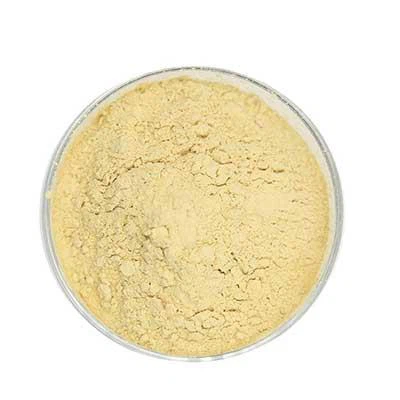
Appearance: Pale yellow solid
less Time
Melting Point: 95-99℃
less Time
Boiling Point: 304.1℃ (760 mmHg)
less Time
Density: 1.608 g/cm³
Solubility: Not specified for specific solvents, but organic synthesis intermediates usually require the selection of solvents based on reaction requirements.
Core Manufacturing Process
Synthesis Route
Main Method:
Synthesis via 3-(2-bromophenyl)propionic acid:Reaction Steps: 3-(2-bromophenyl)propionic acid undergoes intramolecular Friedel-Crafts cyclization under acidic conditions (such as trifluoromethanesulfonic acid) to form 4-brom-1-indone.
Yield: Approximately 77% (specific conditions may affect the yield).
Synthesis via 1-indone bromination reaction:
Reaction Steps: 1-indone is brominated at a specific position (C-4) with a brominating agent (such as bromine) to generate the target product.
Key Point: Reaction conditions need to be controlled to avoid multi-bromination or isomer formation.
Process Optimization Case
Microwave-assisted Synthesis:
Using aromatic aldehyde, 4-brom-1-indone, propionitrile, and ammonium acetate as raw materials, the 2-amino-6-bromomethyl-4-aryl-5H-inden-3-acrylonitrile derivative was synthesized by the next-step microwave irradiation method.
Advantage: Short reaction time (traditional heating requires several hours, microwave only requires minutes) and high yield.
Green Chemistry Route:
Using ferricyanide potassium as the cyanide source and combining with a palladium catalyst, 4-cyanomethyl-1-indone (a derivative of 4-brom-1-indone) was efficiently prepared.
Advantage: Simple post-treatment, high total yield, suitable for industrial production.
Quality Control and Standards
Purity Requirements:
Industrial Grade: ≥97%
Reagent Grade: ≥98% (some suppliers provide 99% purity products).
Detection method:
Melting point determination: Verify the purity of the crystal (standard value: 95-99℃).
Chromatographic analysis: Monitor the content of impurities using HPLC or GC.
Elemental analysis: Confirm that the contents of C, H, Br, and O are in line with the theoretical values.
Safety and Environmental Protection
Hazards:
GHS classification: Warning (H302: Ingestion is harmful; H319: Causes severe eye irritation).
Operational requirements:
Wear protective gloves, goggles, and laboratory coat.
Avoid inhaling dust or steam. Do not operate when eating, drinking, or smoking.
Waste disposal:
Dispose of the contents and containers in accordance with local regulations to avoid environmental pollution.

This compound exhibits several notable characteristics. Its physical state and melting point can vary depending on purity and crystalline form, but it is generally a solid at room temperature. The bromine substitution enhances its reactivity, making it a valuable intermediate in organic synthesis. Due to its stability and the unique substitution pattern, it is often used as a starting material or building block in the preparation of more complex organic molecules, particularly those requiring a brominated aromatic ring attached to a cyclopentanone scaffold.
Moreover, its synthetic versatility allows for the introduction of various functionalities at other positions of the molecule, facilitating the generation of a diverse range of derivatives. Applications span from the pharmaceutical industry, where it may contribute to the synthesis of biologically active compounds, to materials science, where its derivatives could find use in the development of novel polymers or advanced materials. Overall, it represents a valuable chemical entity with significant potential in both research and industrial settings.

First Half of the 20th Century
In the early 20th century, organic chemists focused on the synthesis and structural study of fused-ring aromatic compounds such as indane and indanone. During the 1920s to 1940s, 1-indanone, as a core parent compound, was systematically synthesized and characterized, and its aromatic ring substitution reactions became a research hotspot. In this period, chemists attempted halogenation of 1-indanone. Although 4-bromo-1-indanone was not explicitly isolated, explorations on the regioselectivity of bromination laid a theoretical foundation for its subsequent discovery. Most relevant studies focused on positional isomers such as 2-bromo and 3-bromo derivatives.
Mid-to-Late 20th Century
In the 1960s and 1970s, with breakthroughs in regioselective halogenation of aromatic rings, 4-bromo-1-indanone was first synthesized in a targeted manner and isolated in pure form. Researchers used 1-indanone as the starting material and reacted it with bromine under acidic or basic conditions. By precisely controlling the reaction parameters, selective monobromination at the 4-position of the benzene ring was achieved, affording the target product. Subsequently, modern analytical methods including melting point determination, infrared spectroscopy and proton nuclear magnetic resonance spectroscopy were employed to confirm its molecular structure as 1-indanone substituted by a bromine atom at the 4-position of the benzene ring. Its CAS Registry Number 15115-60-3 was officially registered, establishing it as a standardized organic synthetic intermediate.
21st Century to the Present
In the early 21st century, demand for indanone derivatives surged in the pharmaceutical and materials fields. Owing to the high reactivity of the bromine atom, 4-bromo-1-indanone became a key building block for constructing complex fused-ring molecules. After 2005, its synthetic process underwent continuous optimization, and regioselective bromination methods matured, leading to a substantial increase in yield and a transition from laboratory-scale trials to industrial production. Today, it is widely used in the synthesis of pharmaceutical molecules such as TRPV1 antagonists and KDR kinase inhibitors, as well as organic optoelectronic materials. Having evolved from a niche laboratory compound, it has become an important fundamental raw material in the field of organic synthesis with continuously expanding application value.
Hot Tags: 4-bromo-1-indanone cas 15115-60-3, suppliers, manufacturers, factory, wholesale, buy, price, bulk, for sale, 99 9 pure lidocaine powder, 2 1 1 biphenyl 4 yl 4 6 dichloropyrimidine, 7 4 4 5 5 tetramethyl 1 3 2 dioxaborolan 2 yl dibenzo b d furan 3 carbonitrile, CAS 1869059 10 8, 2 3 diphenyl 6 1 phenyl 1H benzo d imidazol 2 yl quinoxaline, Indicator Reagent