




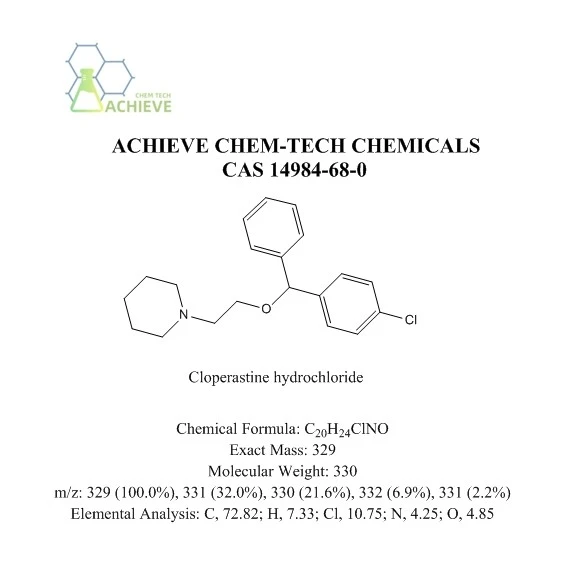


Cloperastine hydrochloride as a chemical substance, has a series of specific physical properties. It is a colorless semi transparent crystal or white fine to coarse crystalline powder with a certain degree of crystallinity, which gives it a distinct solid form in appearance. Molecular formula C20H24ClNO · HCl or C20H25Cl2NO, CAS C20H25Cl2NO. This substance has a certain acidity, which may be determined by the acidic groups (such as chloride ions) in its molecular structure. This substance is composed of five elements: carbon (C), hydrogen (H), chlorine (Cl), nitrogen (N), and oxygen (O). Among them, carbon has the highest proportion (about 65.57%), followed by chlorine (about 19.36%). The clinical use of this substance is mainly for treating dry cough, that is, cough with no or little phlegm. It alleviates dry cough symptoms by inhibiting the cough center and reducing cough reflex. This mechanism of action makes it significantly effective in treating dry cough symptoms caused by upper respiratory tract infections, acute bronchitis, chronic bronchitis, and other conditions. However, it should be noted that this product is only for laboratory use.

|
|
|


|
Chemical Formula |
C20H24ClNO |
|
Exact Mass |
329 |
|
Molecular Weight |
330 |
|
m/z |
329 (100.0%), 331 (32.0%), 330 (21.6%), 332 (6.9%), 331 (2.2%) |
|
Elemental Analysis |
C, 72.82; H, 7.33; Cl, 10.75; N, 4.25; O, 4.85 |

The synthesis method of cloperastine hydrochloride (also commonly known as chlorpheniramine hydrochloride or cough syrup hydrochloride) can be achieved through various pathways, which mainly rely on the synthesis techniques and reaction principles in organic chemistry.
Basic synthetic route
The synthesis of chlorpheniramine hydrochloride usually involves multiple steps, including the selection of raw materials, the synthesis of intermediates, and the salt formation reaction of the final product. The basic synthesis route may include the following key steps:
Select suitable starting materials, which usually include compounds containing benzene rings, pyridine rings, and other structures, as well as acids used for salt formation such as hydrogen chloride or hydrochloric acid.
Through a series of organic reactions such as substitution reactions, condensation reactions, etherification reactions, etc., the starting materials are converted into intermediates containing the target drug skeleton. These reactions may require catalysts, solvents, and specific reaction conditions such as temperature, pressure, pH, etc.
Purification of intermediates to remove impurities and improve the purity of the product. Purification methods may include recrystallization, distillation, extraction, etc.
The purified intermediate is reacted with hydrogen chloride or hydrochloric acid to produce chlorpheniramine hydrochloride. This step is one of the key steps in the synthesis process, which determines the properties and quality of the final product.

Cloperastine hydrochloride, as a non addictive central cough suppressant, has a core mechanism of action by inhibiting the medullary cough center, blocking the incoming impulses of the cough reflex arc, and possessing weak antihistamines and bronchospasmolytic effects. Its indications not only cover common respiratory diseases, but also extend to multiple fields such as allergies, postoperative recovery, and adjuvant therapy for tumors.
Respiratory system diseases: full cycle management from acute infection to chronic obstructive lesions

1. Acute Upper Respiratory Infection (URI)
Cold: The virus invades the upper respiratory mucosa, causing throat irritation and dry cough, which can quickly suppress the cough center and relieve symptoms, especially suitable for patients with nighttime cough affecting sleep.
Acute pharyngitis: Inflammation of the throat leads to sensitization of the cough axis, and medication reduces cough frequency through central cough suppression, avoiding further damage to the throat (such as vocal cord edema).
Clinical data: In patients with a cold, a single oral dose of 20mg resulted in a 60% reduction in cough frequency within 30 minutes, lasting for 4 hours, and a significant improvement in sleep quality.
2. Acute lower respiratory tract infection
Acute bronchitis: Viral or bacterial infection can cause inflammation of the bronchial mucosa, stimulating the cough reflex. It can be used in combination with expectorants (such as ambroxol) to suppress dry cough and promote sputum discharge.
Pneumonia: Inflammation of the lungs leads to coughing accompanied by thick sputum. Medication should be used to suppress coughing while assessing the type of infection (bacterial/viral). Bacterial pneumonia requires combined antibiotic treatment.
Clinical case: A 35 year old patient with acute bronchitis was orally administered 20mg of chlorpheniramine hydrochloride and 30mg of ambroxol three times a day. After three days, the cough frequency decreased by 75%, and the sputum became thin and easy to cough up.


3. Chronic obstructive pulmonary disease (COPD)
Chronic bronchitis: Long term smoking or environmental pollution can lead to chronic inflammation of the bronchi, with alternating dry cough and sputum production. Chlorpheniramine hydrochloride can relieve dry cough, but should be avoided when used alone (as it may inhibit expectoration).
Emphysema: The destruction of alveolar structure leads to restricted airflow, and coughing is often irritating dry cough. Medications can be combined with long-acting bronchodilators (such as tiotropium bromide) to improve symptoms.
Research data: In stable COPD patients, the cough score of the combination therapy group (chlorpheniramine hydrochloride+tiotropium bromide) was reduced by 40% compared to the group treated with bronchodilators alone.
4. Special lung diseases
Tuberculosis: Mycobacterium tuberculosis infection causes dry cough, and medication can alleviate symptoms, but strict adherence to anti tuberculosis treatment standards (such as "quadruple therapy") is required.
Interstitial fibrosis of the lungs: Interstitial inflammation of the lungs leads to dry cough, and can be combined with glucocorticoids (such as prednisone) to alleviate the inflammatory response.
Clinical case: A 60 year old patient with pulmonary tuberculosis was treated with 10mg of clopidogrel hydrochloride three times a day on the basis of anti tuberculosis therapy. After two weeks, the cough frequency decreased by 50% and the quality of life improved.

Allergic diseases: comprehensive intervention from respiratory tract to skin

1. Respiratory allergies
Allergic rhinitis: histamine release causes congestion and edema of the nasal mucosa, leading to nasal congestion, runny nose, and cough. It can inhibit histamine mediated cough reflex and alleviate nasal symptoms.
Cough variant asthma (CVA): a type of asthma characterized by dry cough, in which medication can be combined with inhaled corticosteroids (such as budesonide) to control airway inflammation.
Research data: In CVA patients, the cough relief rate of the combination therapy group (chlorpheniramine hydrochloride+budesonide) reached 92%, which was 15% higher than that of the hormone group alone.
2. Skin allergies
Urticaria: The dilation of small blood vessels in the skin and mucous membranes can cause redness and itching, which can alleviate histamine mediated vasodilation and relieve itching symptoms.
Drug rash: A skin rash caused by drug allergy, in which drugs can assist antihistamines (such as loratadine) to control allergic reactions.
Clinical case: A 25-year-old patient with urticaria was orally administered 10mg of chlorpheniramine hydrochloride and 10mg of loratadine once daily. After 3 days, the rash disappeared and the itching completely relieved.

Postoperative and post-traumatic symptoms: Collaborative management of pain and cough

1. Postoperative cough
Chest surgery: such as lung resection and thoracoscopy, postoperative coughing may cause incision pain or pneumothorax. It can inhibit the cough center and reduce the stimulation of the incision caused by coughing.
Upper abdominal surgery: such as cholecystectomy or subtotal gastrectomy, postoperative coughing may increase abdominal pressure and affect wound healing. Medications can be used in combination with analgesics (such as acetaminophen).
Clinical data: In patients undergoing chest surgery, postoperative use of 20mg clopidogrel hydrochloride three times a day resulted in a 65% reduction in cough frequency and a 40% reduction in incision pain score.
2. Post traumatic cough
Rib fracture: Coughing may cause friction at the fracture site, leading to severe pain. Chlorpheniramine hydrochloride can suppress cough and requires chest fixation (such as chest band bandaging).
After tracheal intubation: Patients undergoing mechanical ventilation often experience irritating dry cough after extubation. Medication can alleviate symptoms and promote respiratory tract repair.
Clinical case: A 40 year old patient with rib fracture was orally administered 10mg of clopidogrel hydrochloride three times a day. After three days, cough frequency decreased by 70% and pain significantly reduced.

Tumor related symptoms: key adjuvant therapy for improving quality of life

1. Lung cancer
Primary lung cancer: Dry cough caused by tumor stimulation or compression of the bronchi can alleviate symptoms, but tumor staging and treatment plan (such as surgery/chemotherapy) need to be evaluated.
After radiotherapy for lung cancer: Radiation damage to bronchial mucosa leads to dry cough, and medication can be used in combination with mucosal protectants (such as sucralfate).
Research data: In patients with advanced lung cancer, the improvement rate of cough symptoms after using chlorhexidine hydrochloride is 60%, and the sleep quality of patients is significantly improved.
2. Mediastinal tumors
Thymoma/Neurogenic Tumor: The tumor compresses the trachea or bronchi, causing dry cough. Medication can alleviate symptoms, but priority should be given to treating the tumor (such as surgical resection).
Clinical case: A 55 year old patient with mediastinal tumor was treated with 20mg clopidogrel hydrochloride three times a day while waiting for surgery. The cough frequency was reduced by 50%, and the preoperative state was stable.


Cloperastine hydrochloride inhibits HERGK+ currents in a strong concentration-dependent manner with an IC50 value of 27 nM.Among cough suppressants, cloperastine has antitussive and antianemic activity and is also used in bronchomuscular chemotherapy. Cloperastine is a centrally acting cough suppressant that also has antihistamine and opioid activity, but no anesthetic effect.
Pharmacological Applications
As a non-addictive central cough suppressant, clepivastine exerts its cough suppressant effect mainly by inhibiting the cough center. Its cough suppressant effect is weaker than that of codeine, but it is non-tolerant and non-addictive, which makes it widely used in clinical practice. Cloperastine is effective in relieving frequent dry cough without sputum caused by acute inflammation of the upper respiratory tract, chronic bronchitis, tuberculosis and lung cancer. Its mechanism of cough suppression includes inhibiting bronchial smooth muscle spasm, relieving bronchial mucosal congestion and edema, and thus contributing to cough suppression. In addition, the H1 receptor blocking effect of clepivastine also reduces allergic reactions, further assisting in cough suppression.
Cloperastine is an antihistamine that blocks H1 receptors and reduces histamine stimulation of mast cells and eosinophils, thereby reducing the symptoms of allergic reactions. This property makes Cloperastine effective in the treatment of symptoms caused by allergic reactions such as allergic rhinitis and urticaria. In addition, Cloperastine can inhibit gastric acid secretion and reduce gastric mucosal damage through competitive antagonism of histamine H2 receptors on gastric wall cells, which is suitable for the treatment of uncomfortable symptoms caused by excessive gastric acid, such as heartburn and acid reflux.
Cloperastine has a certain sedative effect, which can improve the quality of sleep, and in turn helps to relieve anxiety and tension. This mechanism of action makes Cloperastine valuable in the treatment of insomnia. However, it should be noted that long-term use of Cloperastine may result in dependence, so it should be used under the guidance of a doctor and the patient's physical condition should be closely monitored.
Cloperastine is capable of mildly relieving bronchial smooth muscle spasm, a property that is adjunctive in the treatment of respiratory disorders such as bronchial asthma and chronic obstructive pulmonary disease (COPD). By relaxing the bronchial muscles, loperastine improves the patient's breathing and reduces symptoms such as dyspnea.
Cloperastine may cause side effects such as drowsiness and dizziness, so you should avoid driving a motor vehicle or doing other work that requires a high degree of concentration during use.
- For pregnant and breastfeeding women, Cloperastine should be used with caution under medical supervision to avoid affecting the health of the fetus or infant.
- If the patient is accompanied by obvious coughing symptoms, the use of loperastine for cough suppression may inhibit the cough reflex, resulting in sputum is not easy to cough up, then should be used in combination with expectorant drugs.
- The specific usage and dosage of loperastine should be determined by the doctor according to the patient's age, weight and condition, etc. Patients should follow the doctor's instructions.
In summary, as a drug with central cough suppressant effect, as well as antihistamine and opioid-like activity (but no anesthetic effect), loperastine has a wide range of applications in cough, antihistamine, central nervous system inhibition and bronchial muscle relaxation. However, its possible side effects and contraindications need to be noted when using it, and the drug should be used rationally under the guidance of a doctor.
faq
What is the mechanism of action of cloperastine hydrochloride?
The mechanism of action of Cloperastine Hydrochloride involves multiple pathways that collectively contribute to its efficacy in alleviating cough symptoms. Primarily, Cloperastine Hydrochloride functions by exerting a central action on the cough center located in the medulla oblongata of the brain.
What are the side effects of cloperastine HCL?
Hot Tags: cloperastine hydrochloride cas 14984-68-0, suppliers, manufacturers, factory, wholesale, buy, price, bulk, for sale, 3 Phenyltoluene, 1-Bromohexadecane, 2 Chloro 4 pyridylboronic acid, Uridine Powder, 3 6 Dibromopyridazide, 4 Iodopyrazole CAS 3469 69 0