




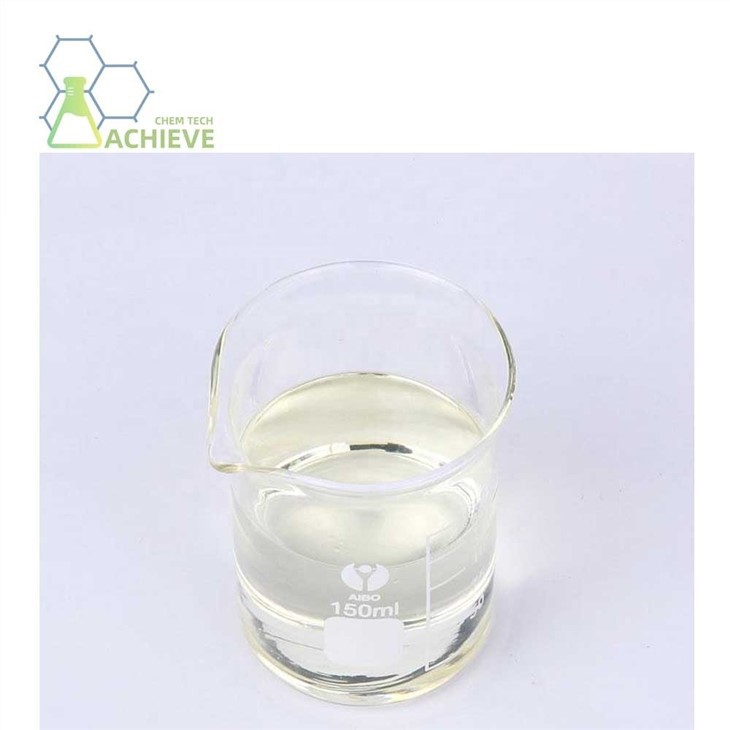
Shaanxi BLOOM Tech Co., Ltd. is one of the most experienced manufacturers and suppliers of dimethyl carbonate (dmc) cas 616-38-6 in China. Welcome to wholesale bulk high quality dimethyl carbonate (dmc) cas 616-38-6 for sale here from our factory. Good service and reasonable price are available.
Dimethyl carbonate (DMC) is an organic compound with the chemical formula C3H6O3. Colorless liquid with aromatic smell. It is insoluble in water, miscible in most organic solvents, and miscible in acids and bases. It is a kind of chemical raw material with low toxicity, excellent environmental protection performance, and wide use. It is an important organic synthesis intermediate. Its molecular structure contains carbonyl, methyl, methoxy and other functional groups. It has a variety of reaction properties. It is safe, convenient, less pollution, and easy to transport in production.

|
Chemical Formula |
C3H6O3 |
|
Exact Mass |
90 |
|
Molecular Weight |
90 |
|
m/z |
90 (100.0%), 91 (3.2%) |
|
Elemental Analysis |
C, 40.00; H, 6.71; O, 53.28 |
|
|
|


Dimethyl carbonate (DMC) is an important organic compound with the chemical formula CH6O, widely used in the chemical and pharmaceutical industries.

1. Substitute phosgene as carbonylation agent:
Phosgene is highly reactive, but its highly toxic and highly corrosive by-products make it face huge environmental pressure, so it will be gradually eliminated; DMC has a similar nucleophilic reaction center. When the carbonyl group of DMC is attacked by nucleophilic group, the acyl oxygen bond breaks to form carbonyl compounds, and the by-product is methanol. Therefore, DMC can replace phosgene as a safe reaction agent to synthesize carbonic acid derivatives, such as carbamate pesticides, polycarbonate, isocyanate, etc., of which polycarbonate will be the field with the largest demand for DMC, It is predicted that more than 80% of DMC will be used to produce polycarbonate in 2005.
2. Substitute dimethyl sulfate as methylation agent:
For reasons similar to phosgene, dimethyl sulfate is also faced with the pressure of being eliminated. When the methyl carbon of DMC is attacked by nucleophilic, its alkyl oxygen bond breaks and methylated products are also generated. DMC has higher reaction yield and simpler process than dimethyl sulfate. Its main uses include synthetic organic intermediates, pharmaceutical products, pesticide products, etc.


3. Low toxic solvent:
DMC has excellent solubility, narrow melting and boiling point range, large surface tension, low viscosity, small dielectric constant of medium, high evaporation temperature and fast evaporation rate, so it can be used as a low toxic solvent in the coating industry and pharmaceutical industry. It can be seen that DMC is not only less toxic, but also has the characteristics of high flash point, low vapor pressure and high lower explosive limit in the air. Therefore, DMC is a green solvent with both cleanliness and safety.
4. Gasoline additive:
DMC has the properties of high oxygen content (up to 53% oxygen content in the molecule), excellent octane number improvement, non phase separation, low toxicity and rapid biodegradability, which makes the amount of DMC used when gasoline reaches the same oxygen content 4.5 times less than MTBE, thus reducing the total emissions of hydrocarbons, carbon monoxide and formaldehyde in automobile exhaust. In addition, it also overcomes the problem that common gasoline additives are easily soluble in water DMC will become one of the most potential gasoline additives to replace MTBE due to the disadvantage of polluting groundwater.


The original production method of Dimethyl carbonate (DMC) is phosgene method, which was successfully developed in 1918. However, the toxicity and corrosivity of phosgene limit the application of this method, especially with the increasing importance of environmental protection worldwide, phosgene method has been eliminated.
Since the 1980s, research on DMC production process has attracted widespread attention. According to Michael and Chr istopher's statistics, there have been more than 200 patents on DMC production process since 1980 to 1996.
In the early 1980s, EniChem Company of Italy realized the commercialization of DMC synthesis process by oxidative carbonylation of methanol with CuCI as catalyst, which was the first industrialized non phosgene DMC synthesis process and also the most widely used process. The disadvantage of this process is that the catalyst deactivation is serious when the conversion rate is high, so the one-way conversion rate is only 20%.

There are many synthesis methods of dimethyl carbonate at home and abroad. According to raw materials, it mainly includes phosgene methanol method, phosgene sodium alcohol method, methanol transesterification method, carbon dioxide direct synthesis method, urea direct alcoholysis method, urea indirect alcoholysis method and methanol oxidative carbonyl method. This experiment is designed to use urea direct alcoholysis, which has the following characteristics:
(1) The raw materials are cheap and easy to get;
(2) The process is simple and easy to operate;
(3) The ammonia generated by the reaction can be recycled, environmentally friendly, green and pollution-free;
(4) The reaction process is anhydrous production, which avoids the separation problem of methanol DMC water complex system
Separation and purification are simplified, saving investment.
(5) Although G>0 in the second step of the reaction is a non spontaneous reaction in thermodynamics, it can be achieved by increasing the temperature
And increase the pressure to improve its conversion. It can be seen from the experiment that when the reaction temperature is 185C and the pressure is
Methanol reacts in a reactive distillation column. Under this condition, the conversion rate of urea can reach 100%, and that of carbonic acid
The selectivity of dimethyl ester is more than 98%, and the yield of DMC is more than 50%.
In addition to the above methods, there are several other methods that can be used for production:
This is currently the most researched and promising synthesis method. This method uses carbon monoxide, methanol, and oxygen as raw materials, without phosgene. The raw materials are cheap, the toxicity is low, the process is simple, and the cost is low. The reaction conditions include liquid-phase and gas-phase methods, usually carried out at 80-10 ℃ and pressures of 0-4.0 MPa, with high methanol conversion rate and good selectivity.
Using phosgene and methanol as raw materials, react at low temperature to produce dimethyl carbonate. This method has a simple production process, easy availability of raw materials, and high yield, but phosgene is highly toxic and flammable, requiring high requirements for production equipment and operating conditions, making safety production difficult.
Using diethyl carbonate and methanol as raw materials, ester exchange reaction is carried out under the action of catalyst to generate dimethyl carbonate and ethanol. This method has easy access to raw materials, mild reaction conditions, and low difficulty in safe production. However, the selection and use of catalysts have a significant impact on reaction yield and product quality, and strict control of process conditions is required.
Methanol and acetate are reacted to produce methyl acetate, which is then reacted with carbon dioxide to obtain dimethyl carbonate. This method has a high yield, but requires high temperature, high pressure, and palladium catalysis.
Methanol and carbon dioxide are reacted under rhodium catalysis to produce formic acid, which then reacts with carbon monoxide to obtain dimethyl carbonate. The reaction conditions of this method are relatively mild, but the catalyst price is relatively high.
Reacting methyl succinate with sodium carbonate at high temperature to produce dimethyl carbonate. This method is relatively simple, but the reaction conditions are strict and the yield is low.
Reacting epichlorohydrin with methyl formate to produce methyl acrylate, and then reacting with diethyl carbonate to produce dimethyl carbonate. This method has a high yield, but it needs to be carried out in a polar solvent.
Methanol, carbon dioxide, and methyl formate are simultaneously added to the reactor for esterification, dehydration, and addition reactions to directly obtain dimethyl carbonate. This method is easy to operate and has a high yield, but it requires high pressure and high temperature conditions.
These methods each have their own advantages and disadvantages, and choosing the appropriate synthesis method depends on specific production needs and cost considerations.
Adverse reactions
Dimethyl carbonate(DMC),The Chinese name is dimethyl carbonate, which is an important organic chemical raw material and green chemical. It has many advantages such as low toxicity, environmental protection, and excellent performance, and has been widely used in various fields such as chemical engineering, medicine, electronics, and fuel. However, like many chemicals, DMC may also cause some adverse reactions during use and contact.
Adverse reactions from inhalation exposure
When exposed to mild inhalation, symptoms such as coughing, sputum production, and throat discomfort may occur, which usually gradually subside after leaving the exposure environment. However, long-term or high concentration inhalation of DMC vapor may cause more severe respiratory damage, such as bronchitis, pneumonia, etc. Animal experiments have shown that after long-term inhalation of high concentrations of DMC vapor in rats, significant inflammatory reactions and pathological changes occur in the lungs, manifested as thickening of alveolar walls and interstitial edema. In addition, inhaling DMC vapor may also have an impact on the central nervous system. Inhaling high concentrations of DMC vapor in the short term may cause symptoms such as dizziness, headache, fatigue, nausea, vomiting, and in severe cases, central nervous system depression such as blurred consciousness and coma may occur.
Adverse reactions of skin contact
DMC has a certain degree of irritation and sensitization to the skin. When the skin comes into direct contact with DMC liquid, skin irritation symptoms such as redness, itching, and rash may occur. For some people with allergic constitution, skin contact with DMC may cause allergic reactions, manifested as skin redness, swelling, blisters, exudation, etc., and in severe cases, it may affect the skin of the whole body. Long term repeated exposure to DMC may also lead to chronic skin damage such as dryness, cracking, and keratinization.
Adverse reactions from eye contact
DMC has a strong irritant effect on the eyes. If DMC accidentally enters the eyes, it can immediately cause symptoms such as eye pain, tearing, photophobia, and conjunctival congestion. In severe cases, it may damage the cornea, leading to shedding of corneal epithelium, corneal ulcers, and affecting vision. Animal experiments have shown that after dripping DMC into the eyes of rabbits, there is a significant inflammatory response and corneal damage. After a period of treatment, some of the damage to the eyes of rabbits has not fully recovered.
Adverse reactions of accidental ingestion
Although DMC is generally not a food ingredient, it may be ingested by mistake in certain special circumstances. After ingestion of DMC, it may cause irritation to the gastrointestinal tract, leading to symptoms such as nausea, vomiting, abdominal pain, and diarrhea. Excessive ingestion of DMC may also cause damage to important organs such as the liver and kidneys, leading to serious consequences such as abnormal liver function and renal failure. In animal experiments, after administering a certain dose of DMC to mice by gavage, significant pathological changes were observed in the liver and kidneys of the mice, as well as significant changes in liver and kidney function indicators in the serum.
Hot Tags: dimethyl carbonate (dmc) cas 616-38-6, suppliers, manufacturers, factory, wholesale, buy, price, bulk, for sale, 1 Hydroxy cyclobutanecarboxylic acid, 2-Bromo-5-nitrobenzotrifluoride, p Coumaric acid powder, 2 BROMO 1 PHENYL PENTAN 1 ONE CAS 49851 31 2, 2 Chloro 5 Chloromethylpyridine CCMP , 5 IODOINDOLE CAS 16066 91 4