



Shaanxi BLOOM Tech Co., Ltd. is one of the most experienced manufacturers and suppliers of decafluorobiphenyl cas 434-90-2 in China. Welcome to wholesale bulk high quality decafluorobiphenyl cas 434-90-2 for sale here from our factory. Good service and reasonable price are available.
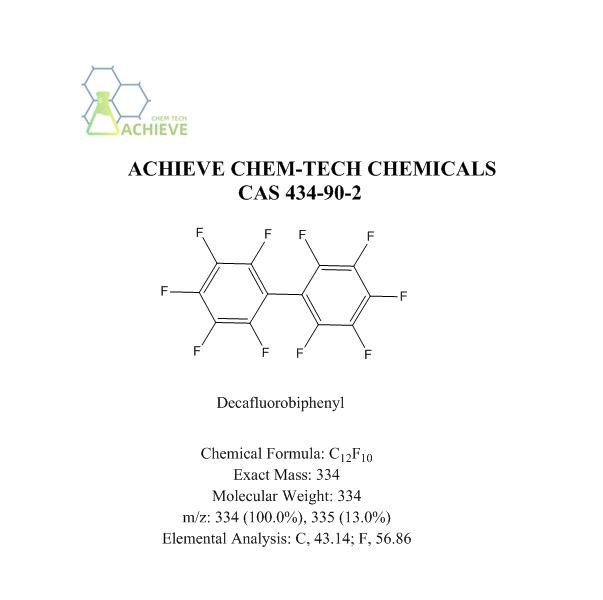
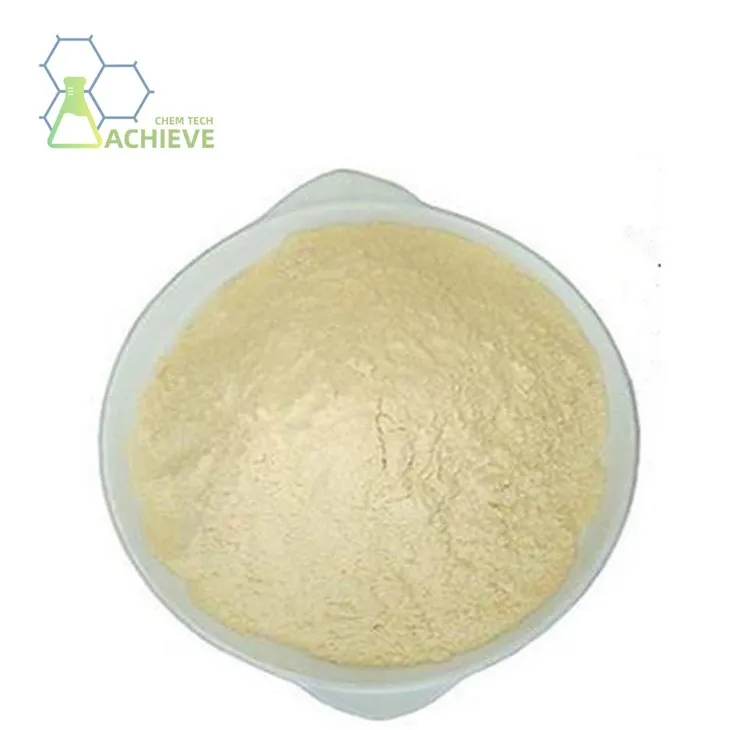
Decafluorobiphenyl is a chemical compound with ten fluorine atoms replacing the hydrogen atoms in the biphenyl ring molecule. The Molecular formula is C12H2F10, CAS V434-90-2, and the Molar mass is 414.11 g/mol. It is a colorless to light yellow solid that appears in the form of crystals or powders at room temperature. Low solubility in common solvents, such as water. It has a certain solubility in organic solvents (such as ethanol, methanol, dichloromethane).
It is a relatively stable compound that is not easily decomposed or undergoes chemical reactions under conventional conditions. It has good stability to air, water, and light. It is transparent to visible light and does not have a distinct color. It is a non-polar compound with high chemical inertness and thermal stability due to the substitution of fluorine atoms. This allows it to be used as an insulating agent, coolant, lubricant, and medium in certain applications. Under normal conditions, it has low reactivity to most common chemical reagents and conditions. However, under high temperature, high pressure or the presence of a specific catalyst, it may undergo some chemical reactions, such as aromatic nuclear Substitution reaction.
The application fields are mainly concentrated in fields such as petrochemical, microelectronics manufacturing, mechanical manufacturing, and aerospace. In addition, perfluorinated biphenyls are used in fields such as the automotive industry and aerospace. The rapid development of the automotive industry has driven the rapid development of the perfluorinated biphenyl industry, which is widely used in the manufacturing of automotive engine Chemicalbook fuel hoses and the synthesis of sealing materials. The matrix of fluorocarbon coating is mainly perfluorobiphenyl, such as PTFE coating, ambient curing PEVE Fluoropolymer, PVDF Fluoropolymer, etc. These materials are widely used in the construction industry, marine antifouling, optical fiber coating and other fields.

|
|
|
|
Chemical Formula |
C12F10 |
|
Exact Mass |
334 |
|
Molecular Weight |
334 |
|
m/z |
334 (100.0%), 335 (13.0%) |
|
Elemental Analysis |
C, 43.14; F, 56.86 |

Decafluorobiphenyl (DFBP) is a chemical compound composed of two benzene rings, with five fluorine atoms substituted on each benzene ring. DFBP has some important applications in various fields.
-Insulation agent: DFBP has excellent electrical insulation performance and thermal stability, so it is widely used as an insulation material in power equipment. It can be used for equipment such as cables, transformers, switches, and relays to isolate and protect circuits and prevent arc generation.
-Sensors: DFBP can be used as a working medium in some sensors, such as gas sensors and humidity sensors. Its low conductivity and stability have potential applications in the field of sensors.

2. Thermal management field:

-Coolant: DFBP has a relatively high boiling point and thermal stability, making it a liquid coolant used for cooling equipment and heat dissipation systems. It is widely used in electronic devices and computer cooling systems to provide effective heat dissipation and temperature control.
-Heat conduction medium: DFBP can be used as a high-temperature heat conduction medium, such as a liquid or paste medium used for heat transfer in power transformers and electronic packaging.
-Solvent: Due to the special properties of DF based substances, DFBP can be used as a solvent for some organic synthesis reactions. It can provide an inert environment for organic metal catalytic reactions under anhydrous conditions and act as a ligand.
-Catalyst carrier: DFBP can serve as a catalyst carrier for some catalytic reactions. It can provide a stable reaction environment and promote the progress of specific reactions.

4. High performance materials field:

-Lubricant: DFBP has excellent stability and chemical inertness, making it suitable for use as a high-temperature high-performance lubricant. It is used in the aerospace field to lubricate moving components such as missiles, rockets, and jet engines.
-Medium: DFBP has low conductivity and high heat resistance, and can be used as a medium for capacitors, insulating films, and dielectric composite materials. It has low conductivity and high heat resistance. It can also be used as a fiber optic liquid medium in fiber optic communication.
-Fire extinguishing agent: DFBP has a high boiling point and excellent fire extinguishing performance, so it can be used as a fire extinguishing agent in special situations. However, the use of DF based substances as fire extinguishing agents may be restricted or prohibited in many regions, as they belong to the halogenated alkane group and may have potential hazards to the environment and health.

Perfluorobiphenyl (PFBP) is a perfluorinated aromatic compound with the molecular formula C12F10, synthesized by perfluorination of biphenyl (C12H10). Its unique perfluorinated structure endows the following core characteristics:
Ultra high thermal stability: decomposition temperature exceeding 400 ℃, boiling point reaching 213 ℃ (under normal pressure)
Chemical inertness: Almost does not react with all acids, bases, and oxidants
Low surface tension: 22.5mN/m (25 ℃), lower than most organic solvents
Electrical insulation: resistivity>10 ¹⁴Ω· cm, dielectric constant 2.05 (1kHz)
Environmental persistence: Perfluorocarbon structure resistant to photolysis, biodegradation, and metabolism
Core application areas

Electronic industry
Semiconductor cleaning
Photoresist removal: replace N-methylpyrrolidone (NMP) to avoid metal ion contamination
Residual cleaning after etching: for polymer residues in TSV (through silicon via) process
Advantages:
Moderate boiling point, easy to remove by vacuum drying
No corrosion to aluminum and copper metals
Compatible with HF etching solution
Flat panel display manufacturing
OLED cleaning: removing pixel definition layer (PDL) photoresist
Liquid crystal infusion: as a temporary solvent for liquid crystal materials
Characteristic requirements:
Moisture content<10ppm
Particle size<0.1 μ m
Printed Circuit Board (PCB)
Blind hole cleaning: removing epoxy resin residue generated by laser drilling
Solder mask development: replacing ODS solvents such as trichloroethane

Thermal management system

Nuclear reactor coolant
Fourth generation reactor: Decafluorobiphenyl as an additive for liquid metal coolant (sodium/lead)
Molten salt stack: improving the thermal conductivity efficiency of fluoride salt system
Key parameters:
Radiation stability>10 ⁶ Gy
Neutron absorption cross section<0.1 target
Thermal management of power batteries
Phase change material (PCM) carrier: enhancing the thermal conductivity of paraffin based materials
Thermal interface material: used for thermal conductivity silicone grease between battery modules
Performance advantages:
Temperature range for use: -60 ℃ to 250 ℃
Thermal resistance<0.05 ℃ · cm ²/W
Solar heat collection system
Parabolic trough collector: as a heat transfer fluid
Molten salt energy storage system: reducing the viscosity of nitrate molten salt

Chemical synthesis

fluorinating reagent
Perfluoroalkylation reaction: cross coupling with olefins catalyzed by nickel
Trifluoromethylation reagent: involved in the synthesis of Umemoto reagent
Typical reaction:
C6F5-CF2-CF2-CF2-CF2-CF3+PFBP → perfluorocarbon chain extension
pharmaceutical intermediates
Respiratory drugs: Perfluorocarbon based artificial blood carriers
Antitumor drugs: building blocks of fluorinated heterocyclic compounds
Representative product:
Fluvix group side chain
Everolimus Fluorinated Substitutes
Polymer synthesis
Fluorinated monomer: preparation of polyvinylidene fluoride (PVDF) copolymer
Crosslinking agent: used for modifying perfluorosulfonic acid resin (Nafion)


Vacuum environment lubrication
Spacecraft robotic arm: maintains lubricity under a vacuum degree of 10 ⁻⁶ Pa
Low temperature bearings: lubricating medium in the liquid nitrogen temperature range (-196 ℃)
Performance indicators:
Saturated vapor pressure<10 ⁻⁸ Torr (25 ℃)
Friction coefficient<0.05 (steel steel contact)
Magnetic storage medium
Hard disk head: acting as a lubricating layer between carbon coating and cobalt based alloy
Magnetic tape coating: improving the dispersion uniformity of magnetic particles
Deep sea equipment
Ten thousand meter submersible: O-ring lubrication for pressure chamber
Deep sea sensor: anti high pressure (110MPa) lubrication system

Analysis and testing field

Gas chromatography stationary phase
High temperature chromatography column: analysis of high boiling point organic compounds (>350 ℃)
Polarity separation: distinguishing isomers (such as dichlorobenzene)
Typical applications:
Quantitative analysis of aromatic hydrocarbons in petroleum fractions
Pesticide residue detection
Nuclear Magnetic Resonance Standard
Fluorine spectrum chemical shift reference: δ=-162ppm (CF ∝ CF ₂ - reference)
Relaxation time standard: T1=0.85s(300MHz)
Mass spectrometry calibration
High quality to charge ratio standard: molecular ion peak m/z=522 (M ⁺)
Fragmentation mode: C8F7⁺ (m/z=333), C ₄ F ∝⁺ (m/z=113)

Application of Environmental Science

Pollutant tracer
Atmospheric migration research: monitoring atmospheric circulation through global distribution of PFBP
Dating of water sediment: using the half-life of ¹⁴ C isotopes (5730 years)
preparation of certified reference material
Organic fluorine content standard: used for ICP-MS/OES analysis
Persistent Organic Pollutants (POPs) Reference: Complies with the requirements of the Stockholm Convention
Bioaccumulation experiment
Fish Bioaccumulation: Evaluating BCF Values (>5000)
Bird toxicology: LD50>2000mg/kg (quail)

Decafluorobiphenyl is widely used in the synthesis of fuel hoses and sealing materials for automotive engines. The matrix of fluorocarbon coating is mainly perfluorobiphenyl, such as PTFE coating, ambient curing PEVE Fluoropolymer, PVDF Fluoropolymer, etc. These materials are widely used in the construction industry, marine antifouling, optical fiber coating and other fields. His synthesis process is as follows:

Add CuBr · SMe2 (0.0013g, 0.0060mmol) to a 4mL drying vial equipped with a stirring rod. The small bottle is sealed with a rubber diaphragm. Then empty the sealed vial and fill it with argon for three times, then add anhydrous THF (0.60mL), Phenylacetylene based Magnesium bromide (1.0MinTHF) (0.30mL, 0.30mmol) and (cyclohexylmethyl) Magnesium bromide. Subsequently, di-tert-butyldiazinone (1) (0.0562g, 0.33mmol) was added to the stirred mixture. Stir the reaction mixture vigorously at room temperature under argon gas for 3 hours, concentrate and purify by rapid chromatography (silica gel, pentane). Cross coupled product 4g is colorless oil (0.0482g, 81%). Obtained white solid perfluorobiphenyl (0.0477 Chemicalbookg, 58%). Melting point 112-113 ° C (melting point 116-118 ° C); IR (pure) 160714831249979cm-1; 1H nuclear magnetic resonance (300MHz, CDCl3) δ 7.40-7.33 (m, 2H), 7.05-6.99 (m, 2AH), 3.87 (s, 3H); 19F nuclear magnetic resonance (282MHz, CDCl3) δ- 143.7 (dd, JF=23.1, 7.9Hz, 2F), -156.6 (t, JF=20.9Hz, 1F), -162.6 (td, JF=23.1, 7.9Hz, 2F; HRMS calculation value of C13H7F5O (M+): 274.0412; Discovery: 274.0409.

Decafluorobiphenyl (a highly fluorinated aromatic compound, with CAS number 434-90-2) has the following chemical properties:
Molecular structure and composition
The molecular formula of this substance is C12 F10 It consists of two benzene rings connected by a single bond, with all hydrogen atoms replaced by fluorine atoms. This fully fluorinated structure endows it with unique chemical stability. The strong electronegativity of fluorine atoms in the molecule (3.98) makes the carbon fluorine bond (bond energy of about 485 kJ/mol) significantly stronger than the carbon hydrogen bond (about 413 kJ/mol), thereby forming a highly inert electron cloud distribution.
Physical State and Thermal Stability
At room temperature, it is a white crystalline solid with a melting point of 68-70 ° C and a boiling and flash point of 206 ° C. Its density is 1.785 g/cm ³, much higher than the density of water (1 g/cm ³), indicating strong intermolecular forces. This compound remains stable below 206 ° C and has a higher thermal decomposition temperature than traditional organic solvents, making it suitable for high-temperature reaction systems.
Chemical inertness and reactivity
The chemical inertness of this product originates from its fully fluorinated structure:
Oxidation resistance: The strong electron-withdrawing effect of fluorine atoms reduces the electron cloud density of the benzene ring, making it difficult for oxidants to attack. For example, in concentrated nitric acid or potassium permanganate solution, this compound can remain stable for a long time.
Hydrolytic resistance: The polarity (dipole moment approximately 1.4 D) of the carbon-fluorine bond is lower than that of the carbon-oxygen bond, and the radius of the fluorine atom (0.64 A) is close to that of the hydrogen atom (0.53 A), with small steric hindrance, effectively preventing water molecules from attacking. Therefore, in neutral or weakly acidic conditions, the hydrolysis rate is extremely low.
Low reactivity: In conventional organic synthesis (such as nucleophilic substitution, Friedel-Crafts alkylation), It is usually used as an inert solvent or matrix, and only limited reactions may occur under extreme conditions (such as high temperature, strong base, or metal catalysis).
Solubility and Compatibility
It is slightly soluble in water (solubility < 0.1 g/L), but soluble in non-polar organic solvents (such as chloroform, toluene) and some polar non-aqueous solvents (such as DMF, DMSO). Its solubility behavior conforms to the "like dissolves like" principle. The all-fluorinated structure makes it have good compatibility with fluorinated polymers (such as PTFE), and is often used to prepare fluorinated composite materials.
Safety and Environmental Characteristics
Low toxicity: The current toxicological data do not clearly record the acute toxicity parameters, but perfluorinated compounds may pose a potential threat to aquatic organisms and should be avoided from being directly discharged into water bodies.
Stability and storage:It can be stored stably for a long time under dry and light-protected conditions, but it should be avoided from coming into contact with strong oxidants (such as concentrated sulfuric acid, hydrogen peroxide) to prevent irreversible reactions.
Application fields
Based on the above properties, It has significant value in the following areas:
Electronic materials: As a dielectric fluid for high-performance capacitors and transformers, its high dielectric constant (ε ≈ 2.1) and low dielectric loss (tanδ < 0.001) can significantly enhance the stability of the equipment.
Organic synthesis: As an inert solvent or reaction matrix, it is used to prepare fluoropolymers (such as fluororubber, fluororesin) or special liquid crystal materials.
Research fields: In organic electronics (such as perovskite solar cells), its electronic transport performance can optimize the device efficiency; in materials science, as a crosslinking agent, it can enhance the heat resistance, chemical resistance and UV resistance of elastomers and coatings.
Frequently Asked Questions
Why is it different from ordinary biphenyl in that it has almost no π - π stacking in crystal stacking?
+
-
A: Fluorine atoms strongly withdraw electron density, reduce the polarizability of aromatic rings, and weaken the π - π attraction between molecules. In addition, large volume fluorine atoms generate spatial repulsion, so crystal stacking is mainly dominated by weak F-F and F-C dipole interactions, rather than typical aromatic stacking.
Can it form host guest inclusion complexes with common macrocycles such as cyclodextrin?
+
-
A: This is difficult. Its high lipophilicity, low polarity, and compact fluorinated surface result in weak binding affinity with the polar lumen of cyclodextrin. It also lacks hydrogen bonding sites, so stable inclusion complexes are rarely formed under normal conditions.
Why does it have strong resistance to electrophilic aromatic substitution?
+
-
Perfluorination strongly causes the benzene ring to lose its electrophilicity. The electron withdrawing effect of fluorine reduces the ring electron density to the point where even strong electrophilic reagents cannot react, making it one of the most chemically inert biphenyl derivatives.
Does it have unique dielectric or charge transfer properties in organic electronics?
+
-
A: Yes, it is. As a weak electron transport additive, it can slightly increase the dielectric constant while reducing charge capture in the fluorinated polymer matrix. However, its high crystallinity and low solubility limit its application in thin film devices.
Why is it not easily degraded by advanced oxidation processes (AOPs)?
+
-
A: The strong C-F bonds and low electron density on the aromatic ring reduce the efficiency of hydroxyl radicals attacking molecules. It does not form easily oxidizable phenol or hydroquinone intermediates, therefore its persistence is much higher than that of non fluorinated aromatic compounds.
Hot Tags: decafluorobiphenyl cas 434-90-2, suppliers, manufacturers, factory, wholesale, buy, price, bulk, for sale, 6 Nitro 1 diazo 2 naphthol 4 sulfonic Acid, Uridine Powder, squaric acid treatment, 1 4 Dibromobenzene 98 , 5 Chloroindole 2 carboxylic Acid CAS 10517 21 2, N N N Trimethylethylenediamine