




Shaanxi BLOOM Tech Co., Ltd. is one of the most experienced manufacturers and suppliers of p-hydroxybenzaldehyde cas 123-08-0 in China. Welcome to wholesale bulk high quality p-hydroxybenzaldehyde cas 123-08-0 for sale here from our factory. Good service and reasonable price are available.
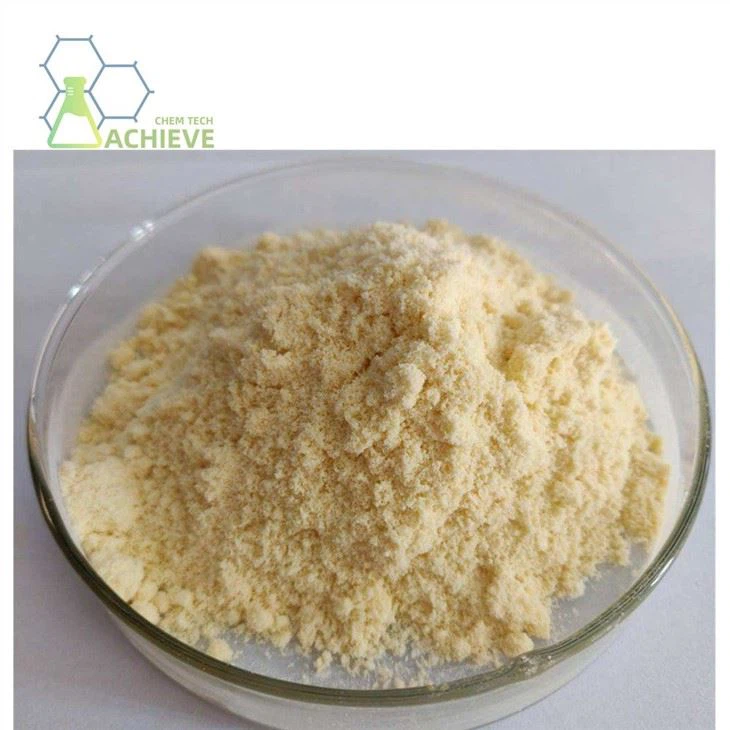
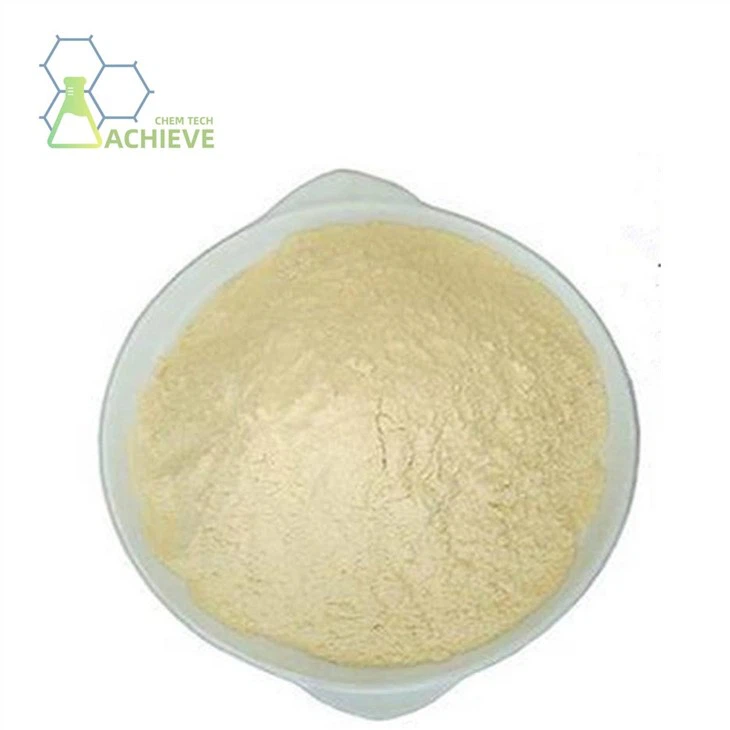
P-hydroxybenzaldehyde, a light yellow or white crystal with a faint and pleasant aroma. Easy to dissolve in ethanol, ether, acetone, and ethyl acetate, slightly soluble in water (1.38g/100ml at 30.5 ℃), CAS 123-08-0, Easily soluble in benzene (3.68g/ml in benzene at 65 ℃). Mainly used as an important intermediate in the pharmaceutical and spice industries. At present, industrial production mainly uses phenol, p-cresol, p-nitrotoluene and other raw materials.
The characteristics of this process are easy availability of raw materials, simple manufacturing process, low output, and high cost. Used for the synthesis of pesticide herbicides bromobenzonitrile and oxycyanide, as well as the production of fungicides, photographic emulsifiers, nickel plating gloss agents, liquid crystals, etc; In the pharmaceutical industry, it is used to synthesize hydroxyampicillin (amoxicillin), antibacterial enhancer trimethoxypyrimidine (TMP), 3,4,5-trimethoxybenzaldehyde, p-hydroxyglycine, hydroxyampicillin, artificial gastrodia elata, rhododendron, esmolol, etc.

|
Chemical Formula |
C7H6O2 |
|
Exact Mass |
122 |
|
Molecular Weight |
122 |
|
m/z |
122 (100.0%), 123 (7.6%) |
|
Elemental Analysis |
C, 68.85; H, 4.95; O, 26.20 |
|
|
|
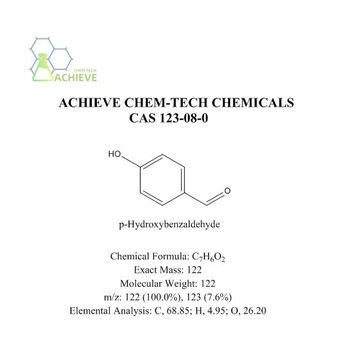

P-Hydroxybenzaldehyde, with the molecular formula C7H6O2 and a molecular weight of 122.12, is a light yellow or off white crystalline substance with a slight aromatic odor. As an important organic compound, hydroxybenzaldehyde has a wide range of applications in various fields.

Medical field
It is an essential intermediate in the pharmaceutical industry. It is widely used in the synthesis of various active drugs, which play important roles in antibacterial, anti-inflammatory, and treatment of cardiovascular and cerebrovascular diseases.
Antibiotics: are key intermediates for the synthesis of semi synthetic β - lactam antibiotics such as amoxicillin, cefradine, and ceftriaxone sodium.
These drugs have broad-spectrum antibacterial effect and can be used to treat a variety of bacterial infectious diseases, such as respiratory tract infection, urinary system infection, etc. In addition, hydroxybenzaldehyde can also be used to synthesize other antibiotic drugs, such as cefoperazone, amoxicillin, hydroxybenzylpenicillin, trimethoprim, etc.
Cardiovascular and cerebrovascular drugs: It is an important intermediate for the synthesis and treatment of cardiovascular and cerebrovascular diseases with the drug esomeprazole.


Esmolol is a beta blocker that can be used to treat diseases such as arrhythmia, angina, and hypertension.
Other drugs: It can also be used to synthesize various drugs such as expectorant rhododendron, anti hyperlipidemia drugs, anti hypertensive drugs, and drugs for treating eye diseases. In addition, it is also an intermediate for Pfizer's new antihypertensive drug ezetimibe, as well as one of the main raw materials for synthesizing drugs such as gastrodin and resveratrol.
Spice field
It is also widely used in the spice industry. It is the key raw material for synthesizing a variety of important spices, which are widely used in food, cosmetics and essence industries.
Synthetic fragrances: can be used for the synthesis of important fragrances such as vanillin, isovanillin, ethylvanillin, 4-hydroxybenzyl alcohol, cinnamaldehyde, p-ethoxybenzaldehyde, raspberry ketone, and p-methoxybenzyl alcohol.


These spices have strong aroma, which can be used as flavor enhancers and flavoring agents in food and essence industry to improve the flavor and quality of food.
Food industry: Synthetic spices have a wide range of applications in the food industry. They are used to make various foods such as popsicles, candies, cookies, etc., adding aroma and taste to the food.
Pesticide field
It is also one of the important intermediates in the pesticide industry. It is widely used in the synthesis of various herbicides and insecticides, providing strong support for agricultural production.
Herbicide: It is the main raw material for synthesizing the contact killing and systemic herbicides Dichlorvonil and Bromophenone. Diclofenac is a plant pre emergence herbicide that can be used for pre emergence weed control of grass crops.


Bromophenone is a selective post seedling stem and leaf treatment contact herbicide that destroys the plant's nutritional system by inhibiting photosynthesis, leading to rapid tissue necrosis.
Insecticides: In addition to herbicides, they can also be used to synthesize new types of insecticides. These insecticides play an important role in pest control in agricultural production, helping to improve crop yield and quality.
Chemical industry field
In addition to the fields of medicine, spices, and pesticides, it also has a wide range of applications in the chemical industry. It is one of the important raw materials for synthesizing various chemical products.
Dyes and Electroplating: Can be used to synthesize dye intermediates such as para hydroxybenzoic acid and benzyl para hydroxybenzoate, as well as chemical products such as color developing agent acetic acid para hydroxyphenol ester.


In addition, it is widely used as a new type of cyanide free brightener in the electroplating industry.
Liquid crystal materials: They also have important applications in the liquid crystal industry. It is one of the basic raw materials for synthesizing high-end photosensitive materials and can be used to make key components in electronic products such as LCD displays.
Other fields
In addition to the aforementioned fields, it also has certain applications in other areas.
Photographic emulsifier: can be used to synthesize photographic emulsifiers, which play an important role in the photographic industry.
Nickel plating gloss agent: In the field of metal surface treatment, it can be used as a nickel plating gloss agent, which helps to improve the glossiness and aesthetics of metal products.


There are many technological routes for the production of P-hydroxybenzaldehyde. At present, the industrial production mainly includes phenol; P-cresol; P-nitrotoluene and other raw materials.
It is also divided into Reimer Tiemann reaction; Gattermann reaction; Phenol Trichloroacetaldehyde route; Phenol glyoxylic acid route; Phenol formaldehyde route and other synthetic processes. The phenol process is characterized by easy availability of raw materials, simple manufacturing process, low yield and high cost.
(1) Reimer Tiemann reaction: phenol and chloroform are heated in alkaline aqueous solution, and hydroxybenzaldehyde and o-hydroxybenzaldehyde (commonly known as salicylaldehyde) are generated at the same time. The total yield is about 50%, and the highest yield of hydroxybenzaldehyde is only 17%.
This process is mainly used to synthesize salicylaldehyde and hydroxybenzaldehyde as a by-product, but it is one of the main production methods. The conversion rate of raw materials and product yield of this process are very low, and a large amount of tar is produced. Chloroform must be excessive, unreacted phenol is not easy to recover, and product separation and purification are difficult. Therefore, we must vigorously develop new and efficient catalysts, improve the selectivity of the reaction, and develop simple and efficient product separation and purification methods to reduce the cost and improve the product yield.
(2) Gattermann reacts phenol and HCN. In the presence of AlCl3, dry HCl is introduced to carry out the catalytic reaction, which is decomposed in ice water to obtain hydroxybenzaldehyde. The product yield is high. If zinc cyanide is used instead of HCN, the yield is almost theoretical.
The product selectivity of this process is high, but the disadvantages are as follows: the cyanide is toxic and the operation technology is high; Difficult. Determination 2: due to the use of anhydrous operation, the requirements for reaction equipment are strict; High cost. Disadvantage 3: a small amount of salicylaldehyde is produced, which makes it difficult to separate and purify the product, thus restricting large-scale production.
The process of hydroxybenzaldehyde production by p-nitrotoluene method is divided into oxidation and reduction; Diazotization and hydrolysis were carried out in three steps.
(1) P-nitrotoluene was oxidized and reduced simultaneously with p-nitrotoluene by sodium polysulfide to obtain p-aminobenzaldehyde. The conversion and yield were above 90%. Sodium polysulfide can be sodium hydrosulfide; Caustic soda and sulfur as raw materials.
(2) Diazotization and hydrolysis: treat p-aminobenzaldehyde with sulfuric acid, add sodium nitrite solution, and decompose excess sodium nitrite with a small amount of urea to obtain p-aminobenzaldehyde diazonium salt solution. This solution is hydrolyzed in the presence of sulfuric acid. The product was extracted; Purification; The yield of hydroxybenzaldehyde was over 90%.
The advantages of this process are that the raw materials are cheap, but the disadvantages are that the process route is long, the equipment is huge, the intermediate product is toxic to p-aminobenzaldehyde, the reaction temperature is low, and the freezing conditions are high. At present, the domestic Qixian fine chemical plant uses this process to produce hydroxybenzaldehyde.
The process is to directly oxidize p-cresol with air or oxygen under the action of catalyst to synthesize hydroxybenzaldehyde.
1980s, Japan; U.S.A; Germany and other countries have conducted in-depth research and reported on this process route.
In the late 1980s and early 1990s, Jiangsu Province; Shanghai; Several research and production units in Dalian and other places have also carried out research and development on this process and applied it to industrial production.
The specific process flow is as follows: p-cresol; Sodium hydroxide; Methanol is added to the stainless steel pressure kettle, and after stirring until it is completely dissolved, cobalt acetate is added to seal the reaction kettle, oxygen is introduced into the kettle after heating, and the temperature in the kettle is kept at about 60 ℃. At the end of the reaction, the material is put into the primary autoclave, the solvent methanol is evaporated for recycling, and hydrochloric acid is added for salting out after water is added for dissolution. The solid-liquid material is filtered by a centrifuge, and the obtained solid is put into a vacuum oven and dried at about 60 ℃ for 3-5h to obtain p-hydroxybenzaldehyde with a content of more than 98%.
FAQ
What is p-hydroxybenzaldehyde?
p-Hydroxybenzaldehyde is a hydroxybenzaldehyde that is benzaldehyde substituted with a hydroxy group at position C-4. CAS Number : 123-08-0. Molecular Formula : C₇H₆O₂
What is hydroxybenzaldehyde used for?
3-Hydroxybenzaldehyde (3-HBA) and 4-Hydroxybenzaldehyde (4-HBA) have been shown to increase intracellular antioxidant activity, vasoprotective efficacy, wound healing, and cell migration. 3-HBA is a natural active compound isolated from Gastrodia elata and is a substrate for aldehyde dehydrogenase in humans.
Can O and p-hydroxybenzaldehyde be separated?
o-Hydroxybenzaldehyde is more volatile due to intramolecular hydrogen bonding. p-Hydroxybenzaldehyde forms intermolecular hydrogen bonding and is less volatile. Therefore, the two can be separated by steam distillation.
Hot Tags: p-hydroxybenzaldehyde cas 123-08-0, suppliers, manufacturers, factory, wholesale, buy, price, bulk, for sale, Bromocyclohexane CAS 108 85 0, 2 3 Dichloropyridine CAS 2402 77 9, 1 2 Naphthoquinone 4 sulfonic acid sodium salt, 2 4 Quinolinediol, Aminoantipyrine, Thiophosgene