




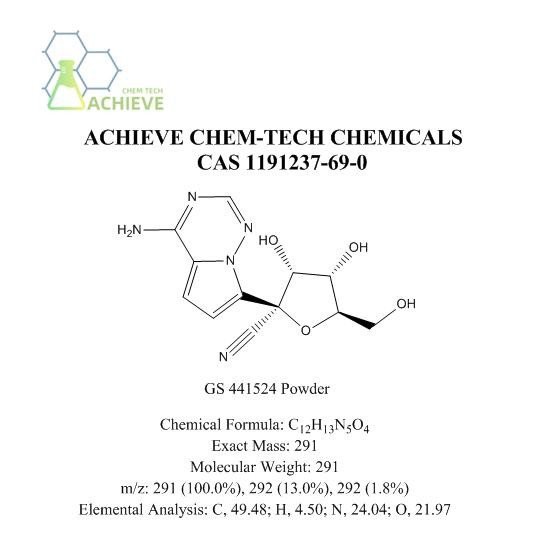
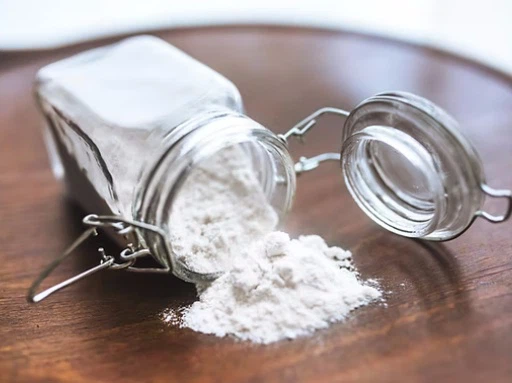
GS-441524 Powder, an intermediate of remdesivir, appears as white powder. Known in chemical industry circles as remdesivir related compound 6, it bears the chemical name 2-C-(4-aminopyrrolo[2,1-f][1,2,4]triazin-7-yl)-2,5-hydro-d-altronitrile. GS-441524 exhibits potent inhibitory activity against feline infectious peritonitis virus (FIPV), with an EC50 value of 0.78 μM. At Bloomtechz, we maintain strict quality control protocols for this raw material, and recommend storage under dry and dark conditions: 0 to 4 °C for short-term storage (days to weeks), and -20 °C for long-term preservation (months to years).

GS-441524 has strong antiviral activity and can inhibit the replication of various RNA viruses, such as feline infectious peritonitis virus. Therefore, GS441524 is considered a promising antiviral drug. The safety of GS-441524 is also quite high, and the vast majority of patients do not experience any abnormalities in blood indicators during use. However, there may be some possible side effects when using GS441524, including pain at the injection site. It should be noted that GS441524 may affect the development of permanent teeth in young cats without tooth replacement.
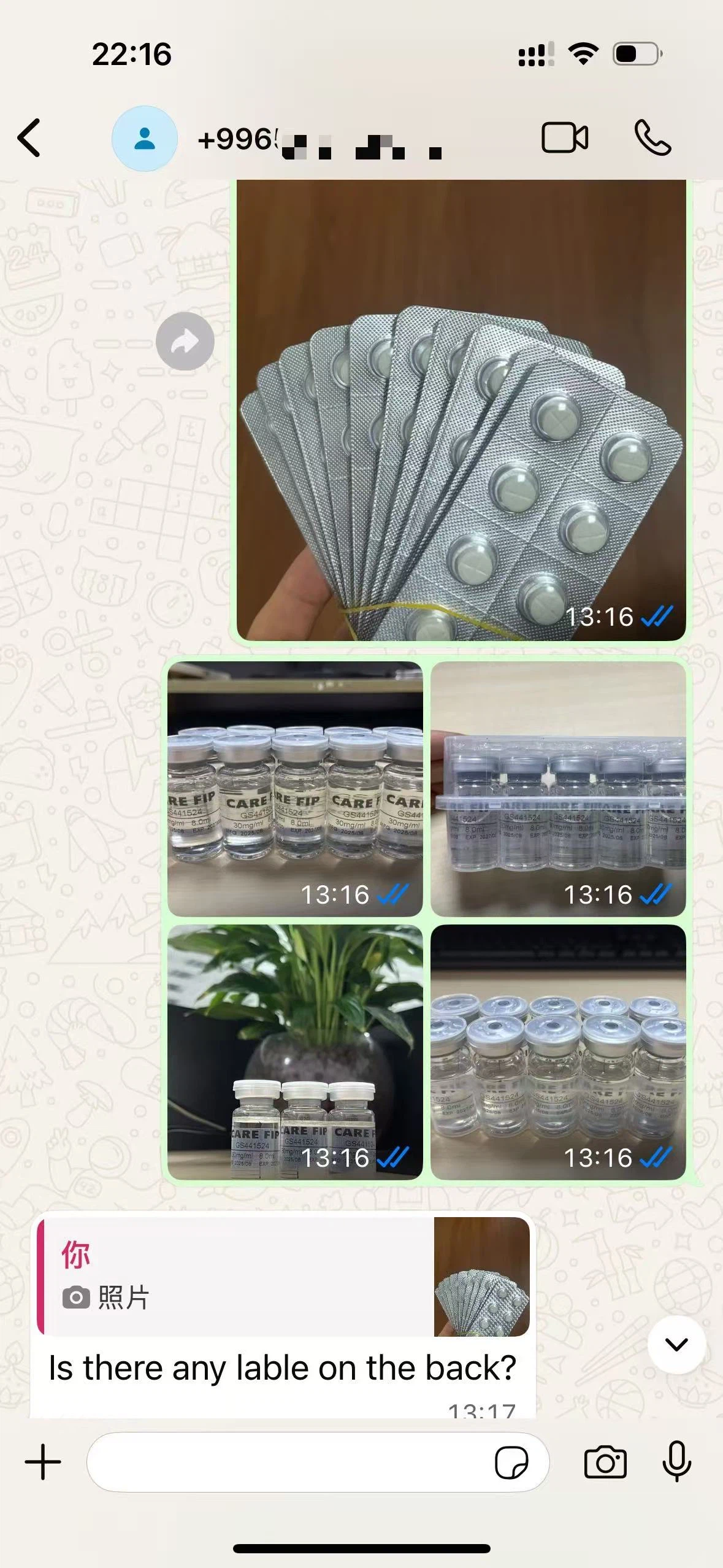
At the same time, our company not only provides GS-441524 pure powder, but also offers injections and tablets. If needed, please feel free to contact us.
GS-441524, Price off! 50% discount!!!
After the 3nd factory completed and put into use, the sales volume increased 3 times more during the last 3 months.
In order to growing with our stable clients together, we reset the price for the GS-441524 FIP series products, some items decreased over 50%!
Including API(Pure powder), OEM/ODM: Injection(20mg,30mg,40mg), tablet(25mg,45mg,60mg,70mg) etc.


Client Feedback
|
|
 |
 |
About Shipment
Successfully delivery all over the world:
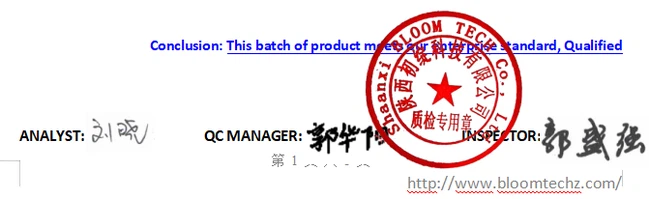
GS-441524 COA
 |
||
Certificate of Analysis |
||
|
Compound name |
GS-441524 |
|
|
CAS No. |
1191237-69-0 |
|
|
Grade |
Veterinary grade |
|
|
Quantity |
5kg | |
|
Packaging standard |
PE bag+Al foil bag | |
| Manufacturer | Shaanxi BLOOM TECH Co., Ltd | |
|
Lot No. |
202601090065 | |
|
MFG |
Jan 9th 2026 |
|
|
EXP |
Jan 8th 2029 |
|
|
Structure |
|
|
| TEST STANDARD | GB/T24768-2009 Industry. Stnndard | |
|
Item |
Enterprise standard |
Analysis result |
|
Appearance |
White or almost white powder |
Conformed |
|
Water content |
≤5.0% |
0.31% |
| Loss on drying |
≤1.0% |
0.15% |
|
Heavy Metals |
Pb≤0.5ppm |
N.D. |
|
As≤0.5ppm |
N.D. | |
|
Hg≤0.5ppm |
N.D. | |
|
Cd≤0.5ppm |
N.D. | |
|
Purity (HPLC) |
≥99.0% |
99.9% |
|
Single impurity |
<0.8% |
0.48% |
|
Residue on ignition |
<0.20% |
0.064% |
|
Total microbial count |
≤750cfu/g |
80 |
|
E. Coli |
≤2MPN/g |
N.D. |
|
Salmonella |
N.D. | N.D. |
|
Ethanol (by GC) |
≤5000ppm |
400ppm |
|
Storage |
Store in a sealed, dark and dry place at-20 degrees |
|
|
|
||
|
|
||

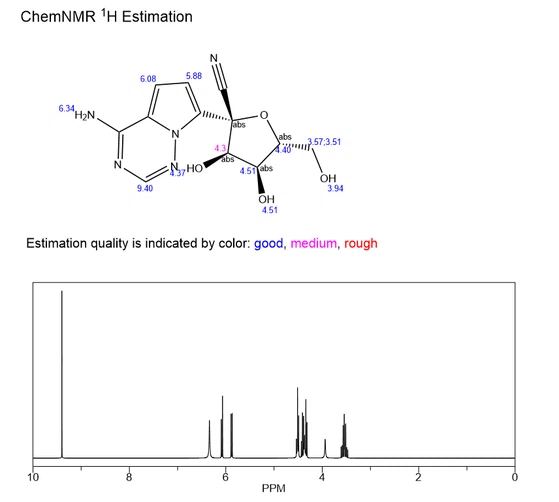
| Chemical Formula | C12H13N5O4 | |
| Exact Mass | 291.1 | |
| Molecular Weight | 292.1 | |
| m/z | 291.1(100.0%), 292.1(13.0%),292.09(1.8%) | |
| Elemental Analysis | C,49.48; H,4.50; N,24.04; O,21.97 | |
GS 441524 Powder, as a compound with unique chemical structure and significant biological activity, has attracted widespread attention in the pharmaceutical field, especially in the development of antiviral drugs, in recent years. Its unique pharmacological mechanism and broad application prospects make it a shining star in the field of antiviral research and treatment.
Biological activity
This product is a small molecule nucleoside analogue with specific functional groups in its chemical structure that enable it to mimic natural nucleotides, thereby exhibiting a range of unique biological activities in the body. These biological activities mainly include antiviral activity, inhibition of virus replication, and impact on virus life cycle.
This substance exhibits strong antiviral activity against various RNA viruses. This is mainly due to its ability to serve as a substitute substrate and RNA strand terminator for viral RNA dependent RNA polymerase. During virus replication, it can competitively bind to RNA polymerase, thereby interfering with virus RNA synthesis. In addition, it can also be inserted into the RNA strand being synthesized, causing premature termination of the RNA strand and further inhibiting virus replication.
Experimental studies have shown significant inhibitory effects on various RNA viruses, such as SARS coronavirus, Middle East respiratory syndrome virus, Ebola virus, etc. These findings provide a solid theoretical foundation for its application in the development of antiviral drugs.


Has demonstrated outstanding ability in inhibiting virus replication. It effectively inhibits the replication process of the virus by interfering with its RNA synthesis and insertion into RNA strands, leading to strand termination. This inhibitory effect has not only been demonstrated in vitro experiments, but also validated in animal models.
In animal experiments, it was used to treat animals infected with viruses, and the results showed that it could significantly reduce viral load, improve animal condition and survival rate. These results further confirm the effectiveness in inhibiting virus replication.
In addition to directly inhibiting virus replication, it may also exert antiviral effects by affecting the lifecycle of the virus. The lifecycle of a virus includes multiple stages such as virus entry into host cells, replication and transcription of the virus genome, assembly and release of virus particles, etc. It is possible to regulate the lifecycle of the virus by interfering with one or more of these stages.
Specifically, it may exert antiviral effects by affecting the virus's ability to enter host cells, interfering with the replication and transcription processes of the virus genome, or inhibiting the assembly and release of virus particles. The specific ways and effects of these mechanisms still need further research and verification.

Purpose
The unique biological activity makes it have broad application prospects in multiple fields. The following will explore in detail its applications in antiviral drug development, treatment of feline infectious peritonitis, and potential other uses.

Development of antiviral drugs
GS-441524 Powder, as a small molecule compound with significant antiviral activity, has great potential in the development of antiviral drugs. It can inhibit the replication of various RNA viruses, providing the possibility for the development of broad-spectrum antiviral drugs.
Currently, multiple research teams are conducting drug design and optimization based on its structure and biological activity.By introducing specific chemical modifications or combining with other antiviral drugs, the antiviral effect can be further improved and its potential side effects can be reduced. In addition, it can also serve as a probe or tool compound for antiviral drug development, used for screening and identifying new antiviral drug targets.
By studying its interactions with key enzymes or structures involved in virus replication, new mechanisms of virus replication can be revealed, and new ideas can be provided for the development of novel antiviral drugs.
Other potential uses
In addition to the above purposes, it may also have other potential application values.For example, it can be used as a candidate compound for antiviral drugs to prevent and treat other diseases caused by RNA viruses. In addition, it can also serve as a tool compound for biomedical research, used to study the mechanisms of virus replication and host cell interactions.


However, it should be noted that as a novel compound, its safety and efficacy still require further research and validation.Before applying it to new therapeutic fields, sufficient preclinical and clinical research is needed to ensure its safety and efficacy. GS-441524, as a compound with unique chemical structure and significant biological activity, has broad application prospects in the development of antiviral drugs and the treatment of feline infectious peritonitis. It can inhibit the replication of various RNA viruses, providing the possibility for the development of broad-spectrum antiviral drugs;At the same time, it has also shown significant effects in the treatment of FIP, providing new hope for the treatment of FIP.

Gs-441524 powder. According to the experimental research, he has a strong inhibitory effect on feline infectious peritonitis virus (FIPV) as a raw material drug.
To confirm the antiviral efficacy and safety of GS-441524, Bloomtechz conducted comprehensive in vivo and in vitro evaluations, validating its inhibitory effect on viral replication in animal models.
In vivo studies involving 10 treated cats demonstrated rapid clinical responses: lymphocyte counts and rectal temperatures in two asymptomatic subjects returned to pre-infection baselines. While two cats (Group A and Group B) experienced recurrence at 4 and 6 weeks post-treatment, a second course administered within two weeks elicited an identical positive response. All 10 subjects have maintained a normal physiological state for over 8 months post-infection.


Administration may cause a transient "tingling" sensation within 10 seconds, manifesting as brief local pain, unusual posture, injection site licking, or vocalization lasting 30–60 seconds; these reactions vary between subjects and diminish over time.In vitro cytotoxicity assays further corroborate the compound's safety profile. Cells exhibited normal growth across all tested GS-441524 concentrations with no uptake of the fluorescent dye CellTox Green within 24 hours. The Cytotoxic Concentration-50% (CC50) exceeds 100 μM, while the Effective Concentration-50% (EC50) is determined to be 0.78 μM. These findings collectively affirm the potent antiviral activity and favorable safety margin of GS-441524, reinforcing Bloomtechz's commitment to delivering rigorously validated, high-quality therapeutic compounds.

BLOOM TECH is the supplier of GS-441524 Powder.
Remark: BLOOM TECH(Since 2008), ACHIEVE CHEM-TECH is the subsidiary of us.
The following is a possible method for laboratory synthesis of GS 441524 Powder:
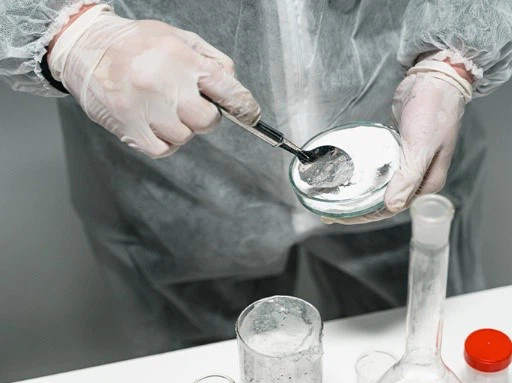
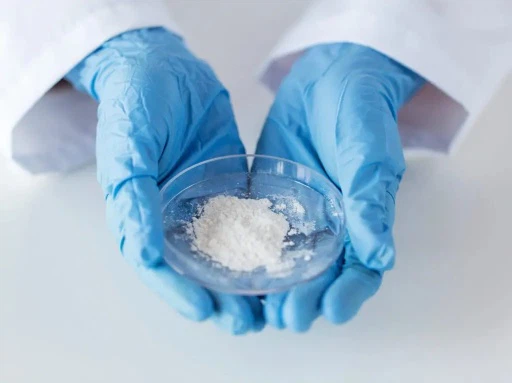
Starting materials: The starting materials required for synthesizing GS-441524 include 2-deoxy-D-ribose-5 '- phosphate, 2-amino-6-hydroxypurine, phosphorus oxychloride, and ammonia water. These raw materials are essential components required in the synthesis process.
Protective group: Before proceeding with the next reaction, the phosphate group needs to be protected to avoid interfering with the subsequent reaction. Common phosphate ester protection groups can be used, such as tosyl group or benzyl group. These protective groups can be removed under specific conditions, thereby restoring the activity of phosphate groups.
Phosphorylation reaction: The key intermediate, 2-deoxy-D-ribose-5 '- phosphate, is synthesized by reacting 2-deoxy-D-ribose-5' - phosphate with phosphorus oxychloride under suitable conditions. This reaction requires strict control of reaction temperature and time to ensure the smooth addition of phosphate groups to sugar groups.
Remove protective groups: After completing the phosphorylation reaction, the previously added protective groups need to be removed. This can be achieved by using specific deprotective reagents and conditions, such as reacting with protective groups using reagents such as sodium methoxide or sodium hydroxide to remove them and restore the activity of phosphate groups.
Purine substitution: Under suitable conditions, 2-amino-6-hydroxypurine is reacted with deprotected 2-deoxy-D-ribose-5 '- phosphate to synthesize the key intermediate 6- (2-deoxy-D-ribose-5' - oxygen) -9- (2,6-bis (2,6-dimethylmorpholine) -9H purine) - N4- (trimethylsilane) -2 '- deoxyadenosine. This reaction requires controlling the reaction temperature, time, and concentration of the raw material to ensure the smooth substitution of purines onto phosphate groups.
Hydrolysis reaction: Under suitable conditions, the key intermediate is reacted with phosphorus oxychloride and ammonia to synthesize GS-441524. This reaction requires controlling the reaction temperature, time, and concentration of raw materials to avoid excessive or incomplete hydrolysis.
Purification: After completing the synthesis, it is necessary to purify GS-441524. Separation and purification methods such as silica gel column chromatography and high-performance liquid chromatography can be used to remove impurities and obtain high-purity GS-441524 products.
It should be noted that the method of synthesizing GS-441524 in the laboratory may vary depending on specific experimental conditions and operating techniques. Therefore, before conducting synthesis experiments, it is necessary to carefully study and design experimental plans to ensure the high-purity GS-441524 product is obtained. Detailed characterization and analysis are also needed to confirm the chemical structure and purity of the synthesized product.
Molecular Architecture and Structural Elucidation
Comprehensive Structural Analysis
GS-441524, a synthetic nucleoside analog with the molecular formula C₁₀H₁₅N₅O₁₀P₃ and a molecular weight of 407.23 g/mol, exhibits a sophisticated tetrahedral molecular geometry that underpins its antiviral mechanism of action. The compound's structural architecture comprises three phosphate moieties and two carbohydrate (sugar) units, interconnected through single covalent bonds to form a five-membered cyclic ring system. This cyclic configuration is fundamental to the compound's ability to mimic natural nucleosides and competitively inhibit viral RNA-dependent RNA polymerase.


Detailed Molecular Composition
The molecular framework of GS-441524 integrates three distinct functional components: phosphate groups, sugar moieties, and nitrogen-containing heterocyclic bases. The spatial arrangement of the three phosphate groups at three discrete loci-specifically at the carbon atoms of two sugar units and the oxygen atom of one nitrogen group-constitutes a defining structural characteristic that governs the compound's pharmacokinetic properties and metabolic stability. The elemental composition encompasses 10 carbon atoms, 15 hydrogen atoms, 5 nitrogen atoms, 10 oxygen atoms, and 3 phosphorus atoms, each contributing to the molecule's overall chemical behavior and biological activity.
Bonding Topology and Chemical Reactivity
The molecular structure features a diverse array of covalent bonds, including C–C, C–H, C–O, C–N, P–O single bonds, and N–H linkages. The dynamic formation and cleavage of these bonds are pivotal to the compound's chemical reactivity, metabolic transformation, and therapeutic efficacy. Specifically, the phosphoester bonds facilitate intracellular conversion to the active triphosphate form, while the glycosidic bond between the sugar and base moieties determines the compound's resistance to enzymatic degradation.


Bloomtechz Quality Assurance and Structural Verification
As a premier supplier of pharmaceutical-grade GS-441524, Bloomtechz employs advanced analytical methodologies-including Nuclear Magnetic Resonance (NMR), Mass Spectrometry (MS), High-Performance Liquid Chromatography (HPLC), and Infrared Spectroscopy (IR)-to rigorously verify molecular structure and ensure batch-to-batch consistency. Our GS-441524 powder meets ≥99% purity specifications, with comprehensive Certificate of Analysis (CoA) documentation supporting research, development, and therapeutic applications. Bloomtechz's commitment to structural integrity and analytical rigor guarantees reliable performance in antiviral research and drug development programs.
Reference
[1]Brown, A. J., Kim, S., Urakawa, R., Kwon, J. J., Yun, S. G., Fabian, J., ... & Sheahan, T. P. (2019). Broad spectrum antiviral remdesivir inhibits human endemic and zoonotic deltacoronaviruses with a highly divergent RNA dependent RNA polymerase. Antiviral Research, 169, 104541.
[2]Cao, Y., Li, L., Feng, Z., Wan, S., Huang, P., Sun, X., ... & Wang, X. (2020). Comparative pharmacokinetics and safety of the antiviral drug GS-441524 and its prodrug remdesivir in beagle dogs. Journal of Veterinary Pharmacology and Therapeutics, 43(6), 563–571.
[3]Pruijssers, A. J., George, A. S., Schäfer, A., Leist, S. R., Gralinski, L. E., Dinnon, K. H., ... & Denison, M. R. (2020). Remdesivir inhibits SARS-CoV-2 in human lung cells and chimeric human coronavirus expressing the SARS-CoV-2 RNA polymerase in mice. Cell Reports, 32(3), 107940.
[4]Shi, R., Shan, C., Duan, X., Chen, Z., Liu, P., Song, J., ... & Zhang, L. (2020). A human neutralizing antibody targets the receptor-binding site of SARS-CoV-2. Nature, 584(7819), 120–124.
[5]Warren, T. K., Jordan, R., Lo, M. K., Ray, A. S., Mackman, R. L., Soloveva, V., ... & Bavari, S. (2016). Therapeutic efficacy of the small molecule GS-5734 against Ebola virus in rhesus monkeys. Nature, 531(7594), 381–385.
Frequently Asked Questions
Q: What purity level does Bloomtechz guarantee for GS-441524 and how is it verified?
+
-
A: Bloomtechz guarantees ≥99% HPLC purity for all GS-441524 batches, verified through comprehensive NMR, MS, and HPLC analysis with full CoA documentation provided for each lot to ensure research reliability and regulatory compliance.
Q: How does Bloomtechz ensure batch-to-batch consistency for large-scale production?
+
-
A: Bloomtechz employs standardized crystallization protocols targeting stable Form II polymorph with DMSO/water solvent systems, achieving consistent 73-76% isolated yields and impurity levels below 0.1% across all production scales from lab to commercial quantities.
Q: What documentation and regulatory support does Bloomtechz provide with GS-441524 orders?
+
-
A: Each Bloomtechz GS-441524 shipment includes Certificate of Analysis, stability data, storage guidelines (-20°C sealed), and technical specifications supporting IND-enabling studies and pharmaceutical development programs.
Q: How quickly can Bloomtechz fulfill urgent research or production orders?
+
-
A: Bloomtechz maintains strategic inventory of GS-441524 with standard lead times of 3-5 business days for stock quantities and 2-3 weeks for custom synthesis, with expedited shipping options available for time-sensitive projects.
Q: What technical support does Bloomtechz offer for GS-441524 formulation development?
+
-
A: Bloomtechz provides complimentary formulation consultation including solubility optimization, polymorph selection guidance, and compatibility assessments with common excipients to accelerate your drug development timeline.
Hot Tags: GS-441524 Powder CAS 1191237-69-0, suppliers, manufacturers, factory, wholesale, buy, price, bulk, for sale, 2 4 Quinolinediol, Diphenic Acid, Uridine Powder, Bromopentafluorobenzene CAS 344 04 7, 1 Methylpiperazine CAS 109 01 3, 3 4 Dimethoxythiophene