




Shaanxi BLOOM Tech Co., Ltd. is one of the most experienced manufacturers and suppliers of l-lysine diisocyanate cas 45172-15-4 in China. Welcome to wholesale bulk high quality l-lysine diisocyanate cas 45172-15-4 for sale here from our factory. Good service and reasonable price are available.
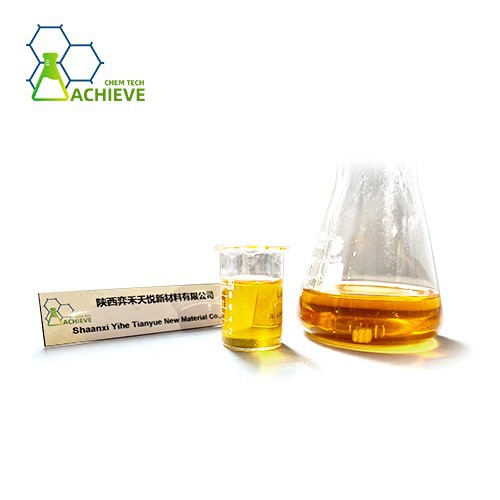
L-Lysine Diisocyanate (LDI) is an important organic compound that appears as a slightly yellow to yellow oily liquid at room temperature and pressure, and may also appear as a yellow to brown viscous liquid. Its molecular formula is C10H14N2O4, CAS 45172-15-4. Its solubility in water is very low, very slightly soluble (0.19 g/L) at 25 ° C, indicating that it is not easily soluble in water and has good solubility in some organic solvents such as alcohols and ethers. Foreign scholars have studied the effect of lysine diisocyanate (LDI) on the properties of polylactic acid (PLA)/bamboo fiber (BF) and polybutylene succinate (PBC)/bamboo fiber, and pointed out that LDI can improve the water resistance, tensile strength, and interfacial bonding properties of PLA/BF and PBC/BF polymers. Mainly used in the production of polyurethane coatings in industry.

|
|
|


|
Chemical Formula |
C8H12N4O3 |
|
Exact Mass |
212 |
|
Molecular Weight |
212 |
|
m/z |
212 (100.0%), 213 (8.7%), 213 (1.1%) |
|
Elemental Analysis |
C, 45.28; H, 5.70; N, 26.40; O, 22.62 |

L-Lysine Diisocyanate (CAS number: 45172-15-4) is an amino acid derivative with a unique chemical structure, containing both the amino group of lysine and the isocyanate group (- N=C=O) in its molecule. This structure endows it with rich reactivity and broad application potential, making it play an important role in multiple industrial and scientific fields.

Production of polyurethane coatings
1. Improvement of coating performance
Plays a key role in the production of polyurethane coatings. Its isocyanate groups can react with polyols in coatings to form polyurethane segments. This reaction process not only constructs the basic framework of the coating, but also endows the coating with excellent physical and chemical properties.
Hardness and Wear Resistance: By introducing this substance, the cross-linking density in polyurethane coatings increases, making the coating harder and more wear-resistant. This is particularly important for situations that require mechanical wear and tear, such as car bodies, industrial equipment surfaces, etc.
Chemical corrosion resistance: The polyurethane segments in polyurethane coatings have excellent resistance to various chemicals, including acids, bases, salts, etc. Its introduction further enhances this chemical corrosion resistance, allowing the coating to remain stable even in harsh chemical environments.
Weather resistance: Polyurethane coatings need to withstand the erosion of natural factors such as ultraviolet rays and wind and rain when used outdoors. The participation of this substance makes the polyurethane chain segments in the coating more stable, less prone to photodegradation and oxidation reactions, thereby extending the service life of the coating.


2. Development of environmentally friendly coatings
With the increasing awareness of environmental protection, the development of coatings with low volatile organic compound (VOC) content has become an industry trend. As a low toxicity and low volatility raw material, it helps to reduce environmental pollution during the production and use of coatings.
Low VOC formula: Traditional polyurethane coatings often use organic solvents as diluents, which can evaporate into the air during the coating drying process, causing environmental pollution. And it can react with water-based polyols to prepare water-based polyurethane coatings, significantly reducing VOC content.
Biobased coatings: derived from amino acids and possessing biodegradability. Using it to prepare bio based polyurethane coatings not only meets environmental requirements, but also reduces dependence on petroleum resources.
3. Special functional coatings
It can also be used to prepare polyurethane coatings with special functions.
Self repairing coating: Polyurethane coatings with self-healing function can be prepared by copolymerizing with other functional monomers. When the coating is slightly damaged, microcapsules or reversible chemical bonds in the coating will release repair agents or undergo chemical reactions, achieving self repair of the coating.


Anti fouling coating: The introduction of this substance can change the chemical properties of the coating surface, giving it anti fouling performance. For example, by introducing fluorine or silicon elements, anti fouling coatings with superhydrophobic or superoleophobic properties can be prepared.
Antibacterial coating: By copolymerizing antibacterial agents with this substance, polyurethane coatings with antibacterial properties can be prepared. This type of coating has broad application prospects in fields such as healthcare and food packaging.
Peptide preparation
1. Peptide synthesis reaction
L-lysine diisocyanate is an important reagent in peptide preparation, and its isocyanate group can react with the amino or carboxyl group at the end of the peptide chain to extend or modify the polypeptide chain.
Efficient synthesis: Compared with traditional peptide synthesis methods, using this substance for peptide synthesis has higher reaction efficiency and selectivity. Its isocyanate groups have high reactivity and can react with peptide chains under mild conditions.


Protective group strategy: In the process of peptide synthesis, it is often necessary to use protective groups to protect specific amino or carboxyl groups to prevent unnecessary side reactions during the reaction. It can react with peptide chains modified with protective groups to achieve directional extension of the polypeptide chain.
2. Development of bioactive peptides
By utilizing it for peptide synthesis, peptide molecules with specific biological activities can be prepared. Drug development: Some peptide drugs with antibacterial, antiviral.
Anti-tumor and other biological activities are prepared through peptide synthesis reactions in which they participate. These peptide drugs have the advantages of high efficiency and low toxicity, and are an important direction for future drug development.
Biocatalysis: Some peptide molecules have enzymatic activity and can catalyze specific chemical reactions. By using it for peptide synthesis, biocatalysts with higher catalytic activity and stability can be prepared.
3. Peptide modification and functionalization
It can also be used to modify and functionalize existing peptides.


Changing physical and chemical properties: By introducing it into specific positions in the polypeptide chain, the solubility, stability, biological activity, and other physical and chemical properties of the polypeptide can be altered. For example, introducing hydrophobic groups can increase the solubility of peptides in organic solvents.
Introducing functional groups: can react with various functional groups, such as fluorescent groups, biotin groups, etc.By introducing these functional groups into the polypeptide chain, peptides can be endowed with new functions, such as fluorescent labeling, biotinylation, etc.
Composite material reinforcement
1. Improved water resistance
In the field of composite materials, it is used to improve the water resistance of materials.
Polylactic acid (PLA)/bamboo fiber (BF) composite material: Introducing product into PLA/BF composite material can significantly improve its water resistance. This is because it can react with PLA and BF to form chemical bonds, thereby preventing the permeation and diffusion of water molecules.


Polybutylene succinate (PBC)/bamboo fiber composite material: Similarly, introducing it into PBC/BF composite material can also improve its water resistance. This improvement enables composite materials to maintain stable performance even in humid environments.
2. Increased tensile strength
In addition to water resistance, it can also enhance the tensile strength of composite materials.
Improvement of interface bonding performance: In the preparation process of composite materials.
The use of coupling agents can improve the interface bonding performance between the matrix and fibers. The improvement of interface bonding performance enables composite materials to better transmit stress when subjected to external forces, thereby enhancing their tensile strength.
Fiber surface treatment: By treating the fiber surface with this substance, the roughness and reactivity of the fiber surface can be increased, thereby improving the adhesion between the fiber and the matrix. This processing method is particularly effective in improving the tensile strength of composite materials.


3. Optimization of interface bonding performance
The interfacial bonding performance is one of the key factors affecting the properties of composite materials. By reacting its isocyanate groups with the matrix and fibers in the composite material, chemical bonds are formed, thereby optimizing the interfacial bonding performance.
Chemical bonding formation: Its isocyanate groups can react with active groups such as hydroxyl and amino groups on the surface of the matrix and fibers to form chemical bonds.
This chemical bonding is more robust than physical adsorption and can significantly improve interfacial adhesion performance.
Interface layer structure regulation: By controlling the dosage and reaction conditions of product, the structure and properties of the interface layer can be regulated. For example, gradient interface layers or nano interface layers can be formed to further improve the interfacial bonding performance and overall performance of composite materials.


The synthesis method of L-lysine diisocyanate is not single, although the specific synthesis route may vary due to experimental conditions, raw material sources, and target product purity, common synthesis methods usually revolve around the modification of L-lysine. Here is an overview of some possible synthesis methods:
1. Isocyanation method after esterification
Firstly, L-lysine is subjected to esterification or other esterification reactions to generate the corresponding ester derivatives.
Then, the hydroxyl or amino groups in ester derivatives react with isocyanates to produce LDI.
The esterification reaction can increase the reactivity of L-lysine, which is beneficial for the subsequent isocyanation reaction.
Ester derivatives are usually more stable than the original amino acids, and are easier to store and transport.
Taking L-lysine ethyl ester as an example, L-lysine ethyl ester can be obtained by esterification reaction between L-lysine and ethanol under acid catalysis, and then further reacted with isocyanates to synthesize L-lysine ethyl ester diisocyanate. This method avoids the direct use of highly toxic phosgene and improves the safety of the reaction.
2. Direct isocyanation method
Step description:
Under appropriate reaction conditions, L-lysine is directly reacted with isocyanates to produce LDI.
Matters needing attention:
Due to the possible involvement of both amino and carboxyl groups in the reaction of L-lysine, strict control of reaction conditions is required to selectively generate the target product.
The direct isocyanation method may involve more complex reaction mechanisms and higher reaction condition requirements.
3. Alternative path method
Summary:
In addition to the above two methods, there may be other alternative pathways for synthesizing LDI. These pathways may involve different starting materials, intermediates, or reaction steps.
Characteristic:
The alternative pathway method may have higher reaction efficiency, lower cost, or better environmental friendliness.
However, the specific feasibility and advantages of these paths need to be evaluated based on experimental conditions and target product requirements.
There are various methods for synthesizing LDI, and the specific choice depends on factors such as experimental conditions, raw material sources, target product purity, and safety requirements. In practical applications, optimization and adjustment need to be made according to specific situations. Meanwhile, with the continuous development of science and technology, new synthesis methods and processes are constantly emerging, providing more choices and possibilities for the preparation of LDI.
Hot Tags: l-lysine diisocyanate cas 45172-15-4, suppliers, manufacturers, factory, wholesale, buy, price, bulk, for sale, 5 Methyl 2 pyrazinecarboxylic Acid CAS 5521 55 1, 2 bromo 3 methylpropiophenone CAS 1451 83 8, GS 441524 Powder, Benzimidazole Powder CAS 51 17 2, DIMETHYLPHOSPHINE OXIDE, 1 2 4 Triazole CAS 288 88 0