




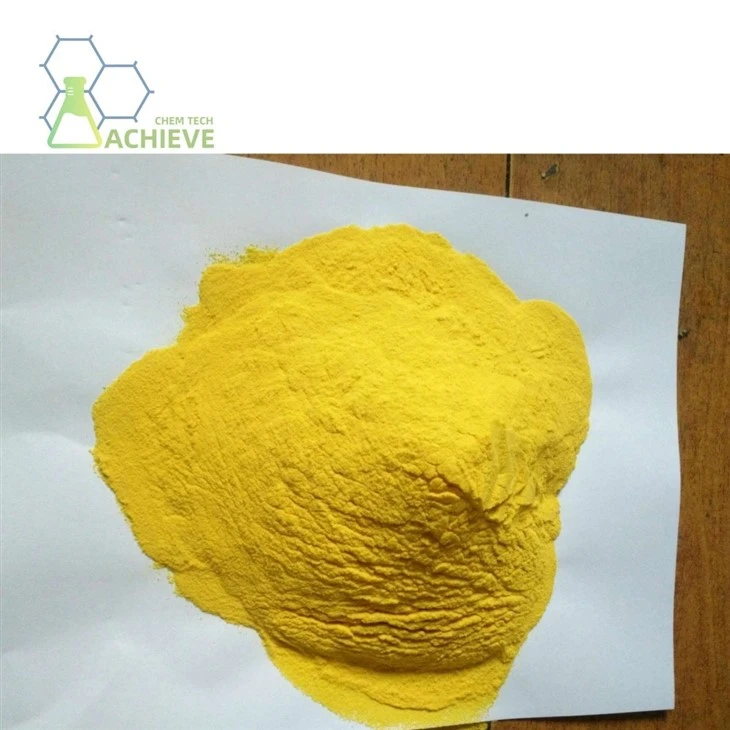
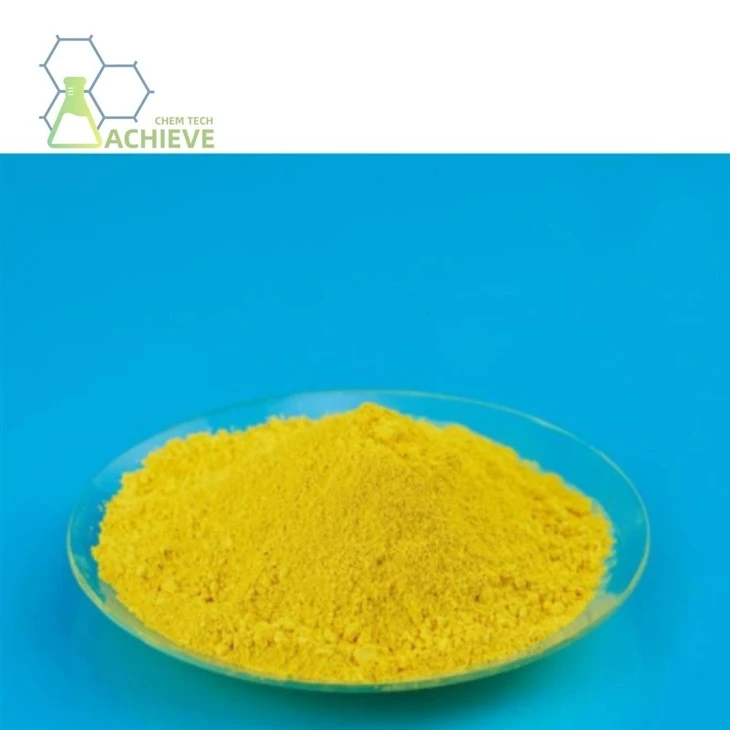
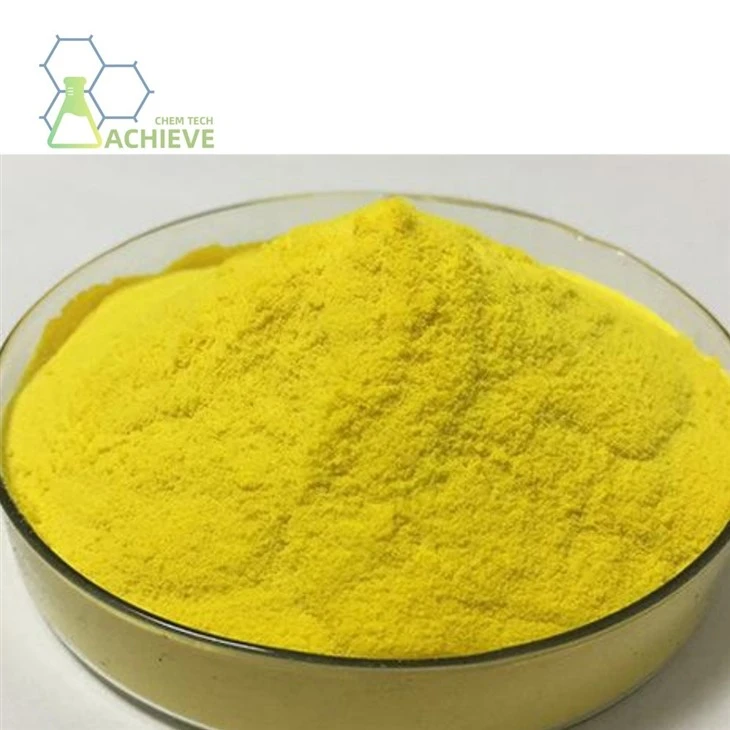
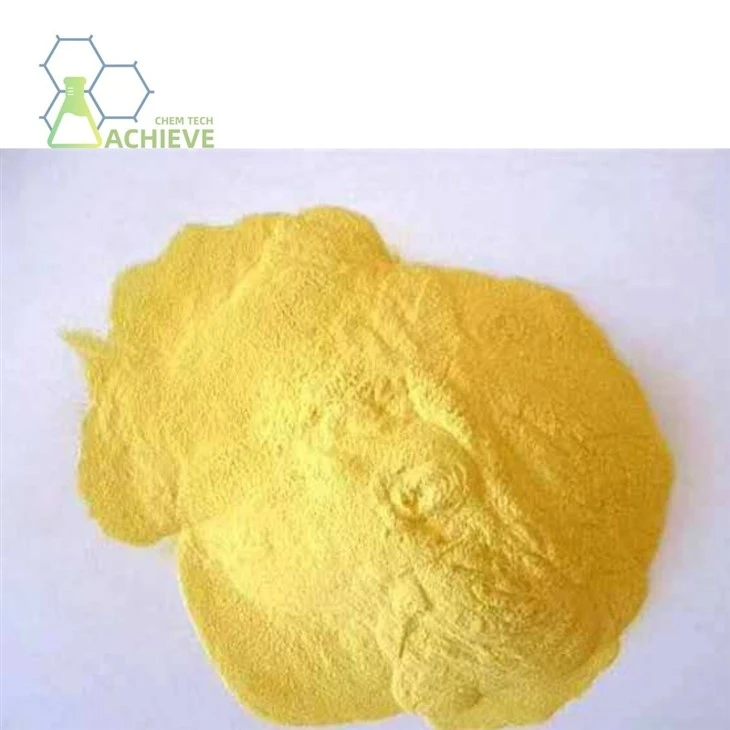
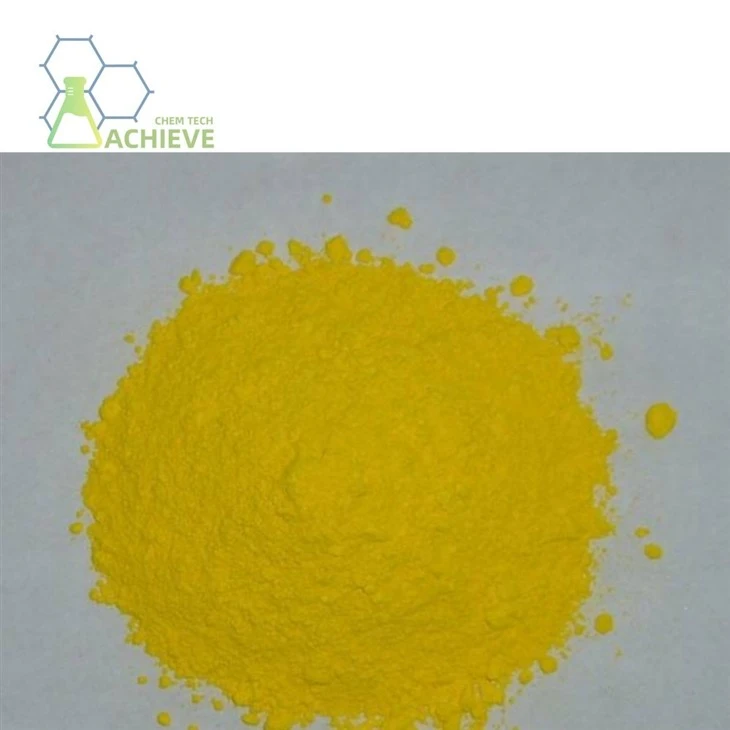
Thiosalicylic acid, also known as ortho mercaptobenzoic acid, 2-mercaptobenzoic acid, ortho carboxy phenylthiophenol, etc., it is an organic compound that usually appears as yellow leaf shaped (in glacial acetic acid) or needle shaped (in ethanol aqueous solution) crystals, or as white to yellow fine crystalline powder. It is easily soluble in acetic acid, slightly soluble in hot water, and can be converted to dithiosalicylic acid when exposed to air. It is sensitive to air and light and needs to be sealed and stored in a dry and cool place. It can be prepared by reacting halogenated benzoic acid with thiosulfate in the presence of copper catalyst.
It is an important organic synthetic intermediate used as an intermediate in pharmaceutical products, such as thiomersal, as an intermediate in sulfur indigo dye, and also used for the determination of iron, as well as for the determination of sodium thiosalicylate and ethylmercury by liquid chromatography. It is widely used in the pesticide, dye, and rubber industries, as well as as as a metal surface treatment agent and a coloring agent in the ceramic industry.

Additional information of chemical compound:
|
Chemical Formula |
C7H6O2S |
|
Exact Mass |
154.01 |
|
Molecular Weight |
154.18 |
|
m/z |
154.01 (100.0%), 155.01 (7.6%), 156.00 (4.5%) |
|
Elemental Analysis |
C, 54.53; H, 3.92; O, 20.75; S, 20.79 |
|
Melting point |
162-165℃(lit.) |
|
Boiling point |
247.55℃(rough estimate) |
|
Density |
1.49 |
|
Storage conditions |
Store below +30℃. |
|
|
|


Thiosalicylic acid is an important organic compound with the chemical formula C7H6O2S and a molecular weight of 154.19. It has unique chemical properties and therefore has a wide range of applications in multiple fields. The following is a detailed explanation of its purpose:
The product is an important organic synthesis intermediate that plays a crucial role in the field of chemical synthesis. It can participate in various chemical reactions and prepare various compounds with specific functions through different synthetic pathways. For example, thimerosal is a commonly used preservative, widely used in pharmaceutical products such as vaccines and eye drops. As an intermediate in the synthesis of thimerosal, the product provides important raw material support for the production of thimerosal.


Sulfur indigo dye is an important industrial dye widely used in industries such as textiles and leather. Ortho mercaptobenzoic acid, as an intermediate in the synthesis of indigo blue dye, provides necessary raw materials for the production of the dye. The product can also react with other compounds to synthesize organic compounds with specific functions, such as certain pharmaceutical intermediates, pesticide intermediates, etc.
The product also has a wide range of applications in the pharmaceutical field. It can be used as an intermediate in the synthesis of certain drugs and participate in the drug synthesis process. For example, it can be used to synthesize pharmaceutical products such as methyl salicylate, which have certain therapeutic effects in treating symptoms such as pain and fever. Although the product itself is not directly used as a drug, its derivatives or analogues may have pharmacological activity.


For example, some compounds containing thiol groups (- SH) have antioxidant and anti-inflammatory effects in organisms, while derivatives of the product, as organic acids containing thiol groups, may also have similar biological activities. The product can also be used as a reagent for analyzing iron and has certain application value in the field of pharmaceutical analysis. For example, when determining the iron content in certain drugs, the complexation reaction between the product and iron ions can be used to determine it by colorimetric or spectrophotometric methods.
Ortho mercaptobenzoic acid is a synthetic intermediate of indigo dye, providing necessary raw materials for the production of the dye. In addition, it can also be used to synthesize other types of dyes, such as certain azo dyes, anthraquinone dyes, etc. The product can also be used as a pigment coloring agent to provide specific colors or improve the properties of pigments.


For example, in the ceramic industry, the product can be used as a coloring agent to give ceramic products bright colors and stable properties.
The product can be used as an anti-corrosion treatment agent for black metals in the electroplating industry. By coating it on the metal surface, a protective film can be formed to effectively prevent the metal from being corroded and oxidized.
Ortho mercaptobenzoic acid can also be used as a reagent in analytical chemistry research. For example, when determining the content of certain metal ions, quantitative analysis can be carried out by utilizing their complexation reactions with metal ions; When separating and purifying certain organic compounds, their interactions with certain materials can be utilized for chromatographic separation.


Ortho mercaptobenzoic acid can be used as a lubricant additive to improve the performance and stability of lubricants. For example, it can be added as an extreme pressure anti-wear agent to lubricants to improve their anti-wear and extreme pressure properties. Ortho mercaptobenzoic acid can also be used as a preservative and mold inhibitor to protect materials from microbial erosion and damage.

Thiosalicylic acid, also known as 2-mercaptobenzoic acid, has the molecular formula C7H6O2S. It is a yellow acicular crystal with a thiol group (-SH) and a carboxyl group (-COOH) attached to the ortho positions of the benzene ring. It serves as a key intermediate for thioindigo dyes and thiomersal, a preservative used in vaccines. Industrially, it is predominantly produced via the diazotization-sulfidation method using the product. Other preparation routes include sodium salicylate sulfidation and halogenated benzoic acid thiolation. The processes are detailed below.
Diazotization and Sodium Polysulfide Method (Main Industrial Process)
The core procedure consists of five steps: The product diazotization, nucleophilic substitution, reduction, acidification and purification. Dissolve 2-aminobenzoic acid in hydrochloric acid, cool the solution to 0–5 °C, then slowly add sodium nitrite solution at a molar ratio of 1:1.05. Stir the mixture for 30 minutes to complete diazotization and form 2-carboxybenzenediazonium salt.
Prepare sodium polysulfide solution by mixing sodium sulfide nonahydrate (Na2S·9H2O) with sulfur powder in proportion and heating until fully dissolved. Cool the solution below 0 °C, then slowly add the diazonium solution while keeping the temperature no higher than 5 °C. Maintain the reaction for 2 hours to generate disulfide intermediates.
Add zinc powder to reduce and cleave the disulfide bonds. Raise the temperature to 60 °C and stir for 1 hour. Filter out residues, then acidify the filtrate with concentrated hydrochloric acid until the pH value reaches 2, whereby yellow crystals precipitate out. The final product with purity over 99% is obtained after cold water washing, ethanol recrystallization and vacuum drying, with a total yield of 85%–90%.
Sodium Salicylate Sulfidation Method (Laboratory & Small-Batch Production)
This route adopts sodium salicylate as the raw material to introduce thiol groups through reaction with sodium hydrosulfide (NaHS) in an alcohol-water alkaline system. Dissolve sodium salicylate in aqueous ethanol, add sodium hydroxide to adjust the pH to 10, and heat the mixture to 80 °C. Add NaHS solution dropwise at a molar ratio of 1:1.2 and conduct reflux reaction for 4 hours.
After the reaction, cool the system and acidify the solution to precipitate crude products. Further purification is carried out via activated carbon decolorization and recrystallization. The yield ranges from 70% to 75%. This process features simple operation but relatively high raw material costs.
Halogenated Benzoic Acid Thiolation Method (Special Application Scenarios)
Using ortho-halogenated benzoic acid such as 2-chlorobenzoic acid as the starting material, the reaction proceeds with thiourea or sodium thiosulfate under copper salt catalysis.
Dissolve 2-chlorobenzoic acid and thiourea in DMF, add cuprous iodide (CuI) as the catalyst, and heat the mixture to 120 °C for a 6-hour reaction. Hydrolyze the reactant and acidify the solution to separate the target product. The yield is 65%–80%, and this method is mainly used for synthesis requiring specific substituent modification.

The discovery and development of thiosalicylic acid are closely linked to the rise of dye chemistry and the foundation of organosulfur chemistry from the late 19th century to the early 20th century. It has evolved over a hundred years from initial laboratory synthesis to large-scale industrial production, becoming an important compound bridging fundamental research and industrial applications.
Embryonic Stage (1870–1890): Exploration of Salicylic Acid Derivatives
In the mid-to-late 19th century, the medicinal value and chemical structure of salicylic acid, an extract from willow bark, were thoroughly studied. Chemists began to explore its derivatives by introducing heteroatoms such as sulfur and halogen to modify chemical properties.
In 1878, German chemists first reacted salicylic acid with hydrogen sulfide (H2S) under high temperature and pressure to replace the hydroxyl group with a thiol group.
Although the obtained product had low purity and its structure was not fully confirmed, this attempt realized the introduction of sulfur atoms for the first time and laid a theoretical foundation for subsequent synthesis.
Meanwhile, the diazotization reaction of 2-aminobenzoic acid was discovered, providing a core technique for functional group transformation on aromatic rings and becoming a key precursor technology for ortho mercaptobenzoic acid synthesis.
Formation Stage (1890–1910): First Synthesis and Structural Confirmation
In 1895, the research team led by German chemist Paul Friedländer successfully synthesized ortho mercaptobenzoic acid for the first time via the diazotization-sulfidation method of 2-aminobenzoic acid during research on structural modification of indigo dyes.
They reacted diazotized 2-aminobenzoic acid with sodium polysulfide, and obtained yellow crystals after reduction and acidification. Through elemental analysis, melting point measurement (167–170 °C) and chemical derivatization including esterification and oxidation, the substance was identified as 2-mercaptobenzoic acid and officially named ortho mercaptobenzoic acid.
In 1906, Friedländer synthesized thioindigo using ortho mercaptobenzoic acid. With a vivid reddish-purple color superior to traditional indigo, thioindigo soon became a core dye in the textile industry, which drove ortho mercaptobenzoic acid into industrial production.
Development Stage (1910–1950): Process Optimization and Application Expansion
From 1910 to 1930, continuous improvements were made to the diazotization-sodium polysulfide process. The standardization of low-temperature control (0–5 °C), zinc powder reduction and acidification crystallization conditions raised the yield from the initial 60% to over 85%, with product purity reaching 99%, fully meeting the demand of large-scale dye production.
In the 1930s, the medicinal properties of ortho mercaptobenzoic acid were discovered. Its thiol group can form complexes with heavy metals, so it was applied to the treatment of heavy metal poisoning.
In the 1940s, thiomersal was synthesized and widely used as a vaccine preservative, which further boosted market demand.
In the same period, alternative routes including sodium salicylate sulfidation and halogenated benzoic acid thiolation were developed to adapt to laboratory small-batch production and special usage scenarios.
After 1950, increasingly stringent environmental regulations promoted the green upgrading of production processes. Continuous flow reactors were adopted in the diazotization-sulfidation route to achieve precise temperature control and reduce by-products. The recycling of sodium polysulfide also cut down the discharge of waste salts.


In the late 20th century, the application scope of ortho mercaptobenzoic acid expanded from dyes and pharmaceuticals to metal corrosion inhibitors, ceramic colorants and general organic synthesis intermediates. Since the 21st century, driven by the development of fine chemicals and biomedicine, the market demand for high-purity ortho mercaptobenzoic acid (≥99.9%) has grown steadily. Technologies such as ion exchange desalination and high-efficiency recrystallization have been adopted to continuously improve product quality, making ortho mercaptobenzoic acid an indispensable organosulfur intermediate in the global supply chain.
FAQ
What is thiosalicylic acid used for?
+
-
Thimerosal is a mercuric derivative of thiosalicylic acid used as a preservative in vaccines, cosmetics, tattoo inks, eye drops and contact lens solutions as well as a disinfectant (e.g. merthiolate). It may cross-react with mercury, which is used as a preservative material in shoe manufacturing.
What is the structure of 2 Mercaptobenzoic acid?
+
-
2-Mercaptobenzoic acid - is an organosulfur compound containing carboxyl and sulfhydryl functional groups. Its molecular formula is C6H4(SH)(CO2H). : M 1607 (OTTO) 2-Mercapto benzoic acid, GR 99%+ Cas 147-93-3 - used in the desulfenylation of 3-indolyl sulfides.
Hot Tags: thiosalicylic acid cas 147-93-3, suppliers, manufacturers, factory, wholesale, buy, price, bulk, for sale, 1 4 Dibromobenzene 98 , Triphenyl Bismuth, tert Butyldimethylsilyl chloride, 5 Chlorovaleryl Chloride CAS 1575 61 7, 2 bromo 3 methylpropiophenone CAS 1451 83 8, 1 3 Propanediol Liquid CAS 504 63 2