



Shaanxi BLOOM Tech Co., Ltd. is one of the most experienced manufacturers and suppliers of titanium boride powder cas 12045-63-5 in China. Welcome to wholesale bulk high quality titanium boride powder cas 12045-63-5 for sale here from our factory. Good service and reasonable price are available.
Titanium diboride powder is gray or gray-black with a hexagonal (AlB2) crystal structure. Its melting point is 2980 ℃, and it has high hardness. The oxidation resistance temperature of titanium diboride in the air can reach 1000 ℃, and it is stable in HCl and HF acid. Wear resistance, acid and alkali resistance, strong conductivity, low coefficient of thermal expansion, excellent chemical stability, and heat resistance. The oxidation resistance temperature of titanium diboride in the air can reach 1000 ℃, and it is stable in HCl and HF acid.

Hexagonal columnar single crystal. The fiber length is hundreds of microns, and the fiber diameter is 0.2 ~ 0.5 μ m. High stability. High hardness and strength, good heat shock resistance, low resistance, not easy to be corroded by molten metal. Because it can resist the corrosion of molten metal, it can be used in the manufacture of the molten metal crucible and electrolytic cell electrode, and can also be used in composite ceramic products.
|
Chemical Formula |
B2Ti |
|
Exact Mass |
70 |
|
Molecular Weight |
69 |
|
m/z |
70 (100.0%), 69 (49.7%), 68 (11.2%), 69 (10.1%), 71 (7.3%), 72 (7.0%), 68 (6.2%), 67 (5.6%), 68 (5.0%), 70 (3.6%), 71 (3.5%) |
|
Elemental Analysis |
B, 31.11; Ti, 68.89 |
|
|
|


Titanium borate (TiB2) is the most stable compound of boron and titanium. It is a C32 structure, which is bound in the form of a valence bond. It is a quasi-metallic compound of a hexagonal system. The structural parameters of the complete crystal are: A is 0.3028nm, and C is 0.3228nm. In the crystal structure, the boron atomic plane and titanium atomic plane alternate to form a two-dimensional network structure, in which B is combined with the other three B by covalent bonds, and the extra electron forms a large π bond. The layered structure of boron atoms similar to graphite and the electrons in the outer layer of Ti determine that TiB2 has good conductivity and metallic luster, and the Ti-B bond between boron and titanium atomic planes determines the high hardness and brittleness of this material.

Titanium diboride powder (TiB2) is the most stable compound of boron and titanium, with unique physical and chemical properties such as high melting point, high hardness, good conductivity, oxidation resistance, corrosion resistance, and good wettability with metals. These characteristics make titanium diboride widely used in many fields, and all of its main applications will be described in detail below.
High temperature structural materials field

Manufacturing of high-temperature components:
Titanium diboride is often used to manufacture wear-resistant components that work in high temperature and harsh environments due to its high melting point (2790 ℃), oxidation resistance, and corrosion resistance. In the aerospace field, the nozzle of rocket engines will withstand extremely high temperatures and pressures during operation, and titanium diboride material can meet its extreme working conditions and ensure the stable operation of the engine. In addition, in some high-temperature industrial equipment, such as heating elements in heat treatment furnaces, titanium diboride components can also play an important role in ensuring long-term reliable operation of the equipment at high temperatures.
Mould and tool manufacturing:
In the field of mechanical processing, titanium diboride can be used to manufacture ceramic cutting tools and molds. It can manufacture precision machining tools, drawing dies, extrusion dies, etc. Due to its high hardness and wear resistance, titanium diboride cutting tools can maintain sharpness during high-speed cutting, reduce tool wear, and improve machining accuracy and efficiency. For example, when processing high hardness alloy materials, ordinary cutting tools may wear out quickly, while titanium diboride cutting tools can work stably for a long time, greatly reducing production costs. Meanwhile, titanium diboride molds can withstand significant pressure and friction during processes such as drawing and extrusion, ensuring the dimensional accuracy and surface quality of the product.


Manufacturing of sealing components:
The sealing components made of titanium diboride have excellent performance. In high-temperature, high-pressure, and highly corrosive working environments, traditional sealing materials may not meet the requirements, while titanium diboride sealing components can maintain good sealing performance. For example, in some chemical equipment, reliable sealing components are required to prevent medium leakage, and titanium diboride sealing components can withstand the erosion of chemical substances to ensure the safe operation of the equipment. In addition, in the fields of aerospace and energy, the requirements for sealing components are more stringent. The application of titanium diboride sealing components can effectively improve the reliability and safety of the system.
Electronic and electrical field
Titanium diboride has good conductivity and is one of the main raw materials for vacuum coating conductive evaporation boats. In the manufacturing process of electronic components, vacuum coating technology is commonly used to prepare thin film materials, and the conductive evaporation boat is a key component to achieve this process. The titanium diboride conductive evaporation boat can work stably at high temperatures, providing uniform current distribution for the deposition of thin films, ensuring the quality and performance of the films.


In addition, titanium diboride can also be used to make molten metal crucibles, aluminum electrolytic cell cathodes, spark plugs, and other electrode and contact materials. In aluminum electrolysis production, titanium diboride is used as the cathode coating material for aluminum electrolysis cells. Due to its good wettability with molten aluminum, it can reduce the power consumption of aluminum electrolysis cells and extend their lifespan.
The addition of titanium diboride particles into high-performance resin can be used to produce PTC heating ceramic materials and flexible PTC materials. These materials have the characteristics of safety, energy saving, reliability, and easy processing and shaping, and are a high-tech product that updates and replaces various types of electric heating materials.
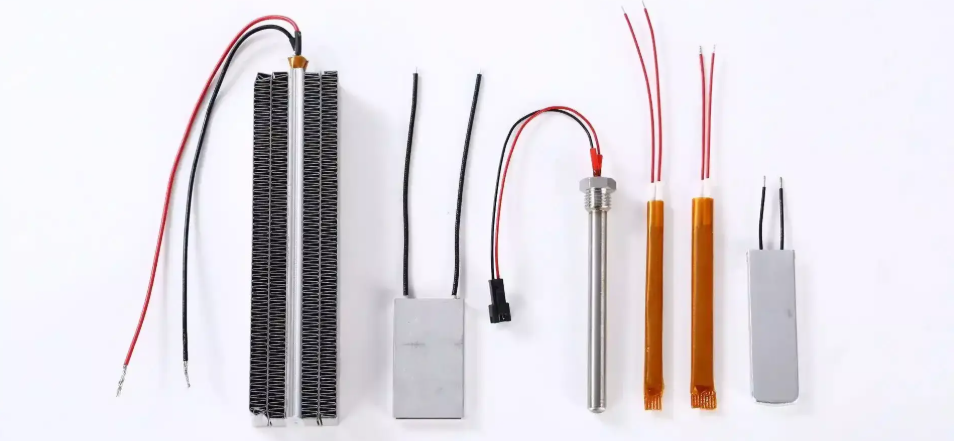

In the field of household appliances, such as electric irons, electric blankets, electric ovens, tableware and clothing dryers, air conditioners, and hot air warmers, PTC heating ceramic materials and flexible PTC materials can automatically adjust the heating power according to the ambient temperature, achieving energy-saving and safe use. Compared with traditional electric heating materials, they have higher heating efficiency and longer service life.
Composite materials field
Titanium diboride can be used as a grain refinement and particle strengthening additive, added to aluminum based, copper based, and iron-based materials to improve their mechanical and physicochemical properties. Adding an appropriate amount of titanium diboride powder to aluminum alloys can effectively refine their grain structure, improve their strength, hardness, and toughness.


This is because titanium diboride particles can serve as heterogeneous nucleation cores during the solidification process of aluminum alloys, promoting grain refinement. Meanwhile, titanium diboride particles can also hinder the movement of dislocations, improving the yield strength and tensile strength of the material. In copper based and iron-based materials, titanium diboride also has a similar strengthening effect, which can significantly improve the performance of the material and meet the needs of different engineering applications.
Titanium diboride can be used as an important component in multicomponent composite materials, and can be combined with non oxide ceramics such as TiC, TiN, SiC, as well as oxide ceramic materials such as Al ₂ O3. Through compounding, new composite materials have higher mechanical strength and fracture toughness.


For example, the composite material prepared by combining titanium diboride with silicon carbide combines the advantages of both materials, possessing both the high hardness and good conductivity of titanium diboride and the high strength and high temperature resistance of silicon carbide. This composite material can be used to make various high-temperature resistant components and functional parts, such as high-temperature crucibles, engine components, etc. In aerospace engines, components made of this composite material can withstand higher temperatures and pressures, improving engine performance and reliability.
In recent years, with the deepening of research on armor protection, ceramic composite armor has gradually replaced thick homogeneous armor and become the focus of research in the field of armor protection. Ceramic materials have also become an indispensable material for composite armor. Titanium diboride ceramics have excellent mechanical properties such as high strength, high hardness, and low density, and have important applications in armor protection.


It can be combined with other ceramic or metal materials to prepare high-performance armor protection materials. When impacted by a projectile, titanium diboride ceramics can effectively absorb and disperse the energy of the projectile, reducing damage to personnel and equipment inside the armor. At the same time, its low-density characteristics also help reduce the weight of armor and improve the maneuverability of armored vehicles.
Chemical and metallurgical fields
Titanium diboride can resist the corrosion of molten metals and can therefore be used to manufacture molten metal crucibles. In the metallurgical industry, crucibles are used to hold molten metals when melting various metals. The titanium diboride crucible can withstand high temperatures and the erosion of molten metal, ensuring the smooth progress of the melting process. For example, in the melting process of titanium alloys, due to the high chemical activity of titanium alloys, the requirements for crucible materials are also very strict. The titanium diboride crucible can meet these requirements, avoiding reactions between the crucible and the molten titanium alloy and ensuring the quality of the titanium alloy.

Manufacturing of electrolytic cell electrodes

Titanium diboride can be used to manufacture electrodes for electrolytic cells. In some electrolytic processes, such as aluminum production, electrode materials need to have good conductivity, corrosion resistance, and stability. Titanium diboride electrodes can meet these requirements, improve electrolysis efficiency, and reduce production costs. Compared with traditional electrode materials, titanium diboride electrodes have a longer service life and better performance stability, which can reduce electrode replacement frequency and improve production efficiency.
Other fields
Abrasive application:
Titanium diboride powder can be used as an abrasive. Due to its high hardness and wear resistance, titanium diboride abrasive can quickly remove material from the surface of the workpiece during grinding and polishing, improving the smoothness of the machined surface. In the processing of optical components, precision mechanical parts, etc., titanium diboride abrasive can meet high-precision processing requirements and ensure product quality.


Application of Sputtering Target Materials:
The coating deposited using titanium diboride target stuff has the characteristics of high hardness and high oxidation resistance temperature, and is one of the good coating choices for cutting tools and molds. Deposition of titanium diboride coating on the surface of cutting tools can improve their hardness, wear resistance, and oxidation resistance, and prolong their service life. At the same time, depositing titanium diboride coating on the surface of the mold can also improve the performance of the mold, reduce wear, improve production efficiency and product quality.
Metallic material strengthening agent
Titanium diboride is a good strengthening agent for metal materials such as Al, Fe, Cu, etc. By adding titanium diboride to these metal stuffs, the strength, hardness, and wear resistance of the metal stuffs can be significantly improved. For example, composite stuffs prepared by adding titanium diboride to aluminum alloys can be used to manufacture high-performance components in aerospace, automotive, and other fields, improving the service life and reliability of the components. Adding titanium diboride to steel materials can also improve their performance and meet the requirements of different industrial fields for material properties.


Titanium diboride (TiB2), as a high-performance ceramic material, has various production methods, including the following:
Titanium dioxide (TiO2) and boron carbide (B4C) are used as raw materials to generate titanium diboride through solid-state reaction at high temperature. The reaction equation is: 2TiO2 +B4C+3C→2TiB2 +4CO↑
This method has low raw stuff cost and simple process, but the reaction temperature is high (usually exceeding 1600 ℃), which easily generates toxic gases such as carbon monoxide, and the particle size is large, requiring subsequent treatment to optimize performance.
Using titanium tetrachloride (TiCl4) and boron trichloride (BCl3) as raw stuffs, titanium diboride is generated through chemical vapor deposition reaction at high temperatures of 800-1000 ℃ with the participation of hydrogen gas (H2).
The reaction equation is: TiCl4+2BCl3 +5H2 →TiB2 +10HCl↑
This method can prepare high-purity, fine-grained titanium diboride powder or coating, suitable for electronic and abrasive grade products, but the equipment cost is high and the process control is complex.
Directly mixing titanium powder (Ti) and boron powder (B), a chemical reaction occurs at high temperatures (usually exceeding 2000 ℃) to produce titanium diboride. The reaction equation is: Ti+2B→TiB2
This method has high product purity, but the reaction temperature is extremely high, the raw stuff cost is high, and titanium boride by-products (such as TiB, Ti3B4) are easily generated, requiring strict control of process conditions.
The exothermic reaction of raw stuffs such as titanium powder, boron powder, and magnesium powder is utilized to initiate self propagating combustion synthesis of titanium diboride at local high temperatures. The reaction equation is: TiO2 +5Mg+B2O3 →TiB2 +5MgO
This method has a fast reaction speed and low energy consumption, but there may be residual magnesium oxide in the product, which requires subsequent purification treatment.
Through the hydrolysis and polycondensation reaction of metal alkoxides (such as tetrabutyl titanate) and boron compounds (such as boric acid), a sol gel precursor is formed, and then titanium diboride is generated after high-temperature heat treatment. This method can prepare nanoscale titanium diboride powder, but the raw stuff cost is high and the process cycle is long.
Directly mixing titanium powder (Ti) and boron powder (B), a chemical reaction occurs at high temperatures (usually exceeding 2000 ℃) to produce titanium diboride. The reaction equation is: Ti+2B→TiB2
This method has high product purity, but the reaction temperature is extremely high, the raw stuff cost is high, and titanium boride by-products (such as TiB, Ti3B4) are easily generated, requiring strict control of process conditions.
A new method developed by Tomsk University of Technology in Russia utilizes titanium powder and amorphous boron powder to directly react under an electric arc to produce high-purity titanium diboride. The carbon monoxide in the reaction zone is self shielded, eliminating the need for vacuum equipment, simplifying reactor design, reducing costs, and achieving high product purity. A patent has been applied for.
FAQ
What is titanium boride used for?
Titanium boride micron powders are commonly used in ceramic sintered parts, structural applications including cutting tool composites, ceramic armor nozzles, wear parts, seals, molten metal crucibles and metallizing boats.
What is the color of titanium boride?
Gray
Titanium Boride Powder (TiB2 Powder) is a gray or black powder with a hexagonal structure and tasteless.
What is the hardness of titanium boride?
AdValue Technology offers Titanium Diboride (TiB2) powders, which have some unique properties and features: Density: ≥4.40g/cm3. Melting Point: 2980°C. Micro Hardness: 34Gpa.
Hot Tags: titanium boride powder cas 12045-63-5, suppliers, manufacturers, factory, wholesale, buy, price, bulk, for sale, Octocrylene Liquid, 3-Chloropropyltrimethoxysilane, Hypophosphorous Acid Solution CAS 6303 21 5, 1-Dodecanethiol, 1 4 Cyclohexanedicarboxylic Acid CAS 1076 97 7, Sodium Isopropyl Xanthate SIPX