


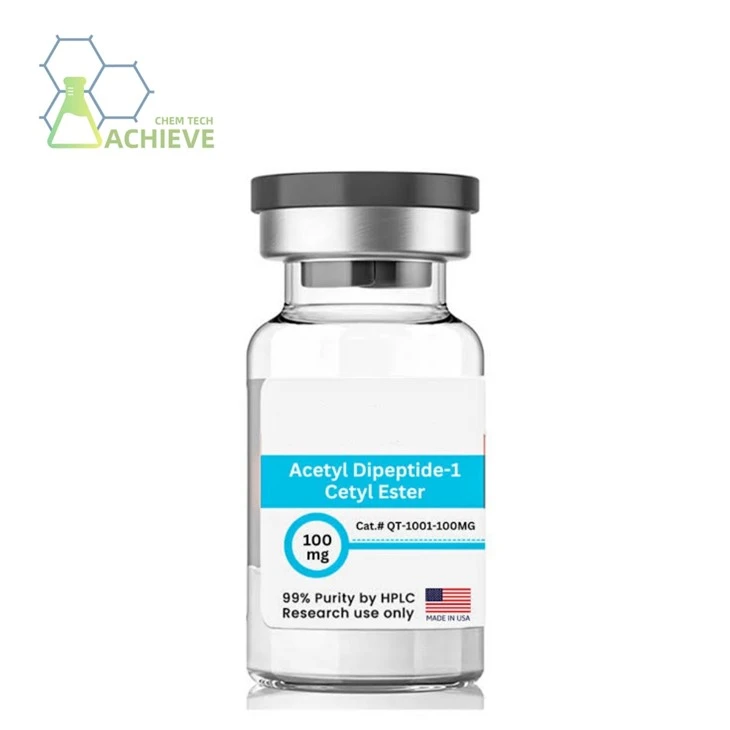


Shaanxi BLOOM Tech Co., Ltd. is one of the most experienced manufacturers and suppliers of acetyl dipeptide-1 cetyl ester in China. Welcome to wholesale bulk high quality acetyl dipeptide-1 cetyl ester for sale here from our factory. Good service and reasonable price are available.
Acetyl Dipeptide-1 Cetyl Ester, also known as Calmosensine, is a popular cosmetic peptide widely used for sensitive skin soothing, redness relief and neuro-aging skincare formulations. Bloomtechz supplies this peptide with stable batch quality and full supporting services. We provide timely sample service, professional technical consultation, complete compliance documents for registration and audit, flexible order options and reliable after-sales support to help cosmetic brands and ODM factories smoothly carry out product development and bulk production.
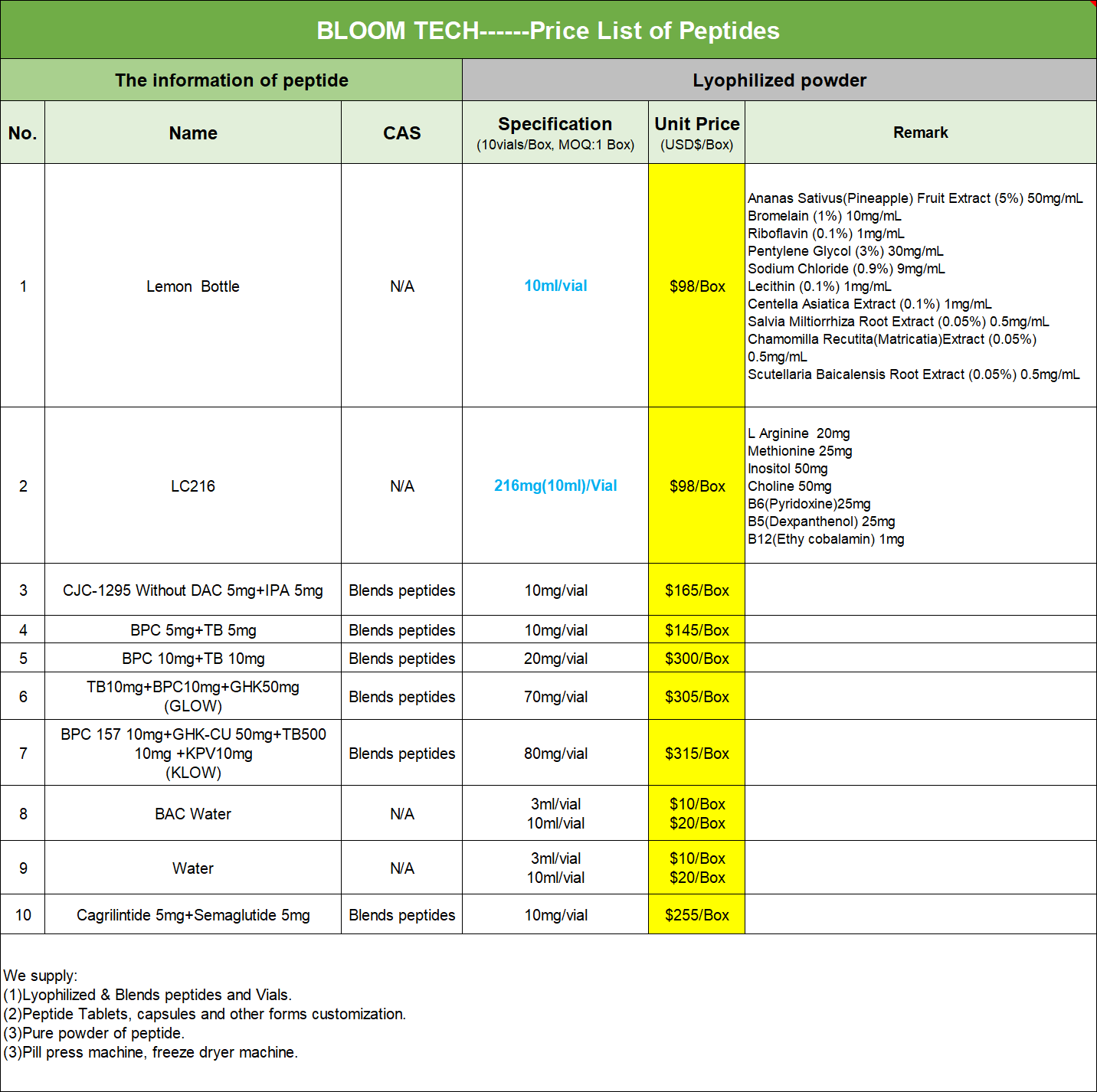
Our Products Form
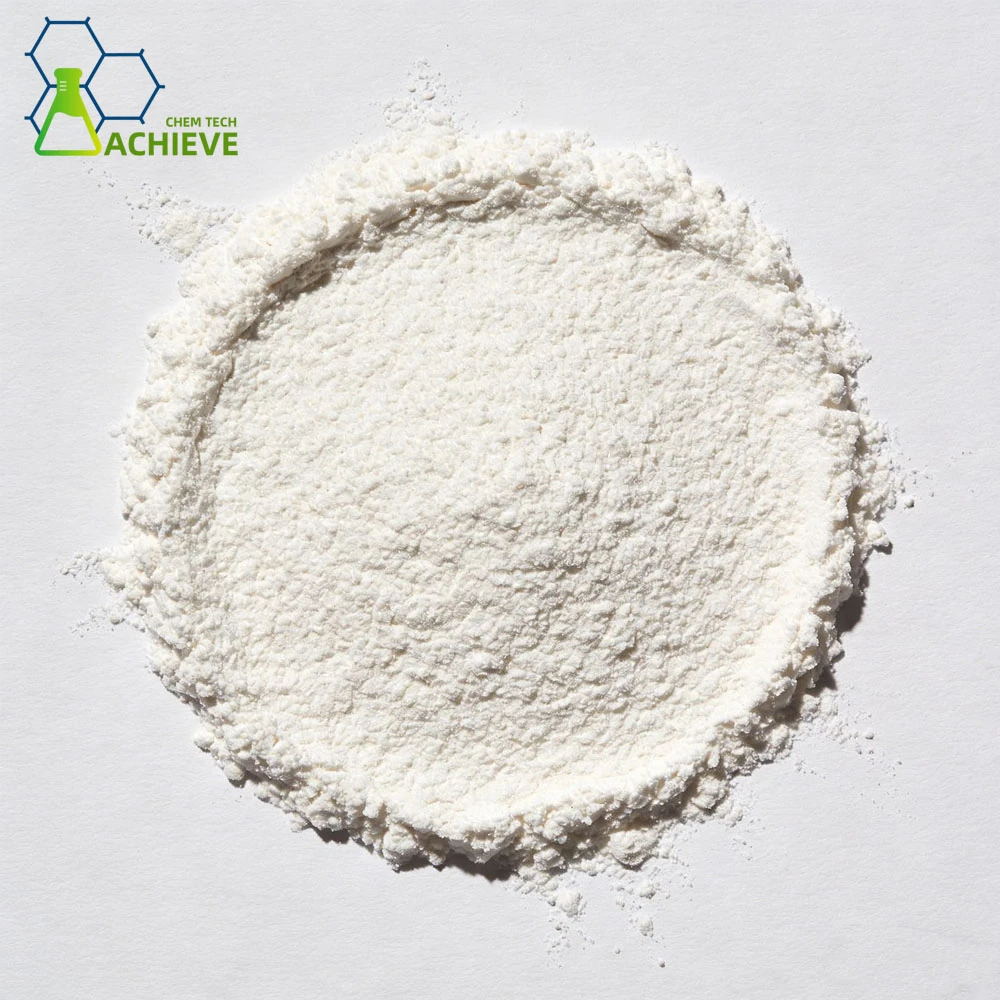



Acetyl Dipeptide-1 cetyl ester COA
 |
||
| Certificate of Analysis | ||
| Compound name | Acetyl Dipeptide-1 cetyl ester | |
| Grade | Pharmaceutical grade | |
| CAS No. | 196604-48-5 | |
| Quantity | 19g | |
| Packaging standard | PE bag+Al foil bag | |
| Manufacturer | Shaanxi BLOOM TECH Co., Ltd | |
| Lot No. | 202601090054 | |
| MFG | Jan 9th 2026 | |
| EXP | Jan 8th 2029 | |
| Structure |
|
|
| Item | Enterprise standard | Analysis result |
| Appearance | White or almost white powder | Conformed |
| Water content | ≤5.0% | 0.38% |
| Loss on drying | ≤1.0% | 0.67% |
| Heavy Metals | Pb≤0.5ppm | N.D. |
| As≤0.5ppm | N.D. | |
| Hg≤0.5ppm | N.D. | |
| Cd≤0.5ppm | N.D. | |
| Purity (HPLC) | ≥99.0% | 99.56% |
| Single impurity | <0.8% | 0.42% |
| Total microbial count | ≤750cfu/g | 563 |
| E. Coli | ≤2MPN/g | N.D. |
| Salmonella | N.D. | N.D. |
| Ethanol (by GC) | ≤5000ppm | 538ppm |
| Storage | Store in a sealed, dark, and dry place below 2-8°C | |
|
|
||


Product Introduction
Acetyl Dipeptide-1 Cetyl Ester, commercially termed Calmosensine, is a structurally optimized lipid-modified lipopeptide developed for cutaneous neuro-inflammatory regulation and skin sensory stabilization.
Derived from the endogenous kyotorphin dipeptide sequence, the molecule undergoes dual directional structural functionalization through N-terminal acetylation and C-terminal cetyl esterification, forming an amphipathic molecular architecture that balances hydrophilic biological recognition and lipophilic skin affinity. Compared with conventional unmodified hydrophilic peptides, this structural optimization effectively enhances stratum corneum partitioning efficiency, improves percutaneous delivery performance, and significantly elevates resistance to cutaneous protease hydrolysis, enabling stable biological expression within topical cosmetic matrices.


Mechanistically, the ingredient acts specifically on cutaneous neuro-sensory signaling pathways rather than non-specific inflammatory cytokine inhibition. It modulates the activation threshold of TRPV1 sensory channels and regulates the release of peripheral neuropeptides including Calcitonin Gene-Related Peptide (CGRP) and Substance P, thereby mitigating neurogenic hyperesthesia, thermal stinging, and stimulus-induced cutaneous flushing. In addition to its sensory-soothing properties, the peptide moderately regulates keratinocyte tight junction protein expression and dermal extracellular matrix homeostasis, assisting in the maintenance of epidermal barrier integrity and delaying extrinsic neuro-aging manifestations caused by long-term sensory overstimulation.
Potential Adverse Reactions & Safety Profile
Under recommended cosmetic addition concentrations, Acetyl Dipeptide-1 Cetyl Ester possesses a well-established low-irritation safety profile.
Reconstructed human epidermis irritation tests, Buehler sensitization assays and acute skin toxicity studies confirm that the raw material does not induce primary skin irritation or contact sensitization for the vast majority of subjects. Nevertheless, cosmetic raw materials cannot be guaranteed to be completely free of individual intolerance responses.
Potential adverse reactions are rare and mostly limited to subjects with severely compromised skin barrier or specific idiosyncratic sensitivity. Possible mild manifestations include transient stinging, local flushing or pruritus immediately after topical application.


Such symptoms are usually temporary and will subside after discontinuing use. These responses are not classified as true allergic sensitization in most cases. No systemic toxic effects have been documented from topical cutaneous application, because the lipopeptide molecule remains largely confined within the epidermis and superficial dermis without entering systemic circulation.
Formulators are advised to carry out patch testing on finished products before commercial launch. Bloomtechz includes safety data summaries within its compliance document package.
Our enterprise qualification files, toxicological evaluation reports and MSDS safety data sheets help downstream brands complete safety assessment and market registration, assisting clients in evaluating raw material safety risks before product development.
Potential Adverse Reactions & Safety Profile
Within the industrially recognized cosmetic dosage range of 0.05%–0.2% finished product incorporation, Acetyl Dipeptide-1 Cetyl Ester exhibits a superior and empirically verified low-irritation safety profile, complying with global cosmetic ingredient safety evaluation specifications including EU SCCS, FDA cosmetic guidelines and China cosmetic regulatory standards.A complete set of pre-clinical safety evaluation tests has been conducted, including reconstructed human epidermis (RHE) in vitro irritation testing, Buehler guinea pig sensitization assay, acute dermal toxicity testing, and cumulative skin tolerance verification.
All test data confirm that cosmetic-grade Acetyl Dipeptide-1 Cetyl Ester does not trigger primary cutaneous irritation, erythema and edema reactions, nor induce delayed-type contact hypersensitivity in mainstream consumer populations. The molecular structure features non-toxic amino acid skeletons and biodegradable esterified modified groups, with no cumulative cutaneous toxicity or irritant metabolites generated after topical application, qualifying it as a mild, high-safety cosmetic bioactive lipopeptide suitable for long-term continuous topical skincare application.


It is objectively clarified that no cosmetic active ingredient can achieve absolute zero-sensitivity risk across all populations, and rare individual adverse responses to Acetyl Dipeptide-1 Cetyl Ester are conditional and non-universal. Potential mild adverse phenomena are exclusively concentrated in populations with severely damaged cutaneous barrier, post-inflammatory fragile skin, or congenital idiosyncratic skin sensitivity. Typical transient manifestations include momentary tingling sensation, slight localized flushing or intermittent pruritus immediately after topical application.
Such symptoms stem from the heightened nerve sensitivity of compromised skin rather than molecular irritation of the peptide itself, and all temporary discomforts will gradually subside and disappear completely after terminating product use, without causing persistent skin damage, inflammatory deterioration or irreversible allergic sequelae. In terms of systemic safety, the amphipathic lipopeptide molecule is mainly retained in the epidermal layer and superficial dermal tissue after penetration, with no systemic blood absorption or bioaccumulation behavior.


Currently, no systemic toxic reactions, organ toxicity or cumulative adverse effects associated with topical application of Acetyl Dipeptide-1 Cetyl Ester have been recorded in authoritative cosmetic safety databases and industrial application reports.
To standardize industrial application and eliminate commercial safety risks for downstream products, standardized pre-market patch testing and formula compatibility verification are strongly recommended for finished skincare products containing Acetyl Dipeptide-1 Cetyl Ester, especially for sensitive skin-targeted and medical-grade gentle skincare lines.
As a vertically integrated source manufacturer focusing on cosmetic peptide R&D and standardized production, Bloomtechz establishes a rigorous full-link safety control system for all bulk peptide products. Each batch of Acetyl Dipeptide-1 Cetyl Ester is accompanied by complete and officially verified safety document dossiers, including standardized safety data sheets (MSDS), systematic toxicological evaluation reports, skin irritation and sensitization test summaries, and microbial & heavy metal safety inspection certificates.
References
[1]Lupo, M. P. (2006). Cosmeceutical peptides. Dermatologic Therapy, 19(5), 298–307.
[2]Kim, S. H., Park, J. Y., & Lee, H. S. (2018). Safety evaluation of palmitoylated oligopeptides for cosmetic use: In vitro skin irritation and sensitization assessment. Journal of Toxicology and Environmental Health, Part A, 81(18), 972–984.
[3]Bosman, B., & Piérard, G. E. (2005). Signal peptides in skin care: Mechanisms of action and percutaneous absorption. Journal of Cosmetic Dermatology, 4(3), 194–201.
[4]Falla, T. J., & Gruber, J. V. (2007). Fatty acid-modified oligopeptides: Stability and skin delivery considerations. International Journal of Cosmetic Science, 29(4), 271–278.
[5]Van den Kerckhove, E., Westgate, G. E., & Rawlings, A. V. (2021). Formulation strategies for signal peptides in topical skincare products: Compatibility and shelf-life challenges. Cosmetics, 8(3), 78.
Frequently Asked Questions
Q1: How does Bloomtechz support clients when sourcing cosmetic peptides?
+
-
A: Bloomtechz is a professional peptide source manufacturer. We assign dedicated sales and technical staff to communicate with you throughout the procurement cycle. We listen carefully to your project goals, product positioning and formulation requirements, then offer suitable supply plans accordingly. We have independent peptide synthesis and purification workshops, stable production capacity and standardized quality control procedures.
Q2: What service can I get if I request samples from Bloomtechz?
+
-
A: When you submit a sample request to Bloomtechz, our sales team will respond promptly and confirm sample specifications, quantity and delivery details. After sample dispatch, our technical support team remains available to answer your basic formulation questions. If your R&D team runs into practical problems during formula testing, we will share practical suggestions based on our peptide application experience.
Q3: What documents can Bloomtechz provide for my cosmetic registration and factory audit?
+
-
A: Downstream brands and ODM factories usually need complete documentation for ingredient registration and supplier audit. Bloomtechz prepares a full compliance dossier for every batch of Acetyl Dipeptide-1 Cetyl Ester. You will receive batch-specific COA, MSDS, toxicological safety summaries, enterprise qualification certificates and workshop audit materials.
Q4: How does Bloomtechz control order delivery, packaging and global logistics?
+
-
A: We understand delayed raw material supply may hold up your product launch plan. After bulk order confirmation, our production control team locks the production schedule and conducts multi-point quality inspection before packaging. We adopt barrier packaging customized for peptide materials to avoid contamination and moisture damage during long-distance international transport.
Q5: What after-sales support can I get if problems emerge after receiving goods?
+
-
A: Our service does not end when goods leave our factory. If you encounter any quality or formulation-related issues after receiving Acetyl Dipeptide-1 Cetyl Ester, your dedicated contact at Bloomtechz will collect your feedback immediately and coordinate QC and technical teams to carry out investigation.
Hot Tags: acetyl dipeptide-1 cetyl ester, suppliers, manufacturers, factory, wholesale, buy, price, bulk, for sale, Bremelanotide Powder CAS 189691 06 3, CJC 1295 Peptide, GLP 1 Peptide CAS 87805 34 3, Kisspeptin powder, mots c peptide CAS 1627580 64 6, Selank Peptide CAS 129954 34 3