




Shaanxi BLOOM Tech Co., Ltd. is one of the most experienced manufacturers and suppliers of acetyl dipeptide 1 cetyl ester in skin care in China. Welcome to wholesale bulk high quality acetyl dipeptide 1 cetyl ester in skin care for sale here from our factory. Good service and reasonable price are available.
Acetyl Dipeptide 1 cetyl ester in Skin Care is a lipid-modified neurocosmetic lipopeptide targeting neurogenic skin sensitivity and mild sensory aging. It modulates cutaneous TRPV1 sensory channels and reduces neuropeptide release, relieving irritation-induced flushing, stinging and burning sensations while strengthening epidermal barrier stability.As a professional peptide source manufacturer, Bloomtechz supplies consistently high-purity Acetyl Dipeptide-1 Cetyl Ester with complete batch COA, MSDS and compliance documents for global registration and factory audits.
Our Products Form
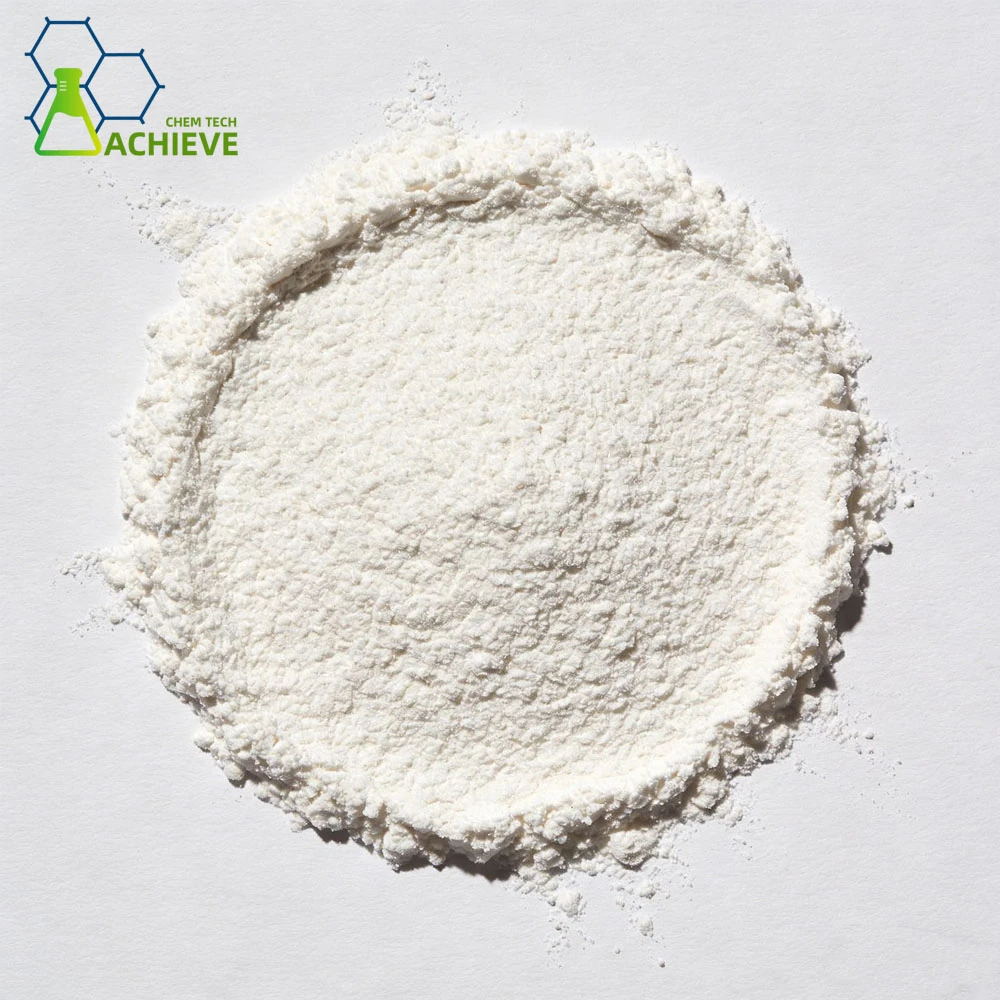



Acetyl Dipeptide-1 cetyl ester COA
 |
||
| Certificate of Analysis | ||
| Compound name | Acetyl Dipeptide-1 cetyl ester | |
| Grade | Pharmaceutical grade | |
| CAS No. | 196604-48-5 | |
| Quantity | 19g | |
| Packaging standard | PE bag+Al foil bag | |
| Manufacturer | Shaanxi BLOOM TECH Co., Ltd | |
| Lot No. | 202601090054 | |
| MFG | Jan 9th 2026 | |
| EXP | Jan 8th 2029 | |
| Structure |
|
|
| Item | Enterprise standard | Analysis result |
| Appearance | White or almost white powder | Conformed |
| Water content | ≤5.0% | 0.38% |
| Loss on drying | ≤1.0% | 0.67% |
| Heavy Metals | Pb≤0.5ppm | N.D. |
| As≤0.5ppm | N.D. | |
| Hg≤0.5ppm | N.D. | |
| Cd≤0.5ppm | N.D. | |
| Purity (HPLC) | ≥99.0% | 99.56% |
| Single impurity | <0.8% | 0.42% |
| Total microbial count | ≤750cfu/g | 563 |
| E. Coli | ≤2MPN/g | N.D. |
| Salmonella | N.D. | N.D. |
| Ethanol (by GC) | ≤5000ppm | 538ppm |
| Storage | Store in a sealed, dark, and dry place below 2-8°C | |
|
|
||


Application Compatibility with Common Cosmetic Excipients
Compatibility screening between an active ingredient and the surrounding excipient matrix is a foundational step in cosmetic formulation development. For Acetyl-dipeptide-1 cetyl ester, its amphiphilic lipopeptide structure, ester-linked cetyl tail, and narrow pH stability window collectively determine how it behaves when combined with widely used cosmetic raw materials. The following systematic compatibility overview covers major excipient categories, based on the molecule's known physicochemical profile and formulation practice.
1. Emulsifier Systems
Emulsifier choice directly influences both dispersion uniformity and long-term active retention.
Non-ionic emulsifiers - including fatty alcohol ethoxylates, glycerol esters, sucrose esters, and PEG-free plant-derived emulsifiers - demonstrate excellent compatibility with this lipopeptide. Their neutral charge and mild HLB profiles do not interfere with the peptide's amphiphilic balance. Non-ionic O/W and W/O frameworks are therefore the preferred carrier systems.
Anionic surfactants at high concentrations should be approached with caution.Strong sulfate-based or sulfonate-based cleansers, when loaded above typical rinse-off levels,

can disrupt the lipopeptide's self-association behavior and may accelerate ester-bond hydrolysis under elevated pH.For leave-on formulations, low-level anionic co-emulsifiers are generally acceptable provided the final pH remains within 4.0–8.0.
Cationic surfactants and cationic polymers require dedicated compatibility testing. Positively charged species can form electrostatic complexes with the peptide's arginine residue under certain pH conditions, potentially leading to cloudiness or precipitation in transparent serum bases. Small-scale jar tests are strongly recommended before scale-up.
Amphoteric surfactants (e.g., betaine derivatives) are generally well tolerated and are commonly used in gentle cleansing formulations incorporating this active.
2. Humectants and Polyols
Polyols serve a dual role here: they are both formulation humectants and the preferred pre-dispersion media for this raw material.
Propylene glycol (PG) is the gold-standard dispersion solvent. A 1:5 to 1:15 raw-material-to-PG ratio, stirred at 40–50 °C, yields a homogeneous stock solution that can be post-added into emulsified systems. PG also helps suppress microbial growth in the concentrated stock.
Glycerin is fully compatible and can partially replace PG in the pre-dispersion step, although dissolution kinetics are slower.


Glycerin-rich formulations (≥10%) benefit from the peptide's improved long-term stability due to reduced water activity.
1,3-Butylene glycol, pentylene glycol, and hexylene glycol are all compatible and can be blended with PG to adjust skin feel and dispersion viscosity. Sorbitol and xylitol solutions are also compatible but should be added after the peptide stock is fully prepared to avoid viscosity interference during pre-dispersion.
Hyaluronic acid and sodium hyaluronate are compatible at typical use levels (0.05%–0.5%). However, high-molecular-weight hyaluronic acid solutions are highly viscous; the peptide stock should be added before the hyaluronic acid gel fully thickens to ensure uniform distribution.
3. Thickening and Rheology Modifiers
Polysaccharide thickeners - xanthan gum, gellan gum, guar gum, and locust bean gum - are fully compatible. Their neutral or weakly anionic nature does not interact adversely with the lipopeptide. Standard hydration procedures apply; the peptide stock is post-added after the gum is fully hydrated and the batch has cooled below 40 °C.
Carbomer and acrylic-based thickeners (Carbopol types, acrylates/C10-30 alkyl acrylate crosspolymer) are compatible once properly neutralized. Key caution: unneutralized carbomer slurries have very low pH (<3.0), which falls outside the peptide's stable window.


The peptide stock must never be added to an unneutralized carbomer dispersion. Always neutralize first (pH 5.0–6.5 optimal), then introduce the peptide stock under gentle stirring.
Cellulose derivatives - hydroxyethyl cellulose, hydroxypropyl cellulose, methylcellulose - are compatible. Non-ionic cellulose ethers are particularly forgiving and suitable for transparent serum formulations.
Clay thickeners (bentonite, hectorite, magnesium aluminum silicate) may adsorb peptide molecules onto their high-surface-area platelet structures, potentially reducing free active concentration. If clays are required, pre-testing to quantify active recovery via HPLC is advised.
4. Emollients and Oils
Because the cetyl tail confers lipophilic character, this ingredient shows good affinity for a broad range of cosmetic oils.
Ester oils - caprylic/capric triglyceride, isopropyl myristate, cetyl ethylhexanoate, diisopropyl sebacate - are highly compatible and can help solubilize the lipopeptide within the oil phase of O/W emulsions.
Hydrocarbon oils - mineral oil, hydrogenated polyisobutene, squalane - are compatible. Squalane, in particular, works well in anhydrous serum frameworks.
Silicone oils - dimethicone, cyclopentasiloxane, dimethiconol - are compatible.

In silicone-heavy formulations, the PG pre-dispersion should be added slowly with adequate shear to avoid phase separation.
Natural vegetable oils (jojoba, argan, sweet almond, etc.) are compatible, but oils with high peroxide values or high free fatty acid content can lower local pH and accelerate ester hydrolysis. Always use fresh, low-peroxide oils and include an antioxidant (e.g., tocopherol, BHT) in the oil phase.
Essential oils and fragrance compounds should be evaluated case by case. Some terpenic fragrance components can lower formulation pH over time or interact with the peptide's aromatic tyrosine residue. Compatibility testing under accelerated conditions (40 °C, 12 weeks) is recommended.
5. Preservative Systems
Preservative compatibility is critical because many cosmetic preservatives function optimally at pH ranges that overlap or conflict with the peptide's stable window.
Phenoxyethanol (0.3%–1.0%) is fully compatible and is the most widely used preservative in formulations containing this active.
Parabens (methylparaben, propylparaben) are compatible at typical use levels and remain stable within the pH 4.0–8.0 window.
Organic acid preservatives - benzoic acid, sorbic acid, dehydroacetic acid - require attention. These preservatives are most effective at pH < 5.5, while the peptide's optimal activity range is 5.0–6.5.

The overlap zone (pH 5.0–5.5) is workable, but formulators should verify both preservative efficacy and peptide stability at the chosen pH. Avoid using these preservatives below pH 4.0.
Formaldehyde releasers (DMDM hydantoin, imidazolidinyl urea, diazolidinyl urea) are compatible but should be used at the lower end of their recommended range. Released formaldehyde can, under prolonged storage, react with the peptide's amino groups; post-addition and pH control (≥5.0) minimize this risk.
Isothiazolinones (methylisothiazolinone, methylchloroisothiazolinone) are not recommended. These preservatives are known sensitizers and can react with peptide nucleophilic sites,
potentially degrading the active.
Natural / alternative preservatives - ethylhexylglycerin, caprylyl glycol, glyceryl caprylate, p-anisic acid -are generally compatible and are preferred for "clean beauty" positioning.Caprylyl glycol also enhances the peptide's skin penetration mildly.
Recommended Compatibility Testing Protocol
For any new excipient combination, Bloomtechz recommends the following tiered testing approach:
Initial visual screening - Prepare small-scale (50 g) samples, observe clarity, color, and phase separation immediately and after 24 hours at room temperature.
pH verification - Confirm final pH falls within 4.0–8.0 (optimal 5.0–6.5). Adjust if necessary before proceeding.
Centrifuge test - 3000 rpm for 30 minutes; check for separation, creaming, or sedimentation.
Accelerated stability - 40 °C / 75% RH for 12 weeks; monitor appearance, pH, and HPLC main-peak area at 0, 2, 4, 8, and 12 weeks.
Freeze-thaw cycling - Three cycles (−15 °C / 25 °C, 24 hours each); verify no crystallization or phase inversion.
Active recovery quantification - At the end of accelerated storage, quantify peptide content via HPLC to confirm ≥90% active retention relative to initial.
By following this structured compatibility framework, formulators can confidently integrate Acetyl-dipeptide-1 cetyl ester into a wide range of cosmetic product types - from lightweight serums and emulsions to anhydrous oils and gentle cleansers - while preserving full biological activity throughout the product's shelf life.
References
[1]Lintner, K., & Peschard, O. (2007). Biologically active peptides: From a laboratory bench to the skin care product shelf. International Journal of Cosmetic Science, 29(3), 171–184.
[2]Bernard, G., Camus, C., & Pin, D. (2009). Lipopeptides targeting cutaneous neurogenic inflammation: A new strategy for sensitive skin care. Journal of Cosmetic Dermatology, 8(4), 288–295.
[3]Misery, L., & Talagas, M. (2016). Neurogenic inflammation and sensitive skin. Current Opinion in Allergy and Clinical Immunology, 16(5), 474–479.
[4]Draelos, Z. D. (2018). Cosmetic active ingredients for the management of sensitive skin. Dermatologic Clinics, 36(3), 397–404.
[5]Haftek, M., & Leveque, J. L. (2020). Penetration and biological activity of lipid-modified cosmetic peptides in human epidermis models. Skin Pharmacology and Physiology, 33(2), 78–88.
Frequently Asked Questions
Q1: What is the core advantage of Acetyl Dipeptide-1 Cetyl Ester compared with other soothing peptides for sensitive skin formulations?
+
-
A: Acetyl Dipeptide-1 Cetyl Ester is a lipid-modified lipopeptide targeting neurogenic skin sensitivity. It modulates TRPV1 channels and the release of neuropeptides such as CGRP and Substance P to ease stinging, burning and heat-induced flushing. As a source manufacturer, Bloomtechz maintains stable batch purity and strictly controls peptide impurities. We provide one-to-one technical support to help you evaluate formula compatibility and select suitable peptide combinations for your product positioning.
Q2: What documents can Bloomtechz provide to support cosmetic registration and supplier audit?
+
-
A: We prepare a complete compliance dossier for every batch of Acetyl Dipeptide-1 Cetyl Ester. Available documents include batch-specific COA, MSDS, toxicological safety summaries, heavy metal and microbial test reports, as well as enterprise qualification certificates. These materials meet the document requirements for cosmetic raw material filing and supplier factory audits in major global markets.
Q3: Can I get samples of Acetyl Dipeptide-1 Cetyl Ester for R&D testing, and what technical support comes with sample orders?
+
-
A: Bloomtechz offers lab-scale samples for your formula screening and performance verification. After sample delivery, our technical team can provide formulation guidance including recommended addition amount, feeding temperature and compatible raw material suggestions. We help you avoid common pitfalls such as peptide hydrolysis and phase separation.
Q4: What is your order flexibility and long-term supply guarantee for cooperative clients?
+
-
A: Bloomtechz supports fully flexible procurement cycles adapting to your R&D trial, pilot production and mass launch stages. We provide small sample batches for formula testing, scalable medium batches for trial production, and ton-level stable bulk supply for formal market launch. As an in-house peptide manufacturer with independent production lines and fixed capacity reserves, we avoid stock shortages and delivery delays common with trading companies.
Q5: What makes Bloomtechz's overall service different from other peptide suppliers?
+
-
A: Unlike most suppliers that only sell raw materials, Bloomtechz delivers full-cycle B2B industrial services. We arrange exclusive sales docking and professional technical follow-up for every client. From inquiry evaluation, quotation confirmation, sample testing, formula debugging, batch production quality control, document sorting, standardized packaging to global logistics and after-sales technical support, all links are professionally managed.
Hot Tags: acetyl dipeptide 1 cetyl ester in skin care, suppliers, manufacturers, factory, wholesale, buy, price, bulk, for sale, Bremelanotide Powder CAS 189691 06 3, CJC 1295 Peptide, Epitalon Powder CAS 307297 39 8, Melanotan 2 Powder, mots c peptide CAS 1627580 64 6, Pralmorelin CAS 158861 67 7