





Shaanxi BLOOM Tech Co., Ltd. is one of the most experienced manufacturers and suppliers of atrial natriuretic peptide rat cas 88898-17-3 in China. Welcome to wholesale bulk high quality atrial natriuretic peptide rat cas 88898-17-3 for sale here from our factory. Good service and reasonable price are available.
Atrial natriuretic peptide rat, also known as cardiac natriuretic hormone and atrial natriuretic peptide, belongs to the family of natriuretic peptides. This is a kind of active polypeptide synthesized, stored and secreted by the atria, which is also known as atrial natriuretic factor (ANF) or atrial natriuretic peptide (ANP). It has powerful natriuretic, diuretic, vasodilatory, blood pressure-lowering and antirenalin-angiotensin system and antidiuretic hormone effects. Measurement of serum ANP activity is used to diagnose and monitor the course and outcome of patients with heart failure.
 |
 |


| Density | 1.54±0.1 g/cm3(Predicted) |
| Storage condition | -20°C |
| Water solubility | Soluble to 1 mg/ml in water |
| Purity(HPLC) | ≥98.0% |
| Acetate content | ≤12.0% |
| Water content | ≤8.0 |
| Peptide content | ≥80.0 |
| Endotoxin | ≤50EU/mg |
| Amino acid composition analysis | ≤±10% |
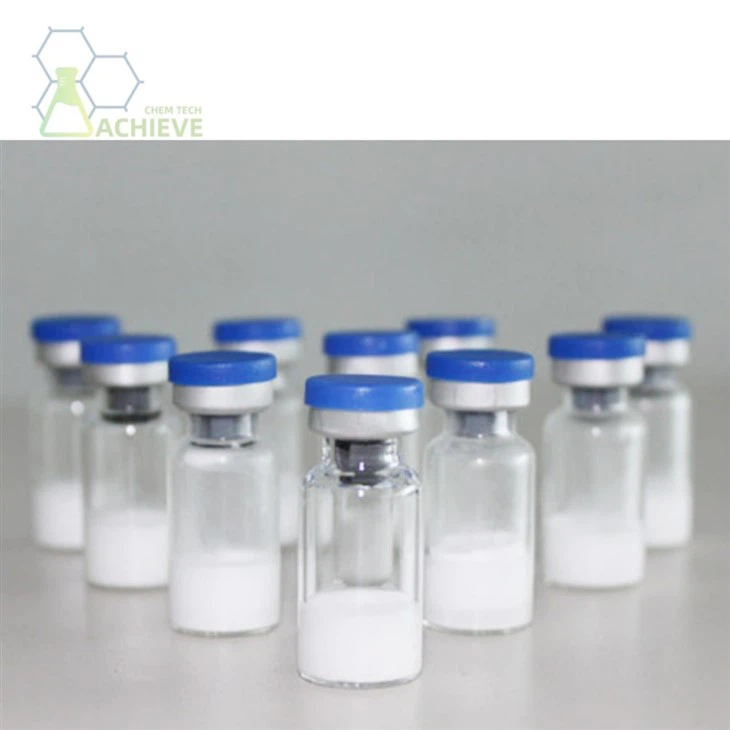
| appearances | white powder |


Atrial natriuretic peptide rat is mainly secreted by atrial myocytes, brain natriuretic peptide is mainly secreted by ventricular myocytes, and C-type natriuretic peptide is mainly secreted by vascular endothelial cells and exerts vasodilatory and antiproliferative effects locally. Plasma cardiac natriuretic peptide has multiple effects of vasodilation, diuresis, and antagonism of neuroendocrine hormones.
Since atrial dilatation is the main trigger for AVP release, the concentration of ANP is closely related to left atrial pressure and pulmonary artery systolic pressure.


Elevated: seen in essential hypertension, coronary artery disease, heart failure, supraventricular tachycardia, premature cirrhosis, bronchial asthma, chronic obstructive pulmonary disease, aldosteronism, and renal disease. In acute infarction, elevated ANP has a unique predictive value for LV dysfunction and mortality in AMI, and elevated concentrations of ANP in patients with acute myocardial infarction in the subacute phase suggest a poor long-term prognosis.
Decreased: seen in hyperthyroidism, atrial fibrillation.
Precautions
Sample collection should be done under the same conditions as much as possible, e.g., at the same time every day, after lying supine and still for 15min, in order to have comparable results.Excessive activity and tachycardia will increase ANP.Liver and kidney disease should be excluded, where ANP can accumulate due to who retention.


Atrial natriuretic peptide rat is a peptide hormone synthesized by the heart when the ventricular wall is dilated or strained. It is an important hormone in the regulation of body fluids, body sodium balance, blood pressure, and can also play a role in protecting the heart. When the ventricular wall is dilated or stretched, cardiac natriuretic peptide is released into the bloodstream, which in turn has the effect of maintaining heart function and dilating blood vessels. If the level of cardiac natriuretic peptide increases, it may cause an increase in the load on the heart, which can lead to heart failure.
The main efficacy of Atrial Natural Peptide rat
balanced dilatation of arteries and veins, lowering the anterior and posterior load on the heart, rapid relief of dyspnea.
01
moderate diuresis and sodium excretion, reducing circulating volume load, increasing renal filtration degree.
02
Comprehensively antagonize the cardiotoxicity produced by activation of the neuroendocrine system.
03
Delay cardiac remodeling, prevent myocardial hyperplasia, hypertrophy and interstitial fibrosis, and reduce long-term morbidity..
04
No positive inotropic and positive heart rate effects, no increase in myocardial oxygen consumption.
05

Atrial natriuretic peptide rat is an important peptide hormone that plays a key role in regulating fluid balance and blood pressure. The following is a common synthesis method.
 |
 |
 |
Synthesis steps
usually, atrial natriuretic peptide can be synthesized by solid-phase synthesis (solid-phase synthesis) or liquid-phase synthesis (solution-phase synthesis). In solid-phase synthesis, the peptide chain is constructed by gradually adding amino acids to the carrier.
The sequence of an ANP is relatively short and known, usually consisting of 28 amino acid residues.
During synthesis, each amino acid requires appropriate protecting groups to avoid side reactions. These protecting groups need to be removed after the synthesis is complete to allow the amino acid to be attached to the peptide chain.
The peptide chain is synthesized step-by-step in the order of the ANP sequence according to the selected synthesis method and equipment. Each amino acid addition requires repeated steps of protection, coupling, and deprotection.
After the synthesis is completed, the peptide needs to be purified and characterized to ensure the purity and correct structure of the product.

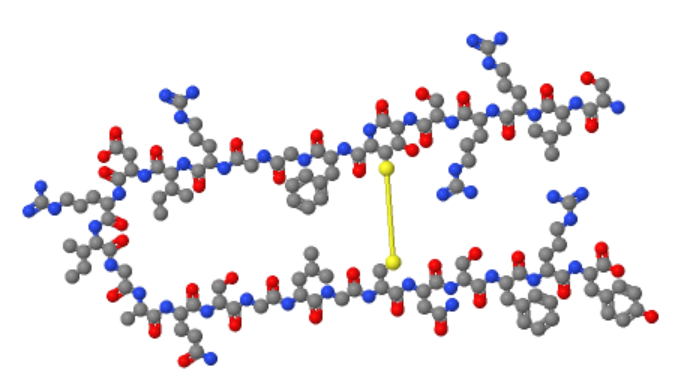
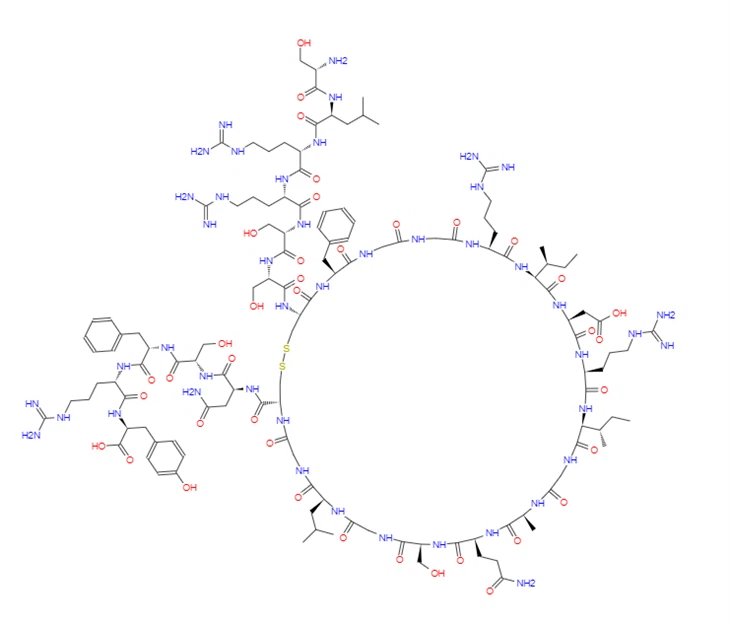
Molecular Structure: Composition and Modification of Peptide Chains
Atrial natriuretic peptide rat is a polypeptide hormone synthesized by rat atrial cells and belongs to the natriuretic peptide family. It is highly similar in structure to human atrial natriuretic peptide (hANP) but there are species differences. The study of its chemical properties is of great significance for understanding its physiological functions and potential applications. The following analysis is conducted from four dimensions: molecular structure, physicochemical properties, receptor binding, and biological activity.
Physical and Chemical Properties: Solubility and Stability-rANP is highly soluble in water and physiological saline, with a solubility of over 10 mg/mL. Its solubility is significantly affected by pH: in acidic conditions (pH < 5), rANP may experience a decrease in solubility due to protonation; in alkaline conditions (pH > 9), disulfide bonds may break, leading to the depolymerization of the polypeptide chain. Therefore, the storage and use of rANP require strict control of the pH range (typically pH 6.0 - 8.0).rANP is temperature-sensitive. When stored at -20℃ under refrigeration, its activity can be maintained for several years.


However, at 4℃, the activity may decrease by 5% to 10% every week; at room temperature (25℃), the activity loss may exceed 30% within 24 hours.
Moreover, repeated freezing and thawing can cause rANP to aggregate and form insoluble precipitates. Therefore, it is recommended to aliquot and use it only once.
rANP is highly sensitive to proteases (such as trypsin and chymotrypsin). In a solution containing 0.1% trypsin, rANP can be completely degraded within 30 minutes at 37℃. Therefore, in experimental or clinical applications, it is necessary to avoid coexistence with proteases or add protease inhibitors (such as PMSF) for protection.
Applications and Challenges
The chemical properties of rANP make it potential for the treatment of hypertension, heart failure, and kidney diseases. However, its species specificity (lower activity on human receptors), short half-life (about 5 - 10 minutes), and proteinase sensitivity limit its clinical application. Currently, researchers are optimizing rANP through the following strategies:Develop NPR-A selective variants (such as rANP(REA18)), reducing the clearance mediated by NPR-C;Chemical modification (such as pegylation) to extend the half-life;Nanocarrier delivery to enhance stability.

Receptor Binding: The Dual Role of NPR-A and NPR-C
The rANP exerts its effects through two membrane receptors:

NPR-A (Natriuretic Peptide Receptor-A)
The binding affinity of rANP to NPR-A is high (Kd ≈ 1-10 nM), activating the guanylate cyclase activity in the intracellular segment of the receptor and catalyzing the formation of cGMP from GTP. cGMP acts as a second messenger, regulating ion channels (such as the Na⁺ channels in renal tubular epithelial cells) and enzyme activities (such as phosphodiesterase) through the activation of protein kinase G (PKG), ultimately promoting sodium excretion, diuresis, and vasodilation.
NPR-C (Natriuretic Peptide Receptor-C)
NPR-C has no enzymatic activity and mainly functions as a receptor for clearance, degrading rANP through endocytosis. The binding of rANP to NPR-C can trigger intracellular signal transduction (such as inhibition of adenylate cyclase), but this effect is weaker than that of NPR-A.
Through genetically engineered variants of rANP (such as rANP(G16R, A17E, Q18A)).

Biological Activity: Vasodilation and Sodium Excretion and Diuresis
The biological activity of rANP is mainly achieved through the cGMP pathway:

Vasodilation
rANP can dilate the aorta, renal artery, and mesenteric artery of rats, with an EC50 of approximately 0.1 - 1 nM. Its mechanisms include:
Direct relaxation of vascular smooth muscle cells;
Inhibition of vascular contraction induced by endothelin-1 (ET-1);
Reduction of vascular smooth muscle cell proliferation (through GATA4-dependent pathway to inhibit endothelin gene expression).
Na-reduction and diuresis
Intravenous injection of rANP (0.325 μg/min) can increase rat urinary sodium excretion by 3 - 5 times and urine volume by 2 - 3 times. Its action sites include:
Glomerulus: By dilating the afferent arteriole, it increases renal blood flow;
Nephron: Inhibiting Na⁺-K⁺-2Cl⁻ co-transporter (NKCC2) and Na⁺/H⁺ exchanger (NHE3), reducing Na⁺ reabsorption;
Collecting duct: Inhibiting the expression of aquaporin 2 (AQP2), reducing water reabsorption.


Blood pressure regulation
rANP can lower the mean arterial pressure of rats by 10 - 20 mmHg, with an effect lasting for 30 - 60 minutes. Its antihypertensive effect is synergistically related to vasodilation and sodium reduction, and is not dependent on changes in heart rate.
The chemical properties of rat atrial natriuretic peptide (rANP) reflect the typical characteristics of polypeptide hormones: structure-dependent activity, environmental sensitivity, and receptor-mediated signal transduction. A deeper understanding of its physicochemical properties and biological effects not only provides tools for basic research but also points the way for the development of new cardiovascular drugs.
FAQ
Atrial-Natriuretic Peptide(rat)is a 28-amino-acid peptide hormone endogenously produced and secreted by the atrial myocytes of rats, belonging to the natriuretic peptide family. It has a characteristic cyclic structure formed by a disulfide bond between the 7th and 23rd amino acid residues, which is essential for maintaining its biological activity. With a molecular weight of approximately 3080 Da and high structural specificity, it is a key tool for preclinical research on cardiovascular and renal physiological regulation in rat models.
Atrial-Natriuretic Peptide(rat)plays a pivotal role in regulating the cardiovascular and renal systems of rats through binding to specific natriuretic peptide receptors (NPR-A, NPR-B, NPR-C). Its main functions include promoting natriuresis (sodium excretion) and diuresis, dilating peripheral blood vessels to reduce blood pressure, regulating plasma volume and cardiac load, and inhibiting the renin-angiotensin-aldosterone system (RAAS) to maintain body fluid and electrolyte balance. These functions make it widely used in studying hypertension, heart failure, and renal dysfunction in rat preclinical experiments.
Atrial-Natriuretic Peptide(rat)is commonly used in both in vivo and in vitro preclinical studies involving rats. For in vivo experiments, it is usually administered via intravenous infusion, subcutaneous injection, or intraperitoneal injection to observe its effects on rat hemodynamics, renal function, and hormone secretion. For in vitro studies, it is added to cell culture systems (e.g., rat cardiomyocytes, renal tubular epithelial cells) to explore its molecular mechanisms, such as receptor activation, signal transduction pathways, and regulatory effects on cell function.
Atrial-Natriuretic Peptide(rat)is typically supplied as a white lyophilized powder with a purity of ≥98% (determined by HPLC), which is easily soluble in water and normal saline but unstable in organic solvents. It is sensitive to temperature, proteases, and pH changes; thus, it should be stored in a sealed, dark container at -20℃ or below to prevent degradation. Reconstituted solutions should be used immediately or stored at 2-8℃ for no more than 72 hours. Additionally, its dosage in experiments should be adjusted according to rat strain, age, and experimental purposes to ensure reliable results.
Hot Tags: atrial natriuretic peptide rat cas 88898-17-3, suppliers, manufacturers, factory, wholesale, buy, price, bulk, for sale, Kisspeptin powder, Tesamorelin CAS 218949 48 5, DecaPeptide 12 CAS 137665 91 9, Lpamorelin Powder CAS 170851 70 4, Melanotan ii powder, sermorelin powder