


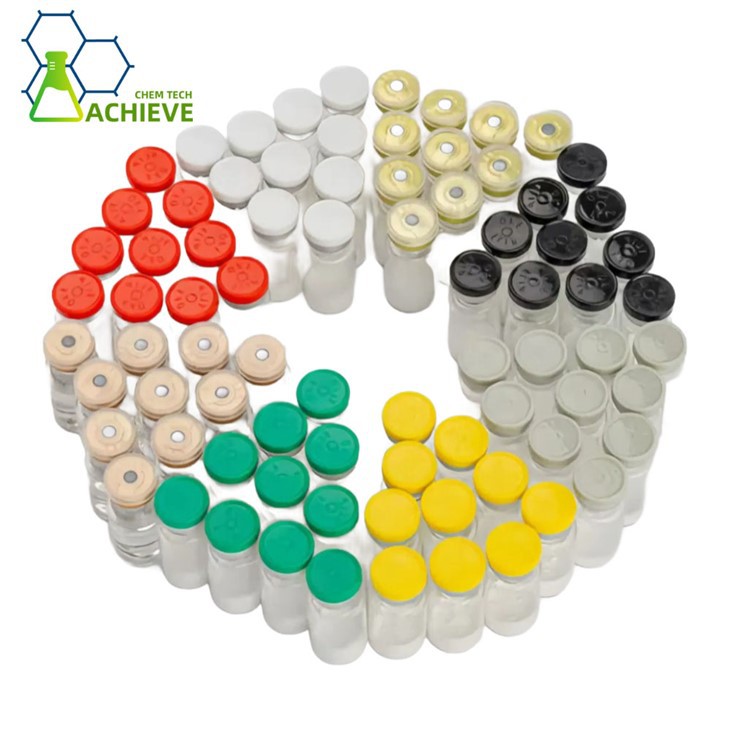


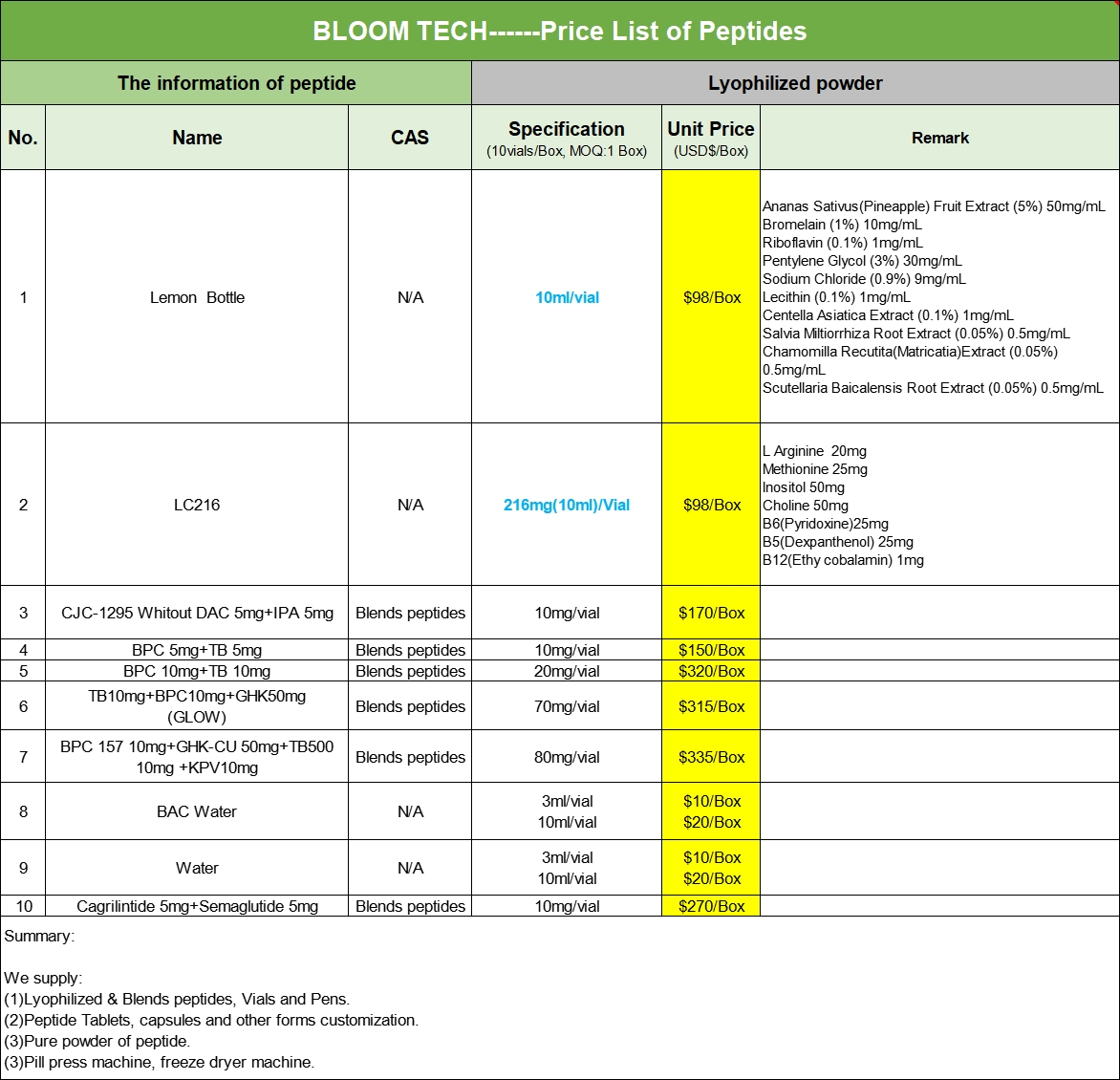
Shaanxi BLOOM Tech Co., Ltd. is one of the most experienced manufacturers and suppliers of edotreotide in China. Welcome to wholesale bulk high quality edotreotide for sale here from our factory. Good service and reasonable price are available.
Edotreotide (CAS number 204318-14-9) is a synthetic peptide optimized based on the structure of octreotide. Its core innovation lies in the introduction of DOTA (tetraazacyclobutane-1,4,8,11-tetracarboxylic acid) chelating groups to form the DOTA - [Tyr ³] - Octreotide (DOTA-TOC) structure. This modification endows it with a unique ability to bind radioactive isotopes, making it a core tool in the diagnosis and treatment of neuroendocrine tumors (NETs). With the deepening of research, its use has expanded from tumor diagnosis and treatment to multidisciplinary fields, forming a dual pattern of "diagnosis and treatment integration" and "interdisciplinary application".
Our products Form



Edotreotide COA
 |
||
| Certificate of Analysis | ||
| Compound name | Edotreotide | |
| Grade | Pharmaceutical grade | |
| CAS No. | 204318-14-9 | |
| Quantity | 50g | |
| Packaging standard | PE bag+Al foil bag | |
| Manufacturer | Shaanxi BLOOM TECH Co., Ltd | |
| Lot No. | 202512090051 | |
| MFG | Dec 9th 2025 | |
| EXP | Dec 8th 2028 | |
| Structure |
|
|
| Item | Enterprise standard | Analysis result |
| Appearance | White or almost white powder | Conformed |
| Water content | ≤5.0% | 0.32% |
| Loss on drying | ≤1.0% | 0.17% |
| Heavy Metals | Pb≤0.5ppm | N.D. |
| As≤0.5ppm | N.D. | |
| Hg≤0.5ppm | N.D. | |
| Cd≤0.5ppm | N.D. | |
| Purity (HPLC) | ≥99.0% | 99.8% |
| Single impurity | <0.8% | 0.54% |
| Total microbial count | ≤750cfu/g | 90 |
| E. Coli | ≤2MPN/g | N.D. |
| Salmonella | N.D. | N.D. |
| Ethanol (by GC) | ≤5000ppm | 500ppm |
| Storage | Store in a sealed, dark, and dry place below 2-8°C | |
|
|
||
|
|
||


Edotreotide chemical information
| Chemical Formula: | C65H92N14O18S2 |
| Exact Mass: | 1421 |
| Molecular Weight: | 1422 |
| m/z: | 1421 (100.0%), 1422 (70.3%), 1423 (24.3%), 1423 (9.0%), 1424 (6.4%), 1422 (5.2%), 1424 (4.7%), 1423 (3.7%), 1423 (3.4%), 1424 (2.6%), 1425 (2.2%), 1422 (1.6%), 1424 (1.3%), 1423 (1.1%), 1422 (1.1%) |
| Elemental Analysis: | C, 54.92; H, 6.52; N, 13.79; O, 20.26; S, 4.51 |
Edotriotide (CAS number 204318-14-9) is a synthetic peptide optimized based on the structure of octreotide. Its core innovation lies in the introduction of DOTA (tetraazacyclobutane-1,4,8,11-tetracarboxylic acid) chelating groups to form the DOTA - [Tyr ³] - Octreotide (DOTA-TOC) structure. This modification endows it with a unique ability to bind radioactive isotopes, making it a core tool in the diagnosis and treatment of neuroendocrine tumors (NETs). With the deepening of research, its use has expanded from tumor diagnosis and treatment to multidisciplinary fields, forming a dual pattern of "diagnosis and treatment integration" and "interdisciplinary application".
Precise diagnosis and treatment of neuroendocrine tumors (NETs)
It is the gold standard for SSTR (somatostatin receptor) imaging, and its diagnostic efficacy is significantly better than traditional imaging:
High sensitivity and specificity: The detection sensitivity of gastrointestinal pancreatic NETs (GEP NETs) reaches 90% -95%, and the specificity exceeds 85%. It can identify small lesions with a diameter of<1cm, while CT can only detect lesions larger than 2cm. The core mechanism lies in its high affinity binding with the SSTR2 subtype overexpressed on the surface of tumor cells (affinity is 40 times that of natural somatostatin), which is visualized through radioactive labeling.
Multimodal imaging technology:
PET imaging: Combined with ⁶⁸ Ga (half-life of 68 minutes) to form ⁶⁸ Ga DOTATOC, used for whole-body PET-CT scanning,


can clearly display primary and metastatic lesions (such as liver, bone, lymph nodes), especially sensitive to mesenteric lymph node metastasis that is difficult to detect with traditional imaging.
SPECT imaging: Combined with ⁹⁹ mTc (half-life of 6 hours), suitable for preliminary screening in resource limited areas.
Molecular typing and prognostic evaluation: The expression intensity of SSTR was quantified by SUVmax (standardized uptake value), and SUVmax>20 indicates well differentiated tumors with good prognosis; SUVmax<10 may indicate poorly differentiated or dedifferentiated tumors and require adjustment of treatment plans. In addition, imaging results can also be used for indirect evaluation of tumor grading (such as Ki-67 index).
Yiduoqupeptide PRRT is the standard treatment regimen for advanced NETs, with its core drug being Lutathera Lu DOTATATE (¹⁷⁷ Lu DOTATATE) ®) And ¹⁷⁷ Lu DOTATOC (ITM-11):
Indications: Non surgical, progressive, SSTR positive GEP NETs (G1/G2 grade) and pulmonary NETs. In 2025, ITM-11 (carrier free ¹⁷⁷ Lu) obtained implied clinical trial approval from the National Medical Products Administration. Edotreotide specific activity is 3-5 times higher than that of traditional carrier ¹⁷⁷ Lu, and radiation contamination is reduced by 90%, significantly reducing the risk of bone marrow suppression.
Efficacy data:
Objective response rate (ORR): 40% -50% (some studies have reached 60%), significantly higher than traditional chemotherapy (ORR 15% -20%).


Progression free survival (PFS): 28-36 months, 2-3 times longer than everolimus (11 months) or sunitinib (12 months).
Overall survival (OS): The 5-year survival rate has increased to 60% -70%, and some patients have achieved long-term tumor survival.
Mechanism of action:
Double kill: The beta particles released by ¹⁷⁷ Lu (with a penetration range of 0.5-2mm) directly destroy the DNA of tumor cells, while releasing gamma rays for imaging monitoring.
Spectator effect: β particles can kill adjacent tumor cells that have not been bound to endorphins, overcoming tumor heterogeneity.
Low toxicity: Kidney radiation dose<23 Gy (safe threshold 27 Gy), incidence of bone marrow suppression<10%, much lower than traditional chemotherapy.
Combined use with targeted drugs:
Everolimus (mTOR inhibitor): Sequential everolimus after PRRT prolongs PFS to 42 months and enhances anti-tumor efficacy by inhibiting the PI3K/AKT/mTOR pathway.
Sunitinib (multi-target TKI): Used alternately with PRRT, ORR increases to 70%, especially suitable for tumors with high Ki-67 index (>10%).


Combined with immunotherapy:
PD-1 inhibitors (such as pembrolizumab): In SSTR positive, microsatellite stable (MSS) type NETs, combination therapy achieves an ORR of 35%, enhancing T cell infiltration by relieving the immunosuppressive microenvironment.
Combined with chemotherapy:
CAPTEM regimen (capecitabine+temozolomide): Combined with PRRT, ORR reaches 65%, especially suitable for poorly differentiated NETs (G3 grade).
Breakthrough in diagnosis and treatment of special types of NETs
Typical carcinoid tumors: SSTR positivity rate of 90%, ORR of 50% for etoposide PRRT, and PFS of 30 months.
Atypical carcinoid: SSTR positivity rate is 60%, and the ORR of PRRT combined with chemotherapy is 40%, significantly better than the traditional regimen (ORR of 15%).
Small cell lung cancer (SCLC): Approximately 30% of cases express SSTR2, and preliminary studies have shown an ORR of 20% for PRRT, providing a new option for refractory SCLC.

2.2 Pheochromocytoma/Paraganglioma: From Surgical Dependence to Multimodal Management

Diagnosis: The positive rate of SDHB gene mutation related tumors detected by Yiduoqupeptide imaging is 80%, significantly higher than that of ¹² ³ I-MIBG imaging (50% positive rate).
Treatment: PRRT has an ORR of 40% and a PFS of 24 months for metastatic pheochromocytoma, and can alleviate symptoms of catecholamine overdose such as hypertension and headache.
2.3 Medullary thyroid carcinoma: from treatment failure to SSTR targeting
About 50% of medullary thyroid cancers express SSTR2, and residual lesions after ¹³ ¹ I treatment can be identified by multi peptide imaging. The ORR of PRRT reaches 30%, providing a supplementary treatment option for patients with radiation iodine resistance.
Exploratory application of non tumor diseases
Yiduoqupeptide can inhibit the TGF - β signaling pathway and demonstrate anti fibrotic effects in an idiopathic pulmonary fibrosis (IPF) model
Animal experiments: Edotreotide can reduce collagen deposition in lung tissue by 40% and improve lung function by 20% in FEV1.
Mechanism: Inhibiting fibroblast activation by blocking the cross activation of SSTR2 and TGF - β receptors.


Can inhibit the release of pro-inflammatory cytokines (such as IL-6, TNF - α) and demonstrate anti-inflammatory effects in rheumatoid arthritis models:
Animal experiments: Can reduce joint swelling (50% reduction) and serum C-reactive protein (CRP) levels (60% reduction).
Mechanism: Inhibiting inflammatory cell infiltration by blocking the interaction between SSTR2 and NF - κ B pathway.
Cutting edge technology: from integrated diagnosis and treatment to intelligent diagnosis and treatment
⁶⁸ Ga/¹⁷⁷ Lu DOTATOC: Simultaneously achieving PET imaging and treatment with the same molecule, optimizing treatment plans. For example, quantifying SSTR expression through PET imaging, personalized adjustment of ¹⁷⁷ Lu dosage, improving efficacy and reducing toxicity.
Fluorescent labeled probe: Cy5.5-DOTATAC is used for intraoperative near-infrared fluorescence navigation to improve the complete resection rate of surgery (R0 resection rate increased from 60% to 85%), especially suitable for the localization of deep or small lesions.

4.2 Artificial intelligence assisted diagnosis and treatment: from image analysis to prognosis prediction

Imaging omics: Through deep learning analysis of ⁶⁸ Ga DOTATOC PET images, texture features (such as entropy and uniformity) are extracted to predict PRRT efficacy (AUC of 0.85) and guide personalized treatment.
Prognostic model: Integrating SUVmax, Ki-67 index, clinical staging and other parameters, constructing a NETs prognostic prediction model (with a C-index of 0.90) to provide quantitative basis for treatment decision-making.

Future direction: From single treatment to ecological construction
Development of new radioactive isotopes
Alpha particle emitter:
The alpha particle penetration power of ² ² ⁵ Ac DOTATOC (half-life of 10 days) is strong (50-100 μ m), and it has a better killing effect on drug-resistant tumor cells. Currently, it is in phase II clinical practice.
Targeted alpha therapy (TAT):
The short range (80 μ m) of Bi DOTATOC (half-life 46 minutes) can reduce bone marrow suppression and is suitable for small volume lesions or pediatric patients.
Interdisciplinary Application Expansion
Neuroscience:
Can penetrate the blood-brain barrier, bind with SSTR2, and potentially be used for the treatment of Alzheimer's disease (by inhibiting β - amyloid deposition) or Parkinson's disease (by regulating dopaminergic neurons).
Cardiovascular disease:
Edotreotide can inhibit phosphodiesterase III, enhance myocardial contractility, and has the potential for short-term treatment of acute heart failure (currently in preclinical research).
Frequently Asked Questions
What is edotreotide?
+
-
Summary. Edotreotide gallium Ga-68 is a radioactive diagnostic agent used in PET scans for somatostatin receptor positive neuroendocrine tumors in adult and pediatric patients. Somakit TOC. Generic Name Edotreotide gallium Ga-68. DrugBank Accession Number DB15494.
Pricing for Diagnostic Imaging Agents (e.g., Ga-68-DOTATOC)
+
-
RFQs often seek competitive pricing for diagnostic-grade Ga-68-DOTATOC, a PET imaging agent used to localize somatostatin receptor-positive tumors. Pricing may vary based on batch size, purity (e.g., GMP-compliant), and delivery timelines. Institutions may request quotes for single doses or bulk purchases to optimize cost-efficiency in clinical trials or routine diagnostics.
Cost of Therapeutic Formulations (e.g., Lu-177-DOTATOC)
+
-
For therapeutic applications, RFQs focus on the price of Lu-177-DOTATOC (or ITM-11), a targeted radionuclide therapy for advanced NETs. Quotes may include the cost of the radioisotope (no-carrier-added Lu-177), peptide synthesis, and radiolabeling services. Pricing is often tiered based on treatment cycles (e.g., per vial or per patient dose) and regulatory compliance (e.g., FDA/EMA-approved facilities).
Custom Synthesis and Radiolabeling Services
+
-
Research institutions may request RFQs for custom synthesis of edotreotide derivatives (e.g., alternative chelators or isotopes) or radiolabeling with non-standard isotopes (e.g., Cu-64, Zr-89). Quotes should detail the feasibility, timeline, and cost of developing novel radiopharmaceuticals, including validation of radiochemical purity and stability.
Bulk Purchasing Discounts for Clinical Trials
+
-
Pharmaceutical companies conducting multi-center trials may request RFQs for large quantities of edotreotide-based agents. Discounts are often negotiated based on volume commitments, long-term contracts, and shared risk models (e.g., milestone-based pricing). RFQs may also include logistics costs (e.g., cold chain shipping for radioactive materials).
Hot Tags: edotreotide, suppliers, manufacturers, factory, wholesale, buy, price, bulk, for sale, Bremelanotide Powder CAS 189691 06 3, DERMORPHIN, dermorphin peptide, Epitalon Powder CAS 307297 39 8, LONG R3 IGF I CAS 143045 27 6, Tesamorelin CAS 218949 48 5