



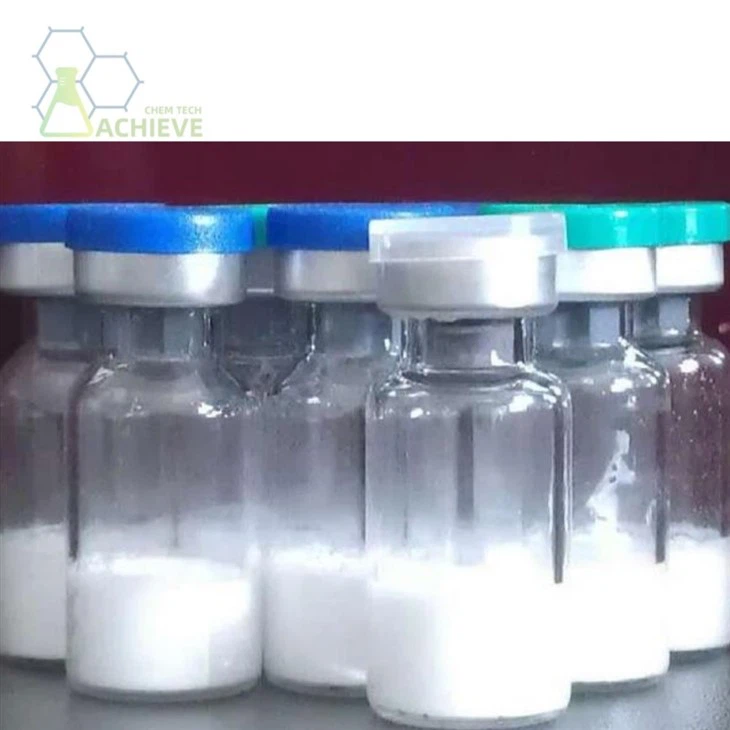

Tesamorelin is a synthetic polypeptide consisting of a 44-amino-acid sequence derived from human growth hormone-releasing factor (GRF), with a 3-hexenoyl group conjugated to the N-terminal tyrosine residue. As a novel GRF analogue, Tesamorelin effectively regulates endogenous growth hormone secretion, inhibits visceral adipose tissue (VAT) accumulation, improves dyslipidemia, optimizes overall metabolic status, enhances quality of life, and stabilizes systemic glucose homeostasis. As a professional peptide manufacturer with mature synthetic and purification systems, Bloomtechz provides high-purity Tesamorelin peptide raw materials for global laboratory research and scientific development.We maintain standardized production processes, complete batch quality inspection, and traceable quality control systems to ensure stable batch consistency and reliable analytical purity for academic and industrial research clients.
Our products


Tesamorelin COA
 |
||
| Certificate of Analysis | ||
| Compound name | Tesamorelin | |
| Grade | Pharmaceutical grade | |
| CAS No. | 218949-48-5 | |
| Quantity | 18g | |
| Packaging standard | PE bag+Al foil bag | |
| Manufacturer | Shaanxi BLOOM TECH Co., Ltd | |
| Lot No. | 202601090033 | |
| MFG | Jan 9th 2026 | |
| EXP | Jan 8th 2029 | |
| Structure | N/A | |
| Item | Enterprise standard | Analysis result |
| Appearance | White or almost white powder | Conformed |
| Water content | ≤5.0% | 0.39% |
| Loss on drying | ≤1.0% | 0.28% |
| Heavy Metals | Pb≤0.5ppm | N.D. |
| As≤0.5ppm | N.D. | |
| Hg≤0.5ppm | N.D. | |
| Cd≤0.5ppm | N.D. | |
| Purity (HPLC) | ≥99.0% | 99.80% |
| Single impurity | <0.8% | 0.74% |
| Total microbial count | ≤750cfu/g | 80 |
| E. Coli | ≤2MPN/g | N.D. |
| Salmonella | N.D. | N.D. |
| Ethanol (by GC) | ≤5000ppm | 500ppm |
| Storage | Store in a sealed, dark, and dry place below 2-8°C | |
|
|
||

Analytical Methods
The crude Tesamorelin synthetic intermediate harvested from solid-phase peptide synthesis is solubilized within deionized aqueous matrix. Stationary phase substrates deployed within the reversed-phase chromatographic bed encompass tetraalkylsilane-grafted silica gel, octylsilane-functionalized silica gel, or octadecylsilyl-bonded silica gel sorbents. A biphasic eluent system is implemented, wherein triethylamine phosphate buffered aqueous medium constitutes mobile phase A, while chromatographic-grade acetonitrile serves as organic mobile phase B. Fractionation is executed via programmed gradient elution; eluate fractions congruent to the retention window of the target analyte peak are harvested and pooled.
The pooled target-containing eluate is subjected to vacuum rotary evaporation for solvent abatement, and the resultant concentrated aliquot is segregated for subsequent downstream unit operations.
A method for purification by reversed phase high performance liquid chromatography includes the following steps:
1) The timorelin rough skin obtained from solid phase synthesis is dissolved in deionized water, and the stationary phase is a reversed-phase silica gel column with tetraalkyl silane bonded silica gel, octaalkyl silane bonded silica gel or octadecyl bonded silica gel, and the mobile phase is two phases, wherein the triethylamine phosphate buffer solution is phase A, and the chromatogram pure acetonitrile is phase B, and gradient elution purification is performed to collect the skin solution of the target peak
2) The obtained solution is concentrated by vacuum rotary evaporation, and the concentrated solution is reserved for standby
3) Use anion exchange resin to exchange and convert into coolate
4) The final high-purity cortisone solution is concentrated and freeze-dried by decompressing, rotating and evaporating again to obtain a powdery finished product.
This method is suitable for industrial purification of temorelin. It can not only obtain refined skin with purity greater than 98.0%, but also produce in batches to meet the requirements of high purity, high yield, low cost and high efficiency.
research history
The research history focuses on the treatment of fat metabolism disorders associated with HIV (Human Immunodeficiency Virus). Below are some key points about the research history:
In the HIV-infected patient population, some medications may cause impaired fat metabolism during treatment, especially excessive accumulation of abdominal fat. This change not only affects the physical appearance of patients, but is also associated with an increased risk of metabolic abnormalities and cardiovascular disease. Therefore, the search for drugs that can effectively treat this fat metabolism disorder has become an important direction of research.
Regulating the release of growth hormone (GH) in the body by mimicking and enhancing the action of human growth hormone releasing hormone (GHRH). Growth hormone plays a key role in the regulation of growth, synthesis and metabolism of body tissues, and it stimulates the secretion of growth hormone by binding to the GHRH receptor in the pituitary gland, thereby increasing the level of GH in the body. This discovery provides a theoretical basis for the treatment of HIV-associated lipid metabolism disorders with Tesamorelin.
Based on the mechanism of action, researchers have conducted several clinical trials to evaluate its efficacy in treating HIV-associated dyslipidemia. These studies have shown that treatment significantly reduces the accumulation of abdominal fat and is also effective in improving patients' symptoms of fat loss. This can have a positive impact on both the psychological and physical health of patients.
Based on the positive results of these clinical studies, it (Tesamorelin acetate salt, trade name Egrifta) was approved by the U.S. Food and Drug Administration (FDA) for the treatment of HIV-associated disorders of fat metabolism in 2010. This was the first drug approved by the FDA for the treatment of lipid metabolism disorders.
In summary, the history of Tesamorelin research has been one of discovery of potential therapeutic effects, in-depth exploration of mechanisms of action, validation of efficacy through clinical trials, and ultimately regulatory approval. The success of this process not only provides a new therapeutic option for HIV-infected patients, but also offers new ideas for the treatment of other disorders associated with disorders of fat metabolism.
Tesamorelin inhibits GSK-3 β and reduces tau protein phosphorylation through IGF-1
Tesamorelin is an artificially synthesized growth hormone releasing factor (GHRH) analog that can stimulate the secretion of growth hormone (GH) from the anterior pituitary gland, thereby affecting the level of insulin-like growth factor-1 (IGF-1). In recent years, research has found that Tesamorelin may regulate tau protein phosphorylation through IGF-1-related signaling pathways, bringing new hope for the treatment of neurodegenerative diseases.
Structure and Enzymatic Characteristics of GSK-3 β
Glycogen synthase kinase-3 β (GSK-3 β) is a serine/threonine protein kinase that is widely present in cells. GSK-3 β has unique structural characteristics and its activity is regulated by multiple factors. At rest, GSK-3 β has a certain basal activity, and its activity is further enhanced when activated by upstream signals. GSK-3 β has a wide range of substrates and can phosphorylate various proteins, participating in various signaling pathways and physiological processes within cells.
Phosphorylation of tau protein by GSK-3 β
Tau protein is a microtubule associated protein that mainly participates in the assembly and stability of microtubules in neurons.


There are multiple phosphorylation sites on tau protein, and GSK-3 β is one of the main kinases that catalyze tau protein phosphorylation. GSK-3 β can specifically recognize and phosphorylate specific serine and threonine residues of tau protein, such as Ser396, Thr231, etc. The excessive phosphorylation of tau protein can lead to a decrease in its binding ability to microtubules, disruption of microtubule structure, which in turn affects the material transport and normal function of neurons, ultimately leading to neuronal death.
The role of GSK-3 β in neurodegenerative diseases
In neurodegenerative diseases such as AD, the activity of GSK-3 β is abnormally increased, which is closely related to the excessive phosphorylation of tau protein and the formation of neurofibrillary tangles.
Research has shown that inhibiting the activity of GSK-3 β can reduce the phosphorylation level of tau protein, improve neuronal pathological changes, and delay disease progression. Therefore, GSK-3 β has become one of the important targets for the treatment of neurodegenerative diseases.
The mechanism of Tesamorelin stimulating IGF-1 secretion
Interaction between Tesamorelin and GHRH receptor
Tesamorelin, as a GHRH analog, can specifically bind to GHRH receptors on the surface of anterior pituitary cells. This binding has high affinity and specificity, similar to the interaction between natural GHRH and receptors. When Tesamorelin binds to the GHRH receptor, it causes a conformational change in the receptor, activating the G protein coupled signaling pathway within the cell.
Activation of intracellular signaling pathways
After Tesamorelin binds to GHRH receptors, the activated G protein further activates adenylate cyclase (AC), leading to an increase in intracellular cyclic adenosine monophosphate (cAMP) levels.


CAMP, as a second messenger, activates protein kinase A (PKA). PKA can phosphorylate various downstream target proteins, including transcription factors, thereby promoting the transcription and expression of GH genes, ultimately leading to an increase in GH secretion.
Induction of IGF-1 synthesis by GH
GH secreted into the bloodstream acts on tissues such as the liver, activating the JAK-STAT signaling pathway within liver cells to promote transcription and expression of the IGF-1 gene.After binding to GH receptors on the surface of liver cells, GH activates receptor related JAK kinases, which further phosphorylate STAT proteins.
Phosphorylated STAT proteins form dimers, enter the nucleus, bind to the promoter region of the IGF-1 gene, and initiate the synthesis and secretion of IGF-1.
IGF-1 inhibits the signaling pathway of GSK-3 β activity
Activation of IGF-1 receptor
After IGF-1 is secreted into the bloodstream, it binds to the IGF-1 receptor (IGF-1R) on the surface of target cells. IGF-1R is a tyrosine kinase receptor. When IGF-1 binds to the receptor, it causes a conformational change and activates the receptor's tyrosine kinase activity. Activated IGF-1R self phosphorylates and phosphorylates downstream signaling molecules, such as insulin receptor substrate (IRS) proteins.
Activation of PI3K Akt signaling pathway
Phosphorylated IRS proteins can recruit and activate phosphatidylinositol 3-kinase (PI3K). PI3K catalyzes the formation of phosphatidylinositol-3,4,5-triphosphate (PIP3) from phosphatidylinositol-4,5-diphosphate (PIP2) on the cell membrane. PIP3, as a second messenger, can recruit protein kinase B (Akt) onto the cell membrane and activate it. Activated Akt is a key molecule that inhibits GSK-3 β activity.
Akt's inhibitory effect on GSK-3 β
Akt can directly phosphorylate specific serine residues (such as Ser9) of GSK-3 β, and the activity of phosphorylated GSK-3 β is inhibited. This inhibitory effect prevents GSK-3 β from phosphorylating substrates such as tau protein, thereby reducing abnormal phosphorylation levels of tau protein.
The effect of GSK-3 β activity inhibition on tau protein phosphorylation levels
In vitro experimental research
In vitro cell experiments, researchers exposed neuronal cells to the Tesamorelin or IGF-1 environment and then measured the phosphorylation level of tau protein. The results showed that after treatment with Tesamorelin and IGF-1, the activity of GSK-3 β in neuronal cells was significantly reduced, and the phosphorylation levels of tau protein at multiple phosphorylation sites were also significantly decreased. This indicates that Tesamorelin inhibits GSK-3 β activity through the IGF-1-Akt signaling pathway, effectively reducing tau protein phosphorylation.


Animal experimental research
In animal models, such as transgenic AD mouse models, after treatment with Tesamorelin, the levels of IGF-1 in mouse brain tissue increased, GSK-3 β activity was inhibited, and tau protein phosphorylation levels decreased. At the same time, the cognitive function of mice was improved and neuronal damage was reduced. These animal experimental results further confirm the effectiveness of Tesamorelin's mechanism of inhibiting GSK-3 β and reducing tau protein phosphorylation through IGF-1 in vivo.
References
[1]Falutz, J., Mamputu, J. C., Potvin, D., & Tremblay, M. (2007). Effects of tesamorelin, a growth hormone-releasing factor analogue, on visceral fat and metabolic parameters in HIV-associated lipodystrophy. Journal of Acquired Immune Deficiency Syndromes, 46(2), 171–179.
[2]Grunfeld, C., & Hadigan, C. (2011). Tesamorelin for the treatment of excess visceral adipose tissue in HIV-infected patients. Expert Opinion on Pharmacotherapy, 12(12), 1947–1956.
[3]Møller, N., & Jørgensen, J. O. L. (2012). Growth hormone secretagogues and growth hormone-releasing hormone analogues: Pharmacology and clinical perspectives. Hormone and Metabolic Research, 44(14), 981–990.
[4]Stanley, T. L., & Grinspoon, S. K. (2010). Pathophysiology and treatment of HIV-associated lipodystrophy. Endocrine Reviews, 31(2), 231–261.
[5]Tritos, N. A. (2018). Tesamorelin: A review of its mechanism of action, clinical efficacy and safety profile in HIV-related visceral adiposity. Drugs, 78(1), 75–87.
Frequently Asked Questions
Q: What are the core advantages of Bloomtechz Tesamorelin compared with generic low-purity industrial peptides on the market?
+
-
A: Most commercially available Tesamorelin raw materials suffer from incomplete impurity removal, residual truncated peptide fragments and unstable salt conversion levels. Bloomtechz adopts independent reversed-phase HPLC gradient purification combined with professional anion exchange resin conversion technology, stably maintaining product purity above 98%. As the source manufacturer, we strictly control each industrial purification link, eliminate batch difference risks, and provide complete impurity profile data and batch test reports. This stable high-purity performance ensures reliable repeatability for customer academic experiments and industrial formulation research.
Q: Can Bloomtechz provide customized salt type and purity grading services for Tesamorelin?
+
-
A: Yes. Based on diverse customer research scenarios, Bloomtechz supports personalized customization of Tesamorelin purity grades and salt conversion specifications. Whether customers require standard research-grade products or high-purity customized versions with stricter impurity limits, our R&D and purification team can adjust the industrial purification process correspondingly. All customized products will pass independent QC re-inspection and be equipped with matched qualified COA documents, fully meeting differentiated experimental and project research standards.
Q: How does Bloomtechz guarantee the stability of Tesamorelin during cross-border long-distance transportation?
+
-
A: Tesamorelin lyophilized powder is sensitive to high temperature and humidity. To solve the instability risk of international ocean and air freight, Bloomtechz adopts professional low-temperature moisture-proof sealed packaging, inert gas protection and insulated outer packaging for all exported batches. We simulate long-distance transportation and temperature fluctuation stability tests in advance to ensure no peptide degradation, no moisture absorption and no purity attenuation after arrival. Meanwhile, complete batch retention samples are reserved to provide effective quality traceability guarantee for global customers.
Q: What complete qualification and technical document support can Bloomtechz provide for Tesamorelin bulk procurement?
+
-
A: As a professional peptide raw material manufacturer, Bloomtechz can provide full-set supporting documents for every Tesamorelin batch, including COA, HPLC purity chromatogram, mass spectrometry identification report, moisture detection data, heavy metal test report and MSDS. All documents conform to international laboratory research and cross-border customs clearance standards. Our professional sales team assists customers in sorting out document packages, greatly simplifying incoming inspection, project filing and customs clearance procedures.
Q: Does Bloomtechz provide post-purchase technical after-sales guidance for Tesamorelin laboratory application?
+
-
A: Yes. Bloomtechz provides one-stop professional technical after-sales service for all Tesamorelin purchasers. Our technical team can offer standardized guidance on peptide reconstitution, dissolution configuration, laboratory storage conditions, aliquot management and experimental operation precautions. We can also provide targeted risk avoidance suggestions for common experimental problems such as peptide inactivation and impurity precipitation, effectively reducing customer experimental failure rate and improving research efficiency.
Hot Tags: tesamorelin cas 218949-48-5, suppliers, manufacturers, factory, wholesale, buy, price, bulk, for sale, DecaPeptide 12 CAS 137665 91 9, LONG R3 IGF I CAS 143045 27 6, Lpamorelin Powder CAS 170851 70 4, Tesamorelin CAS 218949 48 5, Bremelanotide Powder CAS 189691 06 3, CJC 1295 Peptide