




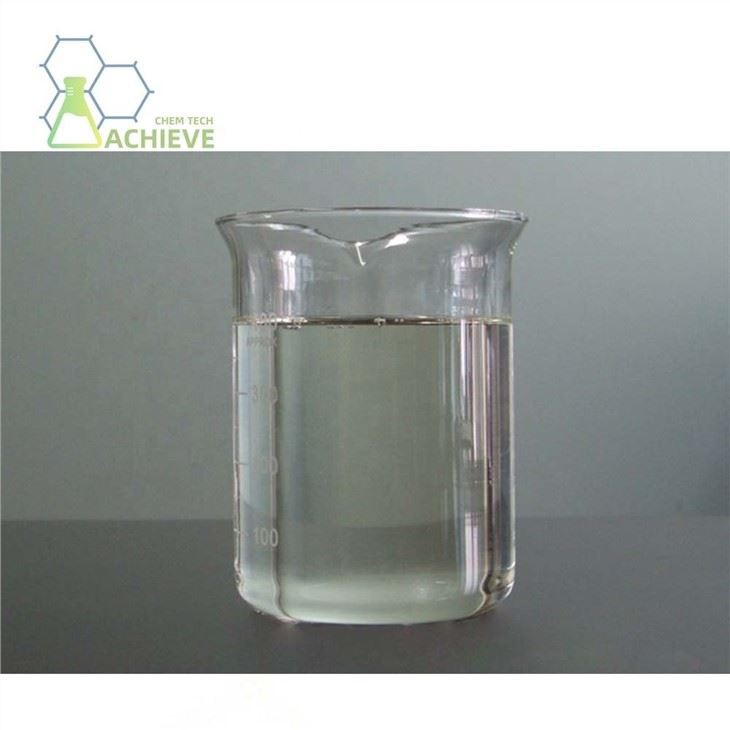

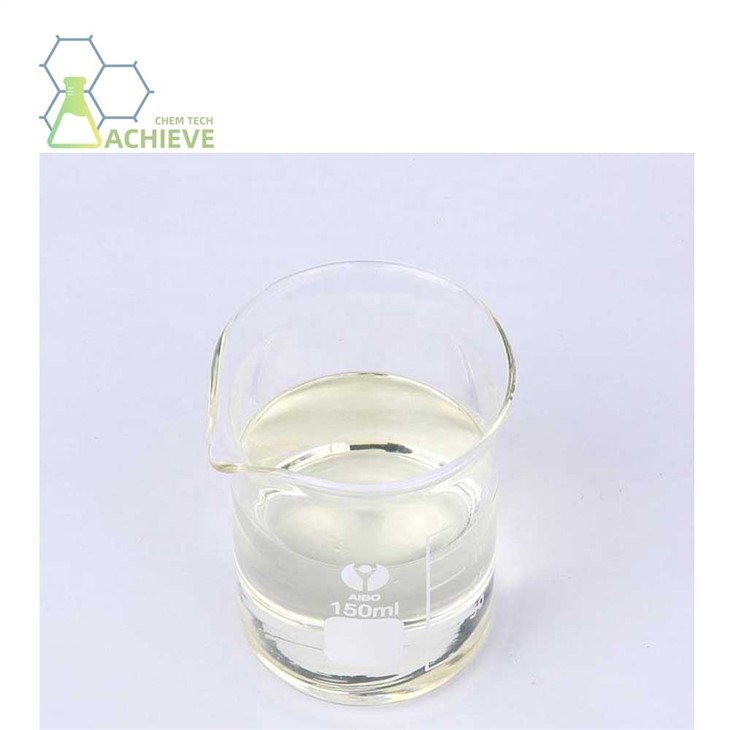

Shaanxi BLOOM Tech Co., Ltd. is one of the most experienced manufacturers and suppliers of 1,3-dibromopropane cas 109-64-8 in China. Welcome to wholesale bulk high quality 1,3-dibromopropane cas 109-64-8 for sale here from our factory. Good service and reasonable price are available.
1,3-Dibromopropane, also known as dibromopropane or DBP, is an organic compound with the chemical formula C3H6Br2 and CAS 109-64-8. It belongs to the family of haloalkanes, specifically dibromides, featuring two bromine atoms substituted on the carbon atoms of a propane molecule. This colorless to light yellow liquid exhibits a characteristic odor and is a highly reactive chemical due to the presence of two halogen atoms.
DBP is a widely used industrial solvent, finding applications in various sectors such as adhesives, sealants, coatings, and dyes. It is also employed as an intermediate in the synthesis of other chemicals, including pharmaceuticals, pesticides, and flame retardants. However, its usage is regulated owing to its potential health hazards, including carcinogenicity and neurotoxicity, which can pose risks to humans and the environment if not handled appropriately.

|
|
|


|
Chemical Formula |
C3H6Br2 |
|
Exact Mass |
199.88 |
|
Molecular Weight |
201.89 |
|
m/z |
201.88 (100.0%), 199.88 (51.4%), 203.88 (48.6%), 202.88 (3.2%), 200.89 (1.7%), 204.88 (1.6%) |
|
Elemental Analysis |
C, 17.85; H, 3.00; Br, 79.16 |

1,3-Dibromopropane (CAS number: 109-64-8), as an important organic halogenated alkane, exhibits unique reactivity and wide application potential due to the presence of two active bromine atoms and a specific three carbon chain skeleton in its molecular structure.
1. Pharmaceutical intermediates: key raw materials for anti-tumor and antiviral drugs
The application in the pharmaceutical field focuses on the synthesis of key intermediates for anti-tumor drugs, cardiovascular drugs, and antiviral drugs. For example, in the synthesis of the anti-tumor drug adefovir disoproxil, specific functional groups are introduced through bromination reactions to provide active sites for subsequent cyclization reactions. The reaction mechanism is based on the electrophilic substitution property of bromine atoms, which can couple with nitrogen-containing and oxygen-containing heterocyclic compounds to form a biologically active molecular skeleton.
Technical case:


Synthesis of anti-tumor drugs: Reacting with amino compounds to generate propylamine derivatives, which are further converted into ligands for platinum based anticancer drugs, enhancing the binding ability of drugs with DNA.
Antiviral drug intermediates: When synthesizing nucleoside antiviral drugs (such as lamivudine), they are used as brominated reagents to control product configuration through stereoselective reactions and enhance drug activity.
2. Pesticide synthesis: the core raw material for new insecticides and fungicides
It is a key synthetic raw material for new pesticides such as fipronil and deltamethrin. The bromine atom in its molecule can participate in free radical reactions to generate bromine containing heterocyclic compounds with high insecticidal activity.
For example, in the synthesis of fipronil, it reacts with cyanide compounds to form a bromotriazine ring structure, which can interfere with the insect nervous system and achieve efficient insecticidal effects.
Technical advantages:
Selective regulation: By adjusting reaction conditions such as temperature and catalyst, the regioselectivity of brominated products can be controlled, reducing the generation of by-products.
Environmentally friendly: Compared to traditional organophosphorus pesticides, brominated pesticides degrade faster in soil and have a shorter residue period, meeting the requirements of green agriculture.


3. Polymer materials: flame retardants and polymer modifiers
The applications in the field of polymer materials mainly focus on flame retardants and polymer modifiers. Its bromine containing structure can release hydrogen bromide during combustion, suppress flame spread, and generate a dense carbide layer to isolate oxygen. For example, adding this flame retardant to polypropylene (PP) can increase the material's limit oxygen index (LOI) from 18% to 28%, meeting the V-0 flame retardant standard.
Technological breakthrough:
Synergistic flame retardant system: By compounding it with phosphorus based flame retardants, a gas condensation synergistic flame retardant mechanism can be formed, significantly improving flame retardant efficiency.
Nanocomposite technology: By grafting 1,3-dibromopropane onto the surface of nanoclay, a nanocomposite flame retardant can be prepared, which can reduce the amount of flame retardant and improve the mechanical properties of the material.
4. Functional materials: LCD materials and electronic chemicals
The applications in the field of functional materials include the synthesis of liquid crystal materials and electronic chemicals. The bromine atoms in its molecular structure can regulate the dielectric anisotropy of liquid crystal molecules, improving the response speed of liquid crystal displays.


For example, in the synthesis of nematic liquid crystals, as side chain modifying groups, the arrangement order of liquid crystal molecules can be optimized, and the response time can be shortened from 10ms to 5ms.
Technological frontiers:
Flexible display material: By introducing it into the polyimide (PI) main chain, high temperature resistant and flexible liquid crystal substrate materials can be prepared to meet the needs of flexible displays.
High purity electronic chemicals: Through distillation and recrystallization techniques, photoresists and etchants with a purity of 99.99% can be prepared for use in semiconductor manufacturing.
1. Green synthesis process: catalytic bromination and continuous production
Traditional synthesis processes, such as the reaction of 1,3-propanediol with hydrobromic acid, suffer from high energy consumption and numerous by-products. In recent years, catalytic bromination process and continuous production technology have become research hotspots.
Technical case:
Molecular sieve catalyzed bromination: Using ZSM-5 molecular sieve as a catalyst, the reaction selectivity of 1,3-propanediol with bromine can be increased from 82% to 90%, while reducing the amount of hydrobromic acid used.


Microchannel continuous reaction: The continuous synthesis of 1,3-dibromopropane is achieved through a microreactor, reducing the reaction time from 7 hours to 2 hours, achieving a product purity of 99.5%, and reducing energy consumption by 30%.
2. Biomedical imaging: fluorescent probes and targeted drug carriers
Fluorescent materials have shown great potential in the field of biological imaging. For example, CsPbBr ∝ nanocrystals (containing bromine structures) can be used for fluorescence imaging of living tumors, with their emission wavelength (520nm) shifted from the self fluorescence wavelength of biological tissues, resulting in a signal-to-noise ratio improvement of over 50%. In addition, surface modification of polyethylene glycol (PEG) can prolong the circulation time of nanocrystals in the blood and achieve targeted delivery.
Technical advantages:
Multimodal imaging: Combining 1,3-dibromopropanyl fluorescent material with magnetic nanoparticles can achieve fluorescence magnetic resonance dual-mode imaging, improving diagnostic accuracy.
Photothermal therapy: Under near-infrared light irradiation, 1,3-dibromopropylalkyl nanocrystals can generate local high temperatures, achieving photothermal ablation of tumors.
3. New energy materials: battery electrolytes and solid electrolytes
With the rapid development of the new energy industry, its application in the field of batteries is gradually expanding. For example, in lithium-ion batteries, it can be used as an additive to optimize the ion conductivity of the electrolyte, increasing the battery cycle life from 500 to 800 times.


In addition, its bromine containing structure can also be used for the synthesis of solid electrolytes, which enhances the ion conductivity of solid electrolytes through the interaction between bromine atoms and lithium ions.
Technological breakthrough:
All solid state battery: Introducing it into sulfide solid electrolyte can form a stable lithium ion conduction channel, increasing the ion conductivity from 10 ⁻⁴ S/cm to 10 ⁻³ S/cm.
Sodium ion battery: Using this substance as raw material, a bromine containing Prussian blue analog is synthesized as the positive electrode material for sodium ion batteries, which can achieve high capacity (120mAh/g) and long cycle life (1000 times).
Applications in Surfactant Synthesis
- Can be transformed into amphiphilic molecules, which are compounds that possess both hydrophilic (water-loving) and hydrophobic (water-fearing) regions. These amphiphilic structures are the backbone of surfactants, enabling them to adsorb at interfaces between two immiscible liquids, such as oil and water.
- Through substitution reactions, the bromine atoms on it can be replaced with hydrophilic groups like hydroxyl (-OH), sulfonate (-SO3Na), or carboxylate (-COONa), while the central carbon chain remains hydrophobic. This process yields surfactants with tailored properties for specific applications.
- Gemini surfactants, also known as dimeric or bolaform surfactants, are characterized by two hydrophilic headgroups connected by a spacer group, often a hydrophobic chain. Serving as a linker in the synthesis of such molecules, where its bromine atoms are replaced with hydrophilic moieties at both ends, creating a bridge between two surfactant units.
- Gemini surfactants exhibit enhanced surface activity and lower critical micelle concentration (CMC) compared to their monomeric counterparts, making them attractive for applications requiring high efficiency at low concentrations.
- Natural surfactants, such as saponins or phospholipids, can be modified using it as an intermediate to introduce additional functionality or improve their performance. For instance, the bromine atoms can be used as handles for attaching specific functional groups that enhance solubility, stability, or environmental compatibility.
- In the development of specialty surfactants for niche applications, it can play a role in creating unique molecular architectures. These surfactants might be designed for use in microemulsions, controlled drug delivery systems, or enhanced oil recovery processes, where their tailored properties are essential.
Synthesis Method
One of the common methods for synthesizing 1,3-Dibromopropane involves the reaction between 1,3-propanediol (also known as propylene glycol) and hydrobromic acid in the presence of a catalyst. However, it's worth noting that the direct reaction mentioned in the sources may have been adapted for clarity or simplicity, and industrial processes might use different conditions or catalysts. Here's a generalized version of the synthesis:
- Preparation of Reactants: Ensure that the 1,3-propanediol and hydrobromic acid are of suitable purity and in appropriate quantities for the reaction.
- Reaction Setup: Set up the reaction apparatus with appropriate safety measures, including ventilation and personal protective equipment.
- Addition of Catalyst and Reactants: Add a catalyst, such as sulfuric acid, to the reaction mixture. Slowly add concentrated sulfuric acid to the hydrobromic acid solution, followed by the addition of 1,3-propanediol. This step should be performed with caution to avoid violent reactions or splashing.
- Heating and Reflux: Heat the reaction mixture to a temperature that promotes the substitution of hydroxyl groups in 1,3-propanediol with bromine atoms from hydrobromic acid. This step typically involves heating the mixture under reflux conditions for an extended period, such as 7 hours, to ensure complete conversion.
- Work-up and Purification: After the reaction is complete, cool the mixture and proceed with the work-up. This includes washing the crude product with water, sodium thiosulfate solution, and sodium carbonate solution to remove impurities. Dry the organic layer over anhydrous calcium chloride and distill the product under reduced pressure to collect the desired fractions. Perform fractional distillation under reduced pressure to isolate and purify 1,3-Dibromopropan. The desired product is typically collected as a fraction boiling at 159-168°C.
Hot Tags: 1,3-dibromopropane cas 109-64-8, suppliers, manufacturers, factory, wholesale, buy, price, bulk, for sale, 5 Bromo m xylene CAS 556 96 7, melamine powder, cmit isothiazolinone, Potassium Formate Powder, Raw Materials, Solvent