


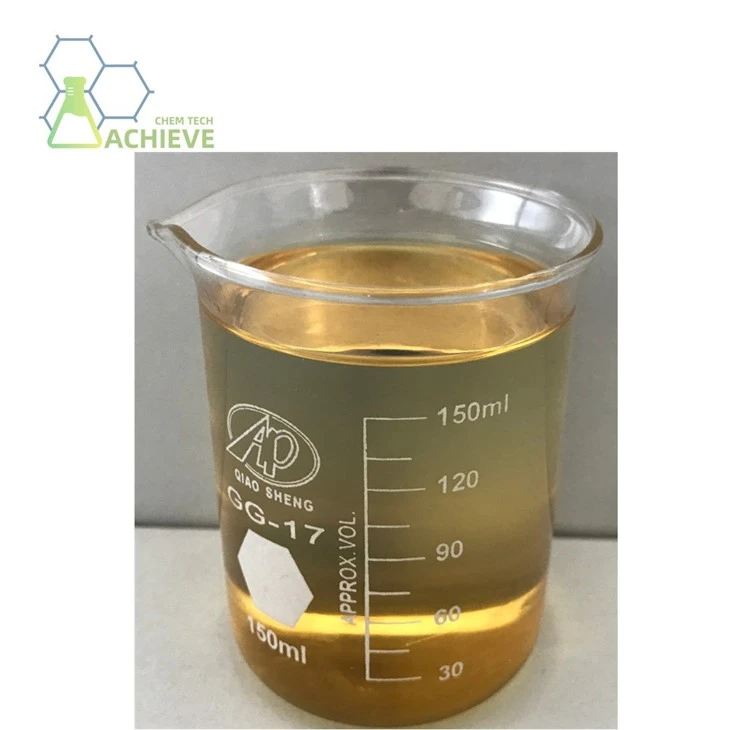


3,5-Dimethylaniline, also known as 1-amino-3,5-dixylene or 5-aminometa xylene, has a CAS number of 108-69-0 and an EINECS number of 203-607-0. It is a widely used organic chemical raw material, appearing as a yellow oily liquid, typically a chemical substance that can evaporate with air. It is slightly soluble in water but soluble in organic solvents such as ethanol, ether, and benzene. In light and air, its color may darken, it can form salts with strong mineral acids, and undergo polymerization reactions in the presence of cerium (IV) sulfate as an oxidant. It is often used as an important reagent in dye production. In addition, it is also used as a raw material for synthesizing chiral fillers for high-performance liquid chromatography. It has important applications in the chemical industry, but due to its flammability and potential reaction with oxygen in the air, special attention should be paid to safety during use and storage. Meanwhile, due to its potential irritation to the skin and eyes, appropriate protective equipment such as gloves and goggles should be worn when handling this chemical substance.

Additional information of chemical compound:
|
Chemical Formula |
C8H11N |
|
Exact Mass |
121.09 |
|
Molecular Weight |
121.18 |
|
m/z |
121.09 (100.0%), 122.09 (8.7%) |
|
Elemental Analysis |
C, 79.29; H, 9.15; N, 11.56 |
|
Melting point |
7-9℃ |
|
Boiling point |
104-105℃14 mm Hg(lit.) |
|
Density |
0.972 g/mL at 25℃(lit.) |
|
|
|


3,5-Dimethylaniline is an important organic compound with the chemical formula C8H11N. In the chemical industry, it has a wide range of uses due to its unique chemical properties. The following is a detailed explanation of its purpose:
This compound plays a crucial role in the dye and pigment industry. It is commonly used as an intermediate for synthesizing various dyes and pigments. Through specific chemical reactions, it can be converted into various dyes with bright colors and good stability, which are widely used in industries such as textiles, printing and dyeing, and papermaking. In the textile industry, dyes derived from 1-amino-3,5-dixylene are used to give rich colors to fibers, yarns, fabrics, etc. These dyes have good dyeing performance and fastness, which can meet the color and durability requirements of different textiles.


In the printing and dyeing industry, the dyes derived from it are used in various printing processes, such as flat screen printing, circular screen printing, drum printing, etc. These dyes can uniformly and firmly adhere to fabrics, presenting exquisite patterns and colors. In addition, it is also used to manufacture some special pigments that have excellent light resistance, heat resistance, and chemical resistance, suitable for industries such as coatings, inks, plastics, etc.
In addition to the dye and pigment industry and the pharmaceutical industry, it also has a wide range of applications in the field of organic synthesis. It can serve as a raw material or intermediate for synthesizing other organic compounds and participate in various chemical reactions. For example, the compound can undergo condensation reaction with aldehyde compounds to generate Schiff base compounds with specific structures.


These Schiff base compounds have potential applications in coordination chemistry, catalytic chemistry, and other fields. In addition, it can also participate in various organic chemical reactions such as cyclization and substitution reactions, generating organic compounds with different structures and properties. These organic compounds have broad application prospects in fields such as materials science and pesticide chemistry.
This substance exhibits ROS mediated DNA damage and mutation spectrum
3,5-Dimethylaniline, as an important organic compound, has become a research hotspot in recent years in terms of the role of reactive oxygen species (ROS) - mediated DNA damage in cancer development and aging processes. It may generate ROS during its metabolism in the body, which can lead to DNA damage and mutations. This mechanism is of great significance for understanding its carcinogenicity and developing related protective strategies.
The generation of ROS and the mechanism of DNA damage
ROS is a class of highly oxidative active molecules in living organisms, including superoxide anions (O ₂⁻), hydrogen peroxide (H ₂ O ₂), hydroxyl radicals (· OH), etc. Under normal physiological conditions, the production and clearance of ROS are in a dynamic equilibrium state, which plays an important role in maintaining normal cellular function. However, when exogenous compounds such as it enter the body, excessive ROS may be produced during its metabolic process, disrupting this balance and leading to oxidative stress reactions. Specifically, its hydroxylation metabolites, such as this substance, may generate ROS through self oxidation reactions within cells. During this process, metabolites react with oxygen to generate ROS molecules such as superoxide anions and hydrogen peroxide. These ROS molecules have extremely high reactivity and can quickly react with intracellular biomolecules such as DNA, proteins, and lipids, leading to cell damage and functional impairment.

DNA damage mechanism

ROS mediated DNA damage mainly includes forms such as base oxidation, chain breakage, and DNA protein cross-linking. Among them, base oxidation is one of the most common forms of DNA damage caused by ROS attacks. ROS molecules such as hydroxyl radicals can directly attack the bases in DNA strands, leading to changes in base structure and loss of function. For example, guanine (G) is easily oxidized to 8-oxoguanine (8-oxoG) under the attack of hydroxyl radicals. This product is prone to mismatches with adenine (A) during DNA replication, leading to base switching mutations from G: C to A: T.
In addition to base oxidation, ROS can also cause DNA strand breakage. ROS molecules such as hydrogen peroxide can generate hydroxyl radicals under the catalysis of metal ions, which have strong oxidizing properties and can directly attack the phosphodiester bonds in DNA strands, leading to single or double strand breaks. DNA strand breaks are one of the most severe forms of DNA damage in cells, which can cause biological effects such as cell cycle arrest, DNA repair failure, and even cell apoptosis.


In addition, ROS can mediate cross-linking reactions between DNA and proteins, forming DNA protein crosslinks (DPCs). The formation of DPC can block key processes such as DNA replication and transcription, leading to genomic instability and cellular dysfunction. Cells exposed to ROS environment for a long time are prone to accumulate a large amount of DPC damage, which can lead to serious diseases such as cancer.
Research progress in ROS mediated DNA damage and mutation spectrum
Multiple in vitro experiments have shown that this substance and its metabolites can induce the generation of intracellular ROS, leading to DNA damage and mutations. For example, a study used Chinese hamster ovary cells (CHO cells) as a model system to investigate its effects on intracellular ROS generation and DNA damage. The results showed that the substance treatment could significantly increase the level of intracellular ROS, while inducing the generation of DNA single strand breaks and oxidative damage products such as 8-oxoG. Further analysis indicates that these DNA damage products are prone to causing base switching mutations during DNA replication, leading to increased genomic instability. Another study used fluorescence labeling technology to observe the effects of its treatment on intracellular ROS distribution and DNA damage. The results showed that the substance treatment can induce the generation and accumulation of ROS in the nucleus, while also triggering damage forms such as DNA strand breaks and DPC. These forms of damage can easily lead to chromosome segregation defects and micronucleus formation during cell division, further exacerbating genomic instability.

In vivo experimental research

In vivo experimental studies have also confirmed the role of this substance in ROS mediated DNA damage and mutation spectrum. For example, a study using a mouse model explored the effects of long-term exposure to the environment on DNA damage and mutations in liver tissue. The results showed that the levels of ROS in the liver tissue of mice exposed to this substance for a long time were significantly increased, accompanied by the accumulation of oxidative damage products such as DNA single strand breaks and 8-oxoG. Further analysis shows that these DNA damage products are prone to genetic changes such as base switching mutations and chromosomal abnormalities in liver tissue, increasing the risk of malignant tumors such as liver cancer.
Another study explored its impact on specific gene mutations using a transgenic mouse model. The results showed that it could induce a significant increase in the mutation frequency of specific genes in transgenic mice, accompanied by an increase in ROS levels and accumulation of DNA oxidative damage products. These results indicate that the substance can induce mutations in specific genes and increase genomic instability in vivo through ROS mediated mechanisms.

Molecular mechanism research

In recent years, with the continuous development of molecular biology technology, researchers have gradually revealed its molecular mechanism in ROS mediated DNA damage and mutation spectrum. For example, a study utilized gene editing technology to construct a mouse model capable of specifically expressing ROS scavenging enzymes and explored the effects of ROS clearance on its induced DNA damage and mutations. The results showed that clearing ROS can significantly reduce the frequency of DNA damage and mutations induced by this substance, indicating that ROS plays a key role in the induction of DNA damage and mutations.
Another study used proteomic techniques to analyze the effect of its treatment on the expression of DNA repair proteins in cells. The results showed that the substance treatment could downregulate the expression levels of various DNA repair proteins, including key enzymes in the base excision repair (BER) pathway such as 8-oxoguanine DNA glycosylation enzyme (OGG1). These results suggest that it may exacerbate ROS mediated DNA damage and mutation processes by inhibiting the expression of DNA repair proteins.

Frequently Asked Questions
How to store n-n-dimethylaniline properly?
+
-
If a leak or spill has not ignited, use water spray to disperse the vapors, to protect personnel attempting to stop leak, and to flush spills away from exposures. Protect against physical damage. Store in a cool, dry well-ventilated location, away from any area where the fire hazard may be acute.
Is dimethylaniline water soluble?
+
-
N,n-dimethylaniline appears as a yellow to brown colored oily liquid with a fishlike odor. Less dense than water and insoluble in water.
Is dimethylaniline a base or acid?
+
-
Dimethylaniline undergoes many of the reactions expected for an aniline, being weakly basic and reactive toward electrophiles.
What is another name for dimethylaniline?
+
-
Dimethylaniline [N,N-Dimethylaniline], N,N-Dimethylbenzeneamine, N,N-Dimethylphenylamine.
What is dimethyl amine used for?
+
-
Dimethylamine is a colorless liquid or gas with a fishy or Ammonia-like odor. It is used as a solvent and in making rubber, textiles, drugs, and other chemicals. * Dimethylamine is on the Hazardous Substance List because it is regulated by OSHA and cited by ACGIH, DOT, NIOSH, DEP, HHAG, NFPA and EPA.
Hot Tags: 3,5-dimethylaniline cas 108-69-0, suppliers, manufacturers, factory, wholesale, buy, price, bulk, for sale, DBDMH, 1 6 Hexanediol, Acetamide Powder, Sodium Cyanoborohydride Solution CAS 25895 60 7, 1 3 Dibromopropane, 5 Bromo m xylene CAS 556 96 7