






Shaanxi BLOOM Tech Co., Ltd. is one of the most experienced manufacturers and suppliers of m-xylene liqud cas 108-38-3 in China. Welcome to wholesale bulk high quality m-xylene liqud cas 108-38-3 for sale here from our factory. Good service and reasonable price are available.
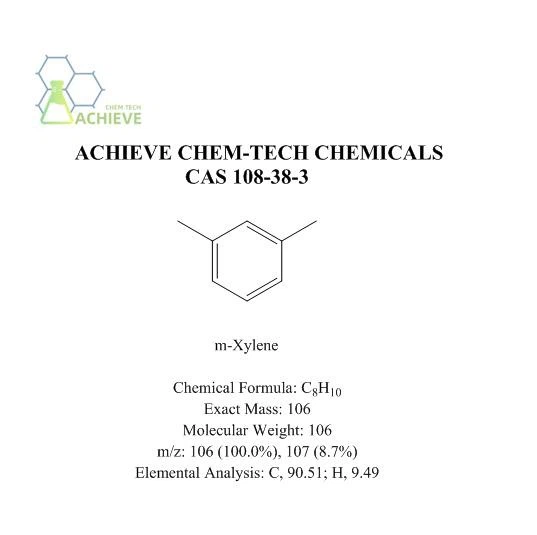
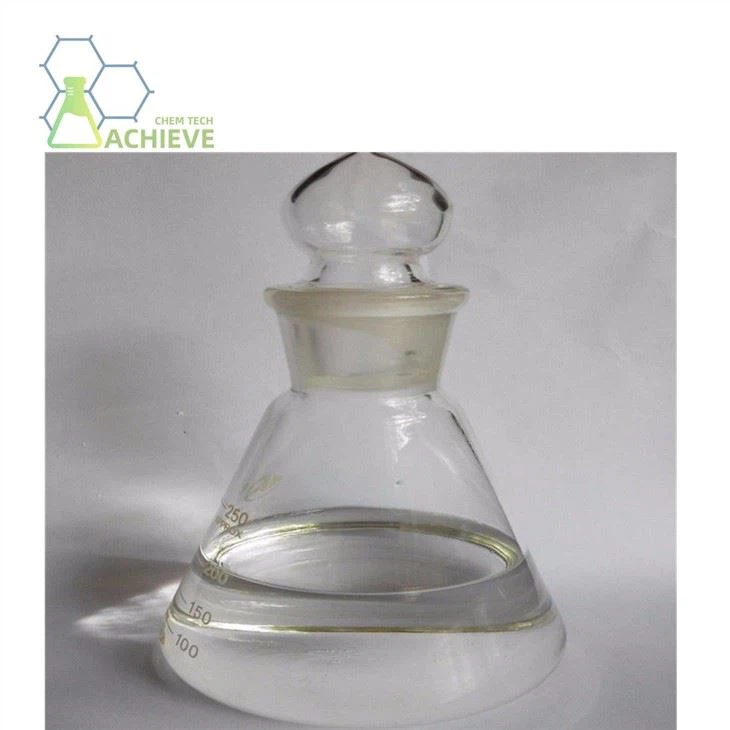
M-xylene liquid, also known as 1,3-xylene, is an organic compound with the chemical formula C8H10. It is a colorless transparent liquid with a toluene like odor. It is insoluble in water and miscible in most organic solvents such as ethanol, ether, chloroform, etc. It has three isomers o-xylene, m-xylene and p-xylene. The industrial product is a mixture of three isomers, of which O-10%, m-70% and P-20%. In coking industry, it is one of crude benzene refining products. During catalytic oxidation, phthalic anhydride, isophthalic acid and terephthalic acid are generated respectively. Xylene is also one of the important raw materials of organic chemical industry. It naturally exists in coal tar and some petroleum, and can be obtained by fractionation of light oil part of coal tar or catalytic reforming light gasoline.

|
Chemical Formula |
C8H10 |
|
Exact Mass |
106 |
|
Molecular Weight |
106 |
|
m/z |
106 (100.0%), 107 (8.7%) |
|
Elemental Analysis |
C, 90.51; H, 9.49 |
|
|
|


M-xylene liquid is an important organic chemical raw material with a wide range of applications.

Chemical industry field
(1) Production of isophthalic acid (IPA)
M-xylene can be oxidized to produce isophthalic acid (IPA). Phthalic acid has various important applications in the chemical industry:
Production of Unsaturated Polyester Resin: IPA is an important raw material for unsaturated polyester resin, which can be applied in the fields of construction, transportation, and marine engineering. It can improve the strength, toughness, fatigue resistance, and corrosion resistance of resin materials, making resin products have better performance.
As a surface coating: IPA can react with polyols to produce polyester resin, which is used for polyester and urethane surface coatings, and can also be used in small amounts as alkyd resin. Using IPA instead of low-cost phthalic acid can improve the hydrolytic stability of surface coatings, making them more durable and weather resistant. These products are typically used in high durability, high solid content, or powder coatings.


Production of modified PET resin: IPA is a monomer co polymerized with PTA for the production of modified PET resin. It can lower the melting point of the resin, slow down the crystallization rate, and thus expand the processing parameters of the resin; In addition, it can also improve the coloring properties of pigments. This IPA modified PET is widely used in the packaging industry.
Production of sulfonated isophthalic acid esters: IPA can also be used to produce sulfonated isophthalic acid esters, which are used to manufacture polyester fibers.
(2) Production of Phthalonitrile
M-xylene can be ammonia oxidized to produce m-benzonitrile, which is an important intermediate raw material for various chemical products
Fungicide Baijunqing: Phthalonitrile is an intermediate raw material for the highly efficient, broad-spectrum, low toxicity, and low residue fungicide Baijunqing. In agricultural production, Baijunqing can be used to prevent and control various crop diseases.
Production of other chemical products: Phthalonitrile is also an intermediate in the production of urea based resins and m-phenylenediamine, and can be used to produce epoxy resin curing agents.


(5) Production of Methyl Benzoic Acid
M-xylene can be oxidized by air to produce m-methylbenzoic acid, which can be used as an intermediate for the drug toluene diethylamine and also in the production of pesticides.
(4) Production of trimeric anhydride
There are two preparation processes for trimellitic anhydride, one using trimethylbenzene as raw material and the other using m-xylene as raw material. When using m-xylene as raw material, it first reacts with CO to synthesize m-dimethylbenzaldehyde, and then undergoes oxidation and dehydration to produce trimellitic anhydride.
Phthalic anhydride is an important raw material for the development of new materials, mainly used in the production of valuable fine chemicals such as heat-resistant plasticizers for polyvinyl chloride, polyimide engineering plastics, water-soluble alkyd resin coatings, and epoxy resin curing agents. Especially in the field of electromechanical industry, polyamide 2 imide synthesized from trimellitic anhydride and aromatic diamine has high heat resistance and good insulation performance. It is used for heat-resistant wire insulation paint and can be used for a long time at 220 ℃.


(3) Production of Phthaloyl Chloride
M-xylene can be oxidized first and then reacted with phosgene to produce isophthalic chloride. Poly (m-phenylenediamine) resin synthesized from m-phenylenediyl chloride and m-phenylenediamine can be used to make fibers, films, and coatings. This type of resin made aromatic polyamide fiber (i.e. aramid) has excellent heat resistance, dimensional stability, and electrical insulation properties, and is widely used in aerospace, military, electronics, and other fields.
(6) Production of other fine chemicals
Meta xylene can also be used to produce various other fine chemicals, such as phenolic products obtained through sulfonation and alkali dissolution, as raw materials for various pesticides, and in the production of azo dyes, plasticizers, rubber anti-aging agents, epoxy resin curing agents, etc.


Pesticide field
(1) Pesticide intermediates
M-xylene liquid is an intermediate raw material for various pesticides. It is an intermediate of fungicides such as metoclopramide, furosemide, benomyl, oxytetracycline, and chlorothalonil, as well as insecticides and acaricides such as amitriptyline, monomethylamine, and imidacloprid, and herbicides such as clotrimazole and isobutyricide.
These pesticides are used in agricultural production to prevent diseases, pests, and weeds, ensuring the growth and yield of crops.
(2) Production of pesticide raw materials
Phenolic products obtained by sulfonation, alkali dissolution and other reactions of meta xylene can be used as raw materials for various pesticides. These raw materials further participate in the synthesis reaction of pesticides, producing pesticide products with different mechanisms of action.


Coatings field
(1) Paint additives
Due to its excellent dispersibility and volatility, meta xylene is often used as a coating additive. Adding meta xylene to coatings can improve their coating and flowability, and enhance their quality and application performance. For example, in some high durability, high solid content, or powder coatings, meta xylene plays an important role as an additive.
(2) Production of special coatings
In the application of isophthalic acid as a surface coating, meta xylene is an important raw material source for its production. Coatings made from isophthalic acid produced from meta xylene have the advantages of high hydrolysis stability, good durability, and strong weather resistance, and are widely used in various fields that require high coating performance.


Resin field
(1) Resin material modification intermediate
M-xylene can be used as a modified intermediate for resin materials. By introducing meta xylene into the molecular structure of resin, the performance of the resin can be improved, such as increasing its strength, toughness, heat resistance, etc. For example, meta xylene plays an important role in the production of unsaturated polyester resin and modified PET resin.
(2) Production of specific resins
In addition to being used for the production of unsaturated polyester resins and modified PET resins, meta xylene can also participate in the production of other specific resins. These resins have a wide range of applications in electronics, electrical, mechanical and other fields. For example, aramid fibers made from poly (p-phenylenediamine) resin have excellent properties and can be used to manufacture high-performance composite materials.


Spice field
(1) Spice raw materials
Meta xylene can be used for the synthesis of fragrances and is a raw material in the fragrance industry. It can participate in the synthesis of various spices with special aromas, providing the spice industry with a rich selection of raw materials.
(2) Color film colorant raw materials
M-xylene can also be used as a raw material for oil soluble color couplers in color film. In the manufacturing process of color film, colorants play a key role, and meta xylene is used as its raw material to ensure the quality and color effect of color film.
Other fields
(1) Isomerization raw materials
M-xylene can be used as a raw material for isomerization to produce p-xylene and o-xylene. Paraxylene is the main raw material for synthesizing polyester. Polyester synthesized from xylene has the characteristics of high strength, light weight, good elasticity, and easy washing and quick drying, and is widely used in the textile industry. O-xylene can be used for the production of phthalic anhydride, which is a raw material for the manufacture of plasticizers, alkyd resins, unsaturated polyesters, etc.


It is applied in various fields such as plastics, paints, coatings, radar antenna covers, aircraft parts, car casings, small boats, transparent corrugated boards, sanitary ware, chemical equipment and pipelines.
(2) Components of solvents or blended gasoline
M-xylene liquid can be used as a solvent to dissolve and dilute in organic synthesis and chemical production. At the same time, it can also be used as a component of blended gasoline to improve its performance.

The preparation method of m-xylene is to separate petroleum xylene or coal tar xylene. The separation methods can be low-temperature crystallization, compounding, adsorption and sulfonation hydrolysis. In the past, m-xylene was produced by sulfonation hydrolysis in China, but now m-xylene has been separated by adsorption. The adsorption method uses molecular sieve as adsorbent, which can be used for gas-phase adsorption or liquid-phase adsorption. The process is described below.

Sulfonation hydrolysis method:
Distill the mixed xylene, cut the components at 130-140 ° C, add sulfuric acid for sulfonation, reaction temperature at 80-90 ° C, react for 3.5 hours, then separate the sulfurless xylene, and cut the components at 140-150 ° C through hydrolysis and distillation to obtain the finished product.
Toluene undergoes alkyl transfer reaction in an alkyl transfer reactor to produce xylene and benzene. The mixed dimethyl undergoes isomerization in an isomerization reactor to produce p-xylene.
After the light component is removed in the stabilizer, the reactants are mixed with xylene in the alkyl transfer section and enter the dec9 component tower. At the top of the tower, a mixed xylene containing high p-xylene is obtained, and the tower kettle is composed of components above C9.
The mixed xylene obtained from the top of the stabilizer enters the adsorption and separation section, and non molecular sieve solid adsorbent is used to adsorb xylene, resulting in the desorption of xylene product with a purity of 99.9%, and the by-product is M xylene.
This method will severely corrode the equipment and there are also three types of waste. M-xylene liquid can only be produced on a small scale and is therefore replaced by adsorption method.
Adsorption method:
Molecular sieves are used for liquid-phase adsorption or gas-phase adsorption.
K-ba-y type is used as an adsorbent, and toluene is used as a desorption agent for liquid-phase adsorbents.
Continuous adsorption and separation are carried out in a moving bed. The working temperature is 65-85 ° C, the ratio of adsorbent to raw material is not greater than 10, and the ratio of desorbent to raw material is greater than 5.
K-ba-y molecular sieve is also used as a gas-phase adsorbent. The adsorption temperature is 170~180 ° C, and the working pressure is atmospheric pressure. Adsorption separation is a new modern method for separating xylene.
FAQ
What is m-Xylene used for?
m-Xylene is an aromatic hydrocarbon primarily used as a solvent in various industrial applications, such as in the production of coatings, paints, rubber products, and adhesives. Additionally, m-xylene serves as a crucial precursor in the production of certain chemicals like phthalic anhydride and isophthalic acid.
Is m-Xylene the same as xylene?
There are three xylenes: m-xylene (CASR# 108-38-3), o-xylene (CASR# 95-47-6), p-xylene (CASR# 106-42-3), since their molecular formula is the same they are called isomers. Their chemical structures are slightly different.
How to make m-Xylene?
A process for producing m-xylene, which comprises isomerizing a hydrocarbon material containing o-xylene as a main ingredient in the presence of a catalyst composition selected from the group consisting of zeolite ZSM-4, zeolite omega and mixtures thereof at a temperature of about 100° to 200° C.
What is the structure of m-Xylene?
The m- stands for meta-, indicating that the two methyl groups in m-xylene occupy positions 1 and 3 on a benzene ring. It is in the positions of the two methyl groups, their arene substitution pattern, that it differs from the other isomers, o-xylene and p-xylene. All have the same chemical formula C6H4(CH3)2.
Hot Tags: m-xylene liqud cas 108-38-3, suppliers, manufacturers, factory, wholesale, buy, price, bulk, for sale, Potassium Formate Powder, Basic Chemicals, 1 3 Dibromopropane, Isoamyl Nitrite, Dichloromethane Solution, Sodium Cyanoborohydride Solution CAS 25895 60 7