




Shaanxi BLOOM Tech Co., Ltd. is one of the most experienced manufacturers and suppliers of mercuric sulfate cas 7783-35-9 in China. Welcome to wholesale bulk high quality mercuric sulfate cas 7783-35-9 for sale here from our factory. Good service and reasonable price are available.
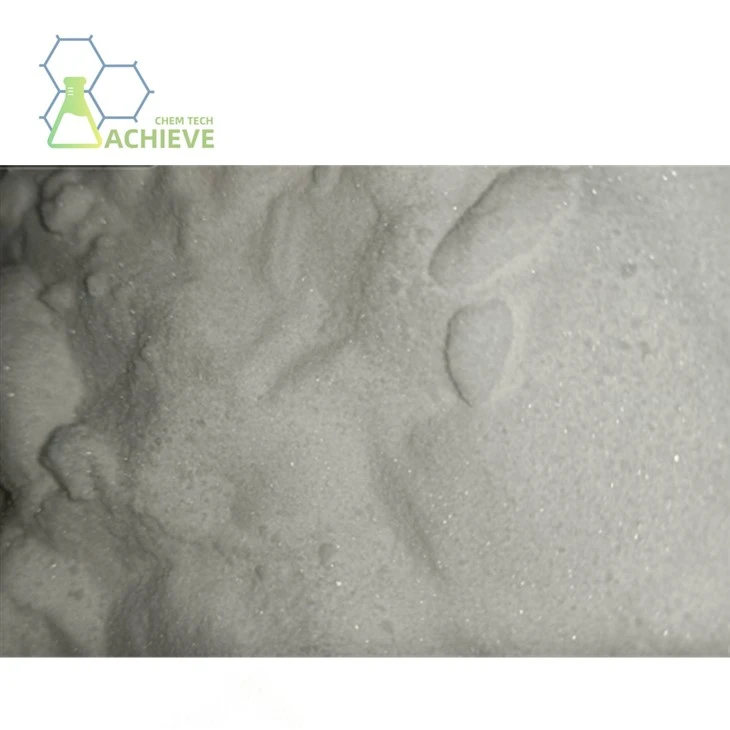
Mercuric sulfate is a highly toxic inorganic mercury compound, presenting as white crystals or powder in appearance. Historically, it was mainly used as a catalyst in industrial processes for the production of acetaldehyde and as a chemical reagent in laboratory analyses. However, its extremely high toxicity is its most significant and dangerous characteristic. Whether through inhalation, ingestion, or skin contact, mercury ions accumulate in the body, causing severe and irreversible damage to the kidneys and nervous system, and posing long-lasting harm to the environment. Given its significant risks and the advancements in modern technology, its application in industry has significantly decreased. Nowadays, the disposal of mercuric sulfate must be strictly managed as hazardous waste, and the operation must be carried out under comprehensive protection, emphasizing that it is now a harmful substance that should be strictly limited and replaced in the contemporary era.
|
Chemical Formula |
HgO4S |
|
Exact Mass |
298 |
|
Molecular Weight |
297 |
|
m/z |
298 (100.0%), 296 (77.4%), 295 (56.5%), 297 (44.1%), 294 (33.4%), 300 (23.0%), 300 (4.5%), 298 (3.5%), 297 (2.6%), 299 (2.0%), 296 (1.5%), 302 (1.0%) |
|
Elemental Analysis |
Hg, 67.62; O, 21.57; S, 10.81 |
|
|
|


Mercuric sulfate (chemical formula HgSO ₄), as an inorganic compound, is mainly used for the preparation of calomel, mercuric chloride, and battery packs, and can also be used as a catalyst for organic synthesis. In addition, it has a wide range of applications in metal extraction, battery electrolytes, universal reagents, pharmaceutical industry, and other fields.

1. Preparation of calomel and mercuric chloride
Preparation of calomel: calomel (Hg ₂ Cl ₂) is an important inorganic compound with wide applications in pharmaceuticals, pesticides, and other fields. Mercury sulfate can be used to prepare calomel by reacting with chloride. For example, mixing it with sodium chloride and reacting under appropriate conditions can produce calomel and sodium sulfate.
Preparation of mercuric chloride: Mercury chloride (HgO) is a red or orange red powder commonly used in the preparation of other mercury compounds or as a catalyst. Mercury can be prepared by heating decomposition or reacting with oxidants. For example, reacting meruric sulfate with oxygen under heating conditions can generate mercuric chloride and sulfur dioxide.
2. Battery pack
Plays an important role in battery packs. A battery is a device that convertschemical energy into electrical energy, and mercury sulfate can be used as an electrolyte or additive in batteries to improve their performance and stability. For example, in some lead-acid batteries, it can be used as an additive to improve the battery's charge and discharge performance and cycle life.


3. Organic synthesis catalysts
It is an effective organic synthesis catalyst that can catalyze various chemical reactions. Here are a few specific application examples:
Catalytic oxidation reaction: It can catalyze the oxidation reaction of aromatic compounds, such as the oxidation reaction of benzene. During the reaction process, as an electron acceptor, it promotes the oxidation of reactant molecules. For example, in the oxidation reaction of benzene, it can catalyze the formation of products such as phenol or benzoic acid.
Catalytic epoxidation reaction: It can also catalyze the epoxidation reaction of olefins, which is a very useful synthetic route. During the reaction process, as an oxidant or catalyst, it promotes the epoxidation reaction of carbon carbon double bonds in olefin molecules, generating epoxides. For example, in the epoxidation reaction of ethylene, mercurc sulfate can catalyze the formation of ethylene oxide.
Catalysis of other reactions: In addition to the above reactions, it can also catalyze other types of organic synthesis reactions, such as esterification reactions, condensation reactions, etc. These reactions have wide applications in fields such as medicine, pesticides, dyes, etc.


4. Metal extraction
It also has important applications in metal extraction processes. It can be used as an extractant or precipitant to help extract valuable metals from ores or waste residues. Here are a few specific application examples:
Extracting gold and silver from chalcopyrite: Chalcopyrite is a sulfide ore containing copper, iron, and small amounts of metals such as gold and silver. It can be used as an extractant to react with elements such as gold and silver in chalcopyrite, generating soluble metal sulfates. Then, through appropriate separation and purification steps, valuable metals such as gold and silver can be extracted.
Extracting metals from other ores: In addition to chalcopyrite, it can also be used to extract metals from other ores. For example, it can react with elements such as lead and zinc in lead-zinc ores to generate soluble metal sulfates; Alternatively, it can react with tin elements in cassiterite to form soluble stannate salts. Then, through appropriate separation and purification steps, these valuable metals can be extracted.


5. Battery electrolyte
It can also be used as a battery electrolyte to improve the performance and stability of the battery. In batteries, electrolyte is an important medium for transferring ions and maintaining the internal potential difference of the battery. As an electrolyte, it can provide the required ion concentration and conductivity to ensure the normal operation of the battery. In addition, it can also react with other components in the battery to generate beneficial products or improve the performance of the battery.
6. General reagents
It can also serve as a universal reagent and play an important role in fields such as chemical analysis and environmental monitoring. Here are a few specific application examples:
Chemical analysis: can serve as a titrant or indicator, playing an important role in chemical analysis. For example, when determining the concentration of certain metal ions or anions, mercuric sulfate can be used as a titrant for titration reactions; Alternatively, when measuring the content of certain substances, they can be used as indicators to observe reaction phenomena such as color changes or precipitation formation.


Environmental monitoring: It can also be used in the field of environmental monitoring. For example, when measuring the concentration of mercury ions in water, it can be used as a standard solution for comparative analysis; Alternatively, when measuring the concentration of pollutants in the atmosphere, it can be used as an absorbent or capture agent to collect pollutants and conduct subsequent analysis.
7. Pharmaceutical industry
It is also widely used in the pharmaceutical industry. It can be used as a raw material or catalyst for drug synthesis, participating in drug synthesis reactions; Or as an additive or stabilizer for drugs, to improve their properties or extend their shelf life. Here are a few specific application examples:
Drug synthesis: Mercury sulfate can be used as a raw material or catalyst for the synthesis of certain drugs. For example, in the synthesis of certain antibiotics, anti-tumor drugs, etc., mercurc sulfate can be used as a raw material or catalyst to participate in the reaction process.


Drug additives: They can also be used as additives or stabilizers for drugs. For example, in the preparation of certain oral preparations, an appropriate amount of the product can be added as a stabilizer or preservative; Alternatively, when preparing certain topical preparations, an appropriate amount of the product can be added as an astringent or antibacterial agent.
8. Other applications
In addition to the above-mentioned uses, mercury sulfate has other applications. For example:
Catalyst for acetylene to acetaldehyde: In the reaction of acetylene to acetaldehyde, it can serve as a catalyst to promote the progress of the reaction. By adding an appropriate amount of this product, the conversion rate of acetylene and the selectivity of acetaldehyde can be improved, thereby optimizing the reaction process and product quality.


Catalyst for ethylene hydration to acetaldehyde: It can also be used as a catalyst in the reaction of ethylene hydration to acetaldehyde. It can promote the reaction between ethylene and water molecules, producing products such as acetaldehyde and ethanol. By optimizing reaction conditions and catalyst dosage, the conversion rate and selectivity of the reaction can be improved.
Nitrogen fixing catalyst: It can also be used as a catalyst in the nitrogen fixing process. It can promote the release and conversion of nitrogen elements in the sample, thereby facilitating subsequent determination and analysis. By adding an appropriate amount of mercury sulfate, the accuracy and sensitivity of the nitrogen determination process can be improved.
Mercuric sulfate, as an important inorganic compound, has a wide range of application value in the preparation of calomel, mercuric chloride, and battery packs. Meanwhile, it can also serve as a catalyst for organic synthesis, metal extractant, battery electrolyte, universal reagent, and raw material or additive for the pharmaceutical industry. However, when using it, attention should also be paid to its toxicity and safety issues, and corresponding protective measures and waste disposal measures should be taken.
Adverse reactions
Mercuric sulfate is a highly toxic chemical, and its adverse reactions mainly manifest in its harm to human health and the environment. The following is a detailed introduction:
Adverse reactions to human health
Acute poisoning
Invasion route: It can enter the human body through inhalation, ingestion, and transdermal absorption.
Symptoms of poisoning: Acute poisoning usually has a sudden onset, and patients may experience symptoms such as headache, dizziness, low-grade fever, and may also be accompanied by oral inflammation, rash, respiratory irritation, and in severe cases, pneumonia, kidney damage, etc. In addition, the substance causes significant damage to mucosal tissue, upper respiratory tract, eyes, and skin, and may trigger symptoms such as cough, shortness of breath, headache, and nausea. If accidentally swallowed, it may lead to fatal consequences; Skin contact can also be fatal; Inhaling its dust or smoke also carries a fatal risk.
Chronic poisoning
Typical manifestations: Long term exposure to mercury sulfate may cause chronic mercury poisoning, with main symptoms including neurasthenia, tremors, stomatitis, etc. Mercury lines may also appear on the gums.
Hazards to special populations
Effects on pregnant women and children: Mercury sulfate can be excreted from breast milk and can cause toxic side effects in infants, so it is contraindicated for breastfeeding women. Children under 14 years old should generally not use drugs containing mercury sulfate. If necessary, close observation should be conducted to prevent serious adverse reactions from occurring.
Mercuric sulfate is a compound of dual significance: its unique chemical properties have enabled critical industrial and scientific applications, yet its toxicity and environmental persistence demand cautious use. As research continues to unravel the complexities of mercury cycling and health impacts, the transition to greener alternatives and stricter regulatory controls will be essential to safeguarding human health and ecosystems. By balancing innovation with responsibility, the scientific community can mitigate the risks associated with mercuric sulfate while advancing sustainable chemical practices.
Hot Tags: mercuric sulfate cas 7783-35-9, suppliers, manufacturers, factory, wholesale, buy, price, bulk, for sale, 2 ETHYLHEXYL STEARATE, Mesitylene 98 , Hydroxylamine hydrochloride powder, DBDMH, 4 4 Methylenedianiline, Sodium Cyanoborohydride Solution CAS 25895 60 7