


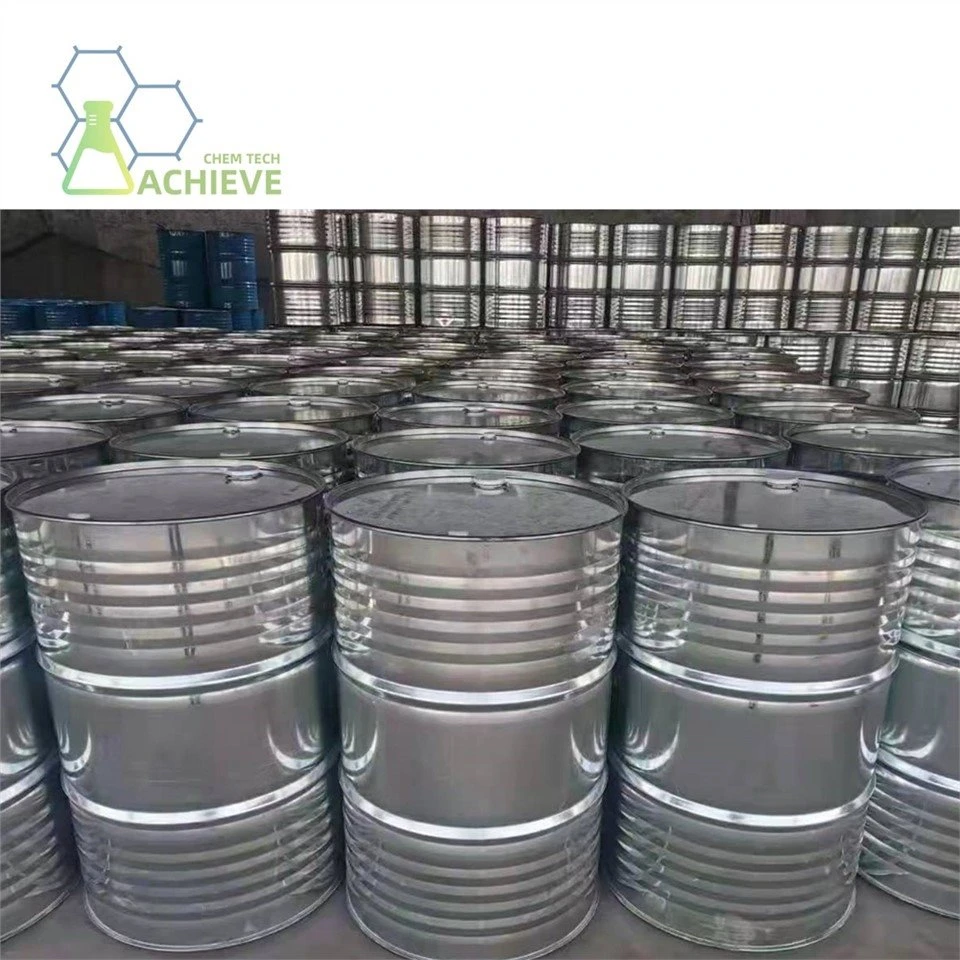


Shaanxi BLOOM Tech Co., Ltd. is one of the most experienced manufacturers and suppliers of triethylene glycol skincare cas 112-27-6 in China. Welcome to wholesale bulk high quality triethylene glycol skincare cas 112-27-6 for sale here from our factory. Good service and reasonable price are available.
Triethylene glycol skincare, also known as triglycol or simply TEG, is a colorless, slightly sweet-smelling, and viscous liquid with unique physical and chemical properties. CAS 112-27-6, 分子式C6H14O4. This compound exhibits a melting point of approximately -7°C and a boiling point of 289.4°C at standard pressure, with a relatively high flash point of 330°C, indicating its stability under normal conditions.
TEG is highly soluble in water, ethanol, and various organic solvents, making it versatile in various industrial applications. Its hygroscopic nature and ability to mix well with polar solvents contribute to its widespread use. Key applications include its role as an excellent dehydrating agent for natural gas, oilfield associated gas, and carbon dioxide. Additionally, it serves as a solvent for nitrocellulose, rubber, resins, oils, paints, and pesticides.
|
|
|
|


|
Chemical Formula |
C6H14O4 |
|
Exact Mass |
150.09 |
|
Molecular Weight |
150.17 |
|
m/z |
150.09 (100.0%), 151.09 (6.5%) |
|
Elemental Analysis |
C, 47.99; H, 9.40; O, 42.61 |
In the chemical industry, TEG finds use as an air disinfectant, plasticizer for PVC, polyvinyl acetate resins, glass fibers, and asbestos boards. It also acts as a tobacco humectant, fiber lubricant, and natural gas drier. Furthermore, its involvement in organic synthesis, particularly in the production of high-boiling and low-temperature-resistant brake fluids, underscores its importance in the manufacturing sector.
Production of TEG primarily involves the hydration of ethylene oxide, resulting in ethylene glycol as the primary product, with TEG being a by-product, typically accounting for 0.5% to 1% of the total output. Despite its benefits, TEG is classified as a flammable liquid and should be stored and handled with caution, avoiding contact with strong oxidants.
Triethylene glycol skincare (TEG, chemical formula C ₆ H ₁₄ O ₄) is a colorless, transparent, sweet viscous liquid with hygroscopicity, good thermal stability, and chemical stability. It is soluble in water and various organic solvents. The three ethylene glycol units in its molecular structure are connected by ether bonds, forming a unique chain like structure that endows it with excellent solubility, low volatility, and high boiling point (285 ℃). These characteristics make it widely applicable in basic chemical engineering, industrial auxiliary, special fields, and emerging technologies.
Basic chemical applications: solvents, plasticizers, and surfactants

1. High performance solvents: Aromatic hydrocarbon extraction and resin processing
The core advantage of being a solvent lies in its high selectivity and solubility, especially suitable for aromatic hydrocarbon extraction processes. In petroleum refining, aromatic hydrocarbons such as benzene, toluene, and xylene (BTX) in the reforming liquid are important chemical raw materials, but they need to be efficiently separated from the mixed hydrocarbons. This goal is achieved through liquid-liquid extraction: its polar groups form hydrogen bonds with aromatic hydrocarbons, while non aromatic hydrocarbons (such as alkanes) are excluded due to polarity differences. The typical parameters of this process are as follows:
Operating conditions: temperature of 40-60 ℃, pressure of 1.0-1.5 MPa, solvent ratio (TEG to raw material mass ratio) of 3:1-5:1.
Separation efficiency: The recovery rate of aromatic hydrocarbons can reach over 90%, the purity is close to 100%, and the solvent loss is less than 0.5 kg/ton of raw material.
Economy: Compared to traditional glycol solvents such as diethylene glycol, its cycle life is extended by 30% and equipment corrosion rate is reduced by 50%.
In addition, it can also dissolve polymer materials such as rubber, nitrocellulose, and resin. For example, in the processing of polyvinyl chloride (PVC), adding 5% -10% of this substance can significantly reduce melt viscosity and improve extrusion molding performance; In polyvinyl acetate (PVAc) lotion, as a cosolvent, it can improve the stability of lotion and prevent stratification.


2. Plasticizers and Flexibility Agents: Key Additives in the Plastic Industry
Through esterification reaction, triethylene glycol diacetate (TEGDA) is generated, becoming an important plasticizer in the plastic industry. The molecular structure of TEGDA is similar in polarity to resin and has excellent compatibility. Its mechanism of action includes:
Lowering the glass transition temperature (Tg): TEGDA molecules are inserted between resin chains, weakening intermolecular forces and allowing the material to maintain flexibility at low temperatures.
Improving processing performance: Adding TEGDA to PVC can lower the melt temperature by 10-15 ℃, reduce energy consumption, and extend equipment life.
Improve physical properties: Increase the elongation at break of PVC film by 200% and the impact strength by 50%.
TEGDA is widely used in safety films, sealing materials, industrial coatings, and other fields. For example, after adding TEGDA to the windshield safety film of a car, it can withstand extreme temperature changes from -40 ℃ to 80 ℃ without cracking; In food packaging materials, TEGDA's low mobility (<0.1 mg/kg) meets FDA standards to ensure food safety.


3. Surfactants and Wetting Agents: Ink, Coatings, and Textile Auxiliaries
Its alcohol ether structure endows it with the ability to reduce liquid surface tension, and its critical micelle concentration (CMC) is 0.1 mol/L, which can significantly improve wettability. Specific applications include:
Printing ink: acts as a moisture absorbent to prevent ink from drying and clumping, while also serving as a softener to enhance the feel of printed materials. For example, adding 3% to newspaper ink can increase printing speed by 20%.
Textile printing and dyeing: As a wetting agent, triethylene glycol skincare helps dyes penetrate fibers evenly and improves color fastness. In reactive dye dyeing, the dyeing time can be shortened by 30% and the number of water washes can be reduced.
Coating industry: As a leveling agent to eliminate pinholes on the surface of coatings, adding 0.5% -1% triethylene glycol to water-based coatings can increase glossiness by 15%.

Industrial auxiliary functions: dehydration, antifreeze, and gas drying

1. Natural gas dehydration: the core process of solvent absorption method
Excessive water content in natural gas can lead to the formation of hydrates, blockage of pipelines, and corrosion of equipment. It is the most commonly used solvent for natural gas dehydration, with a dehydration efficiency far exceeding that of diethylene glycol and ethylene glycol. The typical process flow is as follows:
Absorption tower: Natural gas (with a water content of 0.5% -2%) enters from the bottom and comes into countercurrent contact with triethylene glycol sprayed from the top. The water is absorbed to form a rich liquid (with a water content of 5% -10%).
Regeneration tower: After heating the rich solution to 200 ℃, the water evaporates, and the lean solution (with water content<0.1%) is recycled.
Cooling and filtration: The regenerated triethylene glycol is cooled and filtered before returning to the absorption tower.
The technical advantages of this process include:
Accurate dew point control: It can reduce the water dew point of natural gas to below -60 ℃, meeting the strict requirements of long-distance pipelines for moisture (such as the West East Gas Pipeline Project requiring a water dew point of ≤ -10 ℃).
Low energy consumption: The regeneration process uses a fire tube to directly heat the reboiler, with a thermal efficiency of 85%, and the operating cost is reduced by 20% -30% compared to the molecular sieve adsorption method.
Strong stability: chemically stable, not easily decomposed, can be reused for a long time (usually>5 years), and has low equipment maintenance costs.


2. Antifreeze and coolant: automotive and industrial applications
The freezing point is -7.2 ℃ and the boiling point is 285 ℃, making it an ideal antifreeze for automotive cooling systems and diesel additives. Its advantages include:
Low corrosiveness: The corrosion rate of metals such as aluminum alloy and copper is reduced by 60% compared to ethylene glycol, extending the life of the engine.
High boiling point: can withstand high temperature environment of the engine and prevent the phenomenon of "boiling".
Environmental friendliness: Biodegradation rate>90%, in compliance with EU REACH regulations.
Adding triethylene glycol to diesel can lower the cold filter point (CFPP) and prevent the precipitation of wax crystals in diesel at low temperatures. For example, adding 0.5% triethylene glycol to 0 # diesel can reduce CFPP from 4 ℃ to -10 ℃, ensuring that the engine starts normally in an environment of -20 ℃.


3. Industrial gas drying: oilfield associated gas and synthetic ammonia production
In addition to natural gas, it can also be used for drying industrial gases such as associated gas, carbon dioxide, and hydrogen in oil fields. For example:
Synthetic ammonia production: The water content in the feed gas should be less than 0.1 ppm, otherwise it will poison the iron-based catalyst. Dehydration can extend the lifespan of catalysts by 3-5 times.
Hydrogen purification: In proton exchange membrane fuel cells (PEMFCs), dehydration can lower the dew point of hydrogen to -70 ℃, meeting the strict requirements of the cell for moisture.
Special field applications: energy, environmental protection, and healthcare
1. Rocket fuel and diesel additives: high-performance energy materials
Its high boiling point and good thermal stability make it a stabilizer for rocket fuel. For example, in liquid oxygen/kerosene engines, adding 0.1% -0.5% of this substance can suppress the decomposition reaction of fuel at high temperatures and improve combustion efficiency by 5% -10%. In addition, as a diesel additive, it can improve combustion efficiency and reduce black smoke emissions (reducing particulate matter by 30% -40%), meeting the EU Euro VI emission standards.


2. Air conditioning system disinfectant: inhibits Legionella and mold
Triethylene glycol skincare hygroscopicity and low toxicity make it an active ingredient in air conditioning system cleaning agents. Its mechanism of action includes:
Destruction of cell membrane: Triethylene glycol molecules penetrate bacterial cell membranes, causing leakage of cellular contents.
Inhibition of spore germination: The inhibition rate of fungal spore germination is over 95%.
Long term effectiveness: A protective film is formed on the surface of the evaporator, with a sustained antibacterial time of more than 30 days.
For example, after using its disinfectant in the central air conditioning system of a hotel, the positive rate of Legionella testing decreased from 12% to 0.5%, significantly improving indoor air quality.


In precision machining (such as aerospace parts manufacturing), as a lubricant, it can reduce the friction coefficient between the tool and the workpiece (μ<0.05) and extend the tool life by 3-5 times. Its advantages include:
Water solubility: facilitates subsequent cleaning and avoids residue affecting part accuracy.
Extreme pressure: forms a lubricating film under high pressure to prevent metal bonding.
Environmental friendliness: Waste liquid can be biodegraded, reducing treatment costs.
Emerging Application Fields: Technological Expansion and Innovation
1. Organic synthesis raw materials: photosensitive resin and pharmaceutical intermediates
It is a key monomer for synthesizing various polymer materials. For example:
Photosensitive resin: copolymerized with acrylic ester to generate photosensitive resin for 3D printing (resolution up to 20 μ m).
Crosslinking agent: react with isocyanate to prepare polyurethane foam, which is used for building insulation materials (thermal conductivity<0.025 W/m · K).
Drug intermediate: Triglyceride acid is generated through oxidation reaction and used for the synthesis of antibiotics (such as cephalosporins) and anticancer drugs.


2. Environmentally friendly alternatives: replacing diethylene glycol and volatile solvents
With the tightening of environmental regulations, traditional solvents such as diethylene glycol are gradually being replaced. For example:
Electronic cleaning: In semiconductor manufacturing, replacing Freon cleaning agents reduces VOC emissions by 90%.
Ink solvent: Replace propylene glycol in water-based ink to reduce odor and improve drying speed.
Paint thinner: Replace toluene and xylene to reduce occupational exposure risks.
3. Preparation of nanomaterials: synthesis of superparamagnetic nanoparticles
As a solvent and stabilizer, it can be used for synthesizing superparamagnetic nanoparticles (such as Fe ∝ O ₄). Its functions include:
Control particle size: By adjusting the reaction temperature (180-220 ℃) and the concentration of triethylene glycol, uniformly sized nanoparticles (5-20 nm) can be prepared.


Surface modification: Triethylene glycol skincare molecules are adsorbed on the surface of particles to prevent aggregation and enhance biocompatibility.
Application extension: Used as a contrast agent for magnetic resonance imaging (MRI) (with a 3-fold increase in signal-to-noise ratio) and targeted therapy for tumors (drug loading rate>20%).
FAQ
Is triethylene glycol good for the skin?
Our triethylene glycol is an excellent moisturizer and hydrator that will give your skin a soft and smooth appearance. It also helps to nourish and protect the skin, giving it a dewy look. It works well with every skin type and improves your skin's natural moisture retention capabilities.
What is the use of triethylene glycol?
It is used as a dehydrating agent for natural gas processing; as a lubricating and finishing agent for textiles; a constituent in brake fluids, lubricants, antifreeze formulations, wallpaper strippers and in artificial fog solutions; a solvent for printing inks and textile dyes; and is used as an intermediate in the ...
Is triethylene glycol safe?
TEG has been shown to be safe for humans to breathe at low concentrations , and has also been shown to kill viruses on surfaces [5] or in the air at those same low concentrations.
Is triethylene glycol safe for eyes?
Acute eye contact with the liquid causes mild local transient irritation (conjunctival hyperemia and slight chemosis) but does not induce corneal injury. Animal maximization and human volunteer repeated insult patch tests studies have shown that TEG does not cause skin sensitization.
Hot Tags: triethylene glycol skincare cas 112-27-6, suppliers, manufacturers, factory, wholesale, buy, price, bulk, for sale, methyltetrahydrofuran, 2 Methoxy 5 Nitrophenol Sodium Salt, Tetrachloroethylene CAS 127 18 4