




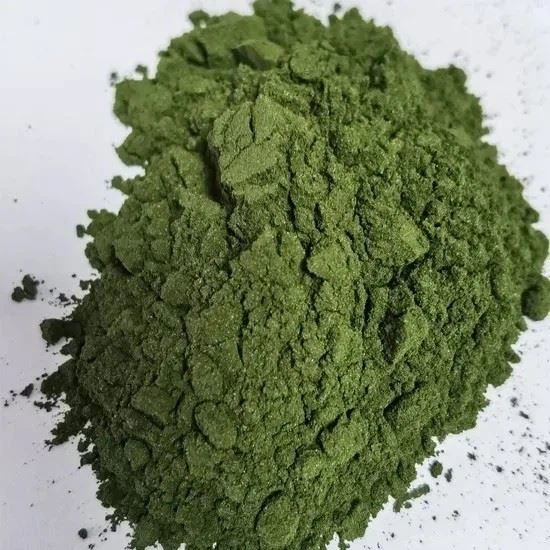
Shaanxi BLOOM Tech Co., Ltd. is one of the most experienced manufacturers and suppliers of thymol blue cas 76-61-9 in China. Welcome to wholesale bulk high quality thymol blue cas 76-61-9 for sale here from our factory. Good service and reasonable price are available.
Thymol blue is a versatile pH indicator dye belonging to the family of phenolphthalein derivatives, widely employed in various analytical and industrial applications. Its chemical formula is C27H30O4S, and it exists as a mixture of different colored forms depending on the pH of its solution.
In acidic environments, it appears as a vibrant red color, indicating a pH range below 1.2. As the pH level increases, it undergoes a color transition. Between pH 1.2 and 2.8, it transforms into a purple hue, providing a clear visual cue for slight alkalinity. Further increases in pH, within the range of 2.8 to 4.0, shift the color to blue, signifying a moderately alkaline solution. Above pH 4.0, it remains stable in its blue form, making it an excellent indicator for monitoring pH changes within these specific ranges.

|
|
|


|
Chemical Formula |
C27H30O5S |
|
Exact Mass |
466.18 |
|
Molecular Weight |
466.59 |
|
m/z |
466.18 (100.0%), 467.18 (29.2%), 468.18 (4.5%), 468.19 (2.7%), 468.19 (1.4%), 469.18 (1.3%), 468.19 (1.0%) |
|
Elemental Analysis |
C, 69.50; H, 6.48; O, 17.14; S, 6.87 |

It is a classic sulfophthalein pH indicator. With its unique dual color color changing properties, affinity for proteins and nucleic acids, and stable staining performance in acidic environments, it has already broken through the application boundaries of conventional acid-base detection and become a multi-purpose staining reagent in the fields of histology and hematology that combines basic staining, special structure recognition, and rapid pathological screening functions.

The rapid overall staining application of routine histological samples
In routine histological testing scenarios, the most basic and widespread use is as a rapid whole tissue staining agent, adapted to the rapid imaging requirements of intraoperative frozen pathological diagnosis. The traditional HE staining process requires more than ten steps, including fixation, dehydration, transparency, wax immersion, embedding, and staining. The complete process takes more than an hour and cannot meet the requirement of providing diagnostic results within 30 minutes of intraoperative pathology. In contrast, the rapid staining system only requires immersing frozen sections in a 0.1% concentration of thymol blue acetic acid solution for 30-60 seconds.
After a simple rinsing step, they can be directly observed under a microscope. The cell nucleus will be stained with a clear deep blue color, while the cytoplasm and stroma will present a bright light blue color. The overall staining contrast fully meets the pathologist's interpretation needs for cell morphology, nuclear cytoplasmic ratio, and tissue structure. Clinical data from pathology departments of multiple top tier hospitals in China shows that using it for intraoperative frozen section rapid staining can compress the overall imaging time to less than 15 minutes, and the diagnostic accuracy is consistent with traditional HE staining, reaching over 97%.


It is particularly suitable for rapid benign and malignant judgment of superficial tumors such as breast and thyroid during surgery, greatly reducing the waiting time for patients and lowering the risk of secondary surgery. The advantages are further highlighted in grassroots medical institutions and field pathological screening scenarios. It does not require a complex fully automatic staining machine, only simple staining solution and optical microscope need to be configured to complete the operation. The stained slices can be stored for a long time in a natural environment without fading, fully adapting to the limited resources of grassroots laboratory conditions. In the large-scale population screening of gastrointestinal mucosal biopsy.
Rapid staining of small mucosal biopsy tissues obtained under gastroscopy can complete the entire process from tissue fixation to staining observation within 10 minutes, quickly identifying atypical hyperplasia and early cancerous lesions of mucosal epithelium, greatly improving the screening efficiency of early gastrointestinal cancer. Unlike the common problems of nuclear over staining and blurred cytoplasmic background in HE staining, the stained tissue slices show clear and sharp staining boundaries of the nucleus, and the subtle structure of the nucleolus can be clearly presented. Pathologists can easily identify the subtle morphological features of early cancer such as abnormal size of the nucleus and thickening of the nuclear membrane, providing reliable basis for the diagnosis of early lesions.


Targeted recognition of special tissue components and pathological structures
It with its high affinity for acidic proteins and mucopolysaccharides, has multiple irreplaceable exclusive uses in the recognition of special histological structures. In the staining scene of cartilage tissue, the cartilage matrix is rich in acidic mucopolysaccharides. In a weakly acidic staining environment, it can specifically bind with these mucopolysaccharides to dye the cartilage matrix a uniform deep blue color, while the cytoplasm of chondrocytes appears light blue. The outline of cartilage pits is clearly outlined, and the staining effect is even better than traditional Alixin blue staining.
In the pathological study of osteoarthritis, its staining can clearly observe the degree of degradation of cartilage matrix, accurately identify the subtle lesions of cartilage surface fibrosis and loss of mucopolysaccharides in the early stage of osteoarthritis, and provide intuitive morphological basis for the pathological grading of osteoarthritis. At the same time, in the staining of decalcified sections of bone tissue, it can tolerate the acidic environment of residual decalcifying solution well, without the problem of nuclear staining loss due to acidic residue like hematoxylin. The stained bone trabeculae and bone cells have clear morphology, making it a very practical and fast staining reagent for bone tissue pathological diagnosis.


In the context of myelin recognition in neural tissue, the improved staining system can perform specific staining on the myelin structure of peripheral nerves. After fixing nerve tissue slices with osmium acid and using it for counterstaining, the myelin sheath structure will be stained with varying shades of blue black, and the running morphology of nerve fibers will be fully presented. The morphological changes of myelin sheath loss, disintegration, and regeneration after nerve injury can be clearly observed, which has been widely used in the pathological diagnosis of peripheral neuropathy and experimental research on nerve regeneration. In the observation scenario of renal pathology basement membrane.
The acidic staining characteristic can make the glomerular basement membrane appear clear dark blue, without relying on the expensive periodic acid Schiff (PAS) staining process, which can quickly identify small lesions such as thickening and spike formation of the glomerular basement membrane, providing a quick reference for the preliminary classification and diagnosis of glomerulonephritis. In the identification of granulomatous lesions, thymol blue can specifically stain the acidic mucin and pathogen related components in the lesions, so that the caseous necrosis area in the tuberculous granuloma presents a characteristic dark blue. The morphology of Langhans giant cells is clear and identifiable, greatly improving the rapid screening efficiency of tuberculosis pathology.


Expanded application of pathological special samples and scientific research scenarios
In the rapid screening of exfoliated cells in cytology, it is an excellent staining reagent for sputum, pleural and peritoneal fluid exfoliated cells. After staining sputum smears with product, the nuclear morphology of bronchial epithelial cells is clear, and the characteristics of large and deeply stained nuclei and imbalanced nuclear cytoplasmic ratio of cancer cells are fully highlighted, which can quickly screen for lung cancer exfoliated cells in sputum. In the pathological detection of pleural and peritoneal fluid, staining can clearly distinguish mesothelial cells from metastatic cancer cells.
The nuclei of cancer cells are stained dark blue, and the thickening of the nuclear membrane is obvious, greatly improving the detection efficiency of metastatic cancer in pleural and peritoneal fluid. Compared to traditional Pap staining, the staining process is simpler and the staining time is shorter, making it very suitable for large-scale screening of exfoliated cell carcinoma. In the special staining combination application scenario of organizational chemistry, it can be used as a counterstain in combination with various special staining systems. In immunohistochemical staining, it is used instead of hematoxylin for cell nucleus counterstaining, which has fast staining speed, high color contrast, and does not easily fade after hematoxylin staining.


It can form a sharp contrast with the brown yellow positive signal of DAB staining, making the positive results of immunohistochemical sections more clear. In TUNEL staining of apoptotic cells, the counterstaining effect on the nucleus is uniform, the background is clean, and it can accurately distinguish apoptotic positive brownish yellow nuclei from normal blue nuclei, greatly improving the accuracy of apoptotic cell counting. In the pathological research of plant tissues, thymol blue can stain the cell wall and nucleus of plants, clearly observe the tissue morphological changes of plant leaves after pathogen infection, and has been widely used in the scientific research of plant pathology.
FAQ
What is thymol blue used for?
Thymol blue is defined as one of the sulfonephthaleins, a class of pH indicators synthesized to determine pH levels, which has been included in the "Clark and Lubs series" of indicators that cover a pH range from approximately 1 to 10.
Why does thymol blue change color?
Structure of thymol blue chemical: increased pH (alkahlinity) shifts this reaction further towards the right. As a result, its visible color also changes: Color of thymol blue solution at different acid–base conditions: left: acidic, middle: neutral, right: alkaline.
When to use thymol blue?
Thymol Blue is a sulfonephthalein dye commonly used as a pH indicator. Its unique feature is its dual pH range, allowing it to display two distinct color changes depending on the pH of the solution. Appearance: Dark purple or reddish-brown crystalline powder.
Is thymol blue organic?
Thymol Blue and Bromothymol Blue are both acid-base indicators, which are weak organic acids. In a solution, the molecular structure of the indicators changes and displays different colors as the acidity or alkalinity of the solution changes.
Hot Tags: thymol blue cas 76-61-9, suppliers, manufacturers, factory, wholesale, buy, price, bulk, for sale, Diisopropylammonium, p Dimethylaminobenzaldehyde, Mercury Reagent, 2-Iodoxybenzoic Acid CAS 61717-82-6, 4-(5-Chloro-2-pyridylazo)-1,3-phenylenediamine, dithizone test