




Shaanxi BLOOM Tech Co., Ltd. is one of the most experienced manufacturers and suppliers of diphenylphosphine oxide cas 4559-70-0 in China. Welcome to wholesale bulk high quality diphenylphosphine oxide cas 4559-70-0 for sale here from our factory. Good service and reasonable price are available.
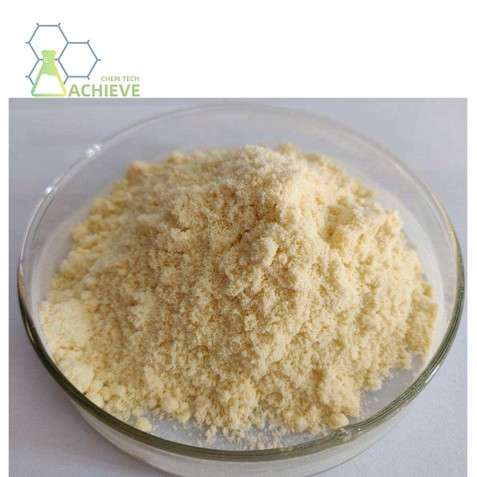
Diphenylphosphine oxide, molecular formula C12H11OP, CAS 4559-70-0, yellow to light orange powder, slightly soluble in water, strong hygroscopicity, is a commonly used chemical reagent in laboratories. It is an important organic synthesis intermediate widely used in the synthesis of various pesticides and chiral phosphine ligands, and can replace alkali metal cyanides as coupling agents to synthesize heterocyclic compounds under mild conditions, such as the herbicide paraquat. Under metal catalysis, diphenylphosphin oxide can be added to alkynes to form highly stereoselective olefin compounds. Under microwave conditions, diphenylphosphin oxide can react with olefins without any solvents or catalysts. Ph2P (O) H reacts with difluorochloromethane to form difluoromethyl diphenyl phosphine oxide, which further reacts with aldehydes or ketones to form 1,1-difluoroalkenes.

|
Chemical Formula |
C12H11OP |
|
Exact Mass |
202 |
|
Molecular Weight |
202 |
|
m/z |
202 (100.0%), 203 (13.0%) |
|
Elemental Analysis |
C, 71.28; H, 5.48; O, 7.91; P, 15.32 |
|
|
|

Chemical Property
Reactivity:
The phosphorus oxygen bond in diphenylphosphin oxide has high reactivity and can participate in various organic synthesis responses, such as coupling responses, addition responses, etc.
Stability:
Stable under inert atmosphere and room temperature, but moisture resistance should be taken into account as it is sensitive to moisture.
Toxicity:
Belongs to low toxicity substances, but still needs to be handled according to chemical safety operating procedures.

Diphenylphosphine oxide (DPPO, CAS number 4559-70-0), as an important organic synthesis intermediate, plays an indispensable role in the chemical industry. Its unique chemical structure and reactivity make it widely applicable in various fields such as pesticide synthesis, chiral ligand development, Wittig Horner response reaget preparation, industrial catalysts, etc.
DPPO plays an important role in pesticide synthesis, especially as a key intermediate in herbicide synthesis.
2.1 Synthesis of herbicides
Synthesis of Paraquat: DPPO can replace alkali metal cyanide under mild conditions as a coupling agent for heterocyclic compound synthesis, used for the synthesis of herbicide paraquat. Paraquat is a non selective contact herbicide widely used for weed control in farmland.
Other herbicides: DPPO can also be used to synthesize other types of herbicides. By adjusting response conditions and raw material ratios, compounds with different herbicidal activities can be prepared.
2.2 Pesticide synergists
Enhancing drug efficacy: DPPO and its derivatives can be compounded with pesticide active ingredients to improve the permeability and adhesion of pesticides, thereby enhancing drug efficacy.
Reduce dosage: By increasing efficiency, the use of pesticides can be reduced, reducing environmental pollution.

Application in the development of chiral ligands

Chiral ligands play an important role in asymmetric synthesis, and DPPO is an important raw material for synthesizing chiral phosphine ligands.
3.1 Synthesis of Chiral Phosphine Ligands
Coupling response: DPPO (Ph2(O)H) can undergo coupling response with trifluoromethanesulfonic acid aryl ester to generate phosphine oxide intermediate, which is then reduced to obtain diphenylarylphosphine, a commonly used chiral ligand.
Chiral catalysis: Chiral phosphine ligands exhibit excellent stereoselectivity in asymmetric catalytic responses and can be used to synthesize compounds with specific optical activity.
3.2 Downstream Product Development
Complex molecular synthesis: Using DPPO as raw material, a series of complex chiral molecules can be synthesized, such as 1,2-bis (biphenylphosphomethyl) - benzene, 2-diphenylphosphine biphenyl, etc. These compounds have potential application value in fields such as medicine and materials science.
Functional materials: Chiral phosphine ligands can also be used to prepare chiral materials with special functions, such as chiral liquid crystals, chiral catalyst carriers, etc.
In addition to the main application areas mentioned above, DPPO has also demonstrated potential applicatio value in multiple other fields.
6.1 Chemical reagents
Common laboratory reagnts: Diphenylphosphine oxide is a commonly used organic synthesis reagnt in the laboratory, which can be used for researh and development of various organic synthesis responses.
Analytical reagnts: In analytical chemistry, DPPO can be used as a standard substance or reagnt for qualitative or quantitative analysis.
6.2 Pharmaceutical intermediates
Drug synthesis: DPPO and its derivatives can be used as intermediates in drug synthesis and participate in the preparation process of various drugs.


Drug development: In drug development, DPPO can be used to synthesize compounds with specific biological activities, providing candidate molecules for new drug development.
6.3 Materials Science
Preparation of functional materials: DPPO and its derivatives can be used to prepare materials with special functions, such as optoelectronic materials, magnetic materials, etc.
Nanomaterials: In the field of nanomaterials, DPPO can be used as a surface modifier or stabilizer to improve the dispersibility and stability of nanomaterials.
DPPO, as an important organic synthesis intermediate, has shown extensive applicatin value in various fields such as pesticide synthesis, chiral ligand development, Wittig Horner response reagnt preparation, and industrial catalysts. Its unique chemical structure and reactivity provide convenience for its applicatio in organic synthesis. With the rapid development of related industries and continuous technological innovation, market demand will continue to grow. Meanwhile, the increasingly strict environmental regulations will also encourage enterprises to increase their researh and development efforts in green synthesis technology, promoting the sustainable development of the DPPO industry.

DPPO is an important intermediate in organic synthesis. In general, the reagents used in the current industrial prodution methods are very expensive and require absolute anhydrous and oxygen free conditions, so large-scale synthesis is difficult. Therefore, it is of practical significance to improve the synthesis method of DPPO and develop a process route with relatively simple operation and low cost. By reviewing the literature, we designed a one pot method to synthesize the target compound, and explored the specific response conditions of this method.
The specific synthesis method of diphenylphosphin oxide is as follows:
Weigh 23.3 g (0.175 mol · L-1) of anhydrous AlCl3 (preferably in tablets and blocks) and 20.0 g (0.146 mol · L-1) of PCl3, add 35 ml of dry benzene, and mix. In the drying system, stir at 60 ℃ until AlCI3 solid is basically dissolved. After response at 80 ℃ for 30 min, at 100 ℃ for 30 min, and at 120 ℃ for 1 h, raise the temperature to 145 ℃ for 6 h. After the response solution is cooled to room temperature, add 50 mL toluene into the ice bath and slowly pour the solution into 60 ml water and 20 ml concentrated hydrochloric acid. Fully stir and hydrolyze (30 ℃~ 40 ℃) to separate the organic layer. Water layer extracted with toluene (50 ml × 5) , merge the organic layers, wash them with 10% NaOH 100 ml in batches, wash them to neutral (pH 6-7), and separate the toluene layer. Dry the anhydrous sodium sulfate, evaporate the toluene under reduced pressure to obtain a light yellow and clear oily liquid, freeze it in the refrigerator to obtain 17.6 g of white solid, recrystallize it with anhydrous ether at – 60 ℃~- 70 ℃, and obtain 6.1 g of white needle crystal with strong moisture absorption, mp50 ℃~53 ℃, the total yield is 21%, and the content determined by HpLC is 95.6%.

Diphenylphosphin oxide (DPPO), as an important organic synthesis intermediate, has a wide range of applicatins in fields such as pesticides, pharmaceuticals, and materials science. There are various synthesis methods, each with its unique response conditions and advantages and disadvantages. This article will provide an overview of the main synthesis methods of diphenylphosphin oxide.
1.1 Reaction principle
This method uses phosphorus oxychloride (POCl ∝) as the raw material. Firstly, the phenyl group is introduced through Friedel Crafts response to generate diphenylphosphine chloride (Ph ₂ PCl). Then, the phosphine chloride is reduced to diphenylphosphin oxide using reducing agents such as lithium aluminum hydride (LiAlH ₄).
1.2 Reaction steps
Friedel Crafts response: Under the catalysis of anhydrous aluminum chloride (AlCl3), POCl ∝ and benzene undergo Friedel Crafts response at high temperature to generate Ph ₂ PCl.
Reduction response: Ph ₂ PCl is reacted with lithium aluminum hydride in an inert solvent to reduce phosphine chloride to diphenylphosphin oxide.
1.3 Advantages and disadvantages
Advantages: The raw materials are easy to obtain and the response conditions are relatively mild.
Disadvantages: Purification of intermediate Ph ₂ PCl is difficult and the yield is relatively low (about 37%). In addition, reducing agents such as lithium aluminum hydride are expensive and require strict safety precautions during operation.
2.1 Reaction principle
This method uses diethyl phosphite as the raw material, first reacting with Grignard reagnt (such as phenyl magnesium bromide PhMgBr) to generate diphenylphosphine magnesium salt, and then obtaining diphenylphosphine oxide through acid treatment.
2.2 Reaction steps
Grignard response: Reacting diethyl phosphite with Grignard reagnt in an inert solvent to produce diphenylphosphine magnesium salt.
Acid treatment: Reacting diphenylphosphine magnesium salt with acid (such as hydrochloric acid) to obtain diphenylphosphin oxide.
2.3 Advantages and disadvantages
Advantages: The response conditions are relatively mild and the yield is high.
Disadvantages: The preparation and storage of Grignard reagents require strict safety precautions, and by-producs may be generated during the responseprocess, requiring subsequent purification.
3.1 Reaction principle
This method uses triphenylphosphine oxide (Ph ∝ PO) as the raw material, and converts triphenylphosphine oxide to diphenylphosphin oxide through the reduction of metal sodium and polyol compounds.
3.2 Reaction steps
Reduction response: Under an inert gas atmosphere, triphenylphosphine oxide is mixed with metal sodium and polyol compounds (such as ethylene glycol) in a non-polar hydrocarbon solvent (such as toluene), and undergoes a thorough response at high temperature to produce diphenylphosphin oxide sodium salt (Ph ₂ PONa), benzene, and polyol sodium salt.
Hydrolysis response: Reacting sodium diphenylphosphin oxide with water to obtain diphenylphosphin oxide.
3.3 Advantages and disadvantages
Advantages: The raw material triphenylphosphine oxide can be obtained through industrial by-produts at a lower cost. The response conditions are relatively mild, and the boiling point difference between the solvent and the by-produt benzene is large, which is beneficial for solvent recovery and produt purification.
Disadvantages: The use of metallic sodium requires strict safety precautions, and by-produts may be generated during the response process, requiring subsequent purification.
4.1 Diphenylphosphine chloride hydrolysis method
This method uses diphenylphosphine chloride as raw material and obtains diphenylphosphin oxide through hydrolysis response. However, due to the difficulty in purifying diphenylphosphine chloride and the strict control of hydrolysis response conditions, this method is subject to certain limitations in practical applicatins.
4.2 Microwave assisted synthesis method
In recent years, microwave-assisted synthesis has been widely used in organic synthesis. This method utilizes the fast and uniform microwave heating to accelerate the response process and improve response efficiency. However, for the synthesis of diphenylphosphin oxide, microwave-assisted synthesis is still in the researh stage and has not yet been industrialized.
5.1 Comparison of synthesis methods
Friedel Crafts Reduction Method: The raw materials are readily available, but the yield is low and the cost of the reducing agent is high.
Grignard reaget method: The response conditions are mild and the yield is high, but the preparation and storage of Grignard reagnts require strict attention to safety.
Triphenylphosphine oxide conversion method: Low raw material cost, mild response conditions, and high solvent recovery rate, but the use of metallic sodium requires strict safety precautions.
Other synthesis methods, such as hydrolysis of diphenylphosphine chloride and microwave-assisted synthesis, each have their own advantages and disadvantages, but have not yet been industrialized.
5.2 Selection of synthesis methods
In practical applicatins, appropriate synthesis methods should be selected based on specific needs and conditions. For example, if pursuing low raw material costs and high solvent recovery rates, the triphenylphosphine oxide conversion method can be chosen; If pursuing mild response conditions and high yield, the Grignard reaget method can be chosen. At the same time, factors such as safety and environmental friendliness during the response process also need to be considered.
Diphenylphosphine oxide, as an important organic synthesis intermediate, has various synthesis methods. Each method has its own unique response conditions and advantages and disadvantages, which need to be selected according to specific needs and conditions in practical applicatins. In the future, with the continuous development and innovation of organic synthesis technology, it is believed that more efficient and environmentally friendly synthesis methods will be developed, providing strong support for the industrial prodution of diphenylphosphin oxide. Meanwhile, optimizing and improving existing synthesis methods is also one of the future researh directions, aiming to improve response efficiency, reduce costs, and minimize environmental pollution.
Hot Tags: diphenylphosphine oxide cas 4559-70-0, suppliers, manufacturers, factory, wholesale, buy, price, bulk, for sale, Iridium III chloride, Consumable, Cerium sulfate powder, CHICAGO SKY BLUE 6B, 1 AMINO 2 NAPHTHOL 4 SULFONIC ACID