




Shaanxi BLOOM Tech Co., Ltd. is one of the most experienced manufacturers and suppliers of hydroxytrimethylsilane cas 1066-40-6 in China. Welcome to wholesale bulk high quality hydroxytrimethylsilane cas 1066-40-6 for sale here from our factory. Good service and reasonable price are available.
Hydroxytrimethylsilane(trimethylsilanol), also known as trimethylsilanol, is an organic compound with the molecular formula C3H10OSi. It has a boiling point of 100 ℃ and is a colorless and transparent liquid at room temperature. The relative density is 0.8112 and the refractive index is 1.3880. The hydroxyl group in the Si OH bond in this substance is unstable, and under the action of acid or base, or under heat, it condenses and dehydrates to form hexamethyldisiloxane. Compared with the corresponding carbon alcohols, it has stronger acidity. When reacting with lithium aluminum tetrahydroxide, the Si-OH bond can be reduced to the Si-H bond. Prepared by hydrolysis of trimethylmethoxysilane. Can be used as a capping agent for straight chain polydimethylsiloxane. Has hydrophobicity. Its surface will not be adsorbed by water, but by oily substances.
|
Chemical Formula |
C3H10OSi |
|
Exact Mass |
90 |
|
Molecular Weight |
90 |
|
m/z |
90 (100.0%), 91 (5.1%), 92 (3.3%), 91 (3.2%) |
|
Elemental Analysis |
C, 39.95; H, 11.18; O, 17.74; Si, 31.14 |
|
|
|


Application as a lubricant
1. Lubricants for mechanical equipment
In mechanical equipment, hydroxytrimethylsilane is widely used as a lubricant due to its excellent lubrication performance and high temperature resistance. Especially in high load and high temperature operating scenarios such as automotive engines, industrial machinery, and aerospace equipment, it can significantly reduce friction and wear, and extend the service life of the equipment.
(1) Automotive engine:
In automotive engines, it can be used as an oil additive or independent lubricant. It can form a uniform lubricating film inside the engine, reducing direct contact between metal components and thus reducing friction and wear. In addition, it also has excellent cleaning and dispersing performance, which can prevent deposits and gum substances in the engine oil from damaging the engine.


(2) Industrial machinery:
In industrial machinery, it can be used for lubrication of various sliding, rolling, and rotating components. For example, using lubricants in components such as bearings, gears, chains, and guides can significantly reduce the coefficient of friction and improve the operational efficiency and accuracy of the equipment. At the same time, it can also prevent corrosion and rusting of metal components, extending the service life of equipment.
(3) Aerospace equipment:
In aerospace equipment, it is used as a high-temperature lubricant due to its extremely low vapor pressure and excellent high-temperature resistance. It can maintain stable lubrication performance in extreme high temperature environments, ensuring the normal operation and safety of equipment.

2. Lubricants for precision instruments
In precision instruments such as optical instruments, electronic instruments, and medical devices, the requirements for lubricants are extremely high. Due to its low volatility, low toxicity, high stability, and excellent lubrication performance, it has become an ideal lubricant for these precision instruments.

(1) Optical instruments:
In optical instruments, they can serve as lubricants for optical components such as lenses, prisms, and mirrors. It can prevent friction and wear between optical components, maintain the stability and clarity of optical performance. At the same time, it can also prevent contamination and corrosion of optical components, extending the service life of the instrument.
(2) Electronic instruments:
In electronic instruments, they can be used for lubrication and sealing of various electronic components. For example, using lubricants in components such as integrated circuits, capacitors, and resistors can prevent short circuits and leakage between electronic components, and improve the reliability and stability of electronic instruments.


(3) Medical devices:
In medical devices, they are used as lubricants due to their good biocompatibility and lubrication performance. For example, using lubricants in medical devices such as surgical instruments, endoscopes, and catheters can reduce friction and damage between medical devices and human tissues, improving the safety and success rate of surgery.
3. Other lubricant applications
In addition to the above applications, it can also be used in various other lubrication situations. For example, in food processing equipment, chemical equipment, and pharmaceutical equipment, it can be used as an anti adhesive and release agent to prevent materials from adhering and accumulating inside the equipment. In addition, it can also be used as an internal release agent in rubber and plastic processing to improve the release efficiency and surface quality of rubber and plastic products.

Application as an antioxidant
1. Oil antioxidant
In food ingredients such as fats and fatty acids, they can be used as antioxidants. Hydroxytrimethylsilane can effectively prevent the oxidation, decomposition, and spoilage of oils and fats, extending the shelf life and shelf life of food.
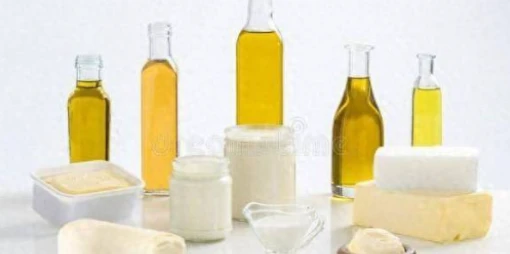
(1) Edible oil: In edible oil, it can combine with unsaturated fatty acids in the oil to form stable compounds, thereby preventing the oxidation and decomposition of unsaturated fatty acids. This antioxidant effect can significantly extend the shelf life and shelf life of edible oils, maintaining their color and aroma.
(2) Fatty acid products: In fatty acid products, such as stearic acid and oleic acid, they can also be used as antioxidants. It can prevent the oxidation and deterioration of fatty acids during storage and processing, and maintain the quality and stability of fatty acid products.

2. Antioxidants for plastics and rubber
In polymer materials such as plastics and rubber, they can be used as antioxidants. It can effectively prevent the oxidation degradation and aging of polymer materials during processing, storage, and use, and improve the weather resistance and service life of the materials.

(1) Plastic materials: In plastic materials such as polyethylene, polypropylene, and polyvinyl chloride, they can be added as antioxidants. It can capture the free radicals generated during the processing and use of plastic materials, preventing the chain reaction caused by free radicals from leading to oxidative degradation of the material. This antioxidant effect can significantly improve the weather resistance and service life of plastic materials.
(2) Rubber materials: In rubber materials such as natural rubber and synthetic rubber, they can also be used as antioxidants. It can prevent the oxidation aging phenomenon of rubber materials during storage and use, and maintain the elasticity and sealing performance of rubber materials. In addition, it can also improve the ozone resistance and weather resistance of rubber materials, extending the service life of rubber products.

3. Petroleum product antioxidants
In petroleum products such as gasoline, diesel, and lubricants, they can be used as antioxidants. It can effectively prevent oxidation, deterioration, and sedimentation of petroleum products during storage and use, improving the quality and stability of petroleum products.
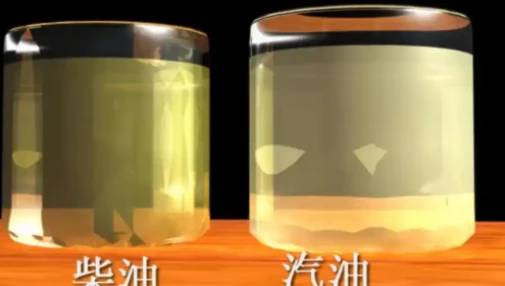
(1) Gasoline and diesel: In gasoline and diesel, they can be used as antioxidant and anti glue agents. It can prevent the formation of gum and sediment caused by oxidation during the storage and use of gasoline and diesel, maintaining the cleanliness and combustion efficiency of the fuel. This antioxidant effect can significantly improve the performance and environmental friendliness of gasoline and diesel.
(2) Lubricating oil: In lubricating oil, it can be used as an antioxidant and anti-wear agent. It can prevent acidic substances and deposits generated by oxidation of lubricating oil under high temperature and high pressure conditions, maintaining the cleanliness and lubrication performance of lubricating oil. At the same time, it can also reduce friction and wear between metal components, extending the service life of the equipment.

4. Other antioxidant applications

In addition to the above applications, it can also be used in various other antioxidant situations. For example, in coatings and inks, it can be used as an anti-aging agent to prevent oxidative aging of coatings and inks during storage and use. In addition, it can also be used as an antioxidant in cosmetics and drugs to prevent the active ingredients in cosmetics and drugs from becoming ineffective or deteriorating due to oxidation.
Trimethylsilanol, as a lubricant and antioxidant, has broad application prospects and huge market potential in multiple fields. Its excellent lubrication and oxidation resistance provide stable protection and support for various materials and products. However, in practical applications, it is still necessary to pay attention to challenges in terms of cost, environmental protection, and technology. In the future, with the advancement of technology and the development of industries, the application fields of trimethylsilanol will continue to expand and deepen.


Hydroxytrimethylsilane(also known as trimethylsilanol) is an organic compound with various synthesis methods. The following are several common methods for synthesizing trimethylsilanol, each with its own unique reaction conditions and process steps.
Synthesis method using trimethylchlorosilane as raw material
Another common method for synthesizing trimethylsilanol is to use trimethylchlorosilane as the raw material. This method can be achieved through different reaction pathways, two of which are as follows:
1. Combination of alcoholysis reaction and hydrolysis reaction
This method first generates intermediate products through alcoholysis reaction, and then further hydrolyzes to obtain trimethylsilanol. The specific steps are as follows:
(1) Alcoholysis reaction:
In the presence of appropriate solvents and catalysts, trimethylchlorosilane undergoes alcoholysis reaction with alcohol compounds to produce intermediate products.
(2) Hydrolysis reaction:
The intermediate product is hydrolyzed to obtain trimethylsilanol. The conditions of hydrolysis reaction and the choice of catalyst have a significant impact on the quality and yield of the product.
This method has a relatively complex process, many by-products, and may have a lower yield. Therefore, in practical applications, it is necessary to carefully optimize the reaction conditions and process steps.
2. Synthesis methods involving ammonia gas
This method involves introducing ammonia gas into a reactor for trimethylchlorosilane under low temperature conditions, and generating trimethylsilanol through a series of reactions. The specific steps are as follows:
(1) Ammonia gas injection:
Under conditions below 10 ℃, ammonia gas is introduced into a reactor containing trimethylchlorosilane. The mass ratio of ammonia to trimethylchlorosilane needs to be controlled within a certain range to ensure the smooth progress of the reaction.
(2) Stirring and Reaction:
Stirring is carried out in the reactor to allow ammonia to fully contact and react with trimethylchlorosilane. The reaction time needs to be controlled within a certain range to ensure high yield and high quality.
(3) Subsequent processing:
After the reaction is completed, water, buffer solution, and extraction solution are added to the reactor for further processing. Oil phase products are obtained through steps such as stirring, settling, and extraction. Finally, the oil phase product is subjected to distillation treatment to obtain trimethylsilanol with a purity greater than 98%.
This method has a simple preparation process and few post-processing steps, and can obtain high-purity trimethylsilanol. Meanwhile, the extraction solution used in the extraction process of this method can be recycled and has good environmental performance.

I. Disciplinary Foundation and Early Explorations
Research on trimethylsilanol evolved alongside the development of organosilicon chemistry. Organosilicon compounds first drew academic attention in the mid-to-late 19th century.
In 1863, Friedel and Crafts synthesized the first batch of organosilicon compounds, breaking the research boundaries of traditional carbon-based compounds.
In the following decades, scholars carried out successive experiments on the preparation of alkylsilanes. At the beginning of the 20th century, the research team led by British chemist Kipping adopted Grignard reagents as the core method to conduct systematic studies on various substituted silanes and silanol derivatives, and verified the chemical properties of silanol groups.
Studies revealed that most alkylsilanols tend to undergo intermolecular dehydration and condensation, which made the purification and stable isolation of short-chain silanols a major technical challenge at that time. These efforts laid solid theoretical and experimental groundwork for subsequent specialized research on trimethylsilanol.
II. Discovery and Structural Confirmation
In the 1940s, methylchlorosilanes were produced in batches at the laboratory scale. Researchers first detected the trimethylsilanol intermediate during the hydrolysis of trimethylchlorosilane.
Under conventional acidic hydrolysis conditions, this substance readily condensed into hexamethyldisiloxane, making it impossible to obtain pure trimethylsilanol independently.
From 1945 to 1950, the R&D team of Dow Corning optimized the reaction conditions by adopting a weakly alkaline system combined with low-temperature control to suppress side reactions, and successfully isolated high-purity trimethylsilanol.
Its chemical structure was formally identified via elemental analysis and chemical characterization, and the compound was listed as a typical member of organosilanols.
III. Process Optimization and In-depth Research
Starting from the 1950s, the direct synthesis process for methylchlorosilanes was put into practical use, greatly boosting raw material output and driving the production of trimethylsilanol from laboratory trials to large-scale manufacturing.
Over the ensuing decades, continuous research was conducted on its physicochemical properties and reactivity. With the widespread application of modern analytical techniques such as nuclear magnetic resonance and diffraction methods, researchers further elucidated its intramolecular forces and reaction mechanisms.
Today, thanks to its excellent silylation capacity, trimethylsilanol has become a common intermediate in fine organic synthesis, pharmaceutical chemical industry and material modification, and relevant applied research is still expanding steadily.
FAQ
Is trimethylsilanol safe?
+
-
Keep away from heat/sparks/open flames/hot surfaces. - No smoking. Precautions for safe handling : Avoid all eye and skin contact and do not breathe vapor and mist.
What is Tris trimethylsilyl silane used for?
+
-
Tris(trimethylsilyl)silane is an organosilicon generally used as a radical reducing agent for xanthates, organic halides, isocyanides, selenides, and acid chlorides. It is also used for hydrosilylation of alkenes, alkynes, and dialkyl ketones.
Hot Tags: hydroxytrimethylsilane cas 1066-40-6, suppliers, manufacturers, factory, wholesale, buy, price, bulk, for sale, 3 5 Dichlorophenylboronic acid, Cerium sulfate powder, 2-bromo-3-hexylthiophene, 6 Benzylaminopurine CAS 1214 39 7, Iridium(III) chloride, Cupferron