




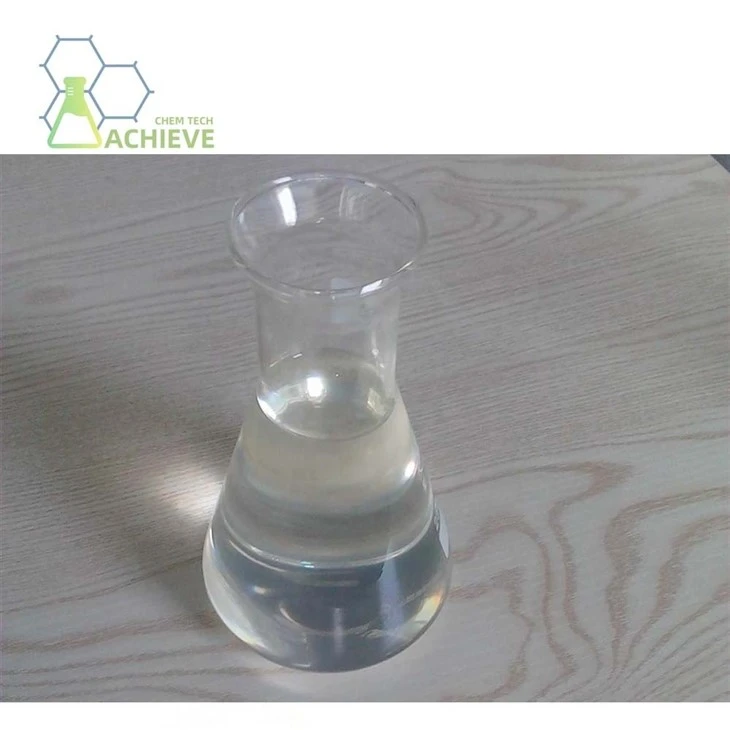
Shaanxi BLOOM Tech Co., Ltd. is one of the most experienced manufacturers and suppliers of thymolphthalein indicator cas 125-20-2 in China. Welcome to wholesale bulk high quality thymolphthalein indicator cas 125-20-2 for sale here from our factory. Good service and reasonable price are available.
Thymolphthalein indicator,I t is a commonly used acid-base indicator. Thyme phenolphthalein changes color within the pH range of 9.3 (colorless) and 10.5 (blue), and it is also believed to change color within the pH range of 8.8 (colorless) and 10.5 (blue). Thyme phenolphthalein is soluble in ethanol and sodium hydroxide solutions and is widely used in acid-base titration due to its unique color changing properties, especially in situations where precise measurement of solution pH is required. When the pH of the solution reaches its color changing range, it will change from colorless to blue, providing a clear indication of the titration endpoint. The substance should be stored in a sealed container to avoid moisture or deterioration. Although Thyme phenolphthalein is relatively safe under normal use conditions, it should still be avoided from direct contact with eyes, skin, or clothing. If accidentally touched, it should be avoided. Immediately rinse with plenty of water and seek medical assistance. When using, pay attention to its compatibility with the test solution. Some chemicals may interfere with its color changing effect, so necessary tests should be conducted before use. Compared with other acid-base indicators, thymolphthalein has the advantages of clear color change range, sharp color change, and vivid color contrast. This makes it widely applicable in experiments such as acid-base titration. However, different indicators are suitable for different pH ranges and application scenarios, so in practical applications, the appropriate indicator should be selected according to specific needs.

Additional information of chemical compound:
|
Chemical Formula |
C28H30O4 |
|
Exact Mass |
430.21 |
|
Molecular Weight |
430.54 |
|
m/z |
430.21(100.0%),431.22(30.3%),432.22(2.7%),432.22(1.7%) |
|
Elemental Analysis |
C, 78.11; H, 7.02; O, 14.86 |
|
Melting point |
251-253℃(lit.) |
|
Boiling point |
504.79℃(rough estimate) |
|
Density |
0.92 g/mL at 25℃ |
|
|
|


Thymolphthalein indicator (scientific name: 3,3-bis (4-hydroxy-5-isopropyl-2-methylphenyl) - phthalein, CAS number 125-20-2) is an organic compound with unique chemical properties, with a molecular formula of C28H30O4 and a molecular weight of 430.54. As a white crystalline powder, it is easily soluble in ether, acetone, sulfuric acid, and alkaline solutions, but insoluble in water, which makes it valuable in multiple fields.
One of its core applications is as an acid-base indicator, with a pH color change range of 9.4-10.6 and a color change from colorless to blue. This characteristic makes it a key tool for weak base or strong base titration of weak acids in laboratory titration analysis. For example, in the ammonia titration of acetic acid experiment, thymolphthalein can clearly indicate the endpoint, avoiding errors caused by the wide color change range of phenolphthalein (8.2-10.0). In addition, the mixed indicator formed by compounding it with other indicators (such as bromocresol green) can further narrow the color change range to 0.1 pH units, significantly improving the analytical accuracy.


In chromatographic analysis, as a stationary phase or mobile phase additive, separation efficiency can be optimized. For example, when detecting volatile organic compounds in environmental samples using gas chromatography, adding thymolphthalein can enhance the retention ability of polar compounds and improve detection sensitivity. Its stability (melting point 251-253 ℃) and low volatility also make it an ideal choice for high-temperature chromatographic analysis.
The application in the pharmaceutical field covers three levels: drug synthesis, quality control, and pharmacological research. In terms of synthesis, its phthalein ring structure can be used as an intermediate to participate in the construction of complex drug molecules. For example, using thymolphthalein as raw material, benzophenone derivatives with anti-inflammatory activity can be prepared through reduction reactions, which have shown potential in the treatment of rheumatoid arthritis.
In the quality control process, it is the standard reagent for detecting the acidity or alkalinity of drugs.


According to the Chinese Pharmacopoeia, the pH value of tablets, injections and other preparations must be strictly controlled within a specific range, and their precise color changing characteristics make them the preferred indicator. In addition, it can also be used for non-aqueous titration, such as determining the content of organic base drugs (such as caffeine), and achieving high-precision quantitative analysis through titration reaction in ethanol dichloromethane mixed solvent.
In terms of pharmacological research, its derivatives have been explored for the development of anti-tumor drugs. For example, a research team has obtained a novel phthalein compound through structural modification, which can induce tumor cell apoptosis while reducing toxicity to normal cells. It is currently in the preclinical research stage.
The applications in the biomedical field focus on cell tracing, biological imaging, and disease diagnosis. Its fluorescence characteristics (excitation wavelength 340nm, emission wavelength 450nm) make it a high-quality probe for cell labeling. For example, in stem cell therapy research, thymolphthalein is loaded onto the surface of nanoparticles, and the migration and differentiation process of stem cells in vivo can be tracked in real time through confocal microscopy, providing a basis for optimizing treatment plans.


In terms of disease diagnosis, thymolphthalein indicator derivatives have been developed as detection reagents for enzyme-linked immunosorbent assay (ELISA). For example, the detection kit for leucine zipper protein kinase (MELK) of maternal embryos combines thymolphthalein labeled antibody with target protein to achieve sensitive detection for early diagnosis of breast cancer (sensitivity up to 0.1ng/mL). In addition, it can also be used to detect hepatitis virus markers (such as HAVCR2) and tumor associated antigens (such as RAB1A), providing diverse tools for clinical diagnosis.
The application of thymolphthalein in the food industry must strictly comply with safety standards. As an acid-base indicator, it can be used to monitor pH changes during food processing to ensure stable product quality. For example, in yogurt fermentation, adding a solution of thymolphthalein can monitor the acid production of lactic acid bacteria in real time, avoiding the deterioration of taste caused by excessive fermentation.


In the field of food additives, derivatives of thymolphthalein have been explored for flavor regulation. For example, a study obtained a fruit flavored phthalein compound through structural modification, which can significantly enhance the aroma intensity of strawberry flavored beverages at low concentrations (0.5ppm), and its safety has been verified through acute toxicity tests (LD ₅₀>5000mg/kg). In addition, it can also be used as a preservative in baked goods to inhibit mold growth and extend shelf life by adjusting the pH value of the dough.
In the field of materials science, its metal chelating ability makes it a key raw material for the synthesis of functional materials. For example, by complexing with zinc ions, metal organic framework (MOF) materials with fluorescent properties can be prepared, which exhibit excellent performance in gas adsorption (such as CO ₂ capture) and photocatalytic degradation of organic pollutants. In addition, it can also be used for synthesizing polymer materials, such as introducing thymolphthalein units into polyester segments through copolymerization reactions to enhance the thermal stability of the material (increasing the thermal decomposition temperature by 30 ℃).


In terms of environmental monitoring, thymolphthalein has been developed as a heavy metal ion detection sensor. For example, based on its specific binding with lead ions, an electrochemical sensor can be designed to achieve rapid detection of lead ions in water (detection limit of 0.1 μ M). In addition, it can also be used for on-site measurement of soil pH value, enabling rapid screening through portable test strips and providing data support for agricultural fertilization.

Thymolphthalein indicator,Phenolphthalein indicator is an important acid-base indicator with a clear color range and sensitive color changing characteristics. The following is a detailed explanation of the use of Thymophthalein:
Titration endpoint indicator: In acid-base titration, Phenolphthalein is widely used to indicate the endpoint of titration.When the pH value of the solution reaches the hundred mile color change range (usually between 9.3 and 10.5), the color of the indicator will undergo a significant change, from colorless to blue. This color change provides the experimenter with a clear titration endpoint signal, allowing for accurate assessment of the completion of the titration reaction.


Improve titration accuracy: Due to the sensitive color change and vivid color contrast of thymolphthalein, it can significantly improve the accuracy of acid-base titration. During the titration process, the experimenter can more easily observe color changes, thereby more accurately determining the titration endpoint and reducing errors.
Suitable for various titration systems: Phenolphthalein is suitable for various acid-base titration systems, including strong acid strong base titration, weak acid strong base titration, and strong acid weak base titration. This makes it widely applicable in chemical analysis.
Phenolphthalein also plays an important role in blood tests. It can react with specific components in the blood to produce color changes, which can be used for the diagnosis and analysis of blood related diseases. This application is mainly based on the specific reaction between thymolphein and certain substances in the blood, such as certain enzymes, ions, or metabolites.
In chromatographic analysis, thymolphthalein is an efficient chromatographic reagent that can help researchers separate and identify components in complex mixtures. It is usually used as an indicator in the stationary or mobile phase, affecting separation efficiency and identification accuracy by changing chromatographic conditions such as solvent composition, pH value, etc.

Electrochemical analysis and other applications

Phenolphthalein also has certain electrochemical activity, which makes it applicable in electrochemical analysis. For example, in electrochemical sensors, thymolphthalein can be used as an element recognition or signal converter to detect the presence or concentration of target substances through changes in electrochemical signals.
In addition to the aforementioned applications, thymolphthalein is also used in other fields. For example, in biological research, it can be used as a cell staining agent or fluorescent probe to observe cell structure or monitor biochemical processes within cells. In addition, in some industrial production processes, thymolphthalein is also used as a process control indicator or product quality inspection method.

Case study of this indicator
case analysis
Application in acid-base titration experiment
In a certain acid-base titration experiment, the experimenter chose thymolphthalein indicator as an indicator. During the titration process, the experimenter carefully observed the color change of the solution. When the solution changes from colorless to blue, the experimenter determines that the titration endpoint has been reached and stops the titration operation. By comparing the concentration of the standard solution with the volume consumed by titration, the experimenter accurately calculated the concentration of the test solution. The success of this experiment is attributed to the sensitive color changing properties and clear endpoint signal of the phenolphthalein indicator.

case analysis
Application Examples in Blood Testing
In a blood test, the doctor chose the thymolphein indicator to detect a specific component in the patient's blood. Through specific chemical reaction conditions, the doctor observed a change in the color of the indicator. Based on the degree and characteristics of color changes, doctors determine that the content of this component in the patient's blood is abnormal and develop corresponding treatment plans accordingly. The success of this test is attributed to the specific reaction between the thymolphein indicator and specific components in the blood, as well as accurate color indication.


What are the side effects of this compound?
Potential side effects
Although typically considered low toxicity, the Thymolphthalein may still cause irritation upon direct contact with the skin or eyes. This stimulation may manifest as symptoms such as redness, swelling, itching, pain in the skin, or redness and tearing in the eyes. Therefore, when using thymolphthalein, appropriate personal protective equipment such as gloves, goggles, etc. should be worn to avoid direct contact.
Long term inhalation of thymolphthalein vapor may have adverse effects on the respiratory system. This may include symptoms such as respiratory irritation, coughing, shortness of breath, etc. Therefore, when using thymolphthalein, it is important to ensure good ventilation in the workplace and avoid prolonged exposure to high concentrations of vapor.
Some individuals may experience allergic reactions to thymolphthalein or its components. This allergic reaction may manifest as severe symptoms such as rash, urticaria, difficulty breathing, and laryngeal edema. Therefore, before use, it is necessary to understand the individual's allergy history to thymolphthalein and take necessary preventive measures.
Phenolphthalein may be released into the environment during use, posing a potential threat to the ecological environment. Although thymolphthalein is generally considered environmentally friendly, excessive use or improper handling can still cause pollution to soil, water sources, and organisms. Therefore, when using and handling thymolphthalein, relevant environmental regulations and guidelines should be followed to reduce negative impacts on the environment.
Precautions for use
The thymolphthalein indicator should be stored in a dry, cool, well ventilated place, away from direct sunlight and high temperatures. At the same time, it should be ensured that the container is well sealed to prevent the indicator from getting damp or deteriorating.
When using thymolphthalein, relevant safety operating procedures should be followed. This includes wearing appropriate personal protective equipment, ensuring good ventilation in the workplace, and avoiding prolonged exposure to high concentration steam environments. In addition, direct contact with skin, eyes, etc. should be avoided, and hands and face should be washed promptly after use.
The waste of thymolphthalein should be disposed of in accordance with relevant regulations and guiding principles. This includes collecting waste in specialized containers, avoiding mixing with flammable and explosive materials, and following the guidance of local environmental protection departments for safe disposal.
Before using thymolphthalein, necessary compatibility checks should be performed. This includes understanding whether the indicator interferes or reacts with other components in the test solution or reaction system to ensure the accuracy of the analysis results.
FAQ
What does thymolphthalein do?
In titration experiments, thymolphthalein is used to determine the endpoint of reactions involving strong bases like sodium hydroxide (NaOH). It remains colorless until the pH reaches 9.3, where it starts turning blue. The appearance of blue color signifies the completion of the reaction.
What are the colors of thymolphthalein?
Thymolphthalein is a phthalein dye used as an acid–base (pH) indicator. Its transition range is around pH 9.3–10.5. Below this pH, it is colorless; above, it is blue.
What is another name for thymolphthalein?
Synonyms: 5', 5''-Diisopropyl-2', 2''-dimethylphenolphthalein; 3, 3-Bis(4-hydroxy-5-isopropyl-o-tolyl)phthalide; Terms & Conditions: These chemicals are for professional manufacturing, research laboratories and industrial or commercial usage only.
How to make thymolphthalein indicator?
Dissolve 0.04 g thymolphthalein in 50 mL of 95% ethanol. Dilute this solution to 100 mL with distilled water.
Hot Tags: thymolphthalein indicator cas 125-20-2, suppliers, manufacturers, factory, wholesale, buy, price, bulk, for sale, Consumable, Iridium III chloride, Thiazolyl Blue CAS 298 93 1, D-Lyxose, Cinchonine, D-Alloisoleucine