




Shaanxi BLOOM Tech Co., Ltd. is one of the most experienced manufacturers and suppliers of xanthine cas 69-89-6 in China. Welcome to wholesale bulk high quality xanthine cas 69-89-6 for sale here from our factory. Good service and reasonable price are available.
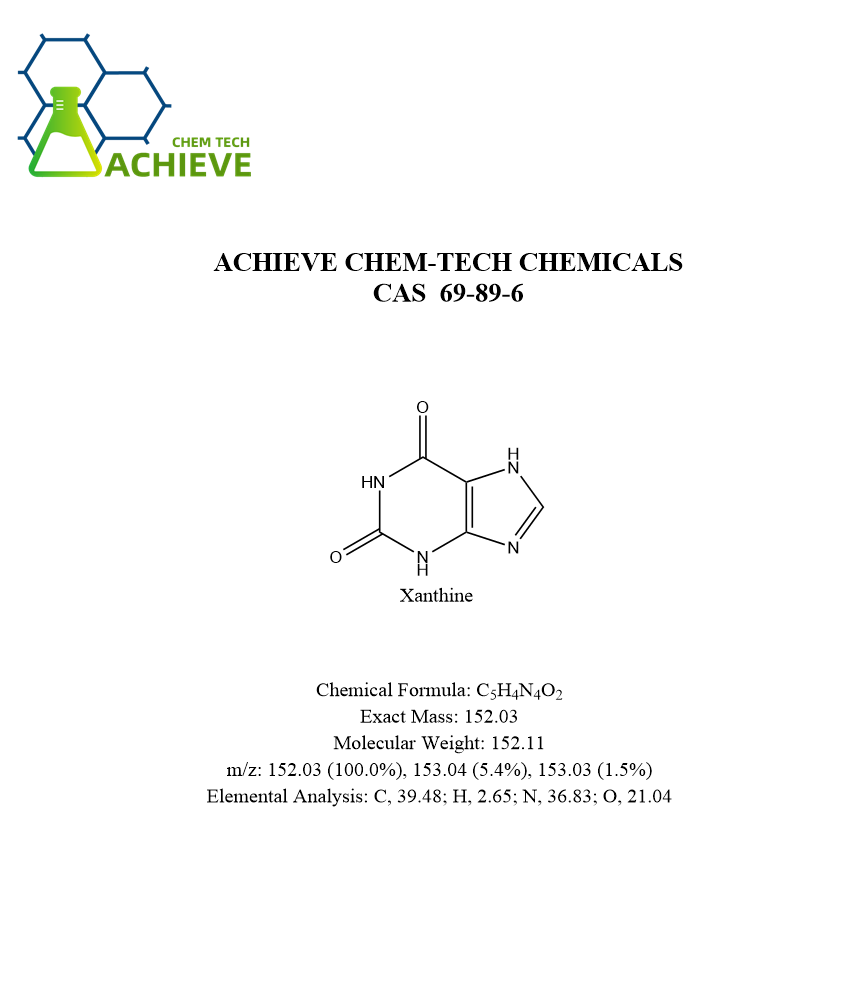
Xanthine,The Chinese name is xanthine, which is an organic compound widely distributed in organs and body fluids of the human body and other organisms. It is a purine base. It is also a component of many plant alkaloids, especially found in tea, coffee, and cocoa. The xanthine derivatives in these plants, such as caffeine and theobromine, are common mild stimulants. The appearance is a white to grayish white crystalline powder, which has various pharmacological effects, including inhibiting the activity of phosphodiesterase in tissues, preventing phosphodiesterase decomposition and metabolism, thereby increasing the concentration of adenosine monophosphate in cells. It is also an adenosine receptor antagonist. These pharmacological effects are crucial for the bronchial tree and can relax the smooth muscle of the trachea. At the same time, this compound and its derivatives (such as theophylline) are often used as mild stimulants and bronchodilators, especially for the treatment of asthma symptoms. In addition, it also has the function of stimulating muscles, heart, central nervous system, and diuresis.

Additional information of chemical compound:
|
Chemical Formula |
C5H4N4O2 |
|
Exact Mass |
152.03 |
|
Molecular Weight |
152.11 |
|
m/z |
152.03 (100.0%), 153.04 (5.4%), 153.03 (1.5%) |
|
Elemental Analysis |
C, 39.48; H, 2.65; N, 36.83; O, 21.04 |
|
Melting point |
300℃ |
|
Boiling point |
274.55℃ (rough estimate) |
|
Density |
1.5452 (rough estimate) |
|
|
|


Xanthine is an organic compound with a wide range of applications. The following is a detailed explanation of its purpose:
This compound and its derivatives (such as theophylline) are often used as mild stimulants and bronchodilators, particularly for treating asthma symptoms. These compounds can relax the smooth muscle of the trachea, thereby alleviating breathing difficulties caused by asthma. Some derivatives of caffeine can excite the central nervous system, increase the excitability of the cerebral cortex, manifested as mental excitement and active thinking, and can alleviate fatigue and eliminate drowsiness. However, it should be noted that high doses of caffeine may cause side effects such as mental stress, hand and foot tremors, insomnia, and headaches. Caffeine can excite the medullary cerebral vascular motor center and vagus nerve center, causing an increase in blood pressure and a decrease in heart rate. At the same time, it can directly relax the smooth muscle of blood vessels, causing vasodilation and reducing peripheral resistance. However, caffeine has the opposite effect on cerebral blood vessels. It directly acts on the muscle layer of cerebral arterioles, causing their blood vessels to contract, increasing cerebral vascular resistance and reducing cerebral blood flow.

Biochemical research and organic synthesis

It is a product of purine metabolism and further converted into uric acid under the action of xanthine oxidase. This metabolic process is of great significance in organisms and is closely related to the pathogenesis of various diseases. Therefore, this substance is often used as a model compound in biochemical research to study purine metabolism, uric acid production, and the pathogenesis of related diseases. Meanwhile, it is an intermediate of the drug theobromine and has a wide range of applications in organic synthesis. Through chemical modification and modification, xanthine derivatives with different pharmacological activities can be prepared, which have potential application value in drug development and treatment.
Caffeine is an important derivative of this compound, widely used in food and beverages such as coffee, tea, chocolate, and certain energy drinks. Caffeine can stimulate the central nervous system, increase alertness and attention, and reduce fatigue. At the same time, it also has diuretic and fat decomposition promoting effects. However, excessive intake of caffeine may lead to side effects such as insomnia, palpitations, and anxiety.
In medicine, caffeine is also used to treat certain diseases such as Parkinson's disease, Alzheimer's disease, etc. Research has shown that caffeine can inhibit the activity of certain enzymes involved in these diseases, thereby slowing down the progression of the disease. Theophylline is another important derivative mainly used for the treatment of asthma and chronic obstructive pulmonary disease. Theophylline can relax bronchial smooth muscle, alleviate airway stenosis and breathing difficulties. Compared with caffeine, theophylline has a weaker stimulating effect on the central nervous system, but a stronger bronchodilator effect.

Medical Applications and Drug Development

Theophylline is usually administered orally or by injection in clinical practice, and regular monitoring of blood drug concentration is required to ensure efficacy and safety. Cocoa alkaloid is a natural ingredient in chocolate and certain beverages, as well as a derivative of this substance. Cocoa alkaloids have diuretic, vasodilatory, and blood pressure lowering effects. Research has shown that theobromine can also inhibit platelet aggregation and thrombosis, thereby reducing the risk of cardiovascular disease. In medicine, theobromine is used to treat diseases such as angina pectoris and hypertension. However, it should be noted that the side effects of theobromine include headache, nausea, vomiting, etc., so caution should be exercised when using it.
Research on the relationship between the metabolism of this compound and diseases
Oxidases and Gout
Xanthine oxidase is one of the important enzymes in the purine catabolism pathway, which can catalyze the conversion of this substance into uric acid. The accumulation of uric acid in the body is one of the main causes of gout. Therefore, studying the activity, regulatory mechanism, and development of inhibitors of xanthine oxidase is of great significance for the prevention and treatment of gout. At present, various oxidase inhibitors have been used to treat gout and hyperuricemia. These drugs can lower uric acid levels in the body, thereby alleviating gout symptoms and preventing disease progression.
Metabolism and Cancer
Research has shown that the metabolism of this substance is closely related to the occurrence and development of certain cancers. For example, reactive oxygen species produced by xanthine oxidase (such as superoxide anion radicals, hydrogen peroxide, etc.) may cause damage to cells and promote the growth and proliferation of tumor cells. Therefore, studying the relationship between its metabolism and cancer, as well as developing anti-cancer drugs targeting the xanthine metabolism pathway, are of great significance.
Metabolism and other diseases
In addition to gout and cancer, xanthine metabolism is closely related to the occurrence and development of various other diseases. For example, xanthine oxidase inhibitors are also used to treat cardiovascular diseases, diabetes and other metabolic diseases. In addition, the metabolism of this compound is closely related to neurological and immune system diseases. Therefore, in-depth research on its metabolic pathways and regulatory mechanisms is of great significance for the prevention and treatment of these diseases.
Detection and analysis methods
Chromatographic method
Chromatography is a commonly used method for detecting and analyzing compounds and their derivatives. By selecting appropriate chromatographic columns, mobile phases, and detection conditions, efficient separation and accurate determination of it and its derivatives can be achieved. Common chromatographic methods include high-performance liquid chromatography (HPLC), gas chromatography (GC), etc.
Spectral method
Spectroscopy is also a commonly used method for detecting and analyzing this substance and its derivatives. Quantitative determination of the substance can be achieved by measuring parameters such as absorbance or fluorescence intensity of the sample at specific wavelengths. Common spectroscopic methods include UV visible spectrophotometry, fluorescence spectrophotometry, etc.
Electrochemical method
Electrochemical method is a detection and analysis method for this compound based on the principle of electrochemical reaction. Quantitative determination of the electrochemical reaction of the sample on the electrode can be achieved by measuring parameters such as current and voltage. The commonly used electrochemical methods include electrochemiluminescence method, electrochemical sensor method, etc.
Other methods
In addition to the above methods, there are multiple other methods available for their detection and analysis. For example, immunoassay, biosensor method, etc. These methods have their own characteristics and are suitable for different detection and analysis needs.
Adverse reactions
Xanthine,also known as xanthine, is a type of nitrogen-containing heterocyclic compound widely present in living organisms, with its structural basis being purine bases. Xanthine and its derivatives have important applications in the fields of medicine, food, and chemical engineering. However, like many chemicals, xanthine and its derivatives may also have a series of side effects on the human body during use. Understanding these side effects is crucial for ensuring the health and safety of users. The following are their side effects:
Cardiovascular system side effects
Xanthine and its derivatives such as theophylline and caffeine have the ability to excite the heart muscle, and excessive use may lead to arrhythmia. The manifestations of arrhythmia include palpitations, rapid or slow heartbeat, irregular heartbeat, etc. Severe arrhythmias can be life-threatening, such as ventricular tachycardia, ventricular fibrillation, etc. Caffeine and other xanthine derivatives may also cause an increase in blood pressure. Caffeine stimulates the sympathetic nervous system, causing blood vessels to contract and leading to an increase in blood pressure. Long term excessive intake of caffeine may increase the risk of hypertension, and for patients who already have hypertension, it may worsen the condition.
Neurological side effects
Xanthine and its derivatives have an excitatory effect on the central nervous system, and excessive use may lead to insomnia. Insomnia is characterized by difficulty falling asleep, shallow sleep, and easy awakening. Long term insomnia may affect a person's mental state and work efficiency, and may also lead to psychological problems such as anxiety and depression. Excessive intake of xanthine derivatives may also cause emotional problems such as anxiety and irritability. This is because xanthine derivatives disrupt the balance of neurotransmitters, causing the brain to be in an overly excited state. Patients may exhibit symptoms such as restlessness, high emotional fluctuations, and irritability. Headache is also one of the common neurological side effects of xanthine derivatives. The nature and severity of headaches vary from person to person and may manifest as bloating, stabbing pain, throbbing pain, etc. The cause of headaches may be related to vasoconstriction and neural excitation caused by xanthine derivatives.
Hot Tags: xanthine cas 69-89-6, suppliers, manufacturers, factory, wholesale, buy, price, bulk, for sale, Thiazolyl Blue CAS 298 93 1, Acetaldehyde solution, 4 4 Nitrobenzyl pyridine CAS 1083 48 3, Chlorosulfonyl isocyanate, Cupferron, Chlorodiphenylphosphine