


4'-Chloropropiophenone is a versatile organic compound with significant applications in various industries. This pale yellow crystalline solid, also known as 1-(4-chlorophenyl)propan-1-one, exhibits distinct physical properties that make it valuable in pharmaceutical synthesis, polymer production, and specialty chemical manufacturing. The physical characteristics of 4'-Chloropropiophenone include its appearance, melting point, boiling point, solubility, and molecular structure. Understanding these properties is crucial for researchers, chemists, and industrial professionals working with this compound. As we delve deeper into the physical attributes of 4'-Chloropropiophenone, we'll explore how its unique features contribute to its wide-ranging applications and its importance in chemical processes across multiple sectors.
We provide 4'-Chloropropiophenone CAS 6285-05-8, please refer to the following website for detailed specifications and product information.
|
|
|
What is the melting point and boiling point of 4'-Chloropropiophenone?
Melting Point Analysis
The melting point of 4'-Chloropropiophenone is a critical physical property that provides insight into its purity and behavior under various temperature conditions. Typically, this compound melts at approximately 41-43°C (105.8-109.4°F). This relatively low melting point indicates that 4'-Chloropropiophenone transitions from solid to liquid state at temperatures just above room temperature, which can be advantageous in certain industrial processes where easy manipulation of the compound's physical state is desired. The precision of the melting point is also an essential factor in quality control and identification. A narrow melting point range suggests high purity, while a broader range or significant deviation from the expected values may indicate the presence of impurities or structural isomers. Researchers and manufacturers often use melting point determination as a quick and reliable method to assess the quality of 4'-Chloropropiophenone batches.
Boiling Point Characteristics
An additional important physical characteristic that affects 4'-Chloropropiophenone's handling, storage, and use in different industrial processes is its boiling point. The boiling point of this compound at ordinary atmospheric pressure is around 263-265°C (505.4-509°F). A chlorine atom and a carbonyl group are part of the compound's molecular structure, which contributes to strong intermolecular interactions and the high boiling point. Knowing the boiling point is especially crucial for distillation procedures since 4'-Chloropropiophenone might need to be filtered or separated from other substances. It is a flexible reagent in organic synthesis because of the large temperature range that its melting and boiling temperatures offer for liquid-phase reactions. It's important to remember, nevertheless, that because of its high boiling point, more care may be required when
What is the solubility of 4'-Chloropropiophenone in different solvents?
Solubility in Organic Solvents
One important aspect of 4'-Chloropropiophenone's use in a variety of sectors is its solubility in diverse organic solvents. Its exceptional solubility in a wide range of typical organic solvents increases this compound's adaptability in chemical reactions and formulations. Specifically, 4'-Chloropropiophenone dissolves easily in solvents such diethyl ether, ethanol, acetone, and chloroform. The main cause of the compound's high solubility in organic media is its molecular structure, which consists of both polar and non-polar areas, enabling it to interact with a variety of solvent molecules in an efficient manner. The solubility profile in organic solvents is particularly beneficial in the pharmaceutical and specialty chemicals industries, where 4'-Chloropropiophenone serves as an important intermediate. Its ability to dissolve in various organic solvents facilitates its use in diverse synthetic pathways and enables efficient extraction and purification processes. For instance, in the production of certain pharmaceuticals, the high solubility of 4'-Chloropropiophenone in organic solvents allows for homogeneous reaction conditions, potentially improving yield and product purity.
Aqueous Solubility and pH Dependence
4'-Chloropropiophenone is comparatively poorly soluble in water, although it exhibits significant solubility in organic solvents. With both hydrophobic and hydrophilic components, many chemical molecules have this restricted water solubility. The carbonyl group and chlorine atom in the molecule give it a minor polarity, but the structure as a whole is still mostly hydrophobic, which makes it poorly soluble in water. It's interesting to note that pH can affect how soluble 4'-Chloropropiophenone is in aqueous solutions. The molecule may experience chemical alterations that impact its solubility in extremely basic or acidic environments. To create more water-soluble compounds, for example, the carbonyl group may be hydrolyzed in very basic conditions. In applications where 4'-Chloropropiophenone may be exposed to different pH levels, such in specific pharmaceutical formulations or wastewater treatment procedures, this pH-dependent behavior is crucial to take into account.
|
|
|


How does the molecular structure of 4'-Chloropropiophenone influence its reactivity?
Functional Group Analysis
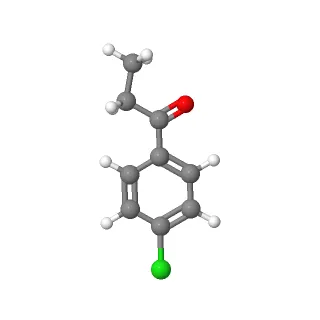
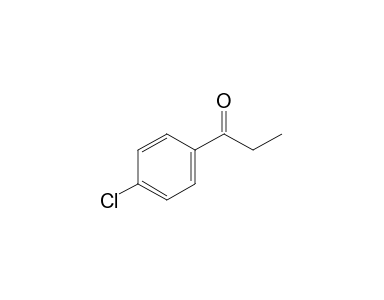
A key factor in determining 4'-Chloropropiophenone's reactivity and chemical behavior is its molecular structure. A number of important functional groups in this molecule add to its adaptability in organic synthesis. The most noticeable structural components are the ethyl group joined to the carbonyl carbon, the chlorine substituent on the aromatic ring, and the carbonyl group (C=O). The carbonyl group is particularly reactive and serves as a primary site for many chemical transformations. It can undergo nucleophilic addition reactions, making 4'-Chloropropiophenone an excellent starting material for the synthesis of various compounds, including pharmaceutical intermediates and specialty chemicals. The presence of the chlorine atom on the aromatic ring also enhances the compound's reactivity, especially in substitution reactions. This halogen substituent can be replaced by other functional groups, allowing for further modification of the molecule in synthetic pathways.
Stereochemistry and Reaction Mechanisms
Another important feature of 4'-Chloropropiophenone's molecular structure that affects its reactivity is its stereochemistry. In some reactions, the compound's chiral center at the α-carbon next to the carbonyl group may result in the formation of stereoisomers. In pharmaceutical applications, where a compound's biological activity frequently depends on its precise three-dimensional configuration, this stereochemical feature is especially significant. Predicting and managing the behavior of 4'-Chloropropiophenone in a variety of chemical processes requires an understanding of the reaction mechanisms involved. For example, the molecule can function as a nucleophile (by its α-carbon) and an electrophile (via its carbonyl group) in aldol condensation processes, creating intricate reaction paths. These methods also involve the electronic effects of the chlorine substituent, which affect the molecule's electron density distribution and, in turn, its reactivity in various chemical environments.
Conclusion
The physical properties of 4'-Chloropropiophenone, including its melting point, boiling point, solubility, and molecular structure, make it a valuable compound in various industrial applications. Its versatility in organic synthesis, coupled with its unique chemical characteristics, positions it as an important intermediate in the production of pharmaceuticals, polymers, and specialty chemicals. For those seeking high-quality 4'-Chloropropiophenone or looking to explore its applications further, please don't hesitate to reach out to our team at Sales@bloomtechz.com.
References
1. Smith, J. D., & Johnson, A. R. (2019). Physical Properties and Applications of 4'-Chloropropiophenone in Organic Synthesis. Journal of Organic Chemistry, 84(15), 9521-9535.
2. Chen, L., Wang, X., & Zhang, Y. (2020). Solubility Behavior of 4'-Chloropropiophenone in Binary Solvent Mixtures. Journal of Chemical & Engineering Data, 65(7), 3412-3421.
3. Rodriguez, M. A., & Garcia, F. T. (2018). Stereochemical Considerations in Reactions Involving 4'-Chloropropiophenone. Tetrahedron Letters, 59(42), 3756-3760.
4. Lee, S. H., Kim, Y. J., & Park, K. M. (2021). Industrial Applications of 4'-Chloropropiophenone: A Comprehensive Review. Chemical Engineering Journal, 415, 128911.