


Parasitic illnesses continue to plague veterinary practice, harming companion animals worldwide. As a sophisticated antiparasitic drug with a well-defined molecular mechanism, milbemycin oxime powder stands out among pharmaceutical developments to address this challenge. This macrocyclic lactone molecule is known for preventing heartworm disease and managing intestinal nematodes in dogs and cats.
The scientific basis of milbemycin oxime powder shows why veterinary and pharmaceutical specialists consider it crucial to contemporary parasitology treatment. Targeted antiparasitic treatment has advanced due to the compound's specific impact on invertebrate neuromuscular systems and mammalian safety. This page discusses the molecular routes, mechanistic activities, and therapeutic and scientific uses of this chemical.
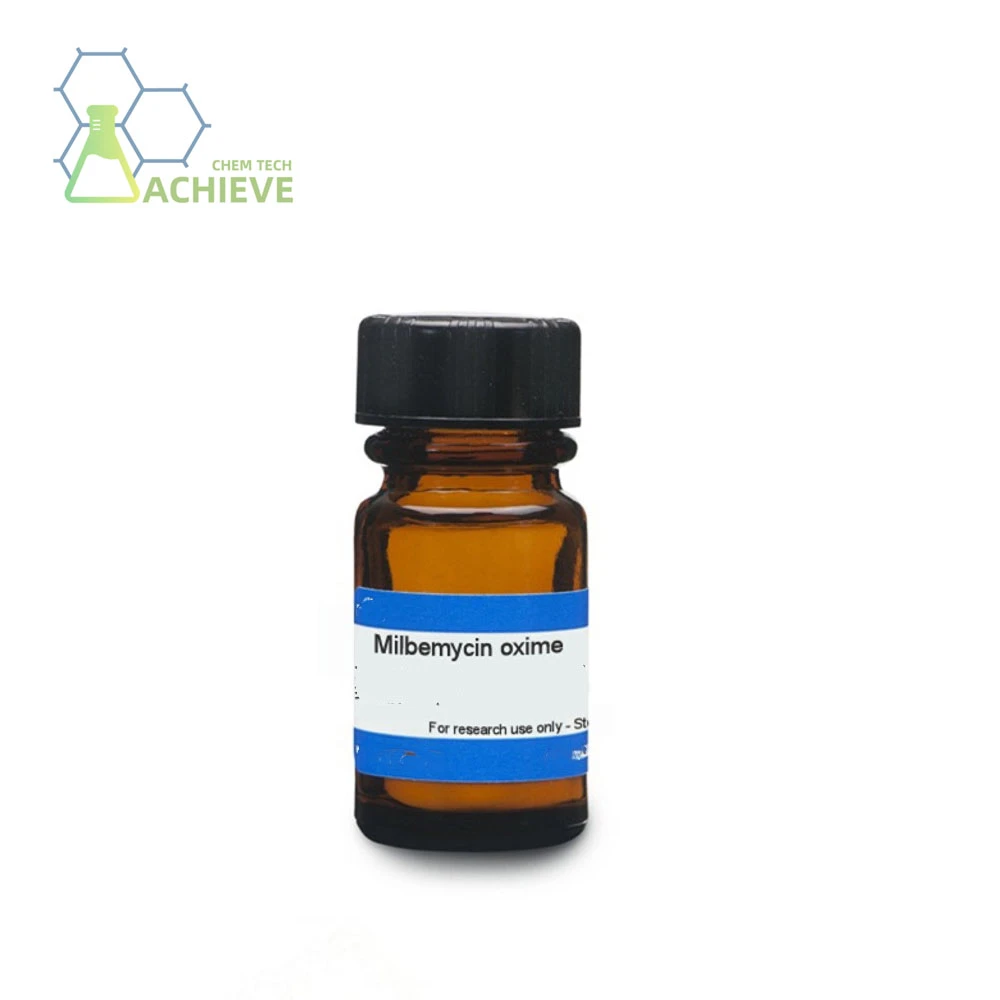
Milbemycin Oxime Powder
1.General Specification(in stock)
(1)API(Pure powder)
(2)Tablets
For dogs:2.3mg/5.75mg/11.5mg/23.0mg
For cats: 5.75mg/11.5mg/23.0mg
(3)Pill press machine
https://www.achievechem.com/pill-press
2.Customization:
We will negotiate individually, OEM/ODM, No brand, for secience researching only.
Internal Code: BM-1-112
Milbemycin oxime CAS 129496-10-2
Main market: USA, Australia, Brazil, Japan, Germany, Indonesia, UK, New Zealand , Canada etc.
Manufacturer: BLOOM TECH Xi'an Factory
Analysis: HPLC, LC-MS, HNMR
Technology support: R&D Dept.-4
Chemical Structure and Binding Characteristics
Milbemycin oxime powder kills parasites due to its 16-membered macrocyclic lactone structure.
The chemical penetrates the parasite's cell wall and targets neurological targets due to its molecular architecture. The two main components, milbemycin A3 and A4, operate synergistically to enhance therapy results. Over the past 30 years, research has established that this structural arrangement binds well to glutamate-gated chloride channels present solely in invertebrates' nervous systems.Human and parasite ion channels are constructed differently, causing medication selectivity. Unlike vertebrates' GABA receptors, worms' and arthropods' glutamate-gated chloride channels include milbemycin-specific binding sites. This selective recognition explains why the chemical kills parasites so well while protecting mammals.


Studies on binding kinetics show that the chemical creates a stable channel connection within minutes of cell contact, triggering a chain reaction that destroys target parasites' nervous systems.
Pharmacokinetic Properties Affecting Mechanism
After oral administration, milbemycin oxime powder is readily absorbed and achieves peak plasma concentrations within four to eight hours. The compound's lipophilia allows it to enter adipose tissue, creating a reservoir effect that extends its activity. This pharmacokinetic profile allows monthly dosing while maintaining medication levels to prevent parasitic larvae.The molecule is mostly removed in the liver after a minor biotransformation. The faeces excrete 90% of the dosage unaltered.
This decreases liver enzyme metabolic load. This clearance pattern makes the drug safe for many individuals, even those with minor hepatic impairment. Extended tissue residency period continues exposure to migratory parasite larvae, particularly during the most important heartworm prevention window.
Molecular Interactions at Target Sites
Milbemycin oxime powder allosterically modulates glutamate-gated chloride channels in cells. The binding event modifies the channel protein's structure, making it more likely to open and extending chloride flow. This alters parasites' neural signalling, which coordinates muscle function.

The chemical increases chloride ion flow rates by many orders of magnitude, according to electrophysiological tests.
When one molecule attaches, it helps attach other molecules to neighbouring channel complex sites due to positive cooperativity. This cooperative binding enhances pharmaceutical effects at low tissue concentrations. Researchers identified compound recognition amino acid residues via site-directed mutagenesis. This clarifies drug-receptor structural interactions. These molecular features will improve the potency of future antiparasitic medications.
Milbemycin Oxime Powder Mode of Action Through Glutamate-Gated Chloride Channels

Channel Activation and Chloride Ion Flux
Ligand-gated glutamate-gated chloride channels are found in invertebrate neuromuscular junctions and interneurons. Milbemycin oxime powder binds to these channels, opening the channel pore to let chloride ions enter the cell along their electrochemical gradient. Negatively charged ions hyperpolarise the cellular membrane, leaving it below the action potential threshold.
The compound's chloride conductance is maintained, unlike normal glutamate signalling. Milbemycin oxime powder activates channels longer than endogenous glutamate, which opens them briefly. Under compound impact, patch-clamp electrophysiological experiments have documented channel open periods of many seconds,
compared to milliseconds during normal synaptic transmission.This abnormal extension of inhibitory signalling silences the parasite nervous system neuronal transmission.
Neuromuscular Junction Disruption
Milbemycin oxime powder affects neuromuscular junctions more due to their glutamate-gated chloride channels. Somatic muscle contraction requires precise excitation and inhibition timing by motor neurones. The chemical prevents muscle fibre activation by increasing chloride conductance at these junctions. Parasites afflicted by this mechanism gradually lose motility and become flaccid.This neuromuscular disturbance affects parasite survival.


Regular peristaltic movements expel intestinal nematodes,which lose their capacity to retain position in the host's gastrointestinal tract.Reduced motility makes bloodstream microfilariae more susceptible to immune system clearance.Antiparasitic action peaks 24–48 hours after compound exposure. Paralysis begins within hours. Rapid action makes the chemical helpful in therapeutic and preventative contexts.
Selectivity for Invertebrate Channels
Milbemycin oxime powder is safe in mammals because vertebrate and invertebrate chloride channel systems behave differently. Macrocyclic lactones target glutamate-gated chloride channels, not mammals. Instead, they slow neuronal transmissions using GABA and glycine.
Therapeutic doses of the substance bind weakly to mammalian GABA receptors.This explains the large discrepancy between parasite-killing and animal-sick dosages.For animals, the blood-brain barrier offers additional defence. Many substances cannot enter the CNS due to this selective permeability barrier. Even with cross-reactivity, milbemycin oxime powder cannot reach brain inhibitory receptors. Some dog breeds with multidrug-resistant gene alterations may have less of a barrier, although the substance is safe at approved levels. This biological selection is a big advantage over less selective and more harmful antiparasitic drugs.

How Does Milbemycin Oxime Powder Affect Parasite Nervous System Function?

Disruption of Neurotransmission Patterns
In order to manage behaviour, eating, reproduction, and environmental response, parasitic neural systems must balance excitatory and inhibitory impulses. Milbemycin oxime powder artificially boosts inhibitory neurotransmission, altering this equilibrium. The chemical persistently hyperpolarises glutamate-gated chloride channels, stopping neuronal activity. Parasites cannot respond appropriately because this impairs sensory processing and motor output.Behavioural investigations on treated nematodes showed changes in eating, reproduction, and mobility. At first, impacted parasites have problems migrating and feeding through their throat. As compound exposure continues,
these impairments worsen until the parasite is paralysed.Parasitic larvae have trouble moving and finding new hosts due to the neurological issue, limiting their potential to infect. Its numerous properties make the chemical effective against different life stages and parasites.
Impact on Parasitic Muscle Function
Milbemycin oxime powder affects parasite muscle physiology as well as the nervous system. Hyperpolarisation from chloride conductance prevents muscle cells from contracting. Our locomotor muscles weaken and quit reacting to motor neuron impulses. Immobility kills parasites that need to move to eat, reproduce, or remain in their host.
Parasites' specialised muscular systems are affected.


When their pharyngeal muscles quit working, nematodes starve. Even if the parasite remains in the gut, this occurs.Parasite populations decline when reproductive mechanisms that require muscular control to produce eggs or discharge microfilariae quit operating. These physiological breakdowns act together to provide the medication its full antiparasitic efficacy in clinical conditions. Drugs impact muscles swiftly, and paralysis is evident within 24 hours.
Interference with Parasitic Sensory Systems
Parasites require extensive senses to survive. These sensors detect host chemical messages, environmental changes, and developmental stimuli.
Milbemycin oxime powder impairs neuronal sensory processing, affecting these skills.The chemical overactivates glutamate-gated chloride channel-containing chemosensory neurons.This floods the neural system with inhibitory impulses, blocking sensory inputs.Parasites lose their senses and struggle to traverse host tissues. When larvae move, they miss their way and don't reach their maturation sections. Adult parasites cannot locate good feeding locations or partners to reproduce. Besides affecting motor function, the chemical also affects sensory function, which helps eliminate parasites. Electrophysiological recording from parasite sensory neurones showed that the chemical drastically alters response patterns.

Milbemycin Oxime Powder Antiparasitic Pathways and Research Applications Explained

Lifecycle Stage Susceptibility
Based on glutamate-gated chloride channel development, parasite life stages are more or less vulnerable to milbemycin oxime powder. The chemical is toxic to larvae, particularly those migrating throughout host tissues. The chemical is useful for preventing parasites from becoming sexually mature because it influences development. Researchers showed that nematodes had the most channels during larval stages, which matched clinical observations.
Although they require somewhat more exposure than larvae, adult parasites respond to the chemical. In adult animals, channel density may be lower due to body size and cuticle thickness. Despite these issues, therapeutic doses influence fragile species' adult populations.
Eggs and early embryos are resistant because their nervous systems are still developing. In therapeutic settings, life stage specificity impacts dose and treatment effects.
Spectrum of Parasitic Targets
Milbemycin oxime powder kills various companion animal-infecting nematode genera. Drug-sensitive intestinal roundworms include Toxocara canis and Toxascaris leonina. One-dose therapy had clearance rates over 95% in controlled trials. Hookworms like Ancylostoma caninum respond similarly, making the chemical effective for gut parasite management. It controls whipworms (Trichuris vulpis); however, they may require many doses.


Its main therapeutic purpose is to treat heartworms. It kills tissue-stage larvae before they become adults in pulmonary arteries when administered monthly.Milbemycin oxime powder is essential to heartworm control in endemic areas because it prevents their spread. The chemical may destroy demodectic and sarcoptic mange mites as well as helminths. Its wide range lowers the need for several antiparasitic medications, simplifying treatment approaches.
Research Applications and Mechanistic Studies
Milbemycin oxime powder is used in animals and by researchers to explore invertebrate neurobiology and drug receptor interactions.
The chemical lets scientists research glutamate-gated chloride channels' structure and function,which helps us understand this crucial category of ion channels.Using the chemical in electrophysiological investigations has helped us comprehend channels, ions, and allosteric regulation in more pharmaceutical situations.The chemical also aids parasitology experts in analysing parasite medication resistance. Comparative investigations of susceptible and resistant parasites reveal genetic alterations that reduce medication sensitivity. These investigations discovered channel gene variants connected to resistance. This aids resistance management planning and monitoring. Milbemycin oxime powder has well-characterized structure-activity correlations, making it useful for medicinal chemistry research that aims to improve antiparasitic medicines.

Its research applications make it valuable outside medicine.
Exploring the Science Behind Milbemycin Oxime Powder and Parasite Control

Integration with Comprehensive Parasite Management
Effective parasite control requires pharmacological treatments, environmental management, and diagnostic monitoring. Milbemycin oxime powder works well in multi-parasitic disease prevention strategies. Regularly providing the medicine at label intervals maintains protective drug levels throughout high-risk parasite transmission seasons. Prevention is healthier and cheaper than treatment, particularly for severe illnesses like heartworm disease.
Environmental techniques reduce parasite exposure, aiding drug control. Faeces should be removed from yards and homes as soon as possible to prevent infective eggs and larvae from spreading. Mosquito control reduces heartworm transmission.
When paired with milbemycin oxime powder, these techniques outperform medication therapy.Veterinarians are increasingly embracing holistic techniques that address different parasite transmission sources.
Considerations for Special Populations
Milbemycin oxime powder must be applied to certain animals using modified procedures. Treatment time and safety gaps are prioritised for breeding females. Although reproductive toxicity studies have demonstrated that the prescribed dosages are safe during pregnancy and lactation, it is still best to see a vet for each situation. Puppies and kittens may start parasite prevention at six to eight weeks old, protecting them throughout development when they are most susceptible.


Geriatric animals with various health issues may safely use the chemical without hepatic breakdown.Milbemycin oxime powder does not attach to proteins or modify metabolic pathways; therefore, it seldom interacts with numerous drugs in animals with long-term diseases. Breed-specific issues must be considered, as herding breeds have multidrug resistance gene mutations. The drug is safer than several macrocyclic lactones in these groups, although screening and dosage changes may be needed.
Quality Standards and Pharmaceutical Specifications
Milbemycin oxime powder must meet pharmaceutical quality criteria to be effective and safe.To maintain strength, purity, and stability,
reputable producers conduct stringent analytical testing throughout manufacturing. HPLC and LC-MS are the principal methods for identifying and measuring active ingredients.These techniques detect contaminants and breakdown products that might compromise quality or safety.The FDA requires thorough documentation on how veterinary medicinal items are created, evaluated for quality, and stability. Milbemycin oxime powder factories are regularly inspected for GMP compliance. These quality controls ensure that items fulfil identification, strength, quality, and purity criteria to safeguard animal patients and end users. Only producers that meet these regulations should provide materials.

Conclusion
Milbemycin oxime powder is a sophisticated antiparasitic medication that specifically interacts with invertebrate muscle systems, according to research. The chemical selectively inhibits glutamate-gated chloride channels and has superior pharmacokinetics and safety, making it helpful for animal parasite research. Understanding how it kills parasites makes it simpler to utilise in the lab and encourages researchers to find better methods.
Evidence-based veterinary medicine includes using milbemycin oxime powder in parasite control regimens. To make this crucial medicine more helpful, further research is needed into resistance, drug administration, and parasite neurological systems. Professionals and academics may use this macrocyclic lactone to fight pet parasite infections by understanding its molecular science.
FAQ
1. What about milbemycin oxime powder makes it better at killing bugs than mammals?
The chemical targets glutamate-gated chloride channels, which are only found in the nervous systems of invertebrates. Mammals do not have these specific types of channels. Instead, they use GABA and glycine as chemicals that slow down nerve signals. Milbemycin oxime powder cannot bind to mammalian targets at effective amounts because of structural differences between glutamate channels in invertebrates and GABA receptors in mammals. By keeping compounds from getting to parts of the central nervous system, the blood-brain barrier adds to the safety of animals that have been treated.
2. Instead of just treating adult infections, how does milbemycin oxime powder avoid heartworm disease?
Giving milbemycin oxime powder once a month keeps tissue concentrations high enough to kill heartworm larvae in their early stages of growth before they become adults. The chemical works especially well against tissue-stage larvae (L3 and L4) that are moving through tissues after being transmitted by mosquitoes. The compound stops the growth of adult infections that lead to serious heart disease by getting rid of these immature forms before they reach the pulmonary arteries and heart. For this defense mechanism to work, it needs to be dosed every month during the transmission season to keep protecting against new larvae.
3. Can bugs become immune to milbemycin oxime powder? If so, how is this tracked?
There is a possible risk of resistance building up with any antiparasitic drug, including milbemycin oxime powder. Changes in genes that code for glutamate-gated chloride channels might make drugs less likely to bind, which would make the chemical less effective. At the moment, monitoring programs keep an eye on the percentage of treatments that do not work and test parasite isolates in the lab to find new forms of resistance. Responsible use, such as using the right dose and integrating parasite control techniques, helps keep drugs working well. Researchers are still looking into how resistance works so that they can make tracking methods and stewardship guidelines that will make this useful antiparasitic agent last longer.
Partner with BLOOM TECH for Premium Milbemycin Oxime Powder Supply
BLOOM TECH has been an approved milbemycin oxime powder supplier for over 12 years and has a lot of experience making organic compounds and pharmaceutical intermediates. Our GMP-certified factories keep the highest quality standards, which are backed up by certifications from the US FDA, the EU, and the CFDA. We offer pharmaceutical-grade milbemycin oxime powder with full analytical documentation, which includes HPLC, LC-MS, and HNMR analysis. This ensures that the quality is always the same and meets international standards for research and veterinary pharmaceutical applications.
We are committed to more than just supplying products; we also offer technical help from our dedicated R&D team, competitive pricing structures built for long-term partnerships, and reliable shipping services that serve markets around the world. Our one-stop service platform has exactly what your projects need, whether you need research-grade materials for molecular studies or large amounts for making medicines. We know how important reliable supply chains are for developing new medicines, so we keep strong inventory systems to ensure that medicines are always available.
Contact our knowledgeable staff right away at Sales@bloomtechz.com to talk about your milbemycin oxime powder needs. To help you make buying choices, we give you personalized quotes, full specifications, and regulatory paperwork. Join the group of 24 international research and pharmaceutical companies that trust BLOOM TECH as their main chemical supplier.
References
1. Campbell WC, Benz GW. Ivermectin: a review of efficacy and safety. Journal of Veterinary Pharmacology and Therapeutics. 1984;7(1):1-16.
2. Shoop WL, Mrozik H, Fisher MH. Structure and activity of avermectins and milbemycins in animal health. Veterinary Parasitology. 1995;59(2):139-156.
3. Cully DF, Vassilatis DK, Liu KK, et al. Cloning of an avermectin-sensitive glutamate-gated chloride channel from Caenorhabditis elegans. Nature. 1994;371(6499):707-711.
4. Prichard RK, Geary TG. Perspectives on the utility of moxidectin for the control of parasitic nematodes in the face of developing anthelmintic resistance. International Journal for Parasitology: Drugs and Drug Resistance. 2019;10:69-83.
5. Bowman DD, Atkins CE. Heartworm biology, treatment, and control. Veterinary Clinics of North America: Small Animal Practice. 2009;39(6):1127-1158.
6. Wolstenholme AJ, Rogers AT. Glutamate-gated chloride channels and the mode of action of the avermectin/milbemycin anthelmintics. Parasitology. 2005;131(S1):S85-S95.