


Bauxite powder development base:
Guizhou is the main producing area of bauxite in China, accounting for about 1/5 of the national reserves, of which Qingzhen and Xiuwen have the largest bauxite reserves and the highest grade. After processing, bauxite can be used to manufacture cement and refractory materials, and also can be used in aluminum industry, nonferrous metal smelting and abrasive industry.
The Qingzhen Mage Mine, on which the bauxite mining and deep processing base depends, is the mine of Guiyang Refractory Factory. In June 2007, a company in Shenzhen successfully acquired the overall property of Guiyang Refractory Factory, a policy-based bankrupt enterprise. According to the principle of "vitalizing the stock and optimizing the increment", the company has invested nearly 200 million yuan to develop the Mage Mine in Qingzhen. It is expected that by the end of 2009, the company will have a comprehensive production capacity of 404000 tons/year in Guizhou, with a sales revenue of 310 million yuan, and then become the largest refractory finishing enterprise in the south of the Yangtze River and the central and southwest regions of China.
The construction of the bauxite mining and deep processing base of Guiyang Refractory Plant, located in Maige Township, Qingzhen City, has commenced. Three rotary kiln production lines with an annual output of 60000 tons of high-alumina clinker will be built to become the largest bauxite deep processing base in Guizhou Province. Guizhou is expected to become the largest bauxite deep processing base in China.
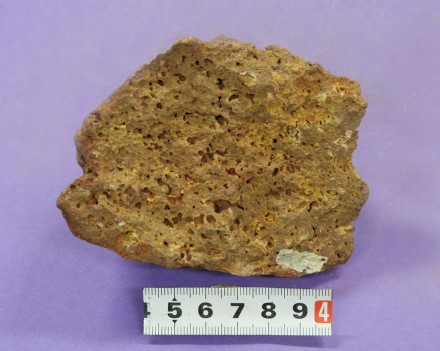
Origin of bauxite:
(1) Xiuwen type carbonate ancient weathering crust allochthonous accumulation subtype bauxite deposit, also known as carbonate ancient weathering crust allochthonous accumulation subtype bauxite deposit. Its genesis is related to carbonate karst lateritized ancient weathering crust. And because there is a few meters thick lacustrine iron lenticular deposit between the bauxite and the underlying carbonate bedrock, the bauxite is not accumulated in situ, but the lateritized weathering crust near the nearly dry lake is migrated and accumulated in different places. This type of deposit is typical of Xiaoshanba bauxite deposit in Xiuwen County, Guizhou. Because the underlying bedrock is carbonate rock, the aluminium-rich calcium-laterite eluvial layer formed by weathering is generally said to be the longer the erosion interval, that is, the longer the weathering time, the more and thicker the aluminium-rich calcium-laterite layer formed by weathering, the more bauxite minerals, the less clay minerals, the richer the ore grade, and the greater the thickness of the ore layer.
(2) Xin'an type carbonate ancient weathering crust in-situ accumulation subtype bauxite deposit, also known as carbonate ancient weathering crust in-situ accumulation subtype bauxite deposit, is typical of Zhangyaoyuan bauxite deposit in Xin'an, Henan. Bauxite of this type of deposit is directly covered on the karst erosion surface of carbonate rock, and is accumulated in situ. In many cases, it is accumulated in karst caves and solution buckets. The ore body is not long (hundreds of meters), but its thickness is large (40~60m). If the erosion is interrupted for a short time, generally only calcareous laterite eluvium is formed, with slight migration and transportation. Although the ore quality is slightly poor, the ore bed is stable and the thickness changes little.
(3) Pingguo type carbonate ancient weathering crust in-situ accumulation - modern karst accumulation subtype bauxite deposit. It is also called carbonate ancient weathering crust in-situ accumulation - modern karst accumulation subtype bauxite deposit. The overlying and underlying bedrock of the deposit is limestone within a thickness of hundreds of meters. After Quaternary karst, limestone and bauxite ore are weathered into laterite and bauxite ore fragments fall into accumulated ore. The formation conditions of this kind of accumulation ore are mainly: there is a certain scale of layered ore, there are suitable climatic conditions, there should be thick limestone above and below the ore bed, and the clay shale on the top and bottom of the ore bed is thin.
(4) Zunyi type aluminosilicate ancient weathering crust accumulates subtype bauxite deposit in situ. Also known as aluminosilicate ancient weathering crust in-situ accumulation subtype bauxite deposit, the underlying bedrock is fine clastic rock or basic volcanic rock, and is the bauxite deposit of the underlying bedrock lateritized weathering crust in-situ accumulation (a few slope deposits). The ore-forming law of this type of deposit is: firstly, there is a transition phenomenon with the underlying bedrock, and there is an erosion discontinuity with the overlying strata, so the thickness changes greatly, and there are many oreless skylights; Secondly, the thickness of the ore bed, the size of the ore body and the grade of the ore depend on the length of the erosion interval during mineralization and whether the underlying bedrock is easily weathered. If the erosion is interrupted for a long time, the underlying bedrock eroded and weathered is mostly fine clastic rock, clay shale, and only part of it is carbonate rock. The ore bed is often thick, large in scale, and the ore quality is good, but the number of mineral-free skylights increases. If the underlying bedrock eroded and weathered is relatively weathered basalt, the ore bed thickness and ore body size may be large, and the ore may also be rich. If the underlying bedrock is relatively weathered basalt, but the erosion interval is too short and the weathering is not complete during mineralization, the thickness of the ore bed, the size of the ore body and the quality of the ore are difficult to meet the ideal.