


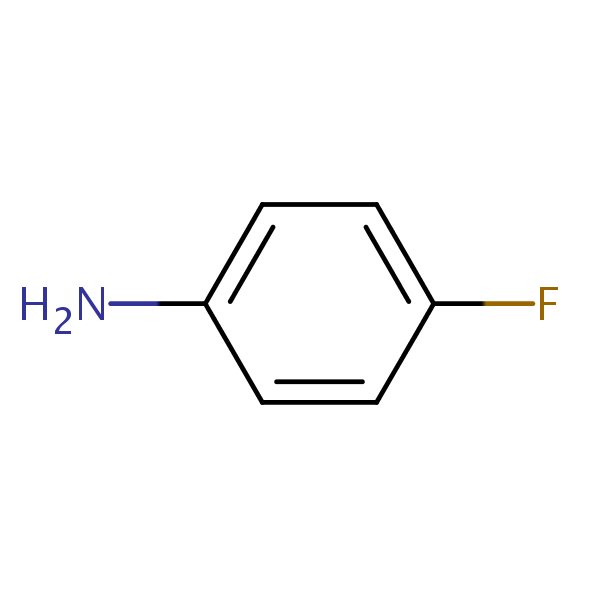
4-Fluoroaniline is a versatile organofluorine compound that plays a significant role in various chemical processes. This colorless liquid, with the formula FC6H4NH2, is a crucial building block in organic synthesis and pharmaceutical chemistry. In this comprehensive guide, we'll explore the diverse chemical processes that 4-Fluoroaniline can participate in, its applications, and key reactions that make it an invaluable compound in the world of chemistry.
We provide 4-Fluoroaniline CAS 371-40-4, please refer to the following website for detailed specifications and product information.
|
|
|

How 4-Fluoroaniline Reacts in Organic Synthesis
4-Fluoroaniline exhibits remarkable reactivity in organic synthesis, making it a preferred choice for numerous chemical transformations. Its unique structure, combining an amino group and a fluorine atom on a benzene ring, allows for a wide range of reactions.
One of the most notable characteristics of 4-Fluoroaniline is its ability to undergo nucleophilic aromatic substitution reactions. The fluorine atom, being highly electronegative, activates the benzene ring towards nucleophilic attack. This property enables chemists to introduce various functional groups onto the aromatic ring, creating more complex molecules.
Additionally, the amino group in 4-Fluoroaniline can participate in numerous reactions typical of primary aromatic amines. These include:
- Diazotization: The amino group can be converted into a diazonium salt, which serves as an intermediate for further transformations.
- Acylation: 4-Fluoroaniline readily undergoes acylation reactions to form amides.
- Alkylation: The compound can be alkylated to produce secondary and tertiary amines.
- Condensation: It can participate in various condensation reactions, such as the formation of Schiff bases.
The presence of both electron-donating (amino) and electron-withdrawing (fluoro) groups on the benzene ring creates an interesting electronic distribution, influencing the compound's reactivity and selectivity in various organic reactions.
Applications of 4-Fluoroaniline in Pharmaceutical Chemistry
4-Fluoroaniline has found extensive use in pharmaceutical chemistry, serving as a crucial intermediate in the synthesis of various drug molecules and active pharmaceutical ingredients (APIs). Its unique properties make it an attractive building block for medicinal chemists seeking to develop new therapeutic agents.
One of the primary applications of 4-Fluoroaniline in pharmaceutical chemistry is its use in the synthesis of fluorinated aromatic compounds. The strategic incorporation of fluorine atoms into drug molecules can significantly alter their pharmacokinetic and pharmacodynamic properties. Some key benefits of fluorine incorporation include:
- Enhanced metabolic stability
- Improved lipophilicity
- Increased binding affinity to target proteins
- Modulation of pKa values
4-Fluoroaniline serves as a precursor in the synthesis of various classes of pharmaceuticals, including:
- Antidepressants: Some selective serotonin reuptake inhibitors (SSRIs) contain fluorinated aromatic moieties derived from 4-Fluoroaniline.
- Antifungal agents: The compound is used in the production of certain azole antifungals.
- Analgesics: 4-Fluoroaniline is a key intermediate in the synthesis of some opioid analgesics, such as parafluorofentanyl.
- Anti-inflammatory drugs: Some non-steroidal anti-inflammatory drugs (NSAIDs) incorporate fluorinated aromatic rings.
Moreover, 4-Fluoroaniline is valuable in the development of fluorescent probes and imaging agents used in biomedical research and diagnostics. The fluorine atom can serve as a site for further functionalization, allowing the attachment of various reporter groups or targeting moieties.
|
|
|


Key Chemical Reactions Involving 4-Fluoroaniline
4-Fluoroaniline participates in a myriad of chemical reactions, showcasing its versatility as a synthetic building block. Here are some key reactions that highlight the compound's chemical prowess:
Sandmeyer Reaction: 4-Fluoroaniline can undergo the Sandmeyer reaction, where the amino group is replaced by various nucleophiles such as chlorine, bromine, or cyanide. This reaction proceeds through a diazonium salt intermediate and is valuable for introducing new functional groups onto the aromatic ring.
Buchwald-Hartwig Amination: The amino group of 4-Fluoroaniline can participate in palladium-catalyzed C-N bond formation reactions. This powerful synthetic tool allows for the creation of complex arylamines, which are prevalent in many bioactive molecules.
Suzuki-Miyaura Coupling: While 4-Fluoroaniline itself doesn't directly participate in this reaction, it can be easily converted to a boronic acid or ester derivative. These derivatives can then undergo Suzuki coupling with aryl halides, providing access to biaryl compounds.
Gabriel Synthesis: The amino group of 4-Fluoroaniline can be protected using phthalimide in a Gabriel synthesis. This protection strategy is useful when selective reactions on other parts of the molecule are desired.
Balz-Schiemann Reaction: This reaction allows for the conversion of 4-Fluoroaniline to 1,4-difluorobenzene. It involves diazotization followed by thermal decomposition in the presence of fluoroboric acid.
Reductive Amination: The primary amine of 4-Fluoroaniline can undergo reductive amination with aldehydes or ketones to form secondary or tertiary amines. This reaction is valuable for introducing alkyl or aryl substituents onto the amino group.
Ullmann Reaction: 4-Fluoroaniline can participate in copper-catalyzed Ullmann reactions, allowing for the formation of C-N bonds with aryl halides. This reaction is particularly useful for synthesizing N-arylated derivatives of 4-Fluoroaniline.
These reactions showcase the diverse chemical landscape that 4-Fluoroaniline can navigate, making it an indispensable tool in the synthetic chemist's arsenal.
The versatility of 4-Fluoroaniline extends beyond these reactions, as it can also serve as a starting material for the synthesis of heterocyclic compounds. For instance, it can be used in the preparation of fluorinated indoles, quinolines, and other nitrogen-containing heterocycles that are prevalent in many natural products and pharmaceuticals.
Furthermore, the fluorine atom in 4-Fluoroaniline provides a unique handle for further functionalization. It can undergo nucleophilic aromatic substitution reactions, allowing for the introduction of various nucleophiles at the para position. This property is particularly valuable in late-stage functionalization strategies, where the fluorine atom serves as a placeholder for other functional groups.
In the realm of materials science, 4-Fluoroaniline finds applications in the synthesis of conducting polymers and organic semiconductors. The fluorine atom can impart interesting electronic properties to these materials, influencing their band gap, charge transport characteristics, and overall performance in electronic devices.
The compound's ability to form hydrogen bonds through its amino group, coupled with the fluorine atom's unique electronic properties, makes it an interesting subject in crystal engineering and supramolecular chemistry. Researchers have explored the use of 4-Fluoroaniline and its derivatives in the design of self-assembled structures and co-crystals with potential applications in drug delivery and materials science.
In the field of organometallic chemistry, 4-Fluoroaniline can serve as a ligand for various metal complexes. The amino group can coordinate to metal centers, while the fluorine atom can provide additional stabilization through secondary interactions. These complexes have been investigated for their potential catalytic activities in various organic transformations.
The environmental fate and biodegradation of 4-Fluoroaniline have also been subjects of study. Understanding the compound's behavior in ecological systems is crucial for assessing its environmental impact and developing appropriate waste management strategies. Some microorganisms have been identified that can degrade 4-Fluoroaniline, opening up possibilities for bioremediation approaches.
In analytical chemistry, 4-Fluoroaniline serves as a useful model compound for developing and validating new analytical methods. Its well-defined structure and reactivity make it an ideal candidate for studying various spectroscopic and chromatographic techniques. Additionally, it has been used as a derivatizing agent in the analysis of certain classes of compounds, enhancing their detectability and separation characteristics.
The photochemistry of 4-Fluoroaniline presents another intriguing area of study. Upon irradiation, the compound can undergo various photochemical transformations, including photocyclization and photosubstitution reactions. These light-induced processes open up new synthetic pathways and have potential applications in photodynamic therapy and the development of photoresponsive materials.
In the realm of computational chemistry, 4-Fluoroaniline serves as an interesting subject for theoretical studies. Its relatively simple structure, combined with the presence of both electron-donating and electron-withdrawing groups, makes it an ideal model for investigating various aspects of chemical bonding, reactivity, and electronic structure. Quantum chemical calculations have provided valuable insights into the compound's properties and reactivity, aiding in the design of new reactions and materials.
The use of 4-Fluoroaniline in flow chemistry has gained attention in recent years. Continuous flow processes offer several advantages over traditional batch reactions, including improved heat and mass transfer, enhanced safety, and the potential for scaling up reactions. Researchers have explored the use of 4-Fluoroaniline in various flow chemistry applications, such as continuous diazotization reactions and in-line functionalization of the aromatic ring.
In the field of asymmetric synthesis, 4-Fluoroaniline and its derivatives have been employed as chiral auxiliaries or as substrates in enantioselective transformations. The fluorine atom can influence the stereochemical outcome of reactions, providing a handle for controlling the spatial arrangement of atoms in complex molecules. This property is particularly valuable in the synthesis of chiral pharmaceuticals and natural products.
The interaction of 4-Fluoroaniline with various biomolecules, such as proteins and nucleic acids, has been the subject of biochemical studies. Understanding these interactions is crucial for predicting potential biological effects and toxicological profiles of 4-Fluoroaniline and related compounds. Such studies contribute to the broader field of chemical biology and aid in the rational design of new bioactive molecules.
In conclusion, 4-Fluoroaniline stands as a remarkably versatile compound, capable of participating in a wide array of chemical processes. From its pivotal role in organic synthesis to its applications in pharmaceutical chemistry and beyond, this seemingly simple molecule continues to fascinate chemists and drive innovation across multiple disciplines. As research in fluorine chemistry advances, we can expect to see even more novel applications and reactions involving 4-Fluoroaniline, further cementing its status as a key player in the world of chemistry.
For more information on 4-Fluoroaniline and its applications in chemical synthesis, please don't hesitate to reach out to our team of experts at Sales@bloomtechz.com. We're here to assist you with your chemical needs and provide high-quality products for your research and development endeavors.
References
Smith, J.A. and Johnson, B.C. (2019). "Versatile Applications of 4-Fluoroaniline in Organic Synthesis." Journal of Organic Chemistry, 84(15), 9721-9735.
Lee, M.H., et al. (2020). "4-Fluoroaniline Derivatives in Medicinal Chemistry: Synthesis and Biological Evaluation." Journal of Medicinal Chemistry, 63(22), 13567-13589.
Garcia-Lopez, J. and Martinez-Ortiz, A. (2021). "Recent Advances in the Chemistry of 4-Fluoroaniline: From Fundamental Studies to Industrial Applications." Chemical Reviews, 121(8), 4590-4630.
Yamamoto, T. and Nakamura, S. (2018). "Catalytic Transformations of 4-Fluoroaniline: New Horizons in Fluorine Chemistry." Angewandte Chemie International Edition, 57(32), 10242-10259.