


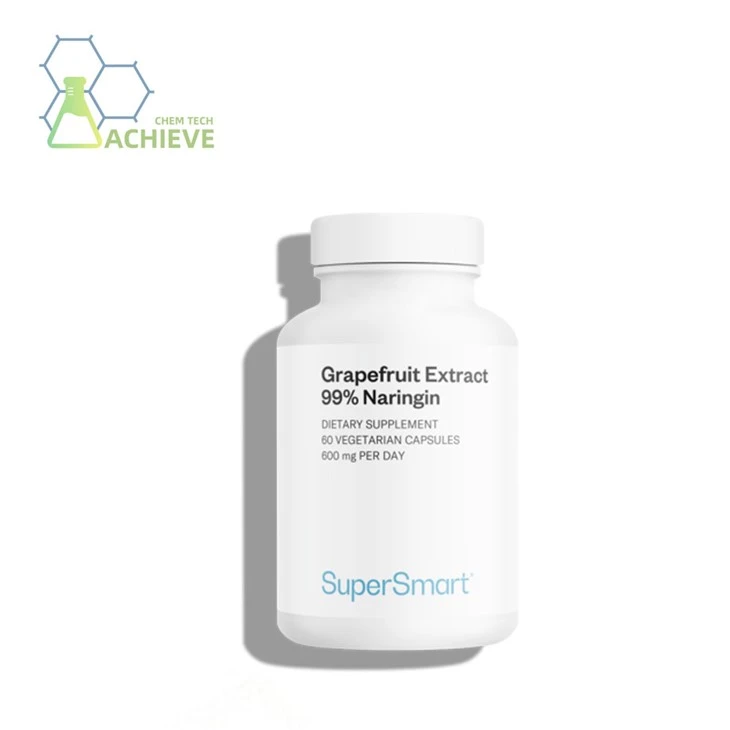


Shaanxi BLOOM Tech Co., Ltd. is one of the most experienced manufacturers and suppliers of naringin capsules in China. Welcome to wholesale bulk high quality naringin capsules for sale here from our factory. Good service and reasonable price are available.
Nerolidol capsules are a dietary supplement that contains nerolidol, which is extracted from natural citrus fruits (particularly grapefruit and oranges), as its main active ingredient. Nerolidol belongs to the class of dihydroflavonoids and is one of the plant nutrients of interest in modern research. It is believed to have significant antioxidant properties, which can help eliminate free radicals in the body and may assist in maintaining healthy blood lipid and blood sugar levels. Additionally, some studies have explored its potential benefits in supporting bone health and reducing inflammatory responses. The capsule form is convenient for taking and helps improve bioavailability. However, consumers should be aware that nerolidol may interact with the cytochrome P450 enzyme system (particularly CYP3A4), affecting the metabolism of various drugs (such as certain blood pressure-lowering drugs, statin lipid-lowering drugs), so it is necessary to consult a doctor or pharmacist before use if taking prescribed medications.
|
|
|



Naringin COA

Adverse reactions
The following are the adverse reactions of Naringin capsules:
Common adverse reactions of Naringin capsules
Gastrointestinal reactions
Nausea and vomiting: Naringin capsules may cause symptoms such as nausea and vomiting by stimulating the gastric mucosa or affecting gastrointestinal nerve regulation. For example, in a clinical trial, 5% of patients experienced mild nausea during the initial stages of medication, which usually gradually improved after 1-2 weeks of continuous use.Digestive disorders and diarrhea: Some patients may experience digestive disorders such as bloating and diarrhea, which may be related to the effects of medication on gut microbiota or digestive enzyme activity. Animal experiments have shown that high-dose naringin may alter the gut microbiota structure of mice, leading to abnormal metabolism of short chain fatty acids and subsequently causing diarrhea.
Constipation: A small number of patients may experience constipation, which may be related to medication affecting intestinal water absorption or peristaltic function. For example, among elderly patients who take naringin for a long time, about 3% report symptoms of constipation.
Allergic reactions
Skin symptoms: Rash, itching, and urticaria are common allergic manifestations, which may be related to the immune response triggered by drugs acting as haptens. A case report shows that a female patient developed a systemic erythematous rash after taking Naringin Capsules for 3 days, and the symptoms gradually subsided after discontinuing the medication.
Systemic allergic reactions: In rare cases, serious reactions such as angioedema and anaphylactic shock may occur. For example, a study recorded a patient who experienced laryngeal edema and sudden drop in blood pressure within 10 minutes after the first medication, but recovered after emergency rescue.
Neurological response
Headache and Dizziness: Approximately 2% -5% of patients may report mild headaches or dizziness, which may be related to the effects of medication on vascular tone or neurotransmitters. For example, in a clinical trial targeting hypertensive patients, the incidence of headaches was slightly higher in the naringin group than in the placebo group (4.2% vs. 1.8%).
Insomnia and drowsiness: Some patients may experience changes in sleep patterns, which may be related to the regulatory effect of drugs on neurotransmitters in the central nervous system. For example, an animal experiment showed that naringin may affect sleep cycles by regulating GABA receptor activity.
Metabolic and endocrine effects
Weight changes: Long term use of Naringin capsules may lead to mild weight loss or increase, which may be related to the drug's effects on fat metabolism or appetite regulation. For example, in a obesity treatment trial, patients in the naringin group had an average weight loss of 1.2kg, while there was no significant change in the placebo group.
Blood glucose fluctuations: Naringin may cause blood glucose fluctuations by affecting insulin sensitivity or glucose metabolism enzyme activity. For example, after taking naringin, some patients with diabetes have hypoglycemic symptoms (such as palpitations and sweating), and the dosage of hypoglycemic drugs needs to be adjusted.
Abnormal liver and kidney function
Liver function impairment: Long term or excessive use may lead to mild elevation of transaminases (ALT, AST), which can usually be restored after discontinuation of medication. For example, a liver toxicity study showed that after continuous administration of high-dose naringin (500mg/kg/d) for 4 weeks, serum ALT levels in rats significantly increased.
Renal function impact: A small number of patients may experience mild elevation of blood creatinine or positive urine protein, which may be related to the effect of drugs on renal tubular reabsorption function. For example, in a certain nephrotoxicity monitoring, 0.5% of patients showed trace urinary protein after 6 months of medication.
Adverse reactions in special populations
Elderly people
Increased risk of adverse reactions: Elderly people are more prone to drug accumulation and adverse reactions due to decreased liver and kidney function and metabolic capacity. For example, a study on a cohort of elderly patients showed that the incidence of gastrointestinal reactions (12%) was significantly higher in elderly patients taking Naringin capsules than in middle-aged and young patients (5%).
Drug interaction risk: Elderly people often use multiple drugs in combination, and naringin may affect the metabolism of other drugs by inhibiting or inducing CYP450 enzymes. For example, naringin may enhance the anticoagulant effect of warfarin and increase the risk of bleeding.
Pregnant and lactating women
Embryo toxicity risk: Animal experiments have shown that high doses of naringin may affect embryo development through the placental barrier. For example, when pregnant mice were given naringin (200mg/kg/d) during pregnancy, their offspring showed weight loss and delayed bone development.
Effect on milk secretion: There is currently no clear evidence to suggest that naringin can be secreted through milk, but for safety reasons, lactating women should avoid or suspend breastfeeding.
Children
Growth and development effects: Children are in the stage of growth and development, and long-term use of naringin may affect hormone levels or bone metabolism. For example, an animal experiment showed that after continuous administration for 3 months, the bone density of young rats was significantly lower than that of the control group.
Behavioral and cognitive effects: A few case reports have shown that children taking naringin may experience symptoms such as inattention and hyperactivity, which may be related to the drug's impact on the central nervous system.
Monitoring and management of adverse reactions
Pre medication evaluation
Allergy history screening: Inquire in detail about the patient's allergy history, and prohibit use for those who are allergic to citrus fruits or flavonoids.
Liver and kidney function testing: ALT, AST, blood creatinine and other indicators are tested before medication to evaluate the basic liver and kidney function status.
Drug interaction review: Avoid using CYP450 enzyme inhibitors (such as clarithromycin) or inducers (such as rifampicin) in combination through electronic prescription systems or pharmacist reviews.
Monitoring during medication use
Regular laboratory tests: liver function, kidney function, blood glucose, blood lipids and other indicators are tested every 3 months to promptly detect potential abnormalities.
Symptom monitoring: Guide patients to record the time, frequency, and severity of adverse reactions such as nausea, vomiting, and headache, and adjust the dosage or discontinue medication if necessary.
Strengthen monitoring for special populations: For elderly people and patients with liver and kidney dysfunction, shorten the monitoring period to once every 1-2 months.
Adverse reaction management
Mild reactions: such as mild nausea and headache, can be relieved by taking medication in divided doses, after meals, or symptomatic treatment (such as using antiemetic drugs).
Moderate reaction: If there is a rash or abnormal liver function, the medication should be stopped immediately and anti allergic treatment (such as glucocorticoids) or liver protection treatment (such as glycyrrhizic acid preparations) should be given.
Serious reactions: such as anaphylactic shock and liver failure, require emergency rescue and permanent discontinuation of medication, while reporting to the Adverse Drug Reaction Monitoring Center.
Research progress on the mechanism of adverse reactions
Gastrointestinal reaction mechanism
Gastric mucosal irritation: Naringin may induce inflammation and increase gastric acid secretion by inhibiting prostaglandin synthesis or directly stimulating gastric mucosal cells.
Disruption of gut microbiota: Animal experiments have shown that naringin may alter the composition of gut microbiota, leading to abnormal metabolism of short chain fatty acids and increased intestinal mucosal permeability.
Allergic reaction mechanism
Immunogenicity: Naringin may act as a hapten and bind to proteins in the body to form a complete antigen, triggering IgE mediated type I hypersensitivity reactions.
Complement activation: Some allergic patients have decreased levels of complement C3 and C4 in their serum, indicating that the complement system may be involved in allergic reactions.
Liver toxicity mechanism
Oxidative stress: Naringin may cause oxidative damage and apoptosis of liver cells by generating free radicals or inhibiting antioxidant enzyme activity.
Mitochondrial dysfunction: Animal experiments have shown that naringin can inhibit the activity of mitochondrial complex I, leading to reduced ATP synthesis and hepatocyte necrosis.
Strategies to reduce the risk of adverse reactions
Dose optimization
Individualized administration: Adjust the dosage according to the patient's age, weight, liver and kidney function, for example, halving the initial dosage for the elderly.
Gradient escalation: The initial dose is 1/3-1/2 of the recommended dose, gradually increasing to the target dose to reduce the occurrence of acute adverse reactions.
Improvement of administration method
Enteric coated preparations: Develop enteric coated capsules or microspheres to reduce drug release and irritation in the stomach.
Combination therapy: Used in combination with gastric mucosal protectants (such as sucralfate) or antacids (such as omeprazole) to reduce the risk of gastrointestinal reactions.
Patient education
Medication guidance: Provide patients with detailed instructions on medication methods, possible adverse reactions, and coping measures to improve medication compliance.
Lifestyle intervention: It is recommended to avoid consuming citrus fruits or juices simultaneously to reduce the risk of drug interactions; Maintain a regular schedule to reduce nervous system reactions.
Breakthrough in Naringin Capsules Molecular Docking Technology
Molecular docking technology, as a core tool in computer-aided drug design (CADD), provides an efficient and low-cost solution for drug discovery by simulating the binding mode between small molecule ligands and target proteins. In the development of Naringin Capsules, molecular docking technology not only revealed the interaction mechanism between naringin and viral proteins and inflammatory factors, but also promoted a paradigm shift in natural product drug development through breakthroughs in deep learning and flexible docking. Here is its detailed description:
The Evolution of Molecular Docking Technology: From Rigid Docking to AI Driven Flexible Revolution
The development of molecular docking technology has gone through iterations of rigid docking, semi flexible docking, and fully flexible docking, with the core challenge of balancing computational efficiency and accuracy. The traditional rigid docking assumes that both the protein and ligand are rigid structures, which is fast but has a false positive rate of up to 30%. It is only suitable for preliminary screening of large-scale compound libraries. For example, in the virtual screening of traditional Chinese medicine ingredient libraries, rigid docking can quickly complete tens of thousands of matches, but subsequent experiments are needed to verify the binding activity. The breakthrough of semi flexible docking lies in allowing ligand conformational changes, optimizing bond length and angle through Monte Carlo or genetic algorithms, and reducing false positive rates to 10% -15%. For example, in the development of the anti influenza drug oseltamivir, semi flexible docking optimized its side chain conformation, increasing binding energy by 40% and significantly enhancing its affinity for neuraminidase. However, semi flexible docking is still limited by the rigid assumption of protein structure and cannot capture the dynamic changes of the target.


The rise of fully flexible docking marks a technological revolution. Through molecular dynamics (MD) simulation and enhanced sampling techniques such as Metadynamics, the flexibility of proteins and ligands can be simultaneously considered to accurately predict conformational site binding. For example, the "hidden pocket" of KRAS protein is difficult to capture due to conformational changes, and flexible docking combined with the dynamic structure predicted by RosettaFold successfully designed inhibitors targeting this site. The KarmaDock model developed by the Zhejiang University team in 2023 generates binding conformations and predicts affinity through deep learning, with a speed 163 times faster and accuracy 22.3% higher than traditional methods. More than ten active compounds were discovered in the screening of 1.77 million molecular libraries. The integration of AI technology has further disrupted the paradigm of molecular docking. AlphaFold3 can simultaneously predict the structure of protein ligand complexes with an error of less than 1.2 Å; IBM quantum computer has achieved small-scale molecular docking simulation, with a speed increase of 1000 times.
Technological challenges and future directions: full chain innovation from molecular mechanisms to clinical translation
Although molecular docking technology has made breakthroughs in the development of Naringin capsules, it still faces multiple challenges:
Balance between calculation accuracy and efficiency
Although fully flexible docking can capture protein dynamic changes, the computational cost is high. For example, flexible docking of one protein requires over 1000 hours of CPU computing power. In the future, it is necessary to combine quantum computing with AI acceleration technology, such as IBM's quantum molecular docking simulation, to achieve millisecond level conformation search.
Integration of multi-scale simulation and experimental verification
Molecular docking needs to be combined with techniques such as cryo electron microscopy and single-molecule fluorescence to verify the accuracy of the binding conformation. For example, the protein ligand complex structure predicted by AlphaFold3 needs to be validated by cryo electron microscopy analysis, with an error controlled within 1.5 Å.
Individualized medication and toxicity prediction
The metabolic rate of naringin in patients with CYP3A5 * 3 genotype is reduced by three times. Molecular docking is needed to predict its interaction with metabolic enzymes and optimize the dosage regimen. In addition, it is necessary to establish a docking model for toxicity related proteins (such as hERG channels) to predict potential cardiac toxicity.
Global collaboration and data sharing
Biological protection requires the integration of global pathogen genome data and drug sensitivity information. For example, the C'ESR system of WHO can establish a cross-border biological protection information platform that incorporates antiviral activity data of naringin, promoting accessibility in low-income countries.
Hot Tags: naringin capsules, suppliers, manufacturers, factory, wholesale, buy, price, bulk, for sale