




Shaanxi BLOOM Tech Co., Ltd. is one of the most experienced manufacturers and suppliers of angiotensin injection in China. Welcome to wholesale bulk high quality angiotensin injection for sale here from our factory. Good service and reasonable price are available.
Angiotensin injection is a class of peptide hormone drugs developed based on the renin-hypertensin-aldosterone system (RAAS). By mimicking the physiological effects of endogenous hypertensin, this class of drugs exerts effects such as vasoconstriction, blood pressure regulation, and improved organ perfusion, and holds important application value in multiple clinical fields including renal diseases, secondary prevention of myocardial infarction and coronary heart disease, and severe shock.
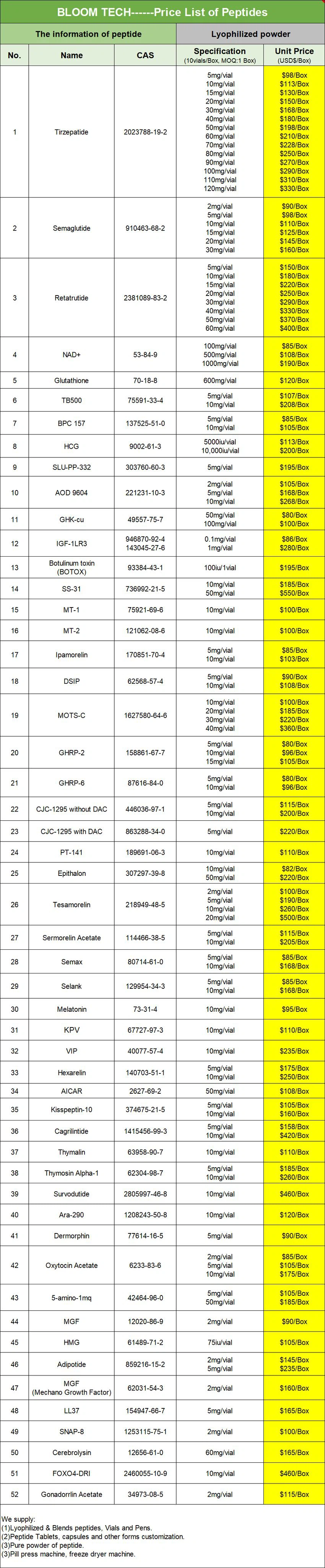
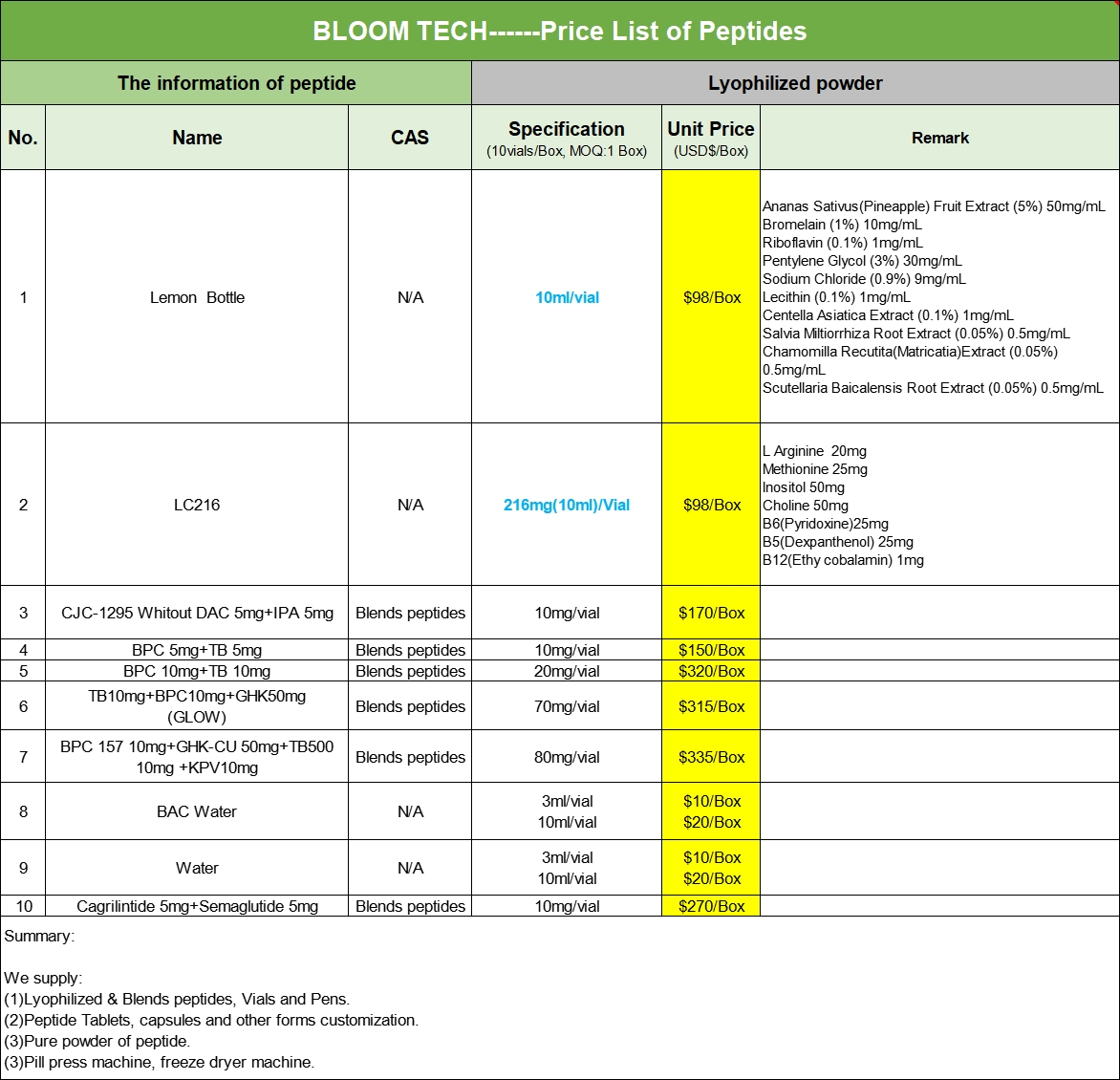
Our Products Form



Angiotensin COA
 |
||
| Certificate of Analysis | ||
| Compound name | Angiotensin | |
| Grade | Pharmaceutical grade | |
| CAS No. | 1407-47-2 | |
| Quantity | 22g | |
| Packaging standard | PE bag+Al foil bag | |
| Manufacturer | Shaanxi BLOOM TECH Co., Ltd | |
| Lot No. | 202601090088 | |
| MFG | Jan 9th 2026 | |
| EXP | Jan 8th 2029 | |
| Structure |
|
|
| Item | Enterprise standard | Analysis result |
| Appearance | White or almost white powder | Conformed |
| Water content | ≤5.0% | 0.21% |
| Loss on drying | ≤1.0% | 0.75% |
| Heavy Metals | Pb≤0.5ppm | N.D. |
| As≤0.5ppm | N.D. | |
| Hg≤0.5ppm | N.D. | |
| Cd≤0.5ppm | N.D. | |
| Purity (HPLC) | ≥99.0% | 99.98% |
| Single impurity | <0.8% | 0.46% |
| Total microbial count | ≤750cfu/g | 230 |
| E. Coli | ≤2MPN/g | N.D. |
| Salmonella | N.D. | N.D. |
| Ethanol (by GC) | ≤5000ppm | 600ppm |
| Storage | Store in a sealed, dark, and dry place below 2-8°C | |
|
|
||
|
|
||


| Chemical Formula | C63H91N17O13 |
| Exact Mass | 1293.7 |
| Molecular Weight | 1294.53 |
| m/z | 1293.70(100.0%), 1294.70(68.1%), 1295.70(22.8%), 1294.70(5.9%), 1296.71(5.0%), 1295.70(4.3%), 1295.70(2.7%), 1296.71(1.8%), 1296.70(1.4%), 1294.70(1.0%) |
| Elemental Analysis | C,58.45; H,7.09; N,18.39; O,16.07 |
Applications in Renal Diseases

The kidney is the core target organ of the renin-hypertensin system. Endogenous hypertensin participates in the regulation of renal hemodynamics, water-electrolyte metabolism, and glomerular filtration function. By precisely modulating the RAAS pathway, angiotensin injection can improve pathological renal conditions and protect renal function. It is mainly used in the treatment of renal diseases such as postoperative complications of hereditary polycystic kidney disease and sepsis-associated acute kidney injury, and demonstrates unique advantages especially in patients with refractory hypotension complicated with renal dysfunction.
1.1 Treatment of Refractory Hypotension After Hereditary Polycystic Kidney Disease Surgery
Autosomal recessive polycystic kidney disease (ARPKD) is a rare hereditary cystic kidney disorder. In severe cases, massive enlargement of bilateral kidneys compresses the thoracic and abdominal cavities, requiring bilateral nephrectomy to relieve symptoms.


Postoperative hypotension is a common severe complication in pediatric patients, particularly in anephric infants, where traditional vasopressors often yield unsatisfactory results. As a potent vasoconstrictor, the product activates the AT1 receptor on vascular endothelium, constricting systemic arterioles and increasing vascular resistance, thereby rapidly elevating mean arterial pressure (MAP).
1.2 Adjunctive Therapy for Sepsis-Associated Acute Kidney Injury
Sepsis-associated acute kidney injury (SA-AKI) is a frequent complication in critically ill patients. Its core pathological mechanism is systemic inflammatory response induced by sepsis, leading to renal vasodilation and hypoperfusion, followed by decreased glomerular filtration function. The product improves renal hemodynamics by constricting renal blood vessels and elevating glomerular perfusion pressure, while inhibiting systemic inflammatory response, alleviating renal tissue damage, and assisting in the restoration of renal function.

Information source:PMC, The Role of Hypertensin-II Infusion in an Infant With Autosomal Recessive Polycystic Kidney Disease Postbilateral Nephrectomies and Refractory Hypotension in the Neonatal Period;Chinese Bulletin of Biology, Review: Targeting the Renin-Hypertensin System for Sepsis-Associated Acute Kidney Injury: From Pathophysiology to Precision Medicine.
Applications in Secondary Prevention of Myocardial Infarction and Coronary Heart Disease

The core pathological basis of myocardial infarction and coronary heart disease is coronary atherosclerosis, vascular stenosis or occlusion, leading to myocardial ischemia and hypoxia, myocardial injury, and even necrosis. Through mechanisms including anti-inflammation, inhibition of cardiomyocyte apoptosis, and improvement of myocardial remodeling, angiotensin injection plays a vital role in acute-phase treatment of myocardial infarction and secondary prevention of coronary heart disease, reducing the risk of long-term cardiovascular events and improving prognosis.
2.1 Acute-Phase Treatment of Acute Myocardial Infarction
Following acute myocardial infarction (AMI), myocardial ischemia and hypoxia trigger severe inflammatory response, cardiomyocyte apoptosis, and myocardial fibrosis, resulting in impaired cardiac function. Continuous intravenous infusion of hypertensin IV injection significantly inhibits the secretion of inflammatory factors (e.g., TNF-α, IL-1β), reduces cardiomyocyte apoptosis, improves mitochondrial function, and alleviates oxidative stress and DNA damage in cardiomyocytes, thereby reducing infarct size and preserving myocardial function.


2.2 Secondary Prevention of Coronary Heart Disease
The core goal of secondary prevention for coronary heart disease is to reduce the risk of cardiovascular events such as recurrent myocardial infarction, heart failure, and sudden cardiac death. By regulating the RAAS pathway, the product inhibits vascular smooth muscle cell proliferation, reduces atherosclerotic plaque formation, improves endothelial function, and attenuates inflammatory response, thus slowing the progression of coronary heart disease and lowering the risk of long-term cardiovascular events.
Information source:PubMed, Continuous Infusion of Hypertensin IV Protects against Acute Myocardial Infarction via the Inhibition of Inflammation and Autophagy;Expert Consensus on the Application of Hypertensin-Converting Enzyme Inhibitors in the Prevention and Treatment of Cardiovascular Diseases.
Applications in Severe Shock
Severe shock is a critical clinical condition, mainly including septic shock, distributive shock, etc. Its core pathological features are vasodilation and abnormal blood volume distribution, leading to tissue hypoperfusion and multiple organ dysfunction. When traditional vasopressors (e.g., norepinephrine) are ineffective, the product, as a potent vasoconstrictor, rapidly improves hemodynamics and enhances tissue perfusion, becoming an important second- or third-line agent for severe shock.


3.1 Treatment of Septic Shock
Septic shock is the most common form of severe shock. Its pathogenesis involves systemic inflammatory response induced by sepsis, causing vascular endothelial injury and vasodilation, resulting in refractory hypotension. Even with adequate fluid resuscitation and conventional vasopressor therapy, some patients fail to reach target vascular pressure. Approved by the U.S. FDA in 2017 for hypotension caused by septic shock, hypertensin II injection (brand name Giapreza) exerts potent vasoconstriction by activating the AT1 receptor, rapidly increasing MAP and improving tissue perfusion.
3.2 Treatment of Other Distributive Shocks
Beyond septic shock, angiotensin injection is also used in neurogenic shock, cardiogenic shock (complicated with vasodilation), and other distributive shocks. In neurogenic shock, sympathetic dysfunction leads to vasodilation and hypotension; Hypertensin II injection directly constricts blood vessels to rapidly restore vascular pressure and tissue perfusion. In cardiogenic shock patients receiving venoarterial extracorporeal membrane oxygenation (VA-ECMO), pulmonary circulation bypass reduces hypertensin-converting enzyme (ACE) activity, leading to endogenous Ang II deficiency. Exogenous Ang II supplementation reverses vascular paralysis and elevates vascular pressure.

Information source:DailyMed, Ang II (medication);Cor et Vasa, Ang II– mechanism of action, current evidence, and statement of the interdisciplinary working group on the use of Ang II in intensive care units;DailyMed, GIAPREZA- Ang IIinjection.


I. Initial Exploration (1898–1934)
The discovery of angiotensin originated from research on the relationship between the kidney and blood pressure. In 1898, Finnish physiologists Tigerstedt and his assistant Bergman at the Karolinska Institute first injected kidney extracts into rabbits and observed a marked rise in arterial vascular pressure. They named this pressor renal substance "renin", establishing an initial link between the kidney and vascular pressure regulation, though the mechanism of renin and its downstream products remained unclear.
Research progressed slowly for decades until 1934, when pathologist Harry Goldblatt successfully established an experimental hypertensive animal model by clamping the renal artery of dogs, confirming that renal ischemia induces sustained hypertension and suggesting the kidney secretes a circulating pressor substance, laying a critical experimental foundation for the subsequent discovery of hypertensin.


II. Key Breakthrough (1939)
In 1939, two independent research teams achieved simultaneous breakthroughs. Led by Eduardo Braun Menéndez at the University of Buenos Aires, a team used Goldblatt's model to isolate a pressor plasma substance from venous blood of ischemic kidneys, naming it "hypertensin" and verifying it as the product of an enzymatic reaction between renin and a plasma substrate. Concurrently, a team led by Irving H. Page at Eli Lilly Laboratories in Indianapolis accidentally discovered that renin reacts with plasma to produce a potent vasoconstrictor during renin purification, naming it "angiotonin". In 1943, they confirmed the enzymatic nature of this reaction and designated the plasma substrate as renin substrate.
III. Unified Nomenclature and Systematic Elucidation (1958 and Beyond)
As the two teams had identified the same substance under different names, Eduardo Braun Menéndez and Irving H. Page reached an agreement at a University of Michigan conference in 1958, unifying the terms "hypertensin" and "angiotonin" into "hypertensin", formally establishing its official name. Subsequently, scientists isolated various hypertensin subtypes, clarified its synthetic pathway, and gradually refined the regulatory mechanism of the renin-hypertensin system, providing clear targets for subsequent drug development and driving innovations in the treatment of hypertension, heart failure, and related diseases.

Information source:American Heart Association, History About the Discovery of the Renin-Hypertensin System;PubMed, A cornerstone in the history of hypertension: the seventieth anniversary of the discovery of hypertensin.
Absolute Contraindications
Pregnancy and lactation (ACEI/ARB)
Bilateral renal artery stenosis / stenosis of the artery in a solitary kidney (ACEI/ARB)
Hyperkalemia (ACEI/ARB)
History of angioedema (ACEI/ARB)
Hypersensitivity to Ang II or any excipient in the formulation (Ang II injection)
Information source:FDA Pregnancy Categories;2025 Expert Consensus on ACEIs in Cardiovascular Disease Prevention and Treatment;DailyMed drug prescribing information.
FAQ
What is hypertensin and its function?
+
-
Hypertensin is an important hormone that helps regulate your blood pressure by increasing it. It's a part of a complex system of hormones, enzymes and proteins called the renin-angiotensin-aldosterone system.
What are hypertensin drugs?
+
-
Hypertensin-converting enzyme inhibitors, also called ACE inhibitors, are medicines that lower blood pressure. ACE inhibitors prevent an enzyme in the body from making angiotensin 2, which makes blood vessels narrow. The heart has to work harder when blood vessels are narrowed. That can make blood pressure go up.
Hot Tags: angiotensin injection, suppliers, manufacturers, factory, wholesale, buy, price, bulk, for sale