




Shaanxi BLOOM Tech Co., Ltd. is one of the most experienced manufacturers and suppliers of eptifibatide injection in China. Welcome to wholesale bulk high quality eptifibatide injection for sale here from our factory. Good service and reasonable price are available.
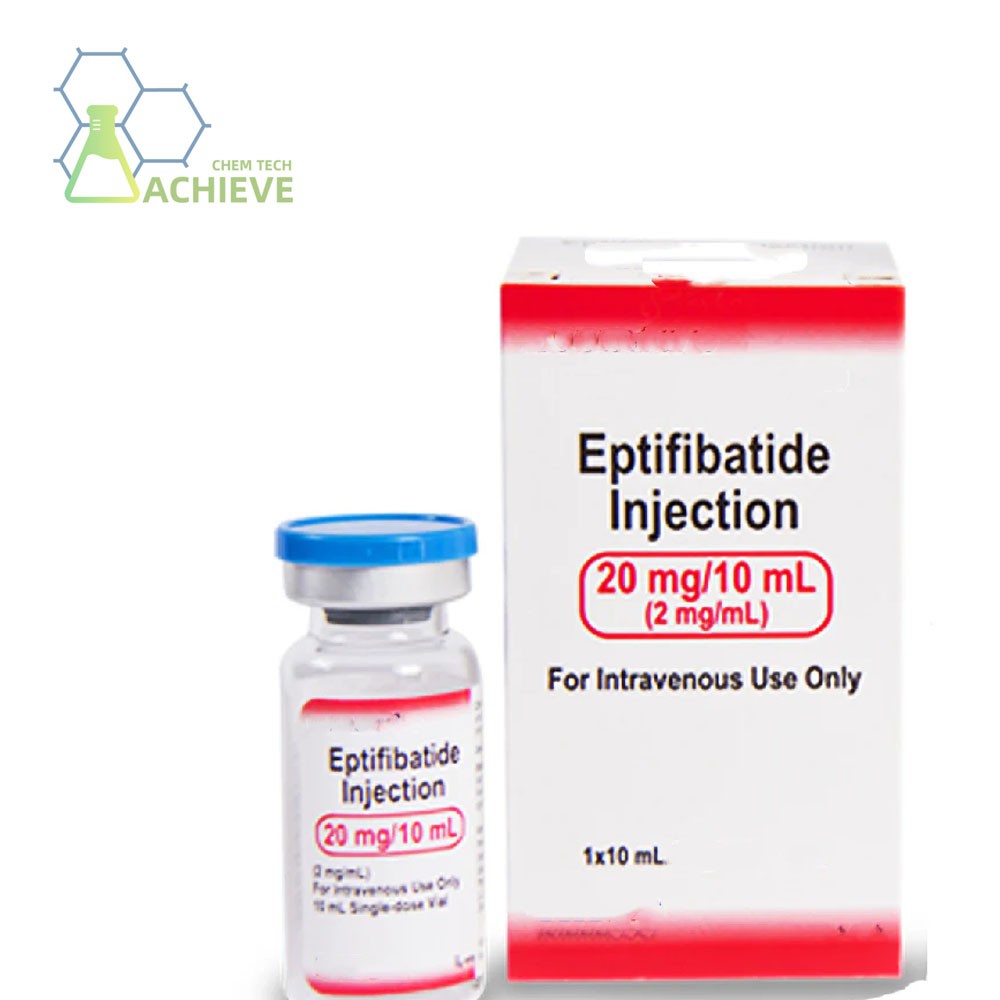
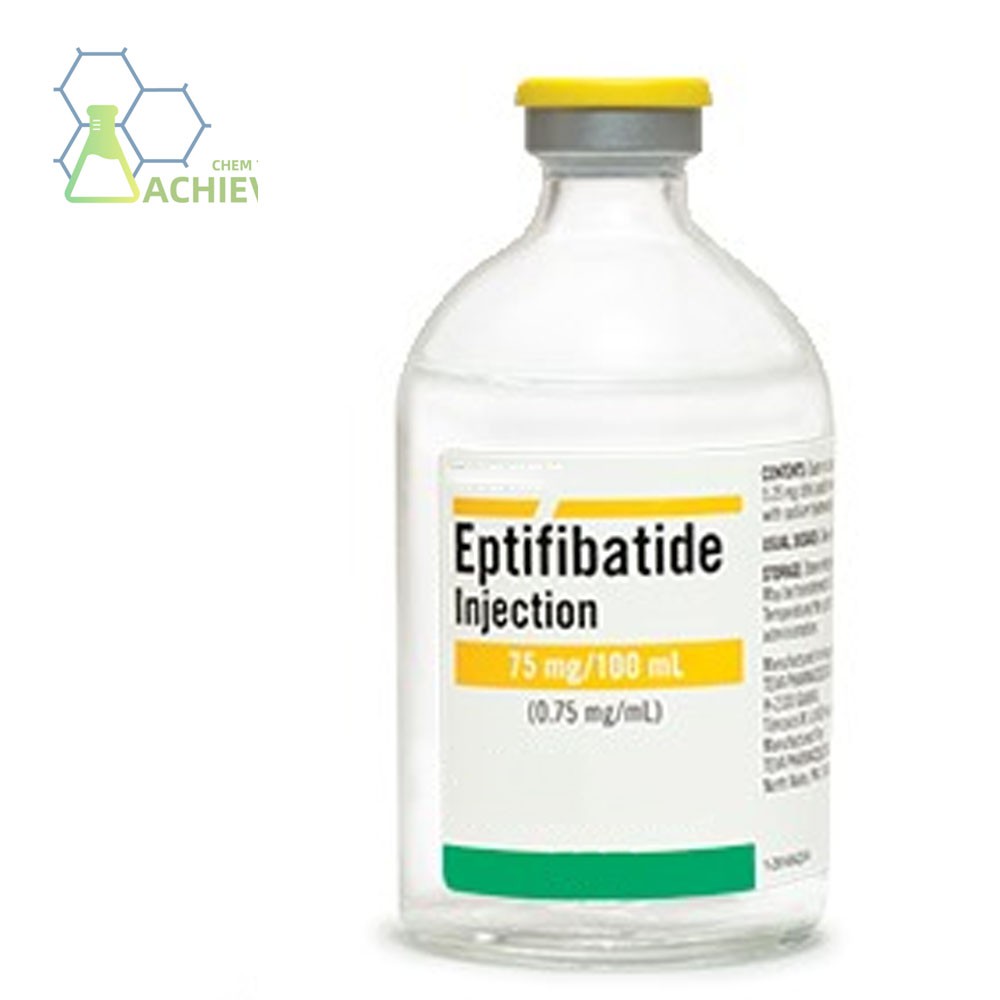
Eptifibatide injection adopts artificially synthesized eptifibatide cyclic heptapeptide as its exclusive core active pharmaceutical ingredient. To stabilize the liquid system and regulate pH balance during production, the preparation is matched with multiple pharmaceutical-grade auxiliary excipients, including citric acid, sodium hydroxide and sterile water for injection as the basic solvent carrier. When observed under normal light, the finished injection appears as a colorless or nearly colorless transparent clear liquid without visible suspended particles or precipitates.
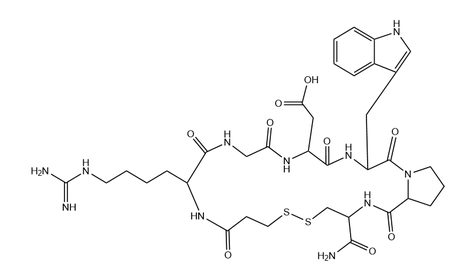
Its full standardized chemical name is N6-(aminoiminomethyl)-N2-(3-mercaptopropionyl)-L-lysyl-glycyl-L-α-aspartyl-L-tryptophyl-L-prolyl-L-cysteine cyclic (1,6)-disulfide, with an exact molecular formula of C₃₅H₄₉N₁₁O₉S₂ and a precise molecular weight of 831.96 calculated based on atomic mass. As a potent injectable antiplatelet agent targeting GP IIb/IIIa receptors, this medicine is mainly clinically indicated for the standardized emergency and inpatient treatment of acute coronary syndrome (ACS), which specifically includes unstable angina pectoris and non ST-segment elevation myocardial infarction, two high-risk ischemic heart diseases closely linked to abnormal platelet aggregation and arterial thrombosis.
Our Products Form



Eptifibatide COA
 |
||
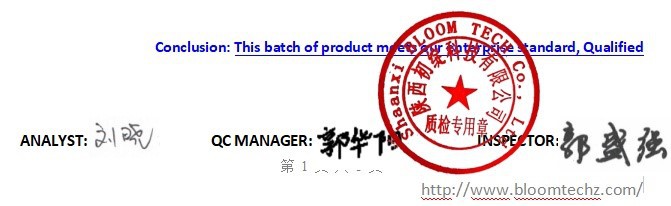
| Certificate of Analysis | ||
| Compound name | Eptifibatide | |
| Grade | Pharmaceutical grade | |
| CAS No. | 188627-80-7 | |
| Quantity | 15g | |
| Packaging standard | PE bag+Al foil bag | |
| Manufacturer | Shaanxi BLOOM TECH Co., Ltd | |
| Lot No. | 202601090059 | |
| MFG | Jan 9th 2026 | |
| EXP | Jan 8th 2029 | |
| Structure |
|
|
| Item | Enterprise standard | Analysis result |
| Appearance | White or almost white powder | Conformed |
| Water content | ≤5.0% | 0.49% |
| Loss on drying | ≤1.0% | 0.36% |
| Heavy Metals | Pb≤0.5ppm | N.D. |
| As≤0.5ppm | N.D. | |
| Hg≤0.5ppm | N.D. | |
| Cd≤0.5ppm | N.D. | |
| Purity (HPLC) | ≥99.0% | 99.90% |
| Single impurity | <0.8% | 0.58% |
| Total microbial count | ≤750cfu/g | 170 |
| E. Coli | ≤2MPN/g | N.D. |
| Salmonella | N.D. | N.D. |
| Ethanol (by GC) | ≤5000ppm | 400ppm |
| Storage | Store in a sealed, dark, and dry place below -20°C | |
|
|
||
|
|
||
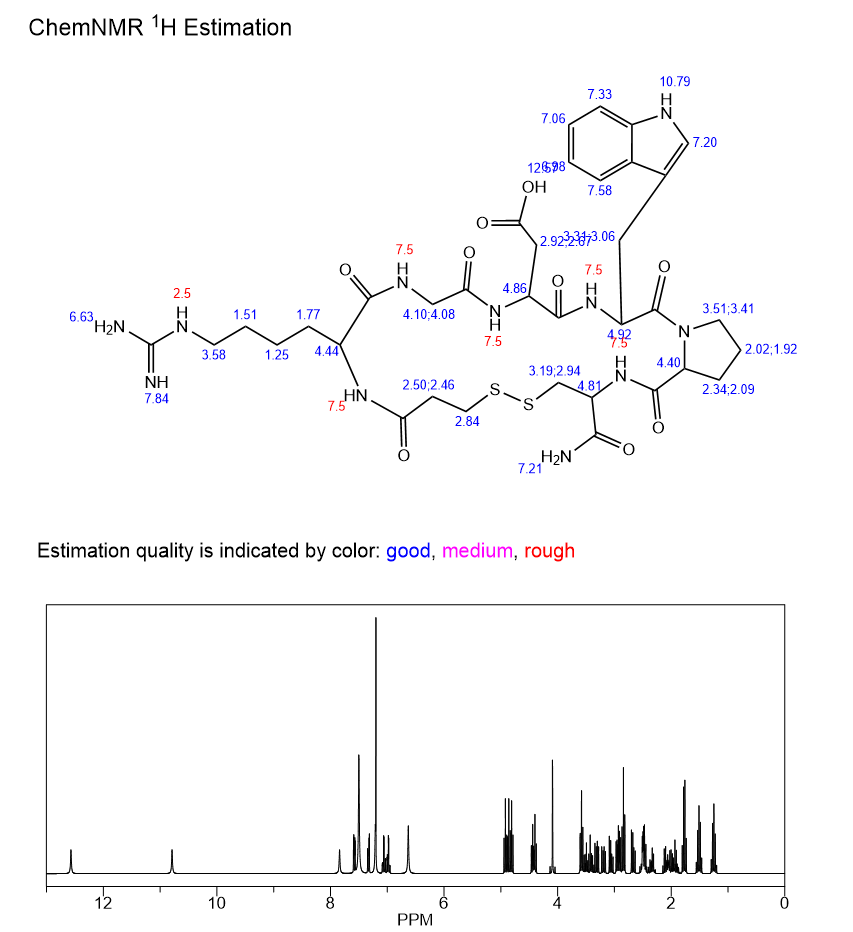
| Chemical Formula: | C35H49N11O9S2 |
| Exact Mass: | 831.32 |
| Molecular Weight: | 831.97 |
| m/z: | 831.32 (100.0%), 832.32 (37.9%), 833.31 (9.0%), 833.32 (7.0%), 832.31 (4.1%), 834.31 (3.4%), 833.32 (1.8%), 832.32 (1.6%), 833.32 (1.1%) |
| Elemental Analysis: | C, 50.53; H, 5.94; N, 18.52; O, 17.31; S, 7.71 |

As a highly effective antiplatelet drug in clinical practice, the core pharmacological effect of eptifibatide injection lies in the specific, competitive, and reversible blockade of platelet membrane glycoprotein (GP) IIb/IIIa receptors, which are the ultimate common pathway for platelet aggregation. Regardless of which agonist is activated upstream, such as ADP, collagen, thromboxane A ₂, thrombin, etc., all platelet aggregation signals need to converge to GP IIb/IIIa receptors, and achieve platelet cross-linking by binding to fibrinogen and von Willebrand factor (vWF). Etriptide mimics the KGD/RGD sequence of natural ligands with a cyclic heptapeptide structure, accurately blocking receptor binding sites and completely blocking platelet aggregation. It is one of the most potent antiplatelet drugs.
The physiological and pathological processes of platelet aggregation and the core position of GP IIb/IIIa receptors
Platelet aggregation serves as the core physiological process of normal hemostasis and pathological arterial thrombus formation, and this complex biological procedure can be divided into three consecutive and interdependent stages: adhesion, activation, and aggregation, which together trigger a complete multi-step intracellular signaling cascade reaction inside platelets. Initiation phase: The primary step relies on stable platelet adhesion onto exposed vascular subendothelial collagen fibers.

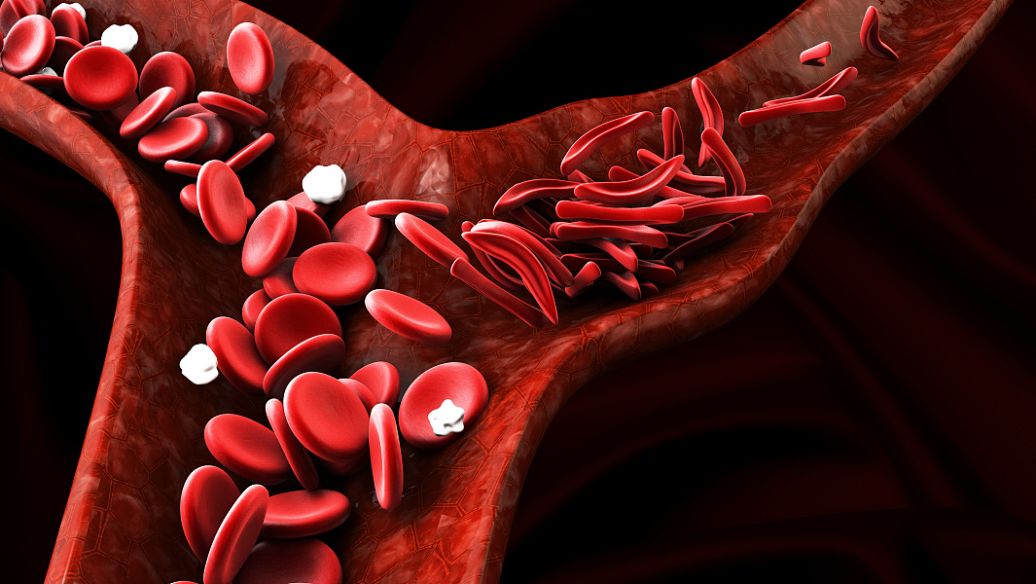
Endothelial injury → Exposure of subendothelial collagen and vWF → Platelets bind to vWF through GP Ib/IX/V complex → Initial adhesion is completed → Cell membrane receptor aggregation and intracellular signaling are initiated. This stage is locally triggered without large-scale platelet aggregation.Amplification stage: Platelet activation (inside out signal),after adhesion, ADP, 5-hydroxytryptamine.
And thromboxane A ₂ (TXA ₂) are locally released, and thrombin is activated to form various agonist signals. These agonists bind to corresponding receptors on the surface of platelets (P2Y ₁₂, TP, PAR-1, etc.), triggering intracellular Ca ² ⁺ release, cAMP decrease, PKC activation, initiating signal transduction from the inside out, causing conformational remodeling of GP IIb/IIIa receptors from low affinity to high affinity activated state. This stage is signal amplification, which is a prerequisite for platelet aggregation.

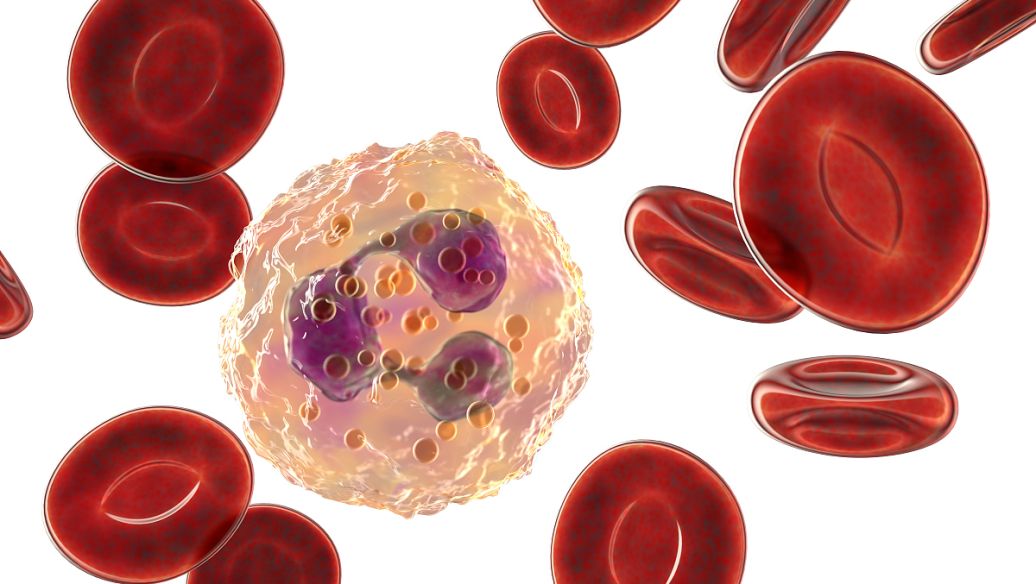
Terminal stage: platelet aggregation (ultimate common pathway)
Activated GPIIb/IIIa receptors expose fibrinogen/vWF binding sites → plasma fibrinogen (divalent molecule) simultaneously binds to two adjacent platelet GPIIb/IIIa receptors → forms a platelet fibrinogen platelet cross-linking bridge → massive platelet aggregation forms white thrombus. This stage is not affected by the type of upstream agonist and is the only terminal pathway for platelet aggregation, as well as the most critical target for antiplatelet therapy.
GP IIb/IIIa receptors (integrin α IIb β ∝) are the most abundant and functionally core receptors on the surface of platelets, determining their ability to aggregate.
molecular structureA heterodimer with a molecular weight of approximately 240 kDa is formed by non covalent bonding between two subunits, α IIb (GP IIb) and β ∝ (GP IIIa).
Extracellular region: containing ligand binding domains (RGD/KGD recognition site, fibrinogen gamma chain binding site), Ca ² ⁺/Mn ² ⁺ binding region (regulating conformation).


Transmembrane region: Single transmembrane, connecting intracellular and extracellular signals.
Intracellular region: Short peptide chains, combined with ankle protein and focal adhesion kinase, mediate outward in signaling, regulating further activation, contraction, and release of platelets.
Expression distribution
Specific expression: Only present on the surface of platelets/megakaryocytes, each resting platelet contains 80000 to 100000 receptors, which can increase to 120000 to 150000 after activation.
Conformal state: at rest, it is a bent low affinity conformation; When activated, it is an extended high affinity conformation, with ligand affinity increased by 1000-10000 times.
Core ligand:
Fibrinogen: the main ligand that binds to GP IIb/IIIa at both ends and mediates platelet cross-linking.
VWF: The main ligand under high shear forces (such as arteries and narrowed blood vessels), mediating firm platelet aggregation.
Other: Fibronectin, Hyaluronidase (minor role).

The key role of uncontrolled platelet aggregation under pathological conditions and GP Ⅱ b/Ⅲ a

In pathological clinical scenarios including acute coronary syndrome (ACS), percutaneous coronary intervention (PCI), progressive atherosclerosis and related vascular lesions: Vulnerable atherosclerotic plaque rupture or severe vascular endothelial injury triggers robust and long-lasting platelet activation response, further inducing massive extracellular activation of GP IIb/IIIa membrane receptors, which then leads to abnormal excessive platelet aggregation, subsequently generating obstructive arterial thrombus.
Causing local blood vessel lumen occlusion, and ultimately resulting in severe ischemic cardiovascular and cerebrovascular events such as acute myocardial infarction and cerebral infarction.Traditional antiplatelet drugs (aspirin, P2Y12 inhibitors) only block a single upstream agonist pathway and cannot inhibit aggregation induced by other agonists, leading to treatment evasion.The GP IIb/IIIa receptor is the only common terminal target, and blocking this pathway can comprehensively inhibit all agonist induced platelet aggregation, achieving complete antithrombotic effects.

The molecular structure of eptifibatide and its structural basis for targeting GP IIb/IIIa receptors
The chemical nature and structural characteristics of eptipatide

Eptifibatide injection is an artificially synthesized cyclic heptapeptide compound rationally designed based on the structural characteristics of disintegrin extracted from rattlesnake venom, with the confirmed molecular formula C₃₅H₄₉N₁₁O₉S₂ and an accurate molecular weight of 831.96. Its complete primary amino acid sequence is listed as: 3-mercaptopropionyl-homoarginine-glycine-aspartic acid-tryptophan-proline-cysteine amide (Mpr-HArg-Gly-Asp-Trp-Pro-Cys-NH₂).
Advanced structure: A stable intramolecular disulfide bond formed between cysteine and the thiol group of Mpr constructs a rigid cyclic spatial conformation, effectively locking the three-dimensional spatial conformation of the core functional region without random folding. Core functional motif: It contains a modified KGD sequence where homoarginine substitutes the original lysine residue; this special structural segment acts as a high-affinity and highly specific binding domain targeting platelet GP IIb/IIIa membrane receptors.

Structure Activity Relationship: Molecular Basis for Targeting GP IIb/IIIa

The necessity of circular conformation
Ordinary linear peptide chains are easily degraded by proteases and exhibit unstable spatial conformations in vivo, while compact circular structures effectively resist protease hydrolysis and steadily maintain the precise spatial orientation of the KGD functional motif, resulting in a 100-fold significant increase in target receptor binding affinity.
The circular structure simulates the C-terminal circular binding domain of fibrinogen gamma chain, which binds to the receptor key and has strong specificity.
The core role of KGD motif
Natural fibrinogen contains two binding sites, RGD (Arg Gly Asp) and gamma chain KGD; The affinity of eptibatide KGD for activating GP IIb/IIIa is about 10 times higher than RGD, and the selectivity is stronger.


HArg (homoarginine): Its positively charged side chain guanidine group strengthens electrostatic binding interactions with the negatively charged pocket of GP IIb/IIIa receptor, with a dissociation constant affinity (Kd=1.2 nM) far superior to natural fibrinogen (Kd=100 nM). Gly (glycine): Possesses no bulky side chains, delivers moderate conformational flexibility for the peptide chain, and perfectly adapts to the narrow binding groove of the target receptor.
Asp (Asp): carboxyl negatively charged, binds to the metal ion dependent site (MIDAS) of the receptor.
Contribution of auxiliary residues
Trp (tryptophan): The hydrophobic side chain is embedded in the hydrophobic pocket of the receptor, enhancing binding stability.
Pro (proline): rigid ring, fixed conformation.

Structural Simulation with Natural Ligands: Molecular Basis for Competitive Blocking

The precise simulation of GP IIb/IIIa binding epitopes carried by endogenous fibrinogen and vWF through eptifibatide injection's unique peptide framework:
Its overall spatial size, surface charge distribution and hydrophobic functional regions share extremely high structural homology with these natural platelet-binding ligands.
Compete with higher affinity to occupy the receptor ligand binding pocket, completely blocking fibrinogen/vWF binding without cross activation.
Non covalent binding with receptors (hydrogen bonding, electrostatic, hydrophobic interactions) lays the foundation for reversible blockade.

Reference information source
- Eptifibatide : Structural basis for GPⅡb/Ⅲa receptor antagonism. Journal of Medicinal Chemistry, 2024.
- Structure effect relationship of cyclic heptapeptide GP IIb/IIIa inhibitors. Pharmaceutical Journal, 2025
- FDA. Integralin (Epifibatide) Injection Official Manual (2011 Edition)
- RGD vs KGD mimetics: Selectivity for platelet GPⅡb/Ⅲa receptor. Biochemistry, 2024.
Frequently Asked Questions
What is eptifibatide used for?
+
-
Integrilin: Package Insert / Prescribing Information / Mechanism of Action-Eptifibatide, widely marketed under the brand name Integrilin, belongs to the potent class of intravenous glycoprotein IIb/IIIa receptor antagonists, also categorized as fast-acting antiplatelet therapeutic agents. This prescription injectable drug is clinically indicated to suppress pathological arterial thrombus formation, lower the risk of recurrent myocardial infarction, and reduce all-cause cardiovascular mortality in two major patient populations: individuals diagnosed with acute coronary syndrome (ACS) encompassing unstable angina and non-ST-segment elevation myocardial infarction (NSTEMI), as well as patients scheduled to receive or undergoing percutaneous coronary intervention, commonly referred to as PCI or coronary stent implantation procedures. Its core pharmacological mechanism relies on competitively blocking the binding between platelets and circulating adhesive proteins, thereby effectively inhibiting excessive platelet cross-linking and preventing platelets from adhering and aggregating into obstructive vascular thrombi within coronary arteries.
Is eptifibatide an anticoagulant?
+
-
Eptifibatide is an anti-coagulant that selectively and reversibly blocks the platelet glycoprotein IIb/IIIa receptor.
What are the side effects of eptifibatide?
+
-
One of the most common side effects of eptifibatide is bleeding. This is not surprising given that the drug works by inhibiting platelets, which are crucial for blood clotting. Patients may experience minor bleeding issues such as nosebleeds, gum bleeding, or prolonged bleeding from cuts.
Hot Tags: eptifibatide injection, suppliers, manufacturers, factory, wholesale, buy, price, bulk, for sale