




GS-441524 Injection, commonly abbreviated as 441, is a broad-spectrum antiviral nucleoside analog classified as a viral RNA-dependent RNA polymerase (RdRp) inhibitor. The compound typically presents as a high-purity, stable white to off-white crystalline powder, which requires dissolution in specific co-solvent systems-such as acidic oil-based vehicles or pH-modulated aqueous matrices-to formulate injectable solutions suitable for subcutaneous administration. At Bloomtechz, we strictly control the crystallization parameters and residual solvent profiles of our GS-441524 API to ensure optimal solubility and long-term stability across both oil-based and aqueous injection formulations.

This metabolite competitively inhibits the transcription process of viral RNA, leading to premature termination of transcription and blocking the synthesis of viral RNA. It is an inhibitor of ribonucleotide analogs that can "trick" the virus's RNA dependent RNA polymerase to bind to it, thereby interrupting the replication of RNA viruses. It is mainly used to treat feline infectious peritonitis (FIP) caused by feline coronavirus. It is injected subcutaneously in cats and generally comes in two forms: oil and water. It needs to be stored and transported under ultra-low temperature conditions, usually using ultra-low temperature ice packs for transportation.
At the same time, our company not only provides GS-441524 injections, but also tablets and powders. If needed, please feel free to contact us at any time.

GS-441524, Price off! 50% discount!!!
After the 3nd factory completed and put into use, the sales volume increased 3 times more during the last 3 months.
In order to growing with our stable clients together, we reset the price for the GS-441524 FIP series products, some items decreased over 50%!
Including API(Pure powder), OEM/ODM: Injection(20mg,30mg,40mg), tablet(25mg,45mg,60mg,70mg) etc.
| Price List of GS-441524 CAS 1191237-69-0 | ||||||
| Category | Specification | Package | Oty | Unit | Unit Price (EXW,USD$/Unit) |
Remark |
| Injection |
20mg/6ml |
10 vials/Box | 1 | Box | $195/Box $250/Box |
(1)Explanation: |
|
40mg/10ml Sometimes white crystals appears, and this specification is being tested... |
We are the R&D company, this is our own technology, previously many buyers want the 40mg injection, we adjusted the proportion of solvent, and we have achieved 40mg.However, recently the temperature is lower, the system is still not stable especially in Europe, so we told all resellers: the 40mg is not availble | |||||
| Tablet | 25mg 45mg 60mg 70mg |
(1)10 PCS/Board (2)12 or 30 PCS/Bottle (3)Customizable |
100 | Pills | $2.5/PCS $2.9/PCS $3.2/PCS $3.5/PCS |
(1)MOQ 100 PCS (2)Printing Customization(Foil blister package of pills) MOQ: 100 PCS, $150//time |
|
API (Pure powder) |
HPLC>99.0% HNMR |
PE bag+Al foil bag |
10 500g |
Gram |
$22.0/Gram $4.0/Gram |
MOQ 10 grams |
Factory supply & Technology support & One-for-one service for you!
GS-441524 injection, tablet & pure powder, the best meds for Cat FIP! BLOOM TECH, the advanced R&D institution for FIP drugs.
(1)If your cat are in emergency! 3-6 days to arrive!
For EU, North America, Middle east, AUS etc., After payment, shipping out in 24h, from our Hong kong & Guangzhou warehouse, International express, FedEx, DHL, UPS etc.
(2)If you buy:
1-9 boxes, shipping cost: $100
10-30 boxes, shipping free.
31-50 boxes, 5% discount.
51-80 boxes, 10% discount.
81-100 boxes, 15% discount.
101+ boxes, 20% discount.
The shipping cost includes:
Shipping, separated packaging, customs clearance, private address delivery fee etc.
Client Feedback
|
|
|
|



GS-441524 COA
 |
||
Certificate of Analysis |
||
|
Compound name |
GS-441524 |
|
|
CAS No. |
1191237-69-0 |
|
|
Grade |
Veterinary grade |
|
|
Quantity |
5kg |
|
|
Packaging standard |
PE bag+Al foil bag | |
| Manufacturer | Shaanxi BLOOM TECH Co., Ltd | |
|
Lot No. |
202601090065 | |
|
MFG |
Jan 9th 2026 |
|
|
EXP |
Jan 8th 2029 |
|
|
Structure |
|
|
| TEST STANDARD | GB/T24768-2009 Industry. Stnndard | |
|
Item |
Enterprise standard |
Analysis result |
|
Appearance |
White or almost white powder |
Conformed |
|
Water content |
≤5.0% |
0.31% |
| Loss on drying |
≤1.0% |
0.15% |
|
Heavy Metals |
Pb≤0.5ppm |
N.D. |
|
As≤0.5ppm |
N.D. | |
|
Hg≤0.5ppm |
N.D. | |
|
Cd≤0.5ppm |
N.D. | |
|
Purity (HPLC) |
≥99.0% |
99.9% |
|
Single impurity |
<0.8% |
0.48% |
|
Residue on ignition |
<0.20% |
0.064% |
|
Total microbial count |
≤750cfu/g |
80 |
|
E. Coli |
≤2MPN/g |
N.D. |
|
Salmonella |
N.D. | N.D. |
|
Ethanol (by GC) |
≤5000ppm |
400ppm |
|
Storage |
Store in a sealed, dark and dry place at-20 degrees |
|
|
|
||
|
|
||

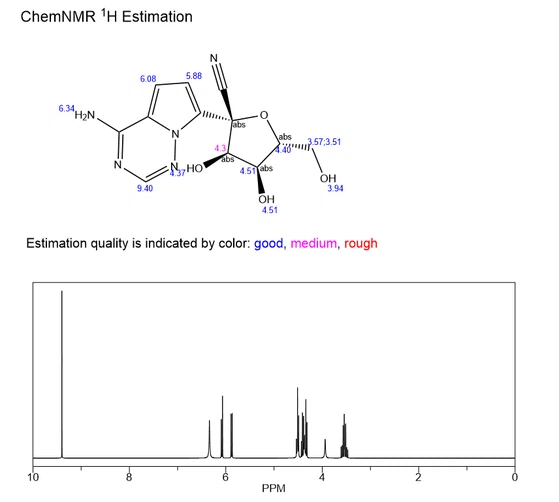
| Chemical Formula | C12H13N5O4 | |
| Exact Mass | 291.1 | |
| Molecular Weight | 292.1 | |
| m/z | 291.1(100.0%), 292.1(13.0%),292.09(1.8%) | |
| Elemental Analysis | C,49.48; H,4.50; N,24.04; O,21.97 | |

Potential Other Applications
As research deepens, scientists have discovered that the antiviral activity of GS-441524 is not limited to FIPV, and it also demonstrates potential application value in multiple other fields.
Canine coronavirus (CCV) is a virus that causes intestinal diseases in dogs, leading to symptoms such as diarrhea and vomiting. Although most dogs are capable of self-healing, CCV infection can be fatal for puppies or immunocompromised dogs. Due to its significant inhibitory effect on feline coronavirus, scientists speculate that it may also have a similar effect on canine coronavirus. At present, there is a lack of systematic clinical trial data on the specific application effect of it in the treatment of canine coronavirus infection.However, some veterinarians have started trying to use GS-441524 to treat cases of canine coronavirus infection and have reported positive treatment outcomes.


Besides cats and dogs, other animals may also be infected with coronavirus and cause diseases. For example, domestic animals such as pigs, cows, sheep, and certain wild animals may become hosts of the coronavirus. The broad-spectrum antiviral activity of it suggests that it may also have therapeutic effects on coronavirus infections in these animals.
Feline calicivirus (FCV) is a common virus in felines that can cause diseases such as stomatitis and pneumonia in cats. Although FCV usually does not cause death in cats, cats with severe conditions may experience serious clinical symptoms such as oral ulcers, difficulty breathing, etc. Studies have shown that it also has a certain inhibitory effect on feline calicivirus. Feline immunodeficiency virus (FIV) is a chronic viral infectious disease in felines, which has similar infection mechanism and clinical manifestations to human AIDS virus (HIV).


FIV infection can cause symptoms such as immunodeficiency and opportunistic infections in cats, seriously affecting their quality of life and lifespan. At present, the application of it in the treatment of feline immunodeficiency virus infection is still in the preliminary research stage.There are studies indicating that it may have a certain inhibitory effect on FIV, but its specific mechanism and effect still need further investigation.
Feline herpesvirus (FHV) is a common virus in feline animals, which can cause diseases such as conjunctivitis, keratitis, and rhinitis in cats. FHV infection is widely present in cat populations and poses a serious threat to the health of cats. Due to its inhibitory effect on various RNA viruses, scientists speculate that it may also have a certain therapeutic effect on FHV.


Multiple in vitro experiments have shown that GS-441524 injection has significant inhibitory effects on various human coronaviruses. For example, research has found that it can effectively inhibit the replication of severe acute respiratory syndrome coronavirus (SARS CoV) and Middle East respiratory syndrome coronavirus (MERS CoV) in Vero E6 cell line. These viruses and the novel coronavirus (SARS-CoV-2) belong to the coronaviridae family, and have similar structures and replication mechanisms.
Therefore, the inhibitory effect of it on SARS-CoV and MERS CoV suggests that it may also have potential therapeutic effects on SARS-CoV-2.Further research indicates that it also has a significant inhibitory effect on SARS-CoV-2. In vitro experiments have shown that it can dose dependently inhibit the replication of SARS-CoV-2 in various cell lines, including Vero E6, Calu-3 (human lung adenocarcinoma), and Caco-2 (colorectal adenocarcinoma). These research results indicate that it has high antiviral activity against SARS-CoV-2 in vitro.

The use of human coronavirus treatment

Scientists use animal models to evaluate the efficacy of it in the treatment of human coronavirus. For example, studies have utilized adenovirus associated virus (AAV) vectors expressing human angiotensin-converting enzyme 2 (ACE2) to construct transduced mouse models to support SARS-CoV-2 infection and pathogenesis. The research results show that administration of it before infection can significantly reduce the viral load in the lungs of mice and alleviate lung pathological damage. These research results indicate that it has a significant therapeutic effect on SARS-CoV-2 infection in animal models.
Apart from pre-exposure drug delivery, matching remedial trials after viral exposure were set up to mirror authentic clinical circumstances where infected human patients obtain timely therapeutic agents post-diagnosis. Rodents received its one day after viral exposure for five straight days. Tissue examinations uncovered drastically restrained viral reproduction in the respiratory passages and lung tissues of treated subjects.


Inflammatory cell infiltration and alveolar deterioration, hallmark pulmonary damages triggered by COVID-19, were far less severe in treated groups versus untreated control cohorts. Compared with blank lab subjects, medicated rodents suffered milder weight loss, displayed delayed emergence of infection-linked discomforts including breathing difficulty and listlessness, and recovered much faster, thoroughly validating the dual preventive and early remedial merits of this compound.
Even though lab animal trials generated encouraging datasets, research specialists highlight that these favorable outcomes cannot be simply regarded as equivalent to therapeutic effectiveness on human patients. Clear interspecies gaps exist between rodents and humans in metabolic speed, drug uptake and bodily dispersion, as well as immune reaction pathways. The subcutaneous injection mode and safe tolerable dose range of it still demand validation through multi-stage human clinical trials.


Existing lab animal research only supplies critical theoretical support for follow-up anti-coronavirus drug creation. Further refinement of medicinal formulations, precise measurement of safe human dosing limits, and long-term evaluation of liver and kidney harmful side effects are mandatory to judge whether this chemical compound possesses clinical application prospects for curing human coronavirus-related illnesses.
Comparison of the advantages and disadvantages of GS-441524 injection oil and water agents
Pharmacotherapeutic Advantages:
The oleaginous vehicle exhibits superior thermodynamic stability and lipophilic compatibility with the GS-441524 nucleoside analog, thereby mitigating the propensity for premature hydrolytic degradation and oxidative denaturation. Its lipophilic matrix facilitates a sustained-release pharmacokinetic profile, prolonging systemic exposure and maintaining therapeutic plasma concentrations over extended intervals, which is particularly advantageous for chronic FIP therapeutic regimens. Furthermore, the oleaginous formulation demonstrates extensive empirical validation within clinical cohorts, boasting a robust evidentiary foundation supporting its efficacy in viral replication suppression.

Physiological and Formulation Drawbacks:
The requisite solubilization of GS-441524 within the oleaginous matrix mandates the incorporation of strongly acidic co-solvents (typically maintaining a pH between 1.0 and 2.0), which engenders significant nociceptive stimulation upon subcutaneous administration. The high viscosity and hydrophobic nature of the vehicle predispose the injection site to localized induration, granulomatous nodules, and cutaneous corrosion, often necessitating adjunctive thermal therapy for resolution. Moreover, the lipophilic solvent system exhibits sluggish lymphatic and capillary absorption kinetics, potentially culminating in prolonged local tissue retention and inflammatory sequelae.
Pharmacotherapeutic Advantages:
The aqueous vehicle, being inherently hydrophilic, aligns seamlessly with physiological fluid dynamics, thereby facilitating rapid transmembrane permeation and expedited entry into systemic circulation. This formulation circumvents the necessity for highly acidic co-solvents, resulting in a markedly attenuated nociceptive response and negligible risk of injection-site induration or cutaneous necrosis. The hydrophilic matrix permits more facile subcutaneous administration with reduced injection resistance, enhancing patient compliance and operator convenience.
Physiological and Formulation Drawbacks:
GS-441524 exhibits intrinsically poor aqueous solubility,


necessitating sophisticated pH modulation (typically maintaining a pH between 5.5 and 6.5) and the incorporation of auxiliary solubilizing agents to achieve therapeutic concentrations.The aqueous vehicle is thermodynamically unstable relative to its oleaginous counterpart, exhibiting a pronounced tendency toward premature crystallization, hydrolytic decomposition, and microbial proliferation, thereby severely constraining its shelf-life and imposing stringent cold-chain logistical requirements. Furthermore, the aqueous market is notoriously saturated with adulterated or mislabeled products-frequently substituting GS-441524 with the inferior analog GS-2801 or incorporating nephrotoxic co-solvents such as dimethyl sulfoxide (DMSO)-thereby substantially compromising therapeutic reliability and posing significant renal toxicity risks.
Viral Safety Assurance
The viral safety paradigm for GS-441524-a C-adenosine nucleoside analog antiviral prodrug-necessitates a multi-layered, orthogonal risk mitigation architecture, governed by the stringent provisions of ICH Q5A(R2), EMA CPMP/BWP/268/95, and FDA Guidance for Industry on Viral Safety Evaluation of Biotechnology Products Derived from Cell Lines of Human or Animal Origin. At Bloomtechz, our viral clearance validation framework employs a systematic, evidence-based approach to quantify and eliminate adventitious viral contaminants across the entire upstream-to-downstream manufacturing continuum, ensuring that the residual viral burden in the final API falls well below the regulatory threshold of ≤10⁻⁶ infectious particles per dose.
I. Adventitious Agent Screening at Raw Material & Cell Substrate Level
Recognizing that the primary vector for viral contamination originates from biological source materials-particularly fermentation-derived nucleoside precursors and animal-origin culture media components-Bloomtechz implements mandatory adventitious agent screening at the incoming raw material qualification stage. Our screening matrix encompasses both in vivo and in vitro methodologies: the traditional animal inoculation assay (mouse antibody production test, MAP) and cell culture-based cytopathic effect (CPE) observation across multiple permissive cell lines (Vero, MRC-5, MDCK) to detect cultivable viral entities;complemented by modern molecular diagnostics including quantitative polymerase chain reaction (qPCR) for species-specific viral genomes (porcine parvovirus,


bovine viral diarrhea virus, murine leukemia virus) and next-generation sequencing (NGS/HTS) for unbiased, pan-viral metagenomic surveillance capable of identifying novel, uncultivable, or unexpected viral sequences without a priori target selection. All bovine serum and trypsin utilized in upstream processes are sourced exclusively from geographies certified free of bovine spongiform encephalopathy (BSE) and transmissible spongiform encephalopathy (TSE), with accompanying Certificates of Origin and TSE/BSE-free declarations per EMA Note for Guidance on Minimising the Risk of Transmitting Animal Spongiform Encephalopathy Agents.
II. Orthogonal Viral Inactivation & Removal Unit Operations
For GS-441524 batches produced via biocatalytic or fermentation-integrated synthetic routes,
Bloomtechz deploys a cascade of three orthogonal viral clearance steps, each operating via a distinct physicochemical mechanism to ensure that a failure in one modality is compensated by the others-a fundamental regulatory expectation for IND-enabling and BLA-grade manufacturing.
Low-pH Incubation (Acidic Hold Step): The harvested bulk solution is subjected to controlled pH reduction (pH 3.5–3.8) using pharmaceutical-grade phosphoric or citric acid, maintained for ≥30 minutes at ambient temperature. This acidic milieu induces irreversible protonation-driven conformational denaturation of viral capsid proteins and envelope glycoproteins, particularly effective against lipid-enveloped viruses (e.g., retroviruses, flaviviruses, herpesviruses) whose structural integrity is contingent upon the native folding of transmembrane fusion proteins.

The process is validated under worst-case conditions (minimum hold time, maximum product concentration) to establish a robust Log Reduction Value (LRV) benchmark.
Solvent/Detergent (S/D) Treatment: Following pH neutralization, the intermediate is treated with a validated combination of tributyl phosphate (TNBP, 0.3% v/v) and polysorbate 80 (Triton X-100, 1.0% v/v) at 24–26°C for ≥6 hours. The amphiphilic detergent molecules intercalate into and solubilize the lipid bilayer of enveloped virions, while the organic solvent disrupts hydrophobic interactions stabilizing the viral envelope, resulting in complete disintegration of the viral particle. This step achieves an LRV ≥4 for enveloped indicator viruses (X-MuLV, PRV) and is subsequently followed by an S/D removal chromatography step (C18 or oil-phase extraction) to reduce residual TNBP to <2 ppm and polysorbate to <25 ppm,
well below ICH Q3C Class 2 solvent limits.
Planar Nanofiltration (Virus Retentive Filtration): The final and most robust physical barrier employs serial tangential-flow or dead-end nanofiltration through stacked 35 nm and 20 nm pore-size polyethersulfone (PES) or regenerated cellulose membranes. This size-exclusion mechanism physically retains viral particles based on hydrodynamic diameter-effectively removing both enveloped (80–200 nm) and, critically, small non-enveloped viruses such as murine minute virus (MMV/MVM, 18–26 nm) and porcine parvovirus (PPV, 20–25 nm) that are inherently resistant to low-pH and S/D treatments. Membrane integrity is verified pre- and post-filtration via water permeability testing and bubble point determination, with each validated filter lot demonstrating an LRV ≥4 for the 20 nm parvovirus challenge.

III. LRV Quantification, Statistical Validation & Cumulative Clearance Accounting
The efficacy of each viral clearance step is quantified via the Log Reduction Value (LRV, also denoted Virus Reduction Factor, VRF in ICH Q5A(R2) nomenclature), calculated as LRV = log₁₀(total infectious virus input / total infectious virus output), with volumetric corrections applied to account for process hold volumes and sample dilution factors. Bloomtechz's validation studies employ a panel of four indicator viruses selected per regulatory guidance to span the physicochemical diversity of potential contaminants: X-MuLV (enveloped, ~100 nm, retrovirus surrogate), PRV (enveloped, ~150 nm, herpesvirus surrogate), Reo-3 (non-enveloped, ~70 nm, reovirus surrogate), and MMV/MVM (non-enveloped, ~20 nm, parvovirus surrogate-the most stringent challenge due to its small size and extreme environmental stability).
reference
[1]Pedersen, N. C., Kim, Y., Liu, H., Galgiani, A. D., Griffith, J., & Tablin, F. (2019). Evaluation of the efficacy, safety, and pharmacokinetics of GS-441524 in cats with experimentally induced feline infectious peritonitis. Journal of Feline Medicine and Surgery, 21(7), 629–638.
[2]Murphy, B. G., Perron, M., Murakami, E., Bauer, K., Park, Y., & Eckstrand, C. (2018). The nucleoside analog GS-441524 strongly inhibits feline infectious peritonitis (FIP) virus in tissue culture and experimental cat infection studies. Veterinary Microbiology, 219, 226–233.
[3]Allinder, K. M., Koo, S., & Pesavento, P. A. (2022). Uroliths composed of antiviral compound GS-441524 in two cats undergoing treatment for feline infectious peritonitis. Journal of Veterinary Internal Medicine, 36(5), 1782–1787.
[4]Kent, S., & Pedersen, N. C. (2021). Analysis of black market GS-441524 and GC376 products used for the treatment of feline infectious peritonitis (FIP) in cats. Journal of Feline Medicine and Surgery, 23(10), 936–945.
[5]Dickinson, P. J., Banovic, F., & Bannasch, D. L. (2021). Effectiveness of antiviral drugs for feline infectious peritonitis. Frontiers in Veterinary Science, 8, 745018.
Frequently Asked Questions
Q1: What purity level does Bloomtechz guarantee for GS-441524 Injection API, and what documentation is provided?
+
-
A: Bloomtechz guarantees ≥99.0% HPLC purity for every batch of GS-441524 (CAS 1191237-69-0). Each lot is accompanied by a comprehensive Certificate of Analysis (CoA) covering ¹H-NMR structural confirmation, Mass Spectrometry verification, FT-IR fingerprinting, Karl Fischer moisture determination, and residual solvent screening per ICH Q3C guidelines. Our full analytical package is structured to support veterinary drug registration, IND filings, and global regulatory submissions.
Q2: What are the standard dosing protocols for GS-441524, and does Bloomtechz support both oil-based and water-based injection formulations?
+
-
A: The standard subcutaneous dosing protocol is 5–10 mg/kg/day for conventional FIP cases, escalated to 15–20 mg/kg/day for neurological or ocular presentations, with a minimum treatment duration of 12 weeks (84 days).
Q3: How does Bloomtechz ensure the long-term stability and shelf life of GS-441524 API?
+
-
A: To mitigate GS-441524's sensitivity to oxidation and moisture, Bloomtechz employs a nitrogen-flushed, light-resistant packaging protocol-double-layered polyethylene inner bags sealed within aluminum drums.
Q4: What are the Minimum Order Quantities (MOQ) and delivery lead times?
+
-
A: Bloomtechz offers flexible procurement tailored to your development stage. R&D samples (1g–100g) are dispatched within 24 hours to accelerate your preliminary testing.
Q5: How can I request a quotation or technical consultation for GS-441524 Injection API?
+
-
A: You can obtain an immediate quotation by contacting our sales team at mailto:sales@bloomtechz.com or through our official website inquiry portal.
Hot Tags: gs-441524 injection, suppliers, manufacturers, factory, wholesale, buy, price, bulk, for sale