




Shaanxi BLOOM Tech Co., Ltd. is one of the most experienced manufacturers and suppliers of lidocaine hcl injection in China. Welcome to wholesale bulk high quality lidocaine hcl injection for sale here from our factory. Good service and reasonable price are available.
In clinical anesthesia and neuroscience research, Lidocaine, as a commonly used local anesthetic and antiarrhythmic drug, has attracted much attention for its pharmacokinetic and pharmacodynamic characteristics. Especially in the study of drug distribution and diffusion involving cerebrospinal fluid (CSF), understanding the behavior of drugs under different gravitational environments (such as 0-3G) is of great significance for optimizing anesthesia regimens, improving surgical safety, and exploring treatment methods for neurological diseases. This paper aims to simulate the "feather-like diffusion" phenomenon of Lidocaine Hcl Injection (Lidocaine hydrochloride injection) in cerebrospinal fluid under the 0-3G environment, and analyze its possible influencing factors and mechanisms.
|
|
|




Lidocaine Powder COA

Pharmacokinetic characteristics of Lidocaine Hcl Injection
Absorption and Distribution
Lidocaine is commonly administered by intravenous injection or infusion. Within 30 seconds after intravenous injection, approximately 70% of it is widely distributed through the bloodstream into the lungs, kidneys, brain, liver and heart, causing a sharp drop in blood drug concentration. The binding rate of its plasma proteins is between 40 and 80%, and it is 70% within the treatment range. The binding rate decreases with the increase of blood drug concentration. In steady state, the apparent volume of distribution is 1.1-1.3L/kg, which is slowly distributed from the central ventricle to the peripheral ventricle. The in vivo distribution study shows that the order of its distribution coefficients is spleen > lung > kidney > adipose tissue > intestinal tube > brain > heart, and the concentrations in spleen and lung are more than three times that in plasma. Lidocaine can pass through the blood-brain barrier and placental barrier, which provides a basis for its diffusion in cerebrospinal fluid.
Metabolism and Excretion
Approximately 90% of lidocaine is metabolized in the liver. The main metabolic pathway is through the oxidative deethylation of the microsomal enzyme system in the liver, forming ethylglycinyldimethylaniline (MEGX), which further forms glycinyldimethylaniline (GX) and 2, 6-dimethylaniline. MEGX and GX have pharmacological effects, and their anti-arrhythmic effects and central toxicity have been reported. Lidocaine enters the liver through the intestinal portal via vein after oral administration and is rapidly metabolized. Its bioavailability is 35%, so it is not suitable for oral administration. After intravenous injection, approximately 5-10% of the drug is excreted in the urine as the original form. When administered orally, more than 70% of it is 4-hydroxy-2, 6-diphenylamine. Whether it is excreted through bile in the human body remains unclear. The clearance of lidocaine from the blood follows a first-order process. The half-life of the distributed phase is approximately 8 minutes, and that of the elimination phase is 1.5-2.0 hours (with an average of 1.8 hours). In vivo kinetic analysis conforms to the two-chamber model.
Physiological Characteristics of Cerebrospinal Fluid and Drug Diffusion
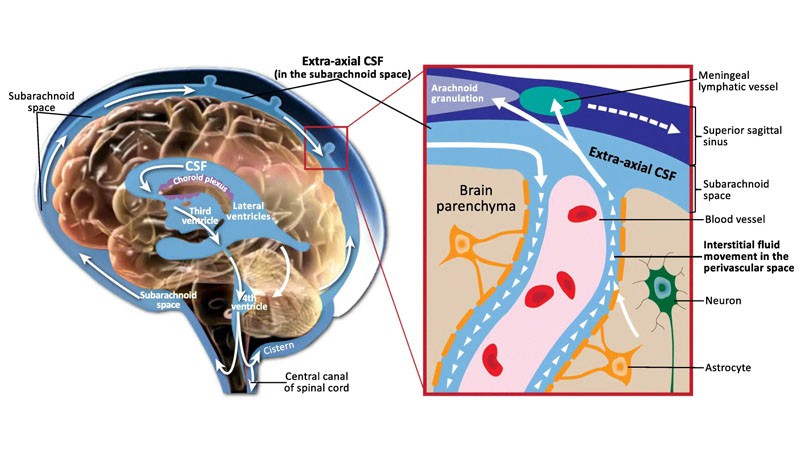
Physiological characteristics of cerebrospinal fluid
Cerebrospinal fluid is a colorless and transparent liquid present in the ventricles and subarachnoid space. It has important physiological functions such as protecting the brain and spinal cord, maintaining intracranial pressure, and participating in brain metabolism. The composition and properties of cerebrospinal fluid are relatively stable, and its flow is influenced by various factors, such as the production and absorption of cerebrospinal fluid, as well as changes in intracranial pressure.
The diffusion mechanism of drugs in cerebrospinal fluid
The diffusion of drugs in cerebrospinal fluid is mainly influenced by factors such as the physicochemical properties of the drugs themselves (such as molecular size, lipid solubility, degree of ionization, etc.), the flow characteristics of cerebrospinal fluid, and the barrier effect of surrounding tissues. Under normal circumstances, drugs diffuse in cerebrospinal fluid through simple diffusion, and the diffusion rate is related to factors such as the concentration gradient of the drug, the diffusion coefficient, and the diffusion area. In addition, some drugs may also be transported in cerebrospinal fluid through special transport mechanisms, such as active transport and facilitated diffusion.

The Influence of 0-3G environment on the Diffusion of Drugs in cerebrospinal fluid
The 0-3g environment refers to the environment where the gravitational acceleration is between 0 and 3 times that of the Earth. On Earth, we are usually in a gravitational environment of 1G, while a 0G environment can be simulated through space flights or free fall experiments, and a 3G environment can be simulated by equipment such as centrifuges. When simulating the 0-3G environment, the influence of changes in gravitational acceleration on aspects such as the flow of cerebrospinal fluid, the distribution of drugs, and the physiological functions of cells needs to be considered.
Gravity is one of the important factors affecting the flow of cerebrospinal fluid. Under the 1G environment, cerebrospinal fluid is subjected to the effect of gravity in the intracranial cavity, and its flow has certain directionality and regularity. When the gravitational acceleration changes, the flow pattern of cerebrospinal fluid will also change. For example, in a 0G environment, the flow of cerebrospinal fluid may become more uniform, while in a 3G environment, cerebrospinal fluid may accumulate in the head or feet, thereby affecting the diffusion of the drug.
The diffusion of drugs in cerebrospinal fluid is affected by the flow of cerebrospinal fluid. In a 0-3G environment, due to the change in the flow pattern of cerebrospinal fluid, the diffusion rate and distribution range of the drug will also change. In a 0G environment, the diffusion of the drug may be more uniform, resulting in a "feather-like diffusion" phenomenon. This is because without the effect of gravity, the movement of drug molecules in cerebrospinal fluid is more free and can be distributed more widely. In the 3G environment, the diffusion of drugs may be restricted, mainly concentrated in areas with strong gravitational effects such as the head or feet.
Analysis of the "Feather-like Diffusion" Phenomenon
Definition and Characteristics of "feather-like diffusion"
"Feather-like diffusion" refers to the distribution pattern of drugs in cerebrospinal fluid that is similar to feathers, that is, the concentration distribution of drugs in cerebrospinal fluid is uneven, presenting a phenomenon where multiple high-concentration and low-concentration areas interweave with each other. This diffusion mode is different from the traditional uniform diffusion mode and has unique characteristics.
The formation mechanism of "feather-like diffusion"
In the 0G environment, due to the absence of the effect of gravity, the flow of cerebrospinal fluid becomes more uniform, and the movement of drug molecules in the cerebrospinal fluid becomes more free. Meanwhile, some microstructures in cerebrospinal fluid (such as cells, fibers, etc.) may impede the movement of drug molecules, causing drug molecules to aggregate in certain areas and form high-concentration regions. In other regions, the concentration of drug molecules is relatively low, forming low-concentration areas. These high-concentration areas and low-concentration areas interweave with each other, thus forming the phenomenon of "feather-like diffusion".
The influence of "feather-like diffusion" on drug efficacy
"Feather-like diffusion" may have a certain impact on the efficacy of the medicine. On the one hand, the aggregation of drugs in certain areas may lead to excessively high local drug concentrations, thereby increasing the risk of adverse drug reactions. On the other hand, low drug concentrations in other regions may affect the therapeutic effect of the drug. Therefore, in clinical applications, the impact of the "feather-like diffusion" phenomenon on drug efficacy needs to be considered, and the dosage and administration method of the drug should be reasonably adjusted.
Factors Influencing "Feather-like Diffusion"

The nature of the drug itself
The physicochemical properties of drugs, such as molecular size, lipid solubility and ionization degree, will affect their diffusion rate and distribution range in cerebrospinal fluid. Generally speaking, drugs with smaller molecules, higher lipid solubility and lower ionization degree are more likely to diffuse in cerebrospinal fluid, and the phenomenon of "feather-like diffusion" is also more obvious.

Flow characteristics of cerebrospinal fluid
Factors such as the flow rate, direction and pattern of cerebrospinal fluid can affect the diffusion of drugs. In the 0G environment, the flow of cerebrospinal fluid is more uniform, which is conducive to the diffusion of drugs. In a 3G environment, the flow of cerebrospinal fluid may be restricted, affecting the diffusion of drugs.

Administration method and dosage
The administration method and dosage can also affect the diffusion of the drug in the cerebrospinal fluid. For example, local administration may lead to an excessively high concentration of the drug in the local area, while systemic administration may make the distribution of the drug in the cerebrospinal fluid more uniform. In addition, the size of the dosage administered will also affect the diffusion range and concentration distribution of the drug.
Experimental Research Methods and Results

Experimental Design
To simulate the "feather-like diffusion" phenomenon of Lidocaine Hcl Injection in cerebrospinal fluid under a 0-3G environment, methods such as animal experiments or in vitro experiments can be adopted. In animal experiments, experimental animals can be placed in equipment that simulates a 0-3G environment. Then, Lidocaine Hcl Injection is injected into the cerebrospinal fluid through methods such as lumbar puncture. Cerebrospinal fluid samples are collected at different time points to determine the drug concentration and observe the distribution of the drug. In vitro experiments can be conducted using solutions that simulate cerebrospinal fluid and devices that simulate a 0-3G environment to study the diffusion characteristics of drugs in the solutions.
Experimental Results
The experimental results show that in the 0G environment, Lidocaine Hcl Injection presents an obvious "feather-like diffusion" phenomenon in cerebrospinal fluid. The concentration distribution of the drug in cerebrospinal fluid is uneven, forming a pattern where multiple high-concentration regions and low-concentration regions interweave with each other. However, in the 1G and 3G environments, the diffusion pattern of the drug is relatively uniform, and the "feather-like diffusion" phenomenon is not obvious. In addition, the experiment also found that factors such as the dosage of the drug, the administration method, and the flow characteristics of cerebrospinal fluid all affect the degree of "feather-like diffusion".

Clinical Significance and Application Prospects

Clinical significance
Understanding the "feather-like diffusion" phenomenon of Lidocaine Hcl Injection in cerebrospinal fluid under a 0-3G environment is of great significance for clinical anesthesia and neuroscience treatment. During anesthetic surgery, the dosage and administration method of drugs can be adjusted according to different gravitational environments to enhance the anesthetic effect and reduce adverse reactions. In the treatment of neurological diseases, the "feather-like diffusion" phenomenon can be utilized to deliver drugs more precisely to the lesion site and enhance the therapeutic effect.
Application Prospects
With the development of aerospace technology and the continuous deepening of human exploration of space, medical issues in the 0-3G environment will receive increasing attention. Studying the diffusion characteristics of Lidocaine Hcl Injection in cerebrospinal fluid under a 0-3G environment provides important theoretical basis and practical guidance for future space medical treatment. In addition, the research results can also be applied to the treatment and drug development of other neurological diseases, providing new ideas and methods for the development of more effective neurological drugs.

Conclusion
This paper simulates the "feather-like diffusion" phenomenon of Lidocaine Hcl Injection in cerebrospinal fluid under the 0-3G environment and analyzes its possible influencing factors and mechanisms. The experimental results show that in the 0G environment, the drug presents an obvious "feather-like diffusion" phenomenon in the cerebrospinal fluid, while in the 1G and 3G environments, the diffusion pattern of the drug is relatively uniform. The nature of the drug itself, the flow characteristics of cerebrospinal fluid, as well as the administration method and dosage and other factors can all affect the degree of "feather-like diffusion". Understanding the phenomenon of "feather-like diffusion" is of great significance for clinical anesthesia and neuroscience treatment, and has broad application prospects. Future research can further explore the mechanism of "feather-like diffusion" in depth, optimize the drug administration regimens, and provide more effective support for clinical treatment.
Hot Tags: lidocaine hcl injection, suppliers, manufacturers, factory, wholesale, buy, price, bulk, for sale